⚡ TL;DR: Using Mascara on Lash Extensions
Using mascara on lash extensions is generally discouraged — but it isn’t completely off-limits in every situation.
It’s only tolerated under very specific conditions, and most damage happens when those conditions are ignored.
Before anything else, here’s the quick reality check:
- Volume or hybrid extensions? Stop here. Mascara isn’t compatible.
- Within 24–48 hours of a fresh set or fill? Also stop.
- Classic (1:1) extensions, worn occasionally, with correct technique? That’s the only scenario where mascara is sometimes tolerated.
🎁 The Quick Safe Method (If You’re Going to Use Mascara Anyway)
If mascara is happening, this is the least risky way to do it:
- Cleanse gently the same day using an oil-free lash cleanser
- Wait 24–48 hours after a fresh set or fill
- Separate lashes first with a clean spoolie
- Apply one thin coat from mid-shaft to tips only
This doesn’t make mascara good for extensions — it simply keeps the margin for damage as small as possible.
Okay, so let’s slow this down for a second.
Lash extensions are designed to replace mascara, not work alongside it. They already add length, darkness, and shape, which means mascara rarely upgrades the look.
What it usually adds instead is extra weight, residue, and stress during removal.
That said, mascara isn’t absolutely forbidden if — and this part matters — all of the following are true:
- You have classic (1:1) lash extensions
- The mascara is water-based and oil-free
- Application stays mid-shaft to tips only (never at the base)
- It’s used occasionally, not daily or as a routine
⚠️ If even one of these conditions isn’t met, mascara stops being “tolerated” and starts actively shortening the lifespan of your extensions.
🧭 Before We Dive In
This article isn’t here to scare you or repeat salon rules.
It’s here to explain what actually causes damage, what’s sometimes workable, and how to make smarter choices if you still want mascara.
📌 If you’re new to extensions, it may help to first understand what eyelash extensions are and how they work.
To keep things clean and avoid overlap, here’s how this page fits into the bigger picture:
- 📌 How to Apply Mascara Like a Pro — general mascara technique (not extension-specific)
- 📌 How to Take Care of Eyelash Extensions (Sleeping, Showering & Maintenance)
This page focuses on using mascara on lash extensions safely — the method, the risks, and how to avoid ruining your retention.
Why Mascara Is a Problem for Lash Extensions (The “Why” Matters)
Mascara causes problems with lash extensions, not because it’s “bad,” but because of how it behaves on artificial fibers — and how it has to be removed.
Most damage doesn’t happen during application.
It happens later, during buildup, clumping, and removal.
Let’s explain this without salon drama.
Mascara is designed to bind, coat, and thicken natural lashes. Lash extensions, on the other hand, are already finished fibers. They don’t flex, separate, or shed product the same way natural lashes do.
When you combine mascara with extensions, three things start going wrong.
- First — clumping: Mascara doesn’t just coat extension fibers. It sticks them together. Once extensions clump, they stop moving independently, which creates uneven tension across your natural lashes instead of distributing weight evenly.
- Second — added weight: Even a lightweight mascara adds mass. That extra weight pulls on the natural lash underneath the extension — especially when you blink, rub your eyes, or sleep. Over time, that repeated stress shortens retention and can weaken the natural lash itself.
- Third — and this is the biggest issue — removal: Most damage from mascara on lash extensions doesn’t happen while you’re wearing it. It happens when you try to take it off.
Most lash adhesives are cyanoacrylate-based polymers — strong, fast-setting bonds that hold best when kept clean and dry. Oils, waterproof solvents, and repeated rubbing slowly weaken those bonds.
Once the bond is compromised, extensions shed earlier than they should, even if the application looked gentle.
That’s why even “careful” mascara use can still reduce retention if removal isn’t perfect every single time.
If you want deeper context around lash health or post-wear care, these related guides explore those angles without repeating what’s already covered here:
- 📌 Is Mascara Bad for Your Eyelashes? (+ eye health risks)
- 📌 Mascara Aftercare
- 📌 Why Does My Mascara Flake?
Lash Extension Type Matters More Than Mascara Brand
Whether mascara is sometimes tolerated or completely incompatible depends far more on your extension type than on the mascara itself.
This is where a lot of online advice oversimplifies things — and why people end up confused or disappointed with their retention.
Here’s the simple truth: Mascara behavior + extension structure matter more than brand claims.
Classic Lash Extensions (Sometimes Tolerable)
Classic lash extensions use a 1:1 ratio — one extension attached to one natural lash. That structure is naturally more stable and can handle very minimal added weight if everything else is done correctly.
That’s why mascara is sometimes tolerated with classic lashes — but only under strict rules.
Even then:
- Mascara must be water-based and oil-free
- The application must stay away from the base
- Use must be occasional, not routine
Think of this as a controlled exception, not a normal habit.
Mascara here isn’t adding something essential — it’s just being allowed briefly, when done carefully and infrequently.
Volume & Hybrid Lash Extensions (Not Compatible)
This is where we need to be firm.
Volume and hybrid lashes rely on fan-shaped groupings of ultra-fine fibers. Mascara collapses those fans — and once that happens, they don’t spring back into shape.
Here, clumping isn’t just cosmetic. It creates uneven traction across multiple natural lashes at once. Over time, that repeated stress can increase the risk of traction-related lash shedding in ongoing or extreme cases.
For volume and hybrid extensions, mascara isn’t just “risky.”
It’s structurally incompatible and should be avoided entirely.
If you’re looking for definition with these styles, adjustments at your fill — not mascara — are the safer route.
- 📌 Can You Wear Mascara After a Lash Lift? (timing & safety guide)
Emergency Use Only — Hiding Gaps in an Old Set
Let’s be real for a second.
Most people don’t reach for mascara because a fresh set isn’t bold enough. They reach for it because their extensions are two to three weeks old, shedding, and starting to look sparse.
If you’re using mascara to hide gaps before your next fill, the rules change slightly — but they still need to be strict.
How to do it with the least damage:
- Target the gaps only: Do not coat the remaining extensions. Mascara on extensions makes them look heavy and spidery next to bare spots.
- Apply only to natural lashes in the gaps: You’re darkening what’s missing — not enhancing what’s already extended.
- Use a precision tool: A full mascara wand is too bulky. Use a disposable micro-wand or just the very tip of the brush to spot-treat without touching surrounding extensions.
Think of this as bridging the gap visually, not trying to match the volume of a fresh set.
⚠️ Warning
This is an emergency workaround, not a habit. The goal is to get you to your next fill — not replace it.
Mascara Types — What to Avoid vs What’s Least Risky
With lash extensions, formula matters far more than brand.
Most mascaras fail not because they’re “bad,” but because they rely on oil, friction, or heavy buildup to work — all of which shorten extension retention.
Let’s clear up a big misconception first.
There is no true “lash-extension-safe mascara” category in the way people expect. What actually exists are formulas that are less destructive if mascara is used occasionally and correctly.
That’s why this section focuses on behavior, not hype.
Mascara Types to Avoid Completely
These formulas consistently cause the most damage — even when used carefully.
- Waterproof mascaras: They don’t come off without oils or strong solvents. That removal process weakens lash adhesive and increases premature shedding.
- Oil-based mascaras: Oils migrate. Even if you avoid the base, the residue slowly breaks down the adhesive bond over time.
- Fiber mascaras (nylon or rayon): Fibers tangle into extensions, cause clumping, and are extremely difficult to remove cleanly.
- Heavy wax formulas: They add weight quickly and harden on extension fibers, increasing tension with every blink.
The Tubing Mascara Rule (Top vs Bottom)
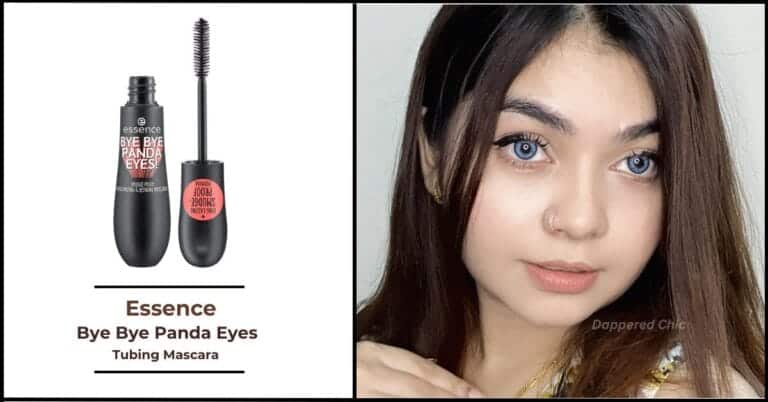
Tubing formulas form polymer “sleeves” around lashes. That makes them amazing in one zone — and damaging in another.
- Top lashes (with extensions): ❌ Never
The polymer tubes wrap around extension fibers. Sliding them off during removal creates friction that can pull the extension off the natural lash.
- Bottom lashes: ✅ Preferred
Tubing mascara doesn’t smudge or flake, so it’s far less likely to transfer residue onto your top extensions when you blink.
If Someone Insists on Using Mascara
If mascara is going to be used at all, it must meet every condition below:
- Water-based
- Oil-free (trace glycols are acceptable; heavy oils are not)
- No fibers
- Lightweight, minimal build
- Removable with a lash cleanser, not oil or rubbing
This isn’t about finding the “best” mascara.
It’s about choosing the least disruptive behavior — and using it sparingly.
For deeper context around ingredients or mascara categories (without repeating what’s already covered here), these guides explain the mechanics clearly:
- 📌 What Is Tubing Mascara?
- 📌 What Is Mascara? (+ how it works & ingredients)
- 📌 What Does Clear Mascara Do?
- 📌 Best Clear Mascara
How to Apply Mascara on Lash Extensions
When lash extensions are involved, application technique matters more than formula.
One bad habit at the base can undo everything else.
And honestly? Most people mess up in two places:
- Getting mascara too close to the glue line
- Getting rough during removal
This isn’t a full mascara tutorial.
This section only covers what changes because extensions exist.
Strict Technique Checklist
- Wait 24–48 hours after a fresh set or fill
- Separate lashes first with a clean wand or disposable spoolie
- Apply only from the mid-shaft to the tips
- Never touch the glue line
- Use straight upward strokes only
- The One-Coat Rule: Apply one single coat to darken the tips — never layer
- Comb gently while wet to prevent clumps
⚠️ Avoid at all costs:
- Base application
- Zig-zag motions
- Curling tools
Once mascara reaches the base, removal becomes aggressive — and that’s where retention collapses.
⚠️ If you accidentally touch the base: Don’t “fix” it with more product. Cleanse that same day and let it go.
If you need foundational mascara technique outside the context of extensions, these guides cover it properly without repeating things here:
- 📌 How to Apply Mascara Like a Pro
- 📌 How to Layer Mascara Like a Pro (usually not recommended with extensions)
- 📌 How to Clean Your Mascara Wand
How Often Can You Use Mascara With Lash Extensions
Mascara with lash extensions should be occasional, not habitual.
Frequency matters more than formula. Here’s the simplest way to think about it:
- Occasional use (events, photos, short wear) is usually tolerated if everything else is done right
- Daily use turns small stresses into cumulative damage
When mascara starts stressing your extensions, you’ll usually notice signs like:
- Extensions shedding earlier than usual
- Clumping that doesn’t fully separate, even after cleansing
- Increased fallout during removal
- Lashes feeling stiff, uneven, or tangled
When that happens, the smartest move isn’t switching mascaras.
It’s stopping, cleansing thoroughly, and letting your lashes reset.
Quick “What’s Happening?” Triage
- Clumps that won’t separate → buildup + too much product → cleanse thoroughly, spoolie gently, stop mascara for a few days
- Fallout during removal → rubbing / too much friction → switch to press-and-lift removal (no scrubbing)
- Extensions feel stiff or crunchy → product drying on fibers → cleanse the same day, reduce to one coat only.
- Retention suddenly worse → base contact + aggressive removal → stop mascara and protect your next fill cycle
Lash extensions are meant to replace mascara.
The more often mascara fills that role again, the shorter your retention window becomes.
Removal & Hygiene (Why This Matters More Than Mascara)
This is where we need to be very honest.
With lash extensions, poor removal is more dangerous than mascara itself.
Residue trapped near the lash line creates a hygiene problem, not just a cosmetic one.
Mascara residue combined with lash extensions can create warm, slightly moist pockets near the lash line. That environment makes it easier for oils, debris, and bacteria to build up — especially when removal isn’t thorough.
Over time, this can contribute to:
- Blepharitis (inflamed, itchy, flaky lash lines)
- Eye irritation and redness
- Demodex-related lash line issues (mites are common on skin, but hygiene slip-ups make symptoms more likely)
None of this is dramatic. It’s simply what happens when residue sits too close to the eye for too long.
🧪 Tester insight (real-world hygiene context):
Dr. Rabeya Akter (dentist, beauty educator) has noticed that people who skip proper eye-area cleansing after makeup are far more likely to complain of lash-line itching and irritation — even when the makeup itself is labeled “gentle.”
The issue usually isn’t the product alone. It’s residue sitting too close to sensitive tissue.
This is why how you remove mascara matters more than what mascara you used.
For a broader eye-health context, the American Academy of Ophthalmology consistently emphasizes keeping cosmetic residue away from the lash line to reduce irritation and inflammation.
Clinical research indexed by the National Center for Biotechnology Information also documents a higher irritation risk when eye cosmetics are not thoroughly removed.
⚠️ Warning
If you ever have redness, swelling, pain, crusting, or persistent itching, stop using eye makeup and speak with a qualified professional. We don’t push through symptoms around the eyes.
Safe Removal Protocol (Extensions Involved)
This is the non-negotiable baseline when lash extensions are involved:
- Use oil-free micellar water or a lash shampoo
- Press — don’t rub (hold 10–15 seconds)
- Move vertically only, never side-to-side
- Use lint-free tools (no cotton fuzz near adhesive)
- Follow with gentle lash cleansing
Rubbing, twisting, or scrubbing doesn’t just irritate the eye — it weakens the adhesive bond and shortens extension life.
For deeper technique or product breakdowns, these cover it without repeating what’s already here:
Bottom Lashes — The Smart Exception
This is the part most guides forget to mention.
Mascara on bottom lashes is generally safe — even when you have lash extensions on top.
Bottom lashes don’t carry extensions, and they sit far enough from the adhesive line that the risk drops significantly. That’s why mascara here is usually fine, as long as removal stays gentle.
Tubing mascaras work especially well on bottom lashes because they offer:
- Less smudging
- Cleaner removal
- Minimal transfer to top extensions
This is a smart compromise if you want definition without stressing your extensions or shortening retention.
- 📌 How to Apply Mascara to Bottom Lashes Without Smudging
- 📌 Best Mascara for Bottom Lashes
Better Alternatives Than Mascara (Extension-Friendly Options)
If you’re craving more impact, there are safer ways to enhance lash extensions than adding mascara.
Sometimes the issue isn’t mascara — it’s that your set needs a small tweak, not extra product.
Extension-friendly alternatives include:
- Extra volume at your next fill (more impact without added weight)
- Lash tinting for deeper color without buildup
- Black lash sealants to enhance darkness and definition
- Wet-look or spike styling for shine without stiffness
- Oil-free eyeliner to subtly darken the lash line (without touching extensions)
These options keep the look intentional and polished — without adding removal stress or shortening retention.
Quick FAQs About Using Mascara on Lash Extensions
❓ Can I use mascara occasionally?
Yes — if you have classic extensions, follow strict technique, and keep it truly occasional.
❓ Is clear mascara safer than black?
Sometimes. Clear formulas are lighter, but removal habits matter more than color.
❓ Can tubing mascara be used anywhere?
Bottom lashes only. Avoid tubing mascara on extension-covered top lashes.
❓ What if mascara clumps my extensions?
Stop, cleanse thoroughly, and don’t reapply. Repeated clumping shortens retention quickly.
📌 Best Non-Clumping Mascaras
📌 Best Mascara for Sensitive Eyes
Final Thoughts — Mascara With Extensions Is About Restraint
Mascara isn’t the enemy.
Overuse and poor technique are.
Lash extensions are meant to replace mascara, not compete with it. When using mascara on lash extensions, how — and how often — you apply it matters far more than the formula itself.
Using mascara less often leads to:
- Better retention
- Healthier natural lashes
- Fewer hygiene issues
And honestly? Better results overall.
Before You go… (Continue Reading)