⚡ Quick Answer
The best colored mascara for dark lashes uses strong pigment, real contrast, and a formula that layers well — so the color sits on top of your lashes instead of disappearing into black.
Quick Picks:
- 🏆 Winner: NYX Professional Makeup Color Mascara (Blue) — fastest visible contrast
- 🥈 1st Runner-Up: Vivienne Sabó Cabaret Premiere (Green) — balanced visibility + wearability
- 🥉 2nd Runner-Up: Maybelline Sky High (Burgundy Haze) — soft everyday color shift
👉 Key tip: On dark lashes, contrast + layering matter more than the shade name
If you’ve been searching for the best colored mascara for dark lashes, you’ve probably had that annoying moment already.
You buy a blue, purple, or burgundy mascara… apply it carefully… and somehow, it just looks black.
And honestly? That’s not your fault.
Dark lashes naturally absorb more light, so softer or sheer colored formulas can disappear fast. What looks vibrant in the tube may look muted, muddy, or barely visible once it’s on your lashes.
That’s where most colored mascara guides miss the point. They recommend pretty shades, but they don’t always explain how those shades actually behave on dark lashes.
So in this guide, we’re focusing on what really matters:
- Shades that create visible contrast
- Formulas that layer without turning muddy
- Simple techniques that help the color show better
So instead of guessing, we can choose colored mascara that actually works for dark lashes.
This guide is for you if:
- Your colored mascara keeps looking black on dark lashes
- You want visible color payoff, not just a soft tint
Not ideal if:
- You only want classic black mascara results
- You’re looking for waterproof-only performance
Expectation Reset for Dark Lashes
What to expect: On dark lashes, most colored mascaras will not look bold in every lighting.
That’s normal.
Blue, green, and red usually show faster because they create a stronger contrast. Burgundy, plum, purple, brown, and bronze can still look beautiful — but they often show as a softer color shift, especially indoors.
So the goal isn’t always “neon lashes.” The real goal is choosing a mascara that stays visible enough on a dark base.
💡 Before We Dive In
This guide is focused on one thing: color that actually shows up on dark lashes — not hype, not guesswork.
If you want a broader shade overview (not just for dark lashes), this helps you compare all color options before narrowing down:
✨ Inside This Mascara Guide
🌸 Psst…
Some links in this post are affiliate links. If you shop through them, we may earn a small commission at no extra cost to you — like a little coffee while we keep testing beauty favorites. ☕💄
Quick Comparison: Colored Mascara for Dark Lashes
| Product | Color Payoff | Best For | Formula | Verdict |
|---|---|---|---|---|
| NYX Blue Mascara | High contrast | Fast visible color | Creamy | 🏆 Bold pick |
| Vivienne Sabó Green | Medium contrast | Wearable green | Creamy/lightweight | Balanced pick |
| Maybelline Sky High – Burgundy | Soft shift | Everyday color | Flexible/wax | Easy daily |
| Pat McGrath – Red | High, statement | Bold visible color | Creamy | Statement pick |
| L’Oréal Voluminous – Violet | Very subtle | Soft depth effect | Creamy | Subtle pick |
💡 Why this matters: We prioritized real visibility on dark lashes across layering, contrast, and everyday wear.
How We Chose These Mascaras
We focused on one thing: color that actually shows on dark lashes.
- High pigment only — no weak “wash of color” formulas
- Contrast-driven shades — blue, green, and red outperform softer tones
- Layer-friendly formulas — payoff improves after 2–3 coats
- Real wear tested — holds up through long days without turning muddy
💡 The key takeaway: visibility first, wearability second
Can People With Dark Lashes Even Wear Colored Mascara?
Yes — absolutely. But contrast is everything.
Colored mascara works on dark lashes when the shade and formula are strong enough to sit on top of the lash instead of blending into it. High-contrast colors, deeper jewel tones, and more opaque formulas make the biggest difference.
That doesn’t mean your lashes have to look dramatic or loud. It just means subtle shades behave differently on dark lashes than they do on lighter lashes.
💡 What this means: Once we choose with that in mind, colored mascara stops feeling like a gamble and starts feeling intentional.
Why Colored Mascara Looks Different on Dark Lashes
If colored mascara keeps turning black on you, it’s usually not because you applied it wrong. It’s because dark lashes naturally absorb more light.
So when a colored mascara is too sheer, the dark lash underneath shows through and visually cancels out the color. That’s why purple can look black, burgundy can look brownish-black, and navy can disappear completely.
The fix is opacity.
A colored mascara needs enough pigment and coverage to create a visible layer on top of the lash. If the formula is too translucent, the shade may look pretty in the tube but muddy on dark lashes.
So when color doesn’t show up, it’s usually because:
- The formula isn’t opaque enough
- The base lets your natural lash show through
- The shade relies on softness instead of contrast
What Makes a Colored Mascara Work on Dark Lashes (Decision-Focused)
For dark lashes, color payoff isn’t about hype — it’s about structure. A mascara shows up when it creates a visible layer on top of the lash instead of melting into it.
Here’s what actually matters:
- Opacity comes first.
Semi-sheer formulas let the lash show through, which usually kills the color. Opaque formulas create a solid layer that reflects light back instead of letting it get absorbed.
👉 Buyer takeaway: Skip anything described as “sheer” or “wash of color.”
- Base matters more than the shade name.
Some mascaras look vibrant in the tube, but dry down translucent. Others have a slightly lighter or more reflective base that helps the pigment stay visible.
👉 Buyer takeaway: Tube color can be misleading — payoff depends on the base, not the shade name
- Tubing vs. wax formulas.
Tubing mascaras wrap each lash in a clean, even coating, which helps the color sit on top more consistently.
Wax-based mascaras can still work — but if they’re even slightly sheer, layering can turn muddy instead of brighter.
👉 Buyer takeaway: For predictable color after 2–3 coats, tubing formulas are usually safer
- Layering tolerance is non-negotiable.
One coat is rarely enough on dark lashes. The formula needs to stay smooth as you build, not clump or dull out.
👉 Buyer takeaway: Choose mascaras that improve with the second coat, not ones that peak early
- Primer: when it helps (keep it simple).
Primer creates a lighter base, so the color reflects instead of getting absorbed
- Strongly recommended: cobalt blue, emerald green, true Violet
- Optional: burgundy, wine, plum
- Often unnecessary: brown, bronze
👉 Quick tip: A white primer boosts visibility the most, while a black base keeps things softer but still noticeable
If you want to understand exactly how primer changes color payoff (and when it’s actually worth using), this breaks it down simply:
Expectation Reset (Dark Lashes)
What to keep in mind: On dark lashes, most colors won’t look bold in every lighting.
Visibility depends on contrast, opacity, and layering — not just the shade itself.
5 Best Colored Mascara for Dark Lashes (Tested Picks)
We wear-tested these across heat, humidity, and long days — focusing on one thing: does the color actually show up on dark lashes?
Maybelline Lash Sensational Sky High Mascara – Burgundy Haze
Soft burgundy length mascara for dark lashes
Sky High in Burgundy Haze is for anyone who wants colored mascara to feel wearable, not loud. On dark lashes, this gives more of a soft burgundy shift than a bold red-purple lash moment.
The formula is very length-focused, so it works best if you like that wispy, separated, lash-extension kind of finish. The slim, flexible wand also makes it easier to reach tiny corner lashes without making everything look heavy.
👉 If you want subtle color with serious length, this one fits

- ✅ Strong length and clean separation
- ✅ Slim flexible wand reaches small lashes easily
- ✅ Soft burgundy shift that stays visible on dark lashes
- ❌ Anyone expecting a bold burgundy payoff in one coat
- ❌ People who want super-easy, zero-effort removal
- ❌ Sensitive eyes or contact lens wearers who react easily

💡 Lash Lab Notes — Dr. Rabeya — Dentist, beauty enthusiast (Heat/Humidity/Shift Test):
“Wore this through a long clinic shift in warm conditions. Lashes stayed defined with no major smudging, but the burgundy looked more subtle indoors than in natural light.”
- ⭐ Editor’s Note: Sky High Burgundy Haze is a length-first pick with a soft color bonus. If you want dark lashes to look lightly tinted without going dramatic, it makes sense here.
If you want more user feedback, you can check the Amazon reviews here.
Care Tip: This one may take more patience to remove than expected for a washable mascara, so use gentle pressure and avoid rubbing.
If burgundy is your comfort zone, this is the kind of shade that keeps colored mascara wearable on dark lashes.
If you want to compare more burgundy options — from subtle wine tones to slightly bolder plum shifts — this will help you choose faster:
It is a good next read if you want more wine, plum, and burgundy options that stay soft but still visible.
But if you want color that shows up faster, the next pick gives dark lashes a stronger contrast shift.
L’Oréal Paris Original Voluminous Mascara – Deep Violet
Soft violet depth-enhancing mascara for dark lashes
Deep Violet is one of those shades that sounds bold… but wears very quietly. On dark lashes, it doesn’t scream purple — it just adds a soft, shadowy dimension.
The real strength here is the formula. It builds volume easily, feels lightweight, and stays comfortable all day. The color works more as a background effect — something you notice in certain light, not instantly in the mirror.
👉 If you prefer depth over obvious color, this one makes sense

- ✅ Buildable volume with good separation
- ✅ Lightweight and comfortable for long wear
- ✅ Soft violet tone adds subtle depth
- ❌ Anyone expecting vibrant or clearly visible Violet
- ❌ Buyers are sensitive to packaging inconsistencies
- ❌ People who want consistently easy removal
💡 Lash Lab Notes — Engr. Nusrat — Engineer, beauty enthusiast (Heat/Humidity/Shift Test):
“Held up well through a full workday with no smudging. The Violet was there, but very subtle — mostly visible in sunlight.”
- ⭐ Editor’s Note: This is a formula-first pick. The color plays a supporting role, not the main character.
If you’re curious what other users think, you can browse the Amazon reviews here.
Care Tip: Use a gentle remover and let it sit for a few seconds before wiping to avoid tugging.
If you’re testing colored mascara for the first time, this is a safe, low-risk starting point.
It helps you explore more shades if you want something more visible than this.
But if subtle isn’t enough, the next pick goes the opposite direction — it shows up fast.
NYX Professional Makeup Color Mascara – Blue
High-contrast royal blue mascara for dark lashes
If you’ve tried blue mascaras that disappeared into black… this one fixes that problem.
NYX Blue leans bright and slightly punchy, which is exactly why it works better on dark lashes. Instead of blending in, it creates a clear contrast — especially in natural light, where the blue becomes noticeably visible.
👉 If you want color that actually shows, this is one of the easiest wins

- ✅ Noticeable royal blue tone (better than navy for dark lashes)
- ✅ Builds visible color in 1–2 coats
- ✅ Affordable entry point for bold shades
- ❌ Very long wear days (light flaking possible)
- ❌ People who prefer ultra-light flexible brushes
- ❌ Buyers are concerned about occasional dry batches
💡 Lash Lab Notes — Dr. Sazia — Medical doctor, beauty enthusiast (Heat/Humidity/Shift Test):
“In daylight, it looked clearly blue — not black. After long hours, slight flaking showed up, but the color stayed visible.”
- ⭐ Editor’s Note: For dark lashes, this is one of the safest “visible color” picks. It does what most blue mascaras fail to do.
If you want more user feedback, you can check the Amazon reviews here.
Care Tip: Wipe excess product off the wand slightly to avoid early clumping.
Blue is usually the fastest way to get visible contrast on dark lashes.
If you want to compare bright cobalt vs softer navy options (and see which ones actually show on dark lashes), this will help:
It’s worth checking if you want more blue options across different intensity levels.
This is where colored mascara starts to feel intentional instead of disappointing.
But if bold color feels like too much, the next pick pulls things back into a softer, everyday zone.
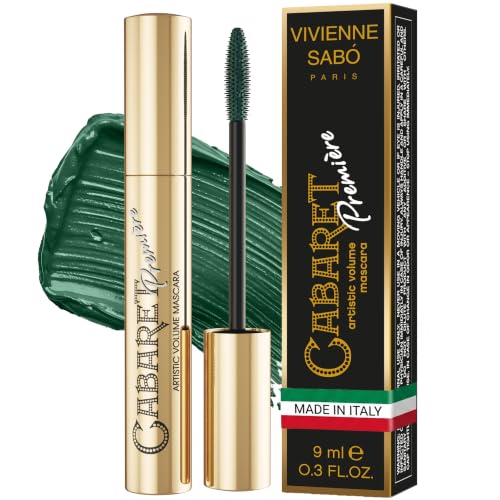
Vivienne Sabó Cabaret Premiere Green Mascara (06 Green)
Lightweight defining mascara with a visible green shift for dark lashes
Okay, so if you’ve been missing that “green actually shows up” moment on dark lashes… this is where things start to make sense.
Cabaret Premiere in Green leans visible-but-wearable. It doesn’t go neon, but it also doesn’t disappear into black like olive or muted greens usually do. Instead, it adds a soft but noticeable green tint — especially after a second coat.
The formula keeps things clean and controlled. You get separation, light volume, and a natural-looking finish without heaviness or clumping.
👉 If olive shades always disappear on you, this shows better
- ✅ Visible green tone (better than muted/olive shades)
- ✅ Clump-free, lightweight formula for clean definition
- ✅ Easy application and removal
- ❌ Anyone wanting bold, high-drama green payoff
- ❌ Very long wear in extreme humidity (mixed smudge reports)
- ❌ People who prefer thick, volume-heavy mascaras
💡 Lash Lab Notes — Dr. Rabeya — Dentist, beauty enthusiast (Heat/Humidity/Shift Test):
“Wore this through a full clinic day. Lashes stayed defined and comfortable, and the green tint was visible in brighter light without looking overdone.”
- ⭐ Editor’s Note: This is a balanced green pick — visible enough to notice, but still easy to wear daily.
If you want more user feedback, you can check the Amazon reviews here.
Care Tip: Apply a second coat while slightly tacky to boost the green payoff without clumping.
Green works best when it creates contrast — not when it blends in.
That guide helps you compare which shades show up fastest on dark lashes.
Green sits right between bold and wearable — which is why it works so well here.
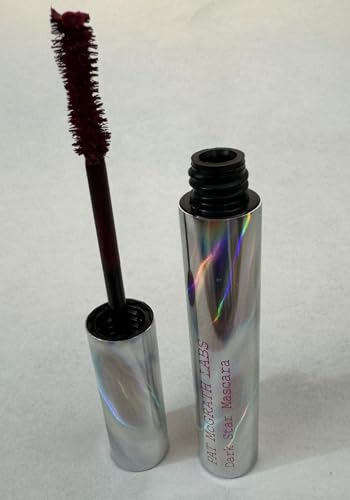
Dark Star Color Blitz Mascara – Renegade Red (Pat McGrath Labs)
Deep crimson statement mascara with bold, visible payoff
This is not a “safe” colored mascara — and that’s exactly the point.
Renegade Red is built to show up. On dark lashes, it doesn’t fade into black as softer shades do. Instead, it creates a deep crimson tone that clearly reads as color, especially in natural light.
It’s bold, slightly edgy, and very intentional. This is the kind of mascara you wear when you want your lashes to stand out — not blend in.
👉 If you want impact, this delivers
- ✅ True deep red tone that stays visible on dark lashes
- ✅ Lengthening effect keeps lashes defined, not heavy
- ✅ Strong wear with minimal smudging
- ❌ Every day, minimal or “no-makeup” looks
- ❌ Budget-conscious buyers (premium pricing)
- ❌ One-coat routines (needs layering)
💡 Lash Lab Notes — Engr. Nusrat — Engineer, beauty enthusiast (Heat/Humidity/Shift Test):
“Wore this through a long day in warm conditions. The color stayed visible and didn’t smudge, but it definitely felt like a bold look.”
- ⭐ Editor’s Note: This is a statement mascara. It’s more about mood and impact than convenience.
If you’d like to see recent feedback, you can view the Amazon reviews here.
Care Tip: Build in thin layers to keep definition — too much at once can feel heavy.
If you’ve been frustrated by colors disappearing on dark lashes, this solves that problem fast.
It’s worth exploring if you want more bold vs subtle options side by side.
Sometimes the fix isn’t technique — it’s choosing a color that refuses to disappear.
Best Colored Mascara Shades That Show Up on Dark Lashes
Not all colors behave the same on dark lashes. Some create instant contrast, while others only show under the right lighting or layering.
🎨 Quick Shade Chooser (Dark Lashes)
- Want visible color fast → Blue / Green / Red
- Want a soft everyday shift → Burgundy / Plum / Brown
Here’s the quick way to decide:
- Want visible color fast → go high-contrast
- Want a subtle everyday shift → choose deeper, warmer tones
Blue Mascara
Cobalt and bright royal blues show up best because they sit far from black on the spectrum. NYX Blue is a good example here because it gives dark lashes a faster royal-blue contrast instead of disappearing into black.
Navy, on the other hand, often reads like a slightly cooler black unless the formula is very opaque.
Decision tip: If you want an obvious color without primer, skip navy and go brighter.
Purple & Plum Mascara
True violet needs strong opacity, or it turns black quickly. L’Oréal Violet works better as a soft depth pick than a bright purple pick on dark lashes.
Plum and burgundy-leaning purples are more reliable because their red undertones stay visible even on dark lashes.
Decision tip: If purple always disappears on you, choose plum first.
If you want to compare true Violet vs plum vs deeper wine tones (and see which ones actually stay visible on dark lashes), this will help:
Green Mascara
Emerald and jewel greens create enough contrast to stay visible. Vivienne Green is a good example of that wearable green zone — visible enough on dark lashes, but not neon. Olive or muted greens usually blend into the lash and can look dull or brownish.
Decision tip: Jewel green > earthy green for dark lashes.
💡 Lighting note: Color looks stronger in natural light because more light reflects off the pigment. Indoors, shades appear deeper and softer — which is completely normal on dark lashes.
Burgundy, Red & Wine Mascara
These shades can go two ways on dark lashes. Sky High Burgundy gives more of a soft everyday shift, while Pat McGrath Red gives a stronger statement color.
So if you want wearable color, burgundy makes sense. If you want a visible impact, red usually shows faster.
Decision tip: Choose burgundy or wine for a soft color, and red when you want the shade to show faster.
Brown, Bronze & Copper Mascara
These are enhancement shades, not statement colors. On very dark lashes, they read as warmth rather than clear color.
Decision tip: Choose these for softness and polish, not strong payoff.
Best Colored Mascara Formulas for Dark Lashes
When it comes to dark lashes, formula matters just as much as shade.
Tubing formulas are usually the safest choice.
They wrap each lash in a thin, even coating, helping color sit on top instead of blending in. They also layer cleanly — which matters when one coat isn’t enough.
Decision tip: If you want reliable color after 2–3 coats, tubing is the safer bet.
Creamy, wax-based formulas can still work — but they’re less predictable.
If they’re highly pigmented, like NYX Blue or Vivienne Green, they can still show up clearly. But if they’re even slightly sheer, layering can turn muddy instead of brighter.
Decision tip: Only trust creamy formulas when opacity is clearly strong.
Simple way to think about it:
- Tubing → cleaner color, easier layering
- Creamy → more volume, but needs higher pigment
💡 Quick takeaway: For dark lashes, the goal is simple — color that still shows after the second and third coat.
If you want to understand why tubing formulas keep color cleaner and more visible (especially after multiple coats), this explains it clearly:
How to Apply Colored Mascara on Dark Lashes So It Pops
You don’t need complicated techniques — but a few small tweaks make a big difference.
Start with curl.
Lifting your lashes opens them up to light, which instantly improves color visibility.
Primer helps more than most people expect.
A white primer creates a light base, so color reflects instead of disappearing.
A black base keeps things softer but still enhances contrast.
- Best for → blue, green, true Violet
- Optional for → burgundy, plum
Layer while it’s still slightly tacky.
If you let each coat dry fully, the color stops building. Slightly wet layers bond better and keep pigment visible.
Focus on the roots.
That’s where color disappears first. A gentle wiggle at the base deposits pigment where lashes are darkest.
The goal isn’t speed — it’s controlled buildup that keeps color sitting on top of the lash.
If you want to see how to style colored mascara (subtle vs bold looks) without losing that visible payoff on dark lashes, this will help:
Common Mistakes That Make Colored Mascara Invisible
Most problems come down to a few simple mistakes:
- Choosing pastel or low-contrast shades
- Expecting one coat to be enough
- Letting layers dry completely before adding more
- Applying too much product at once (clumping instead of clarity)
Fix these, and color payoff becomes much more predictable.
If you’re using high-pigment shades, removal matters too — this shows how to avoid staining without damaging your lashes:
Waterproof vs Washable Colored Mascara on Dark Lashes
This isn’t about “better” — it’s about priority.
Waterproof formulas:
- Hold color longer
- Resist smudging better
- Harder to adjust while layering
Washable formulas:
- Easier to build color
- More flexible and forgiving
- May fade faster in heat or humidity
The honest takeaway:
- Maximum hold → waterproof
- Better layering → washable
If long wear matters more than layering flexibility, you can explore:
FAQs About Colored Mascara for Dark Lashes
❓ What color mascara shows up best on dark lashes?
High-contrast shades — cobalt blue, emerald green, true Violet, deep burgundy.
❓ Do you need a primer?
Not always. But it helps a lot for brighter shades.
❓ Why does purple look black?
Because most formulas are semi-sheer. Plum tones usually stay visible better.
❓ Can colored mascara look subtle?
Yes. Burgundy, wine, and navy give a soft shift without looking bold.
❓ Is tubing mascara better?
Often, yes — especially for clean layering and consistent payoff.
Final Thoughts: Choosing the Right Colored Mascara for Dark Lashes
Colored mascara isn’t failing — it’s just reacting to dark lashes differently.
Once you focus on contrast, opacity, and layering-friendly formulas, everything changes.
You don’t need dramatic looks. You just need color that’s designed to be seen — not absorbed.
And once you get that right, colored mascara stops feeling like a gamble… and starts working the way you expected.
Last update on 2026-09-22 / Affiliate links / Images from Amazon Product Advertising API