⚡ TL;DR: eye primer for mature eyes
The right formula is not automatically the one marked “anti-aging.” We get a better match by watching what our lids do now: smoothing and hydration for dry texture, tint for discoloration, and firmer crease control when oil or hooded-lid transfer is the bigger problem.
Top Picks
- 🏆 Best Overall — Urban Decay Primer Potion — balanced smoothing with grip
- 🥈 1st Runner-up — Milk Hydro Grip Eye Primer — hydrating base with soft focus
- 🥉 2nd Runner-up — M·A·C Prep + Prime Eye Base — light texture with crease control
Long-wear sounds comforting. Then a dry, textured lid can look even more obvious once primer sets.
A smarter way to choose an eye primer for mature eyes is to start with the lid itself. Is it dry, oily, hooded, discolored, or mixed? From there, we can pick the formula job that helps without piling on an extra layer.
✨ Inside This Eye Makeup Guide
🌸 Psst…
Some links in this post are affiliate links. If you shop through them, we may earn a small commission at no extra cost to you — like a little coffee while we keep testing beauty favorites. ☕💄
Quick Comparison: Eye Primer For Mature Eyes
So what matters more than the longest wear claim? The finish, the tint, and the type of control each formula is built to provide.
These five picks solve different lid problems. That makes their texture direction and wear emphasis more useful than one simple “longest-lasting” ranking.
| Product | Best For | Finish/Texture Direction | Tint/Coverage | Wear Emphasis |
|---|---|---|---|---|
| Urban Decay Primer Potion | Balanced mature-lid needs | Soft-focus sheer cream | Nude/transparent base | Long-wear grip |
| Milk Hydro Grip Eye Primer | Dry or crepey-looking lids | Hydrating radiant gel | Clear | Up to 8-hour brand grip claim |
| LAURA GELLER NEW YORK Eye Spackle | Discoloration and visible veins | Smoothing matte cream | Tinted Universal coverage | Waterproof crease/smudge control |
| M·A·C Prep + Prime Eye Base | Oily or hooded mature lids | Lightweight matte liquid | No tint focus | Up to 24-hour brand wear claim |
| Milani Eye Shadow Primer | Everyday value | Lightweight matte/semi-matte gel | Lightweight base | Up to 8-hour brand wear claim |
What Mature Eyelids Need From a Primer
What does eye primer really need to do here? At its simplest, it gives eye color a base so makeup can grip and wear more evenly.
Mature lids add more variables. Fine lines, folds, laxity, visible veins, dryness, breakthrough oil, and hooded skin contact can all change what feels comfortable or stays put. So we match the primer to our lids instead of assuming every mature eye needs the same finish.
That difference matters because “mature” describes age, not one skin type. Research on eyelid aging supports changes in elastic fibers, laxity, and surface texture. It does not support a blanket claim that upper-eyelid skin always becomes thinner with age.
Some lids feel drier and show more texture. Others still get oily through the crease. Plenty do both in different places.
Want the broader category basics first? That belongs in a dedicated primer guide.
Here, the question is more specific: which primer behavior supports mature-lid makeup best? Before comparing finishes, it helps to separate a true eye base from nearby products that may sound similar.
Dry or crepey-looking lids usually need a different starting point. Hydration, smoothing, or soft focus may be more useful than the strongest matte hold.
Broader facial-skin research associates lower skin hydration with more pronounced wrinkling. For makeup, that supports a practical point: if a lid already looks dry, a needlessly dry-feeling layer can make the surface less forgiving.
Does that mean a hydrating primer treats wrinkles? No. It means texture and comfort are valid buying criteria.
Discoloration creates another decision. When visible veins or redness are the main distraction, tint can do more useful work than another sheer gripping layer.
A tinted eye base can reduce contrast before shadow goes on. That may mean less pigment is needed on top. The trade-off is simple: the tint still has to suit the skin tone and the look we want.
And oily or hooded mature lids? Here, crease control can matter more than extra hydration.
Lid-to-lid contact plus breakthrough oil can move shadow into the fold even when nearby skin feels dry. A lightweight long-wear base can therefore make more sense than a richer-feeling one when transfer is the main frustration.
Mixed lids are common too. The mobile lid may look dry while oil gathers in the crease or hood.
In that case, technique matters almost as much as formula. We use less product, keep the layer even, and let it set instead of trying to fix both problems with a thicker coat.
One boundary is worth saying plainly. “Anti-aging” is cosmetic positioning, not a medical treatment claim.
A primer may make the surface look smoother or help makeup sit more evenly. It does not reverse eyelid aging. Our top pick leads because it balances smoothing with grip, not because of the wording on the label.
👉 If that balanced brief sounds closest to our lids, the Urban Decay Primer Potion review below is the place to start.
Best Eye Primer for Mature Eyes
So are these five versions of the same “best”? Not really.
Each pick owns a different mature-lid need: balanced smoothing and grip, hydration, tint, oil/hood control, or budget-friendly everyday prep. The easiest choice is the one tied to the problem we actually see.
Urban Decay Eyeshadow Primer Potion Anti-Aging
Best Overall
Need one option that sits between dry and oily extremes? This is the most balanced pick when smoothing plus grip both matter.
The formula is a sheer cream base with soft-focus positioning. Its listing describes optical blurring pigments intended to minimize the look of redness and smooth texture.
Urban Decay also markets the Anti-Aging version around visible smoothness and long-wear color. That makes it more directly aligned with mature-lid search intent than primers that talk only about hold.
But the useful part is the combination, not the “anti-aging” label. The nude/transparent base can support color and wear while aiming for a more even-looking surface.
Buyer feedback is not perfectly uniform. Some report strong all-day hold on hooded eyes, while others mention creasing or an overly dry feel. That split is why a thin layer matters so much on textured lids.
Bottom line: Best balanced fit when mature lids need visible smoothing and serious grip together; very dry lids may feel better with a more hydration-led base.

- ✅ Soft-focus sheer cream helps address visible texture without adding heavy coverage
- ✅ Long-wear positioning is backed by positive feedback from some hooded-eye users
- ✅ Nude/transparent base leaves the focus on shadow instead of extra color
- ❌ Very dry lids when quick-setting primers tend to feel tight or uncomfortable
- ❌ Budget-focused shoppers who do not want premium pricing for a small tube
🧪 Lash Lab Notes — Mahmuda (Homemaker & Beauty Enthusiast)
My rule here is a small, even layer rather than trying to fill every line. I would let it set before shadow, and if the lid looks drier, I would use less next time instead of adding another coat.
- 💡 Editor’s Note: We care more about the evidence balance than the marketing phrase here. The mature-eye angle is clear, but the practical reason to pick it is still soft focus plus meaningful grip. When dryness is the bigger issue, Milk is the more useful comparison than assuming “anti-aging” means extra moisture.
Want the buyer side of the story? See what current buyers say about Urban Decay Primer Potion.
Best for mature lids that need texture support and wear control in the same routine.
Care tip: Start with a small amount, blend it evenly across the eyelid, and follow the current package directions.
When “mature” immediately makes us think “dry,” the next pick shows why hydration deserves a separate slot.
Milk Makeup Hydro Grip Eye Primer
Best for Dry or Crepey-Looking Lids
What if comfort matters more than maximum oil control? This clear gel is the hydration-first pick when hydration without a heavy base leads the list.
Milk positions it around hydration, grip, and a soft-focus effect. Highlighted ingredients include blue agave extract, hyaluronic acid, niacinamide, and aloe water.
The radiant gel format also separates it from the more strongly matte long-wear options later in this roundup. That gives it a clearer role for lids that already look or feel dry.
The brand reports a small 31-person consumer perception study. It covers a smooth, even base, a soft-focus appearance around fine lines, and grip after eight hours.
Those are manufacturer-reported perception results, not independent testing. Still, they match the product’s intended use.
Buyer feedback is more mixed on crease prevention and texture. Some describe smooth application and longer wear; others report early creasing or a sticky feel.
Bottom line: Best for dry-looking texture when comfort and soft focus come first; oil-dominant creases may still need firmer control.

- ✅ Hydrating gel texture comes with clear soft-focus positioning
- ✅ Clear base adds grip without putting another color layer on the lid
- ✅ Specific dry-down guidance makes the application routine easier to repeat
- ❌ Very oily or transfer-prone creases when grip tends to break down early
- ❌ Anyone who strongly dislikes a tacky or sticky sensation while primer sets
🧪 Lash Lab Notes — Dr. Sazia (Medicine Specialist & Beauty Enthusiast)
My rule is to let eye cream dry completely first, then smooth on a thin layer of primer. I see this hydration-led formula as a better fit when dryness and visible texture are the bigger concern, not when oil is driving most of the creasing.
- 💡 Editor’s Note: The mixed feedback is useful because mature lids can be mixed too. Familiar hydrating ingredients are not the only reason to choose this. The stronger case is the light gel texture, soft-focus direction, and clear application rule; when the hood gets oily, we keep the layer especially thin.
Curious what buyers noticed in real use? Check what current buyers say about Milk Hydro Grip Eye Primer.
Best for dry or textured mature lids that still need a light makeup-gripping base.
Care tip: Blend it onto clean lids, then give it about one minute to dry before makeup.
Dryness is not the only reason mature lids can look uneven. Visible veins and discoloration need a different kind of help.
LAURA GELLER NEW YORK Waterproof Eye Spackle Eye Shadow Primer
Best for Discoloration and Visible Veins
Can color correction matter more than grip alone? Yes, especially when tint can do real work before eyeshadow even starts.
The Universal version is a cream primer with a matte direction and coverage built into the base. Its usage guidance specifically includes correcting discoloration on clean, dry lids.
That separates it from clear primers that mostly focus on grip. If visible veins, redness, or uneven tone make shadow look patchy, a more even canvas can be more useful than chasing the longest wear claim.
Buyer feedback often points to good coverage without a cakey look and longer wear through the day. The color itself gets more mixed reactions.
That trade-off matters. A tinted primer only earns the extra coverage if the shade looks natural enough on our skin.
Brand-hosted verified reviews also include mature users who describe using it as a base or even wearing it alone. That is a useful pattern, not controlled performance evidence.
Bottom line: Best for tone evening when veins or discoloration matter more than dryness; the Universal tint still has to suit the complexion.
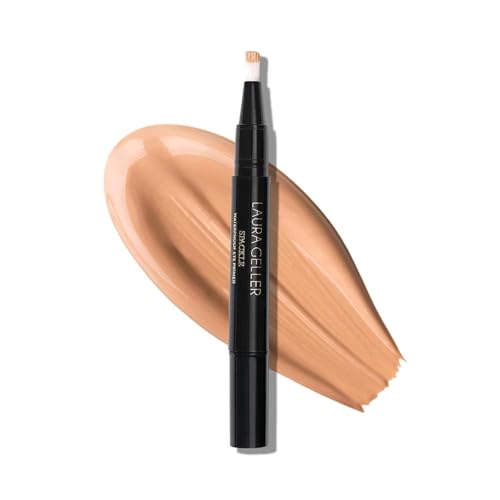
- ✅ Tinted cream base starts correcting discoloration before shadow goes on
- ✅ Many coverage comments describe an even result without a heavy cakey look
- ✅ Waterproof and crease/smudge positioning gives the tint practical wear support
- ❌ Anyone who wants a fully clear base without any visible shift in tone
- ❌ Complexions where the Universal tint does not blend naturally enough
🧪 Lash Lab Notes — Mahmuda (Homemaker & Beauty Enthusiast)
I would treat the tint as a correction layer, not something to build thickly over every fold. To me, a light coat makes more sense for visible veins or uneven tone without turning coverage into another texture layer.
- 💡 Editor’s Note: This pick asks a more useful question than wear time alone: what problem are we asking primer to solve? The tint is functional when discoloration would otherwise make us overwork the shadow. We keep it light and judge the shade on the actual lid instead of assuming Universal looks universal on everyone.
Want to know how the tint lands with buyers? Read what current buyers say about LAURA GELLER NEW YORK Eye Spackle.
Best for mature lids where evening out visible tone matters as much as makeup grip.
Care tip: Smooth a thin layer over clean, dry lids before shadow and keep the coverage light rather than building it up.
If tint is not the issue and shadow keeps moving into a hood or oily crease, the next formula shifts the priority back to hold.
M·A·C Prep + Prime 24-Hour Extend Eye Base
Best for Oily or Hooded Mature Lids
When does stronger hold make the most sense? When lightweight crease control matters more than a dewy or hydration-first feel.
M·A·C positions this liquid eye base as lightweight, matte, crease-resistant, and fade-resistant. It also carries an up-to-24-hour wear claim.
The brand includes it within mature-eye primer guidance, so the fit here goes beyond generic long-wear marketing. The practical appeal is a thin film that can manage transfer without asking us to build a thick concealing layer over textured skin.
Matched product data also includes positive reviewer patterns around cream and powder shadow, humidity resistance, smooth application, and color intensity. A smaller group describes the texture as dense or dry.
That split matters for mature lids. A formula can be excellent for an oily hood and still feel like too much control on a dry mobile lid.
Bottom line: Best for oil and transfer when an oily or hooded crease is the main failure point; drier lids may not need such strong matte long-wear emphasis.

- ✅ Lightweight long-wear design suits lids where skin contact can lead to transfer
- ✅ Matte finish focuses on oily-crease control without introducing extra tint
- ✅ Crease- and fade-resistant positioning fits more demanding wear conditions
- ❌ Very dry lids when cushion and hydration matter more than maximum hold
- ❌ Anyone who finds dense, quick-setting bases hard to spread in a thin film
🧪 Lash Lab Notes — Dr. Rabeya (Dentist & Beauty Enthusiast)
My rule is a very thin film over the mobile lid and into the crease, then enough time to set. I see the best fit when oil or transfer is the priority and a heavier base would only add more surface texture.
- 💡 Editor’s Note: Mature lids can still produce plenty of oil even as texture changes with age. We reach for this when shadow repeatedly collects in the crease or transfers under a hood, not just because the 24-hour number sounds impressive. If tightness or flaking is the bigger complaint, Milk is the more logical comparison.
Wondering what current buyers report? See what current buyers say about M·A·C Prep + Prime Eye Base.
Best for oily or hooded mature lids that need a thin base focused on crease control.
Care tip: Use it sparingly, spread an even layer, and let the base dry before adding shadow.
And the budget end? The final pick shows that a useful mature-eye primer does not have to begin in the premium tier.
Milani Eye Shadow Primer
Best Budget
Can a lower-priced primer still respect mature-lid texture? Yes. For daily prep, budget does not mean bare-bones when the formula still considers both texture and wear.
Milani’s lightweight gel primer has a matte-to-semi-matte direction. It is positioned to enhance color and wear without becoming a heavy base.
Current brand research also emphasizes fine-line smoothing and a never-drying feel. That is unusually relevant here because a budget pick still has to earn its place on mature-lid suitability, not price alone.
Buyer feedback is especially positive around value, smooth non-greasy application, color vibrancy, and longevity. Some shoppers compare it favorably with more expensive primers.
The main caution is consistency. Some report separation in the tube, especially after temperature changes, and feedback on crease resistance is not identical across reviews.
There is also an isolated report of burning. Any irritation is a reason to stop using the product rather than trying to push through it.
Bottom line: Best everyday value for mature lids that want light smoothing and dependable prep without premium positioning; very strong oil control may justify moving up to M·A·C.

- ✅ Lightweight gel gives us an accessible format with strong value-focused feedback
- ✅ Fine-line smoothing and non-drying positioning line up with mature-lid concerns
- ✅ Simple everyday prep makes it an easy entry point for shadow and liner
- ❌ Very oily hoods that need the strongest emphasis on transfer control
- ❌ Anyone who notices stinging, burning, or any other irritation response
🧪 Lash Lab Notes — Fauzia (University Student & Beauty Enthusiast)
I would use a small dab per eye and spread it evenly instead of adding more for coverage. If the tube separates after temperature changes, the supplied reviewer guidance says to shake it before application.
- 💡 Editor’s Note: We like that this is not a “cheap, therefore good” choice. Its lightweight texture plus smoothing/non-drying positioning fit the same decision rule as the premium picks. The shorter wear claim is a reasonable trade when normal daily makeup matters more than maximum crease defense.
Want to compare that with buyer feedback? Find out what current buyers say about Milani Eye Shadow Primer.
Best for everyday mature-eye prep when low weight and good value matter most.
Care tip: Start with a small dab per eye; if the formula separates, shake the tube before using it.
Once the formula is right, application decides whether primer disappears into the routine or turns into another visible layer.
How to Apply Eye Primer on Mature Lids Without Emphasizing Texture
So how do we keep primer from making texture louder? The key is control.
The goal is a thin layer, full dry-down, not enough primer to make the eyelid look perfectly blank before shadow begins.
Step 1: Let skin care dry fully.
If we use eye cream or moisturizer, we give it time to settle before primer.
Milk specifically tells users to let skin care dry down before applying its eye primer. The same principle is useful beyond one formula.
A slippery skin-care layer underneath can make primer harder to spread evenly. It may also weaken the clean set we are trying to create.
Do we need to skip hydration because primer is next? No. We simply avoid stacking two wet layers.
Step 2: Use a very small amount.
We start with less than we think we need and add only when an area is clearly missed.
Why stay so light? A heavy coat can collect around folds, make a quick-setting formula feel drier, or leave a thicker surface for shadow to catch on.
If discoloration is the main concern, a tinted product such as LAURA GELLER NEW YORK Eye Spackle may do more with a thin corrective layer than a clear primer built up for opacity.
Step 3: Smooth or pat without tugging.
We distribute primer across the mobile lid and wherever creasing actually happens, using light pressure.
The goal is an even film. We are not stretching the skin flat while the base dries.
What if one part of the lid is dry and another oily? We keep the application even first and let the product choice carry most of the finish strategy.
We also keep the primer’s job narrow. A clear base does not have to erase every vein or shadow of color to be working.
A tinted base does not need to become an opaque concealer layer either. Asking one thin coat to deliver full coverage, smoothing, and maximum grip makes overapplication more likely.
So we use tint when tone correction is the priority. For grip or soft focus, we use the lightest even coat that gets the job done.
Step 4: Let the primer set before shadow.
We follow the product’s own dry-down directions rather than placing color immediately.
Milk’s matched data calls for about a minute; other formulas can differ. Once the base has set, we move to shadow with the lightest touch that gives the color payoff we want.
Where does primer technique stop? Right where full shadow technique begins.
If folds, hooding, or softer lid contours change color placement, a dedicated older-eye shadow guide can take over. That topic goes deeper than a primer article should.
Primer is only the base layer. Once it sets, shadow placement becomes its own skill, and the older-women eyeshadow guide covers mature-eye placement and blending without turning this routine into a full tutorial.
Eye-area hygiene needs one short rule set too. According to the FDA eye-cosmetic safety guidance, we keep hands and applicators clean, stop using a cosmetic if it irritates the eye area, and avoid eye cosmetics during an eye infection or when the surrounding skin is inflamed.
Primer can improve makeup wear. Irritation is not a normal “adjustment period” we should work through.
👉 For a formula with especially clear dry-down guidance, see the Milk Hydro Grip Eye Primer review above.
Common Questions About Eye Primer for Mature Eyes
Why do the same questions keep coming up? Because texture, oil, and skin care often overlap.
The answers stay short. Usually, the useful choice is matching the base to the lid rather than adding more layers.
❓ Is eye primer or concealer better for mature eyes?
They are built for different jobs. Concealer can even out discoloration, while a dedicated eye primer is formulated and marketed around grip, crease control, fade resistance, or a specific eye-base finish.
If uneven tone is the main concern, a tinted primer can combine some correction with primer wear benefits. If we only need color correction, concealer may already be enough.
The important part is not stacking both automatically just because the lid is mature.
❓ Can eye primer make crepey eyelids look worse?
Yes, it can for some people. That is more likely when the formula feels dry, the layer is too thick, or product gathers around folds.
Current user patterns include mature makeup wearers who say heavy or dry-feeling primers make texture more visible. Brand directions also generally support small amounts and proper set time.
Does that make primer bad for crepey lids? No. It means a hydrating or soft-focus formula with a thin layer may be a better starting point than the strongest matte hold available.
❓ What if my mature lids are dry but my crease is oily?
That is a mixed condition, not a contradiction. We can choose a lightweight primer that does not feel heavy on the mobile lid, then keep application especially thin through the crease and hood where oil and skin contact create movement.
Milk Hydro Grip is the hydration-led option in this roundup. M·A·C Prep + Prime is the stronger oil/transfer choice.
Which direction wins? The dominant failure should decide it: dry-looking texture or creasing.
When oil keeps defeating otherwise comfortable primers, a mature-lid roundup can only take the decision so far. A dedicated oily-lid guide compares formulas where crease and breakthrough-oil control are the primary job, not one factor among several.
❓ Should I use eye cream before eye primer?
Yes, we can, especially when the eye area benefits from moisture. We just let the skin-care layer dry fully before primer.
That helps keep the base from mixing with a still-wet cream and gives us a better chance of spreading a very thin, even coat.
What if the primer pills, slides, or will not set? The first things to test are less skin care, more dry-down time, or less primer—not thicker layers of both.
❓ Does anti-aging eye primer treat wrinkles?
No. “Anti-aging” on a cosmetic primer is appearance and positioning language, not proof that the product medically treats or reverses eyelid aging.
A formula may make the surface look smoother, blur the appearance of fine lines, improve grip, or help shadow sit more evenly. Those are makeup effects.
If a brand cites a study, we keep the claim attributed to the brand and judge the primer by the practical result we need.
Across all five questions, the simplest test stays the same. We notice what our lids are doing before deciding what the primer should do.
Dryness, discoloration, oil, hooded-lid transfer, and budget are different problems. One universal “mature” label should not be expected to solve all of them.
Final Thoughts on Eye Primer for Mature Eyes
What matters at the end? The primer should match our lids today, not simply carry the most age-focused wording.
We choose by lid behavior: smoothing or hydration for dry-looking texture, tint for discoloration, stronger crease control for oily or hooded wear, and a lightweight value formula when everyday prep is the main goal.
Primer is only one part of making mature-eye makeup feel easier and look balanced. When we want the wider routine beyond the base layer, the mature-eye makeup guide is the natural next step.
Last update on 2026-09-07 / Affiliate links / Images from Amazon Product Advertising API