⚡ TL;DR: best eye primer for oily lids
Oily lids call for more than a matte label or a vague long-wear promise.
The strongest picks combine explicit oil-control evidence with credible crease, smudge, or transfer resistance.
And even then, we still need a thin layer that has time to set before shadow or liner goes on.
Top Picks
- 🏆 Best Overall — Too Faced Shadow Insurance — strongest direct oil-control case
- 🥈 1st Runner-up — Elizabeth Mott Thank Me Later — directly addresses oiliness and creasing
- 🥉 2nd Runner-up — Milani Stay Put Primer — lower-cost crease-control option
Can a famous primer still disappoint on oily lids?
Yes.
Recent user discussions include people who still saw transfer after trying prestige primers and setting powder.
That is a useful reminder that formula fit and application matter as much as reputation.
So what are we solving with the best eye primer for oily lids?
It is not about the tube with the loudest wear claim.
We want formulas that make the strongest case for resisting breakthrough oil, creasing, smudging, and transfer.
Oil control is not the same as long wear, and waterproofing is not automatically the same thing as oil resistance.
We keep this roundup narrow on purpose.
It ranks dedicated eye primers for oily lids.
It does not turn into a full oily-eye-makeup routine or a guide for mature eyes.
✨ Inside This Eye Makeup Guide
🌸 Psst…
Some links in this post are affiliate links. If you shop through them, we may earn a small commission at no extra cost to you — like a little coffee while we keep testing beauty favorites. ☕💄
Quick Comparison: Best Eye Primer For Oily Lids
Want to narrow the field quickly?
Match the primer to the failure mode that bothers us most.
We keep direct oil-control evidence separate from matte finish, tint, and manufacturer wear-time claims so those signals do not blur together.
Best Eye Primers for Oily Lids
Can one formula win every oily-lid scenario?
No.
These nine picks earn their places for different reasons: direct oil-control evidence, transfer resistance, set behavior, tint, price, or format.
| Product | Best For | Oil/Transfer Evidence | Finish or Base Style | Set Note / Main Tradeoff |
|---|---|---|---|---|
| Too Faced Shadow Insurance | Best Overall | Explicit breakthrough-oil claim plus crease/fade resistance | Translucent natural-finish gel | Let dry; mixed texture feedback |
| Elizabeth Mott Thank Me Later | Oily-lid-specific positioning | Explicitly positioned for oiliness and creasing | Matte, transparent-dry-down cream | Thin layer; some users report longer set needs |
| Urban Decay Primer Potion | Familiar prestige pick | Oily-lid guidance plus crease resistance | Nude/invisible cream base | Let dry; not universal for transfer |
| NARS Smudge Proof Base | Matte grip | Smudge/crease claims plus polymer and powder grip | Quick matte cream-powder base | Firmer set; comfort varies |
| M·A·C Prep + Prime Eye Base | Heat and humidity | Crease/fade resistance plus humidity user patterns | Firm-setting cream base | Allow about one minute to set |
| Milani Stay Put Primer | Budget | Crease/smudge positioning; non-greasy user patterns | Nude cream base | Up-to-8-hour wear is a brand claim |
| NYX Ultimate Shadow & Liner | Deep tinted base | No-smudge/no-crease positioning | Deep cream tint | Tint solves visibility, not oil control |
| Juvia's Place I Prep, I Prime | High-coverage tinted base | Brand oil-regulation and anti-crease claims | Milky White cream-to-liquid base | Shake well; consistency can separate |
| Sigma Eyeshadow Base Primer | Stick format | Crease/fade-resistant positioning | Matte twist-up stick | Drier feel for some users |
Too Faced Shadow Insurance Eye Primer
Best Overall
A translucent gel base with breakthrough-oil control at the center of its oily-lid case.
When the main frustration is shadow migrating once the lid turns slick, this is the most complete all-around match in our comparison.
Too Faced separately positions the formula to fight breakthrough oil, make shadow waterproof, and resist creasing and fading, so the recommendation does not depend on one vague “long wear” claim.
That distinction matters.
Water resistance helps with one type of stress, while oil breakthrough is a different pressure on the makeup film.
The formula also dries down before color is layered over it, which fits the thin-and-set application pattern that appears repeatedly across the strongest options in this roundup.
Bottom line: Best all-around oily-lid match if direct oil-control evidence matters as much as crease and fade resistance; the tradeoff is mixed user feedback on texture and applicator feel.

- ✅ Brand messaging specifically against breakthrough oil
- ✅ Waterproof and anti-crease/fade claims
- ✅ Translucent base without a visible tint
- ✅ Recurring user praise for longevity and humid-weather wear
- ❌ Those who dislikes a doe-foot applicator with mixed control feedback
- ❌ Lids that may tend to feel uncomfortable with thicker or drier-setting textures
- ❌ Those expecting a manufacturer “24-hour” claim to guarantee identical wear

🧪 Lash Lab Notes — Engr. Nusrat (Engineer & Beauty Enthusiast)
I pay attention to the separate water-resistance and oil-control claims because they describe different failure pressures. I would keep the layer thin and let it set so it has a better chance to form an even film before shadow goes on; that is a mechanism-informed interpretation, not a hands-on test.
- 💡 Editor’s Note: We favor this pick most when the problem is specifically oily-lid breakthrough rather than simply wanting richer shadow color. The useful part is the breadth of the claim set, not the “24-hour” label by itself. Mixed texture feedback means technique and personal comfort still matter.
Want the day-to-day buyer picture? See reviews for Too Faced Shadow Insurance.
This is a strong fit for oily lids when a translucent base and direct oil-control positioning matter most.
That combination of direct oil-control language and broad wear support makes it our starting point, but some buyers may prefer a primer marketed even more explicitly around oily lids.
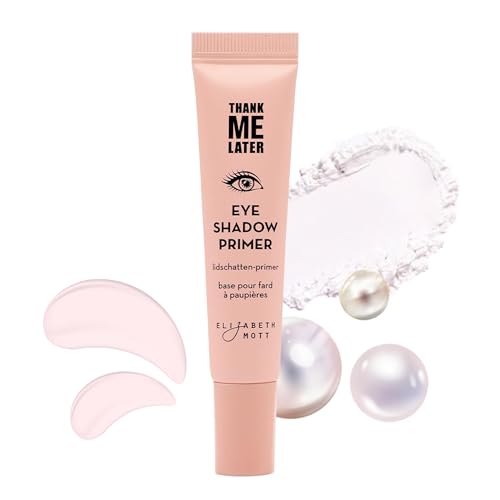
Elizabeth Mott ThankMeLater Eye Primer
Best for Oily-Lid-Specific Positioning
A matte cream for anyone who wants a formula that explicitly targets oiliness and creasing.
This may be the most straightforward “yes, oily lids are the problem” option in the group.
The product is positioned for oily skin types, a matte finish, and crease resistance, and user patterns repeatedly mention oily and hooded lids rather than only generic color payoff.
So what is the practical catch? patience.
Some users report that wetter or heavily waterproof products layered on top can lift the base if it has not fully dried, so adding more primer is not the smart response.
A thin, patted layer followed by a real set interval is the better way to judge it.
Bottom line: Best for direct oily-lid positioning if you want a matte, transparent-dry-down base and are willing to give it time to set.
- ✅ Brand messaging directly addresses oiliness and creasing
- ✅ Matte cream with transparent dry-down
- ✅ Recurring user praise for oily and hooded lids
- ✅ Value feedback compares favorably with pricier primers
- ❌ Routines too rushed that cannot spare time for the layer to fully set
- ❌ Products that are wet or creamy products applied immediately over the primer
- ❌ Those who wants a tinted base to even visible lid discoloration
🧪 Lash Lab Notes — Fauzia (University Student & Beauty Enthusiast)
I see this as a practical pick when we want an uncomplicated oily-lid formula without building a complicated routine. I would keep the layer thin and give it time to set instead of adding more just because the first coat feels light.
- 💡 Editor’s Note: The strongest reason to choose this over a generic long-wear primer is its topic fit. We would assess it on whether that matte, set-down feel works with the products you layer over it, not on whether it feels thick enough at first application. More product can easily become part of the problem.
Want a broader mix of buyer experiences? Check reviews for Elizabeth Mott Thank Me Later.
Best for oily or partially hooded lids when a transparent matte base sounds easier than a tinted one.
If brand familiarity matters more than oily-lid-specific positioning, the next pick is the classic benchmark most people already know.
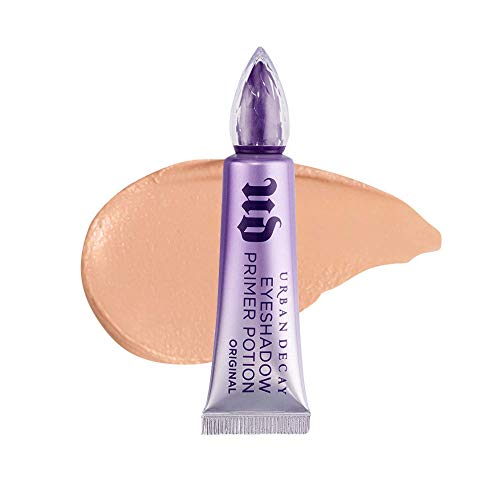
Urban Decay Eyeshadow Primer Potion
Best Familiar Prestige Pick
A classic cream base backed by current oily- and hooded-lid guidance rather than reputation alone.
Why is Primer Potion easy to understand as a buying choice? it is a well-known nude/invisible base, it is positioned as crease resistant, and Urban Decay’s current guidance addresses oily and hooded lids.
That makes it more relevant here than a prestige primer with only a generic color-intensifying claim.
But familiarity does not make transfer impossible.
Recent community discussion includes users who say this classic still moved on their oily lids, while other reviewers praise all-day wear.
That mixed real-world pattern is exactly why we treat it as a strong familiar option rather than a universal fix.
Bottom line: Best familiar prestige benchmark for buyers who want a proven category staple, but individual oily-lid transfer can still vary.
- ✅ Current brand guidance covers oily and hooded lids
- ✅ Crease-resistant positioning with invisible dry-down
- ✅ User praise for color intensity and longevity
- ✅ Users commonly report that a small amount goes a long way
- ❌ Those assuming a famous primer automatically stops every transfer pattern
- ❌ Buyers sensitive to higher prestige pricing for a small tube
- ❌ People who dislike occasional watery or inconsistent texture reports
🧪 Lash Lab Notes — Zayba (A-Level Student & Beauty Enthusiast)
I like how easy a familiar squeeze-tube primer is to understand for a first-time buyer, but familiarity alone does not guarantee zero transfer. I would use a light layer and wait until it no longer feels wet before adding color.
- 💡 Editor’s Note: For us, this is the safe “known quantity” option in the lineup, not the strongest direct oil-control story. That makes it useful for someone who wants a mainstream nude base and familiar application. If the same primer has already failed on your lids, switching formula type may be more useful than simply adding powder on top.
Want to compare the praise with those mixed reports? Read buyer reviews for Urban Decay Primer Potion.
This is a sensible prestige pick for oily lids when an invisible, familiar cream base is the priority.
For a quicker, more matte dry-down with a clearer documented grip mechanism, NARS takes a different approach.
NARS Smudge Proof Eyeshadow Base
Best Matte Grip
A quick matte base with a polymer + mineral-powder grip story that is more specific than “helps shadow last.”
So what is the appeal here?
Structure.
NARS describes a lightweight base that dries matte and uses a combination of polymer and mineral-powder components to help shadow adhere while resisting smudging, creasing, and caking.
That gives us a plausible grip mechanism to discuss without pretending one ingredient can predict oily-lid performance by itself.
That firmer dry-down also brings the tradeoff into focus.
A primer that feels more set can be appealing when movement is the problem, but matte is not a synonym for oil-proof and a drier feel will not suit everyone.
User feedback is strongest when eyeshadow is layered over the base rather than when it is treated as a stand-alone liner primer.
Bottom line: Best for a quick matte grip if you want a firmer-feeling base and a clearly documented adherence mechanism.

- ✅ Anti-smudge and anti-crease positioning is strong
- ✅ Matte dry-down is quick
- ✅ Polymer and powder grip mechanism is documented
- ✅ Positive recurring feedback from oily and hooded-lid users
- ❌ Those who finds firmer matte primers too dry or less comfortable
- ❌ People focused on value per ounce rather than prestige formulation
- ❌ People expecting matte finish alone to guarantee sebum control
🧪 Lash Lab Notes — Dr. Sazia (Medicine Specialist & Beauty Enthusiast)
I think of the quick-setting matte base as a firmer surface that can reduce movement, though it feels different from a creamy primer. If an eye-area product causes irritation, I would stop using it rather than try to push through discomfort.
- 💡 Editor’s Note: The mechanism is the reason this one stands out to us, not a claim that powders automatically beat every oily lid. It is a good choice when a quick, less-creamy set sounds appealing. We would pass on it if comfort and flexibility matter more than that firmer grip.
Wondering how buyers describe the matte set and crease control? See reviews for NARS Smudge Proof Base.
This suits oily lids that respond well to a quick matte base with a firmer grip under shadow.
If heat and humidity are the bigger concern, M·A·C adds a more explicit set-time cue to the decision.
M·A·C Prep + Prime 24-Hour Eye Base
Best Firm Set for Heat and Humidity
A long-wear cream base for anyone who wants a defined set window and a firmer finish in warm, humid conditions.
M·A·C positions this base as crease proof and fade proof, while current guidance says to allow about one minute to set before moving on.
That concrete instruction matters because it gives oily-lid users a repeatable technique instead of relying on guesswork about when the primer is ready.
Community and buyer patterns also mention oily lids, humidity, and water-resistant wear, which strengthens the use-case fit without turning those reports into controlled proof.
The tradeoff is texture: a number of users describe the formula as dense or dry, so a thicker coat is more likely to make the feel worse than improve security.
Bottom line: Best firm-set option for heat and humidity if you value a clear set-time cue and do not mind a denser cream feel.

- ✅ Manufacturer positions it as crease proof and fade proof
- ✅ One-minute set guidance is clear
- ✅ User patterns are positive for oily lids and humidity
- ✅ Firm base may suit buyers who dislike slippery primers
- ❌ Those who prefers a very lightweight or flexible-feeling cream
- ❌ Lids sensitive to texture that dislike dense or dry finishes
- ❌ Buyers treating “24-hour” naming as independently verified wear time
🧪 Lash Lab Notes — Mahmuda (Homemaker & Beauty Enthusiast)
I find a one-minute set window easy to build into an everyday routine, and it matters more than adding a thicker coat. Because a firmer feel may not suit everyone, I would use only the amount needed for an even layer.
- 💡 Editor’s Note: This is the pick we would consider when makeup behaves well indoors but starts moving once heat or humidity enters the picture. The one-minute instruction gives the routine a useful checkpoint. If that firm feel is already something you dislike in primers, the lighter Milani option may be easier to live with.
Want current feedback on texture and humid-weather wear? Check reviews for M·A·C Prep + Prime Eye Base.
This works well for oily lids when a firmer base and a simple one-minute set routine feel manageable.
Keep the coat thin and even and give it about one minute to dry before eye color goes on.
For a lower-cost way to test the same core idea—dedicated crease control without prestige pricing—Milani is the value pick.
Milani Stay Put Eye Shadow Primer
Best Budget
An accessible nude cream that aims for budget without skipping crease control.
Price by itself does not earn a spot in an oily-lid roundup.
Milani makes the cut because the current formula is positioned around crease and smudge resistance, while user patterns repeatedly describe it as non-greasy and effective for extending shadow wear.
That’s enough performance relevance to make the lower price meaningful rather than cosmetic.
The up-to-eight-hour duration is still a brand claim, and user feedback is not perfectly uniform.
Some people report separation in the tube, and isolated irritation reports exist, so the best budget case is practical: a small dab, a properly mixed formula, and realistic expectations about individual wear.
Bottom line: Best budget performance pick for those who wants dedicated crease control before moving up to prestige pricing.

- ✅ Lower-cost way to try dedicated eye primer
- ✅ Positioned for crease and smudge resistance
- ✅ Non-greasy and long-wear feedback recurs
- ✅ Nude base keeps everyday makeup simple
- ❌ Those who wants a deeper or high-coverage tinted base
- ❌ Buyers bothered by possible tube separation or consistency changes
- ❌ Lids with sensitivity if any irritation develops after application
🧪 Lash Lab Notes — Zayba (A-Level Student & Beauty Enthusiast)
I see this as the most accessible way to test whether a dedicated primer improves oily-lid wear before spending prestige-level money. The up-to-eight-hour duration is a brand claim, so I would judge the formula by our own crease and transfer pattern rather than the number on the label.
- 💡 Editor’s Note: The logic works for us: it stays focused on crease and smudge control instead of winning only because it is inexpensive. If the tube separates after temperature changes, mixing it back together before use is a more sensible first step than applying extra product. That keeps the trial fair.
Want to see whether current buyers get the same value? Check Milani Stay Put Primer.
This is a smart starter pick for oily lids when cost matters but a dedicated crease-resistant base is still essential.
If the tube separates, give it a shake, then use only a small dab per eye before letting it set.
Budget is one kind of fit.
Shade visibility is another, and that is where NYX becomes more useful than another pale nude primer.
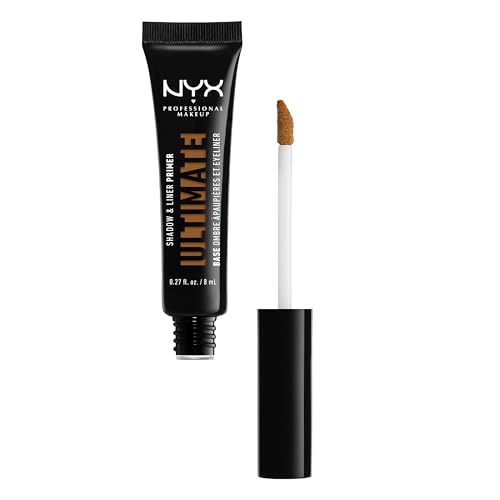
NYX Ultimate Shadow & Liner Primer
Best Tinted Base for Deep Skin
The Deep shade gives a Deep tinted base without pretending that tint itself controls oil.
A lot of primers default to pale beige, white, or pearly tones, which can make the base more visible than intended on deeper skin.
NYX solves that separate problem with a four-shade line and an exact Deep option, while still positioning the formula for long wear, no-smudge, and no-crease use under both shadow and liner.
So what is the practical advantage?
The dual-use design.
It can prepare the area for shadow while also supporting eyeliner placement, but extra versatility is not a reason to spread on more product.
The eye area still benefits from a controlled amount, especially because individual sensitivity reports exist.
Bottom line: Best deeper tinted base if visible cast is a concern and you want one primer for both shadow and liner.
- ✅ Deep shade helps address pale-primer visibility on deeper skin
- ✅ Four-shade range gives more base-tone choice
- ✅ Made for both eyeshadow and eyeliner
- ✅ Manufacturer positions it for no-smudge and no-crease wear
- ❌ Those who assumes a deeper tint automatically provides stronger oil control
- ❌ Lids with sensitivity if the formula causes stinging or irritation
- ❌ People who prefer a completely invisible or translucent base
🧪 Lash Lab Notes — Dr. Rabeya (Dentist & Beauty Enthusiast)
I like a deeper tint when we want to reduce the visible cast some pale bases leave while still preparing the surface for shadow and liner. I would use a controlled amount near the eye area so that dual-use benefit does not turn into excess product collecting in the crease.
- 💡 Editor’s Note: This pick earns its place because shade fit can affect how polished a primer looks before any color is applied. We keep that benefit separate from oil-control claims: the Deep tint is about visibility and versatility. If oily breakthrough is the only priority, Too Faced or Elizabeth Mott has the more direct evidence story.
Want more shade-fit and application feedback? Browse reviews for NYX Ultimate Shadow & Liner.
This suits deeper skin tones when a visible pale primer base is the problem we want to avoid.
Keep the doe-foot application light and keep product away from the immediate eye margin if sensitivity is a concern.
If we want more visible lid-tone evening rather than a softer tint, Juvia’s Place moves into higher-coverage territory.
Juvia’s Place I Prep, I Prime
Best High-Coverage Tinted Base
A pigmented cream-to-liquid base that combines visible lid coverage with a brand-level oil-control story.
Milky White is the lightest in a three-shade system, and the formula is designed to create a more opaque canvas than a sheer nude primer.
That makes it useful when veins or discoloration are part of the prep problem, not just shadow longevity.
Juvia’s Place also uses the phrase “Zero Crease, Zero Clumps, Zero Oils.” “Zero Oils” is a brand claim, not independent proof that the formula controls sebum better than every competitor.
The more practical issue is consistency: user reports often mention separation or wateriness, which makes shaking the tube before use an important part of the routine.
Bottom line: Best high-coverage tinted canvas if you want more visible tone evening and are comfortable shaking and setting the formula carefully.

- ✅ Gives more visible lid-tone coverage than a sheer primer
- ✅ Three-shade system covers different base needs
- ✅ Brand messaging includes oil regulation and crease prevention
- ✅ User praise for coverage and pigment payoff
- ❌ Those who wants a transparent primer with no visible base tone
- ❌ Buyers frustrated by formulas that can separate in the tube
- ❌ Those likely to skip the shake-before-use step
🧪 Lash Lab Notes — Fauzia (University Student & Beauty Enthusiast)
I reach for a pigmented base when the primer itself needs to even the lid tone before color goes on. I would shake it as directed and judge the set after a thin layer; separation in the tube is a use issue to manage, not proof that every unit is defective.
- 💡 Editor’s Note: Here, the value is that the primer does two visual jobs before shadow starts: it creates grip and gives the lid a more even canvas. That can be useful for bright or high-impact looks. The tradeoff is more technique than with a simple translucent base, especially when the formula has separated.
Want buyer feedback on coverage, consistency, and dry-down? See reviews for Juvia’s Place I Prep, I Prime.
Pick this when visible lid coverage matters almost as much as crease control.
Shake the tube well, apply a thin layer, pat it in, and let it dry before adding shadow.
The last pick changes the format completely: a twist-up stick for people who prefer direct, portable application.
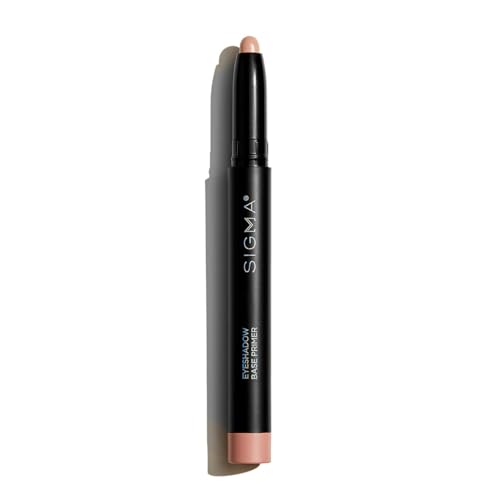
Sigma Eyeshadow Base Primer
Best Stick Format
A matte Persuade stick built around a twist-up stick format instead of a squeeze tube or doe-foot.
Why choose Sigma?
Control.
A solid crayon deposits product directly where it is needed, then the edges can be blended with a finger or brush.
For travel or quick application, that is a materially different experience from squeezing out a cream and deciding how much to spread.
The formula is marketed as crease and fade resistant, with an eight-plus-hour manufacturer claim, but its oily-lid specificity is weaker than the top-ranked picks.
User feedback also splits on texture: some find it smooth and creamy, while others say the stick feels too dry or creases quickly on them.
Bottom line: Best format-first choice for those who values portable, controlled application more than direct oily-lid marketing.
- ✅ Twist-up stick keeps application portable and targeted
- ✅ Matte finish plus crease- and fade-resistant positioning
- ✅ Buildable coverage may help blur visible lid discoloration
- ✅ User praise for color payoff and convenience
- ❌ Those whose top priority is explicit sebum-control evidence
- ❌ Lids that may dislike drier or firmer stick textures
- ❌ Buyers expecting the eight-plus-hour claim to predict their exact wear
🧪 Lash Lab Notes — Engr. Nusrat (Engineer & Beauty Enthusiast)
I find the solid stick easier to control because product is deposited directly instead of squeezed or doe-footed onto the lid. I would use light pressure and blend the edges so the convenient format does not become a thick, dry patch.
- 💡 Editor’s Note: We choose this because of how it applies, not because it has the strongest oily-lid evidence in the group. That distinction keeps expectations realistic. If tubes are messy or hard to portion, the stick can still be the better practical fit even when another primer ranks higher for oil control.
Wondering how current users describe the stick texture and wear? Check reviews for Sigma Eyeshadow Base Primer.
This suits anyone who wants direct stick application and is comfortable with a matte, firmer base.
Use light pressure to blend the crayon rather than building a thick layer in the crease.
With the product choices clear, the next step is understanding why oily-lid primers fail in different ways.
What Actually Makes an Eye Primer Work on Oily Lids?
So what are we actually trying to stop?
Start by separating the failure modes.
Breakthrough oil is the slickness that develops on the lid; creasing is product collecting in a fold; transfer is color moving from one surface to another; smudging is loss of clean placement; fading is loss of intensity.
A primer may improve one without fully solving the others.
That’s why “matte” can be misleading as a shortcut.
A matte dry-down tells us how a base looks or feels after setting, but it does not independently prove that the formula resists sebum.
Waterproof language has the same limitation: resisting water does not automatically mean resisting skin oil.
Some formulas give us a more specific mechanism to work with.
NARS, for example, describes polymer and mineral-powder components that help create grip.
Across several primers in the research set, quick-evaporating carriers, film-forming materials, and powder phases are plausible contributors to a firmer, less mobile base once the layer dries.
The key word here is plausible.
Ingredient presence alone cannot tell us which primer will be best on every oily lid, and “more powder” is not automatically better.
Too much dry texture can trade movement for discomfort or visible texture.
Transfer needs its own definition too because it is easy to confuse with fading.
When shadow or liner stamps onto the upper lid or hood, the color has moved rather than simply lost intensity.
If that upward stamping is the part that keeps ruining an otherwise intact look, the next guide goes deeper into why placement, fold contact, and product movement can interact.
It helps separate true transfer from fading so the fix is aimed at the right problem.
Tint is a separate axis too.
A deeper or more opaque base can make the lid tone look more even and help shadow colors read as intended, but that visual benefit says nothing by itself about oil resistance.
NYX and Juvia’s Place earn their tinted slots because visibility matters to some buyers, not because darker or more opaque primer must control oil better.
So what is the practical takeaway? look for evidence that matches the actual failure—oil breakthrough, crease, transfer, or smudge—then treat finish, tint, and texture as fit variables rather than proof of performance.
How to Apply Eye Primer on Oily Lids
Does application really change how a good formula behaves?
On oily lids, it can.
Across multiple current brand instructions, the most defensible rule is thin, even, fully set before color is layered on top.
Step 1 — Start With a Thin Layer
Start with less than the amount that feels intuitively “secure.” A thin layer is easier to spread evenly and gives the formula a better chance to set without excess cream collecting where the lid folds.
More primer does not automatically give us more protection.
If a formula is slipping or creasing, adding a thicker coat can leave more wet product available to move.
Step 2 — Spread It Evenly Over the Lid
Spread the primer across the areas where shadow or liner will sit rather than concentrating most of it in the crease.
Patting or smoothing lightly is usually more useful than repeatedly rubbing the same area while the base is still fresh.
With tinted formulas, evenness also controls how visible the base looks.
Uneven coverage can make the tint more noticeable without improving wear.
Step 3 — Wait Until the Primer Has Set
Which step gets rushed most often?
This one.
M·A·C gives about a one-minute dry instruction, while other current formulas in the research set use their own dry or set guidance, including around 30 to 60 seconds or simply “let dry” before layering.
Those times are product specific.
They are not universal.
The shared principle is to wait until the primer no longer feels freshly wet before pressing on shadow or drawing liner over it.
Step 4 — Layer Shadow or Liner Without Overworking the Base
After the primer has set, add color with controlled placement rather than repeatedly scrubbing the same spot.
Both powder and liquid eye products can be used over primer, but wetter formulas deserve extra care because they can disturb a base that has not fully dried.
If the primer begins lifting as the next product is applied, the first thing to change is set time and layer thickness rather than immediately changing brands.
This four-step method stays deliberately narrow for oily lids.
For broader technique—including how to adapt primer placement to different eye looks—the full application guide covers the process in more detail.
What to Do If Your Eye Primer Still Creases or Transfers
Still seeing movement after switching primers?
A better primer can help, but persistent movement does not always mean the formula is “bad.” The available evidence supports a short troubleshooting order: correct the amount, correct the set time, then decide whether the formula itself matches the failure.
First: reduce the amount.
If the lid looks coated or feels tacky for a long time, start with a thinner layer.
Extra product can create more material to collect in the fold before it has formed a stable base.
Second: increase the set interval.
Do not use one brand’s exact number as a universal rule, but make sure the primer is no longer freshly wet before shadow or liner goes on.
This is especially important with creamy, liquid, or waterproof products layered over the top.
Third: identify the failure correctly.
Creasing, upper-lid transfer, smudging, and fading can look related, yet they point to different problems.
If the primer amount and set time are already right and product still gathers in a fold, broader cross-product creasing causes may be worth checking.
Persistent creasing can involve more than the primer alone, especially when several eye products are layered over one another.
The dedicated guide below breaks down the common reasons eye makeup collects in folds and what to adjust next.
Fourth: change formula type if the same problem persists.
Someone who keeps getting oily breakthrough from a soft cream may prefer a firmer matte base.
Someone who finds matte primers dry or textured may be better served by a lighter cream with explicit oil-control positioning.
What if shadow stays put while eyeliner still stamps or smears, the liner itself may be the weak link rather than the primer.
Primer can improve the surface underneath, but it cannot turn every eyeliner formula into an oily-lid-resistant one.
When the base is working, liner transfer becomes a separate product decision.
A liner-focused comparison helps identify formulas built to resist oily-lid movement instead of asking primer to solve the whole problem.
The same logic carries across the rest of the eye look.
If mascara, liner, or shadow is failing for different reasons, piling more primer onto the lid is unlikely to solve each one.
A primer-specific fix is only one part of oily-eye-makeup wear.
The broader routine guide connects primer, shadow, liner, and mascara choices so each product is doing the job it is actually designed to do.
Common Questions About Eye Primer for Oily Lids
Why do the same oily-lid questions keep coming back?
Finish labels and set-time instructions are easy to misread.
These answers keep the distinctions simple without expanding into a full eye-makeup routine.
❓ Do I need to let eye primer dry before applying eyeshadow?
Yes.
Multiple current brand instructions support letting primer set before color goes on, although the exact time varies by product.
Rather than forcing one universal number onto every formula, we wait until the layer no longer feels freshly wet.
❓ Can I use eye primer with both powder and liquid eyeshadow?
Yes, but wetter products can disturb a base that has not set.
With liquid or very creamy formulas, we keep the primer layer thin and give it enough time to dry before layering.
❓ Is a matte primer automatically better for oily lids?
No.
Matte tells us about the finish or dry-down, not proven sebum control.
A matte primer can still help because a firmer set may reduce movement, but explicit oil-control and crease/transfer evidence are stronger reasons to choose it for oily lids.
❓ Does waterproof eye primer mean it is oil-proof?
No.
Water and skin oil create different stresses.
So waterproof positioning should not be treated as a guarantee against oily-lid breakthrough.
The strongest products in this roundup keep those claims separate instead of blending them together.
❓ Can concealer replace eye primer on oily lids?
Concealer can give us color coverage, but it is not automatically designed around the same grip, crease, or oil-control goals as a dedicated eye primer.
When transfer and creasing are the main problems on oily lids, a purpose-built primer is the more targeted choice.
Still fuzzy on the difference between a dedicated primer and other base products still feels fuzzy, the parent guide explains the broader roles, textures, and use cases.
It’s the better place to compare primer fundamentals beyond this oily-lid-specific buying decision.
❓ What should I do if eye primer irritates my eyes?
Stop using it. The U.S. Food and Drug Administration advises stopping use of an eye cosmetic if it causes irritation. Persistent irritation should not be treated as a normal “adjustment” period.
Final Thoughts on Choosing an Eye Primer for Oily Lids
The best eye primer for oily lids is the one whose evidence matches the failure we are actually trying to stop.
Breakthrough oil points us toward direct oil-control claims.
Movement makes crease and transfer resistance more important.
Then we weigh tint, texture, and set behavior as fit variables.
Just as important, we judge any formula after a thin, fully set layer, not a heavy coat applied in a rush.
Even a famous primer can fail when the formula or application does not match the lid.
If the lid base is finally staying put but mascara still transfers, that is a separate oily-lid purchase decision.
The mascara guide focuses on formulas chosen for that adjacent problem so primer is not expected to solve it.
Choose the primer whose oil-control evidence and set behavior match our failure mode.
Then use a thin, fully set layer before judging it.
Last update on 2026-09-19 / Affiliate links / Images from Amazon Product Advertising API