⚡ TL;DR: eyeshadow primer for sensitive eyes
The strongest options start with specific suitability evidence—think eye-area testing or an explicit sensitive-eye claim. Finish and wear come next. “Hypoallergenic” alone is not a no-reaction guarantee, so comfort still comes before extra-long wear or stronger grip.
Top Picks
- 🏆 Best Overall — Rare Beauty Always An Optimist — clearest explicit sensitive-eye fit
- 🥈 1st Runner-up — NARS Smudge Proof — tested base without fragrance
- 🥉 2nd Runner-up — ABH Mini Eye Primer — tested base with light-colored coverage
Keeping shadow in place is the easy part. Doing it without making reactive lids feel worse is the harder test. For this eyeshadow primer for sensitive eyes guide, we start with concrete suitability and testing signals; wear, texture, and other performance differences only get a vote after that.
✨ Inside This Eye Shadow Guide
🌸 Psst…
Some links in this post are affiliate links. If you shop through them, we may earn a small commission at no extra cost to you — like a little coffee while we keep testing beauty favorites. ☕💄
Quick Comparison: Eyeshadow Primer for Sensitive Eyes
Use this table as a fast first filter, not a promise that any formula will suit every pair of eyes. The most useful column is the one that lines up with your own sensitivity concern.
| Pick | Sensitivity Evidence | Formula/Finish Cue | Best Fit | Main Caveat |
|---|---|---|---|---|
| Rare Beauty Always An Optimist | Sensitive-eye + contact-lens claim | Peach-tinted cream | Broad sensitivity-first pick | Small tube/value concern |
| NARS Smudge Proof | Eye-area tested + fragrance-free | Lightweight matte base | Fragrance avoidance | Mixed value feedback |
| ABH Mini Eye Primer | Eye-area + clinical testing | Light cream base | Brighter shadow payoff | Mixed consistency feedback |
| M·A·C Prep + Prime 24-Hour | Eye-area tested | Lightweight matte liquid | Long-wear priority | Can feel dense to some |
| Milk Hydro Grip Eye Primer | Fragrance- and alcohol-free | Hydrating clear gel | Dry-feeling lids | Mixed creasing feedback |
What “Sensitive-Eye Friendly” Claims Really Tell You
Why do sensitive-eye labels get confusing so fast? Several sound like the same promise when they are not. “Ophthalmologist tested,” “dermatologist tested,” “fragrance-free,” “hypoallergenic,” and “safe for contact-lens wearers” each tell us something different, so we read them as separate clues rather than one oversized safety badge.
The word hypoallergenic creates the biggest mix-up. The U.S. Food and Drug Administration says there are no federal standards or definitions governing that cosmetic claim, and no cosmetic can be guaranteed nonallergenic. In other words, hypoallergenic is not a guarantee—a useful reminder when marketing copy starts sounding more certain than your eyelids ever are.
Fragrance-free can still be worth prioritizing if fragrance is a known trouble spot for you. FDA guidance notes that some people are sensitive or allergic to fragrance components, but removing fragrance only removes one possible variable; it does not make every other ingredient automatically comfortable.
What carries more weight for this roundup is specificity. A brand that explicitly says a primer is suitable for sensitive eyes or contact-lens wearers gives us a more direct fit signal than a broad “all skin types” statement, while ophthalmologist and dermatologist testing add another layer of context.
None of those claims can predict one person’s reaction with certainty, but specific suitability evidence is a much better place to start than vague “gentle” language.
If sensitivity is not your main concern and you mostly care about wear, texture, or color payoff, the broader primer guide is the better comparison. It covers the category without making sensitivity the first filter.
👉 For the clearest example of explicit sensitive-eye language in this lineup, start with Rare Beauty Always An Optimist below.
That framework makes the product differences much easier to judge without pretending one label can do all the work.
Best Overall for Sensitive Eyes
What earns the first spot? Direct suitability evidence carries the first spot here. This is the strongest all-around starting point when that matters more than chasing one extra performance superlative.
Rare Beauty Always An Optimist Weightless Eye Primer
Best overall when explicit sensitive-eye suitability is the priority.
We get a lightweight peach-tinted cream with sensitive eyes and contact lenses named directly by the brand.
Want the smallest interpretive leap between a product claim and this article’s purpose? This is the easy place to begin. Rare Beauty describes the primer as suitable for sensitive eyes and safe for contact-lens wearers, and also says it is ophthalmologist and dermatologist tested.
The formula is positioned as hydrating and quick-drying, with a peach tint that helps create an even base before color goes on. Manufacturer testing also reports strong all-day crease and fade performance, while customer-review patterns lean positive on longevity and overall quality.
That combination matters because the comfort evidence arrives before the performance extras. You are not being asked to choose a primer solely because it lasts; you are getting a product with unusually direct suitability wording that also aims to keep shadow from creasing, fading, and smudging.
Bottom line: Best balanced sensitive-eye pick if you want the most explicit suitability language in this five-product set, with a hydrating tinted base as a bonus.

- ✅ Brand explicitly says it is suitable for sensitive eyes
- ✅ Brand says it is safe for contact-lens wearers
- ✅ Hydrating, quick-drying peach-tinted base
- ✅ Strong reviewer-reported longevity and quality
- ❌ May feel poor value if you prefer a larger amount of product for the price
- ❌ If you have known ingredient triggers, check the current package before use
- ❌ A peach tint may be less appealing if you specifically want a fully transparent base
🧪 Lash Lab Notes — Dr. Rabeya (Dentist & Beauty Enthusiast)
What stands out to me is how specific the suitability wording is. Sensitive eyes and contact-lens wearers are named directly instead of being implied by a generic gentle claim. I see that as a clearer first screening step, while real-use comfort still has to be judged individually.
- 💡 Editor’s Note: We like that the sensitivity story does not depend on one fuzzy label. The hydrating texture and tinted base are practical extras, but the stronger reason to put this first is the unusually direct eye-area suitability wording. If you know a particular ingredient bothers you, the current ingredient list still deserves the final say.
Want to see how buyers describe the wear and feel? Check the latest Rare Beauty Always An Optimist reviews.
Recommended for sensitivity-first shoppers who also want a lightweight, color-boosting base.
Care tip: Apply a thin layer to clean, dry lids with the doe-foot applicator before shadow.
Next, we move from broad suitability evidence to a narrower question: what if fragrance is one of the variables you specifically want out?
Best Fragrance-Free Pick
Is fragrance one variable you specifically want out? This is the slot to examine. It removes fragrance from the equation while keeping credible eye-area testing in view.
NARS Smudge Proof Eyeshadow Base
Best fragrance-free option when a tested, lightweight matte base fits the goal.
A matte, fragrance-free base with strong crease-control feedback and eye-area testing behind it.
NARS describes this primer as ophthalmologist and dermatologist tested, and current product information also lists it as fragrance-free. The texture is lightweight and designed to dry down quickly, which suits anyone who wants primer to disappear into the routine rather than feel like another heavy layer on the lid.
Its wear story is strong too. Reviewer feedback shows a consistent pattern around crease prevention and longevity, especially on hooded and oily lids, with some users reporting all-day or all-night wear.
That does not make it a guaranteed sensitivity match. It does mean the formula removes fragrance as one possible trigger while also giving you a well-established performance profile, which is the exact reason it earns this specific slot.
Bottom line: Best when fragrance is the concern and you still want a matte, crease-resistant base with ophthalmologist and dermatologist testing.

- ✅ Listed as fragrance-free
- ✅ Ophthalmologist and dermatologist tested
- ✅ Lightweight matte finish
- ✅ Strong reviewer-reported crease prevention and longevity
- ❌ May disappoint if you expect primer to perform equally well without eyeshadow layered over it
- ❌ Value feedback is mixed, especially for shoppers sensitive to product amount versus price
- ❌ Marketplace-condition complaints make current seller and product condition worth checking before use
🧪 Lash Lab Notes — Dr. Sazia (Medicine Specialist & Beauty Enthusiast)
I find fragrance-free most useful when fragrance is already a known concern. It removes one possible source of sensitivity, not every source. To me, the sensible reading is one fewer variable—not a promise of zero irritation.
- 💡 Editor’s Note: NARS makes the most sense when your checklist starts with fragrance avoidance and then moves to wear. We would not use “fragrance-free” as a shortcut for “safe for everyone,” but paired with the eye-area testing, it gives this formula a clear and defensible role in the lineup.
See how long-time users describe the crease control and value trade-off in the latest NARS Smudge Proof reviews.
Recommended for fragrance-conscious shoppers who prefer a light, matte base under powder shadow.
The next pick shifts the goal from disappearing under shadow to actively helping color look brighter.
Best for a Brighter Color Base
Can a primer change how clearly shadow color reads? A light-colored base can help. That makes this pick useful when you want a clearer canvas without turning the whole article into a pigmentation tutorial.
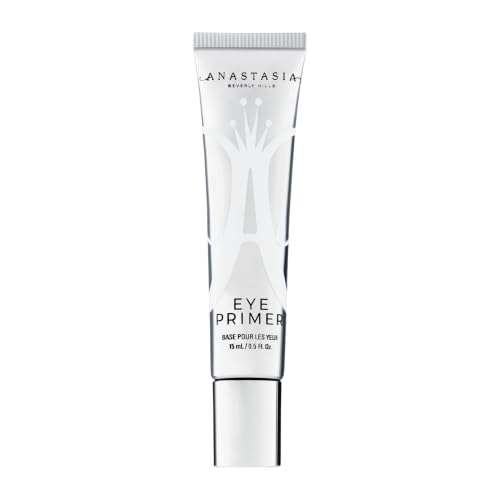
Anastasia Beverly Hills Mini Eye Primer
Best color-based choice when a tested light cream primer fits the goal.
A light cream base that pairs light-colored coverage with ophthalmologist, dermatologist, and clinical testing.
The practical appeal is visual: instead of a clear primer that mostly stays out of the way, this one creates a lighter canvas under shadow. That can make color placement and payoff easier to see, particularly when a shade tends to look muted directly on the lid.
Product information also describes it as long-wearing and water-resistant, while reviewer feedback is positive about smoothness and longevity overall. The same feedback is less consistent on texture, though, with some users describing the formula as watery or runny and reporting mixed crease resistance.
So this is not the “gentlest because it is pale” pick—that would be a made-up connection. Its role is narrower: a sensitivity-conscious option with substantial testing language and a visibly light base.
Bottom line: Best for boosting visible color if you want a tested primer that doubles as a light canvas beneath shadow.
- ✅ Ophthalmologist, dermatologist, and clinically tested in current product documentation
- ✅ Light base can help shadow shades read more clearly
- ✅ Water-resistant, long-wear positioning
- ✅ Mini format is convenient for travel or lower-commitment use
- ❌ Consistency feedback is mixed, with some users describing a watery or runny texture
- ❌ Crease resistance is not equally strong for every reviewer
- ❌ A visibly light base may be unnecessary if you prefer an invisible primer finish
🧪 Lash Lab Notes — Engr. Nusrat (Engineer & Beauty Enthusiast)
I see the light base as the functional feature here. It changes what sits under the pigment instead of only adding grip. I would keep the layer thin and even, because extra product near the eye can work against the clean base we are trying to build.
- 💡 Editor’s Note: This is the most purpose-built pick in the group for people who want primer to affect the look of the shadow, not just its wear. The mixed consistency feedback is worth respecting, so the smarter expectation is “useful light canvas with good testing credentials,” not flawless texture for every user.
Curious whether the light base works the way you want it to? Browse recent ABH Mini Eye Primer reviews.
Recommended for shoppers who want a tested primer with a visible, pigment-friendly base.
If color payoff is secondary and your bigger headache is a very long day, the next formula is built around wear time.
Best Long-Wear Option
What is the goal here? Longer hold without dropping the sensitivity-first screening that defines this guide.
M·A·C Prep + Prime 24-Hour Extend Eye Base
Best long-wear choice when a tested extended-wear primer is the priority.
A lightweight matte liquid built for a long-wear priority, with ophthalmologist and dermatologist testing in its product information.
M·A·C positions this primer for up to 24-hour wear and says it helps shadow stay color-true while resisting fading and creasing. Buyer feedback is also strong around longevity, smooth application, and performance with both cream and powder shadow.
This is where the order of priorities matters. “Up to 24 hours” is a manufacturer claim, not a promise of your personal wear time, and no extra hours are worth chasing if your eyes dislike the formula.
For someone who already knows extended wear is the problem to solve, though, this product has a clearer endurance case than the others in our five. A small minority of reviewers describe the formula as dense or dry, so application feel is the trade-off to watch.
Bottom line: Best for long days when you want eye-area testing plus the strongest explicit extended-wear positioning in this roundup.

- ✅ Ophthalmologist and dermatologist tested
- ✅ Up-to-24-hour manufacturer wear claim
- ✅ Strong reviewer-reported longevity and crease resistance
- ✅ Works with both cream and powder shadow according to review patterns
- ❌ May feel dense or dry to users who prefer a more fluid primer texture
- ❌ Long-wear claims should not outweigh comfort if your lids start reacting
- ❌ Value feedback is mixed among buyers
🧪 Lash Lab Notes — Fauzia (University Student & Beauty Enthusiast)
I can see the appeal of long wear on a full day when touch-ups are the last thing we want to think about. With sensitive eyes, I still put comfort first. The wear claim only matters after the formula feels comfortable enough to keep on.
- 💡 Editor’s Note: This is the pick we would narrow in on when durability is the actual pain point—not simply because “24-hour” sounds impressive. The documented wear claims and reviewer feedback give it a strong longevity story. The texture feedback is a useful reminder to apply sparingly and judge feel before committing to a marathon wear day.
Want the unfiltered buyer take on longevity and texture? Read recent M·A·C Prep + Prime 24-Hour reviews.
Recommended for long-day wear when tested eye-area claims and crease control matter together.
Care tip: Apply a thin layer and let it set before adding shadow; reviewer technique notes suggest giving it a short dry-down.
Our final pick changes the problem again—from lasting longer to making dry-feeling lids more comfortable under makeup.
Best for Dry-Feeling Sensitive Lids
What if gripping primers already feel like too much? Dryness and sensitivity can make that trade feel wrong before shadow even goes on. This option leans harder into hydration and free-from claims, while still carrying ingredient caveats worth reading closely.
Milk Makeup Hydro Grip Eye Primer
Best for dry-feeling lids when a hydrating clear gel makes sense.
A clear gel with dry-feeling lids in mind, using hydrating ingredients alongside fragrance- and alcohol-free positioning.
Milk highlights hyaluronic acid, niacinamide, aloe water, blue agave, and hemp seed extract in the formula, and describes the primer as fragrance-free, alcohol-free, silicone-free, oil-free, and paraben-free. It is designed for both eyelids and the under-eye area and is positioned for up to eight hours of grip.
The important nuance is that a long “free-from” list does not end the sensitivity conversation. The brand itself advises patch testing if you have a known or suspected niacinamide allergy and notes an ingredient derived from nuts, which is exactly why reading the current ingredient list beats assuming “cleaner-sounding” automatically means safer.
Performance feedback is mixed. Some customers report good staying power and smooth application, while others describe creasing within an hour, caking, or a sticky feel.
Bottom line: Best for a hydration-first routine if dry-feeling lids make traditional primers uncomfortable and you are comfortable checking the ingredient caveats.

- ✅ Fragrance-free and alcohol-free positioning
- ✅ Hydrating ingredients including hyaluronic acid and aloe water
- ✅ Clear gel works across multiple eye-makeup textures
- ✅ Can also prime the under-eye area for concealer
- ❌ Not a good shortcut if you have a known niacinamide sensitivity; follow the brand’s current ingredient guidance
- ❌ Crease prevention is mixed in customer feedback, especially on oilier lids
- ❌ Some users may find the texture sticky rather than weightless
🧪 Lash Lab Notes — Mahmuda (Homemaker & Beauty Enthusiast)
I like the hydrating direction when dry lids make extra makeup layers feel uncomfortable. I also give the ingredient caveats as much weight as the free-from list. With known triggers, I would treat the package label as part of the decision, not an afterthought.
- 💡 Editor’s Note: Milk is the most interesting choice here when comfort means avoiding a dry, tight-feeling base. We also appreciate that the brand gives a specific allergy-related caution instead of letting the “free-from” list do all the talking. The mixed crease feedback is the trade-off: hydration and grip do not land the same way on every lid.
See how different lid types report the grip and texture in current Milk Hydro Grip Eye Primer reviews.
Recommended for dry-feeling lids when hydration matters more than maximum crease resistance.
Care tip: Apply to clean lids, blend, and let it dry for about a minute before makeup.
Primer comfort is only one piece of the sensitive-eye equation. The guide below keeps the focus on eyeshadow itself, so you can choose color products without duplicating the primer-specific work we have done here.
Once you have a product candidate in mind, the next question is what to do if your eyes disagree with your shortlist anyway.
What to Do If a Primer Irritates Your Eyes
What should we do if irritation starts? Stop using the product. The U.S. Food and Drug Administration advises stopping an eye cosmetic immediately if it causes irritation; if the irritation persists, seek medical attention. That is a much cleaner rule than trying to “push through” stinging or watering because a product has a sensitive-skin label.
Puffiness, dryness, flaking, watering, or stinging can show up for different reasons, and this article cannot diagnose which one applies. Community reports around popular primers are useful for seeing that reactions vary, but they cannot prove a particular ingredient caused someone’s symptoms.
FDA guidance also says not to use eye cosmetics when you have an eye infection or when the skin around the eye is inflamed. Keep hands and applicators clean, do not share eye cosmetics, and use products intended for the eye area rather than improvising with a face product close to the eyes.
If you repeatedly react to eye products or symptoms do not settle after stopping use, that is the point to bring the issue to a qualified health professional rather than keep rotating through primers and guessing.
Those safety rules answer the urgent part. A few common buying questions still deserve quick, practical answers before you choose.
Sensitive-Eye Primer Questions, Answered
Why do simple primer labels turn into complicated questions? The useful answer usually depends on the problem you are actually trying to solve. Here are the questions that matter most once you have narrowed the field to products that genuinely fit your needs.
❓ Do I need eyeshadow primer if I have dry, sensitive skin?
Not automatically. If your shadow already wears well and another layer makes your lids feel drier or more reactive, skipping primer can be the better choice; primer is useful when grip, creasing, fading, or color payoff is a problem you actually need to solve.
If you do want one, a hydration-focused formula such as Milk Hydro Grip Eye Primer may make more sense than choosing purely by maximum wear time, but individual tolerance still comes first.
❓ Is “hypoallergenic” eyeshadow primer guaranteed to be safer?
No. The FDA does not define “hypoallergenic” for cosmetics and does not treat it as a guarantee that a product cannot cause an allergic reaction.
That is why this eyeshadow primer for sensitive eyes roundup puts more weight on specific claims—such as explicit sensitive-eye or contact-lens suitability, fragrance-free status, and eye-area testing—while still treating all of them as screening evidence rather than certainty.
❓ Is fragrance-free always better for sensitive eyes?
Fragrance-free can be helpful when fragrance is one of your known triggers, because it removes that particular variable. It does not mean the rest of the formula is automatically non-irritating, so the full ingredient list and your own history still matter.
❓ Is Urban Decay Eyeshadow Primer Potion good for sensitive eyes?
It is a popular primer with strong general performance positioning, but our research found mixed community experiences among people describing sensitive or eczema-prone eyelids. Some report good tolerance; others report flare-ups, so we would not use popularity alone as a reason to call it a sensitivity-first pick.
That mixed pattern is also a good reminder that another person’s success—or reaction—is not a reliable prediction of what your eyes will do.
❓ Can primer cause puffy, dry, or flaky eyelids?
A person can experience irritation while using an eye cosmetic, but an anecdote does not establish the exact cause. If a primer is associated with stinging, swelling, unusual dryness, or flaking for you, stop using it and follow the FDA’s guidance to seek medical attention if irritation persists.
❓ What should contact-lens wearers look for?
Do not assume “ophthalmologist tested” automatically means contact-lens compatible. Look for a product that states that suitability explicitly; Rare Beauty Always An Optimist is the selected product here whose brand directly says it is safe for contact-lens wearers.
That is a stronger fit signal for this particular concern, though it still cannot guarantee individual comfort.
Final Thoughts: Comfort First, Performance Second
What is the simplest rule to carry away? Comfort first, performance second. Choose the primer with the most relevant, specific suitability evidence for your needs, then decide whether your priority is fragrance avoidance, a brighter base, longer wear, or more hydration.
That brings us back to the opening problem: a primer only earns its keep if better shadow wear does not come at the expense of comfortable eyes.
If you want to extend the same sensitivity-first thinking beyond primer, the broader guide below is the natural next step. It covers the rest of the eye-makeup routine without forcing every product decision into this one page.
Last update on 2026-09-13 / Affiliate links / Images from Amazon Product Advertising API