
⚡ TL;DR: highlighter for dark skin
Bright sparkle is only part of the story. On deep complexions, the shade beneath that sparkle matters more. Rich copper, bronze, and true gold offer useful starting points. Still, judge each color after blending it on the cheek.
Top Picks
- 🏆 Best Overall — Mario Soft Glow — Bronze shade with copper depth
- 🥈 1st Runner-up — Charlotte Tilbury Glow Glide — Bronze-gold sheen for deep skin
- 🥉 2nd Runner-up — Rare Beauty Liquid Luminizer — Fluid true-gold placement
A silvery stripe can flatten an otherwise beautiful makeup look. Using less product is not always the fix. Often, the real issue is the depth of the shade under the shimmer.
We compare six specific highlighters for dark skin shades here. Some are warm pressed powders; one is a blendable liquid. We look at what each formula does well, what to watch for, and ways to apply it while keeping our natural depth.
✨ Inside This Highlighter Guide
Quick Comparison: Best Highlighter for Dark Skin
These products reflect light differently. That makes the shade base just as important as the finish. Warmth alone does not guarantee a good match for every undertone.
| Product | Shade | Format | Best fit | Watch-out |
|---|---|---|---|---|
| Mario Soft Glow | Bronze | Pressed powder | Copper-bronze depth | Start lightly |
| Rare Beauty Liquid Luminizer | Flaunt | Liquid | True-gold glow | Blend quickly in small dots |
| Maybelline Master Chrome | Molten Gold | Powder | Bold budget metallic | Strong reflection |
| Laura Geller Baked Gelato | Gilded Honey | Baked powder | Warm golden sheen | Assess on textured skin |
| Charlotte Tilbury Glow Glide | Bronze Glow | Pressed powder | Rich bronze-gold | Premium positioning |
| Anastasia Glow Seeker | Sun Idol | Powder | Champagne-gold statement | Check base contrast |
Choose a Highlighter Shade That Does Not Look Ashy
When a highlight looks ashy, color contrast is often the reason. If the shimmer contains a very pale or opaque base, its light-colored residue can remain visible even after the sparkle catches the light. On deeper skin, that residue may look gray, white, or simply disconnected from the complexion.
Start with the color left after blending, not the shine in the pan. We can try one tiny swipe where highlight usually sits on the upper cheek.
Next, soften the edge. Check it in daylight and again indoors. What stays visible when you’re not facing the light tells you more about the shade fit than the brightest flash of shimmer.
Bronze and copper bring richer depth; warm gold can brighten without looking stark. Rose gold can work too, especially where it echoes the skin’s red or rosy undertones. Cool undertones do not mean silver is the only option, and warm undertones do not automatically rule out champagne.
For very dark skin, compare a copper-bronze swatch against a pale champagne swatch on the same cheek. The deeper tone may leave less obvious residue, but the answer depends on each product’s pigment base and your particular coloring. A shade can sparkle beautifully on your hand and still appear chalky across the cheekbone.
Color is only half of the decision. Texture matters too. A highly metallic finish creates a stronger light-catching point, while a subtler sheen can sit more quietly against pores and fine texture. Choose the effect you want after deciding whether the shade itself blends in.
If you want to compare highlighters beyond deep-skin shade matching, that is a broader shopping decision. The all-complexion roundup helps you evaluate those additional formats and finishes.
Once we know what to look for, these six shades are much easier to compare.
Best Highlighters for Dark Skin
These are six different shades and formulas. None is a perfect choice for everyone. Each pick has an identifiable product record, and the recommendations below are based on documented shade and formula details, not on invented wear testing.
MAKEUP BY MARIO Soft Glow Highlighter
Does pale gold look out of place? The copper-infused Bronze shade is worth swatching first.
This pressed powder is described by the brand as soft and weightless, with a Bronze shade that leans copper. That copper direction matters on deeper complexions. It gives the shine a richer-looking base.
This is the shade to examine if a pale, powdery stripe is the main concern. The appeal is its documented bronze color. It is not a promise of an identical result on every undertone.
Bottom line: Best first swatch for rich bronze and copper lovers; build slowly if you prefer gentle shine.

- ✅ Bronze shade is specifically described as copper-infused.
- ✅ Pressed-powder format suits a controlled brush application.
- ✅ Shade offers a darker starting point than an icy champagne.
- ❌ The bronze color may read too warm on some cooler complexions.
- ❌ Heavy layering may look more metallic than intended.
🧪 Lash Lab Notes — Fauzia (University Student & Beauty Enthusiast)
The Bronze description gives you a useful clue before swatching. Use a thin layer first, and build only where the light lands.
- 💡 Editor’s Note: We would make this the first cheek swatch for someone who keeps seeing pale residue in highlighters. The decision still belongs to the blended shade against your own skin, rather than the shade name alone.
Want to see how this copper-leaning shade looks to other buyers? Explore Mario Soft Glow reviews before choosing.
Especially useful for those seeking a copper-bronze powder highlight.
Prefer placing gold without a powder? The next formula is liquid.
Rare Beauty Positive Light Liquid Luminizer
A true-gold liquid changes how we place the glow.
Flaunt is a gold shade in Rare Beauty’s liquid luminizer line, making it a sensible option when a reflective powder edge feels obvious. A little liquid can be tapped along the upper cheek and softened with the same care you give cream blush.
The benefit here is placement control. It does not guarantee a dewy finish on every skin type. The liquid format gives you another route to a golden glow, but the amount and the blend still decide whether the finish looks seamless.
Bottom line: Best for carefully placed liquid gold; avoid broad applications until you know how the base settles.

- ✅ Gold shade offers a warm color direction.
- ✅ Liquid format allows small, targeted applications.
- ✅ Buildable formula makes gradual intensity possible.
- ❌ A large application can spread beyond the intended cheekbone area.
- ❌ The shade still needs a cheek swatch on cool or neutral undertones.

🧪 Lash Lab Notes — Engr. Nusrat (Engineer & Beauty Enthusiast)
Small dots give more placement control than an across-the-cheek sweep. Tap the border outward before deciding whether to add another dot.
- 💡 Editor’s Note: For readers who dislike an obvious powder edge, this is the alternative worth testing. We would assess the finish over your actual base makeup, since a liquid can behave differently on bare skin and foundation.
To learn more about buyers’ experiences with a golden liquid, see Rare Beauty Liquid Luminizer reviews.
A good candidate for anyone who wants liquid gold in small amounts.
A liquid texture may raise a different question for someone with dry skin. The dedicated guide compares liquid formulas for that specific concern.
Want more impact from a powder without paying a premium? The next pick addresses that need.
Maybelline Master Chrome Metallic Highlighter
If visible shine is the goal, a bold metallic gold powder makes sense.
Molten Gold is a recognizable shade in the Metallic Highlighter, with a powder formula and a deliberately reflective finish. This is one of the bolder choices here. It is not meant to look barely there.
If you want a warm, strong highlight for a photo or evening look, start with the lightest brush touch you can manage. On textured skin, that same intensity calls for care. Check it from the side before adding more.
Bottom line: Best budget-leaning metallic option for a noticeable gold effect; not the quietest everyday finish.

- ✅ Molten Gold provides a specific warm shade to assess.
- ✅ Metallic finish offers distinct impact from softer powders.
- ✅ Drugstore-brand alternative to prestige picks.
- ❌ Pronounced reflection can draw attention to skin texture.
- ❌ A thick layer may make the color base more visible.
🧪 Lash Lab Notes — Zayba (A-Level Student & Beauty Enthusiast)
The metallic finish makes a small amount worth assessing first. Use the remaining powder on the brush to diffuse the outer edge rather than adding fresh powder.
- 💡 Editor’s Note: We like that this offers a clear style choice instead of pretending to suit every preference. Compare it directly with a subtler option if you are unsure how much shine you enjoy wearing.
See what shoppers say about this stronger gold finish in Maybelline Master Chrome reviews.
Suited to shoppers who enjoy a strong powder-metallic gold highlight.
A baked formula can make an appealing contrast to that intense metallic look.
Laura Geller Baked Gelato Swirl Illuminator
Gilded Honey offers a warm gold direction with a baked-powder identity.
This Baked Gelato Swirl Illuminator comes in Gilded Honey, a shade worth considering if you like gold but do not want to begin with the brightest metallic finish in the lineup. Its documented powder formula makes it easy to compare beside other brush-applied highlighters.
Think of it as a texture-and-shade alternative rather than a promise that baked makeup always flatters fine lines. The key test is whether the golden base disappears at the edges when you apply it to your own cheek.
Bottom line: Best for a warm golden baked-powder option; verify its sheen in daylight before committing.

- ✅ Gilded Honey gives a clear warm-gold shade direction.
- ✅ Powder formula is easy to place with a small brush.
- ✅ Offers a different finish identity than a liquid luminizer.
- ❌ Warm honey can look too yellow on some skin tones.
- ❌ Powder texture may show on very dry cheek areas.
🧪 Lash Lab Notes — Mahmuda (Homemaker & Beauty Enthusiast)
Judge the baked sheen in daylight where skin texture is easy to see. Keep the first sweep narrow so the base shade stays easy to assess.
- 💡 Editor’s Note: We would choose this for a reader who likes a warm powder look but wants to compare it against a more metallic option. Build intensity only after you have seen how the first layer looks away from direct light.
Wondering whether the honey shade is right for your routine? Browse Laura Geller Baked Gelato reviews.
Worth swatching for warm-gold powder fans who prefer a baked formula.
If your dry patches become more visible under powder, you might need a more skin-type-focused comparison. That guide considers highlighters specifically for dry skin rather than this article’s shade priorities.
If you want a bronze shade with an explicit deep-skin positioning, there is another option.
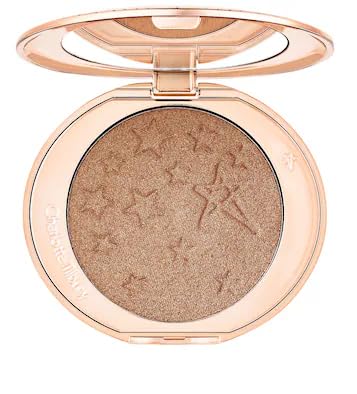
Charlotte Tilbury Glow Glide Highlighter
Bronze Glow combines a deep-skin-oriented shade with a pressed-powder format.
The bronze-gold pressed-powder shade is described by the brand as intended for deeper complexions. That positioning makes it more than a generic light champagne placed into a dark-skin roundup.
It is a prestige option, so the real question is whether you prefer its particular bronze-gold effect enough to justify choosing it over a simpler warm-gold alternative. A deep-skin description is encouraging, but it cannot replace a swatch on your specific undertone.
Bottom line: Best for a brand-described bronze-gold shade for deep skin; premium positioning is the trade-off.
- ✅ Brand explicitly connects Bronze Glow with deeper skin.
- ✅ Pressed powder allows precise placement.
- ✅ Bronze-gold color direction avoids an icy-silver starting point.
- ❌ Prestige pricing may be unnecessary for occasional highlighter use.
- ❌ A deeper bronze can look warmer than expected on certain undertones.
🧪 Lash Lab Notes — Dr. Rabeya (Dentist & Beauty Enthusiast)
Bronze Glow has an appropriate depth description on paper. Blend the boundary with a clean brush, then judge it when your face turns away from the brightest light.
- 💡 Editor’s Note: This is a shade-led luxury alternative, not a claim that expensive highlighter is automatically better. If the less expensive bronze in this guide disappears into your complexion just as well, that is a practical reason to save the difference.
Before choosing a premium bronze, compare buyer feedback for Charlotte Tilbury Glow Glide.
Consider it if you want a prestige pressed-powder bronze-gold shade.
The final pick pushes toward a brighter champagne-gold look instead.
Anastasia Beverly Hills Glow Seeker Highlighter
Sun Idol favors champagne-gold reflection over the deepest copper-bronze base.
Anastasia’s Glow Seeker in Sun Idol is a champagne-gold highlighter with a powder formula and a buildable finish. It offers an intentionally brighter direction than the deeper bronze entries, which can be flattering when the base still blends into your cheek.
The risk is contrast: a reflective shade can look exciting under a store light but leave a visible pale border in natural light. Choose it for that brighter look only after testing the blended edge, not from the shine alone.
Bottom line: Best for a more reflective champagne-gold statement; very deep skin needs an extra base-color check.

- ✅ Champagne-gold hue expands beyond bronze-only choices.
- ✅ Powder format allows a gradual brush application.
- ✅ Buildable finish supports adjustment of shine intensity.
- ❌ The lighter base may contrast on the deepest complexions.
- ❌ Strong reflection may be more noticeable over textured skin.
🧪 Lash Lab Notes — Dr. Sazia (Medicine Specialist & Beauty Enthusiast)
Sun Idol is not the brand’s deeper Enchanted shade. Test the blended base against the cheek before choosing a stronger reflective finish.
- 💡 Editor’s Note: We would treat this as the adventurous pick in a shade-conscious lineup. If the edge looks pale without direct light, go back to a deeper bronze instead of trying to hide the cast with more shimmer.
See how shoppers describe the champagne effect in Anastasia Glow Seeker reviews.
For a brighter champagne-gold look after a successful cheek swatch.
Now that the shades have distinct jobs, match those options to undertone and finish.
How to Match Undertone, Texture, and Finish
Now that the shade names are clearer, bring your undertone into the decision. Deeper skin can lean golden, neutral, olive, rosy, or cool; there is no single shade chart that captures every complexion. A copper highlight may harmonize beautifully on one person and look too orange on another.
For a golden or warm undertone, compare bronze and honey gold first. If your skin has cooler or red-leaning tones, a balanced champagne or rose-gold hue may be worth testing alongside warmer shades. The blended border is the final test, because undertone labels do not tell you how opaque a specific base pigment will look.
Next compare formula. A small powder brush may feel simpler for precise placement, especially when your T-zone gets shiny.
A liquid can be easier to tap onto a selected area, but it also requires you to watch where it spreads. Neither format is universally better for oily or dry skin; the finish should be checked over the base products you actually wear.
If your skin tends to get oily, sheen and longevity may matter as much as pigment depth. A skin-type-focused guide helps you compare formulas against that concern.
Highlighting and bronzing are different jobs. The bronzer guide helps if you want extra cheek warmth instead of another point of reflected light.
Once shade and formula are settled, even the right product can look wrong if the placement is too broad.
Apply Your Glow Without a Pale Stripe
Keep the first application small. Place a little product on the upper cheekbone, roughly where daylight naturally catches your face, instead of spreading it across the whole cheek. A precise brush works for powder; a fingertip or appropriate blending tool can help with a liquid.
For a softer everyday result, a barely-there sheen is a different shopping goal from metallic impact. The natural-highlighter guide compares formulas designed around that quieter effect.
Fade the edge outward into the surrounding complexion before adding another layer. Look straight ahead, then turn your face slightly to see whether an obvious border or chalky base remains. If the stripe stays visible when the sparkle fades, the problem may be the shade itself rather than your blending skill.
Blush can frame a warm highlight without expanding its bright patch. The blush comparison helps you choose that neighboring color rather than asking highlighter to do both jobs.
The most common mistakes happen when we mistake maximum reflection for the best match.
Avoid These Common Highlighter Mistakes
The first mistake is buying from a flash photo alone. A flash can make a reflective shade look beautiful while hiding the lighter base that becomes obvious in ordinary daylight. Always inspect the swatch both directly lit and turned away from the light.
The second is using a thick layer to correct an unflattering color. More shimmer usually makes an obvious edge more visible, not less. If a warm gold looks too yellow or a champagne looks gray, try another shade family before changing the amount.
A third trap is treating skin type as a rigid rule. Powder is not automatically wrong for dry skin, and liquid is not automatically wrong for oily skin. Your moisturizer, foundation, application amount, and skin texture all influence the result.
Finally, new cosmetics can sometimes cause irritation even when the shade looks perfect. The American Academy of Dermatology recommends testing new skin-care products on a small area before widespread use; use suitable caution with new cosmetics too, especially if your skin is reactive. Don’t apply a new product over irritated skin and assume a luxurious formula guarantees compatibility.
That leaves a few shade and placement questions worth answering directly.
Highlighter for Dark Skin: FAQs
These questions come up when you’re deciding between a deep bronze and a brighter gold. The key distinction is always how much base pigment remains visible after blending.
❓ What color highlighter is best for very dark skin?
Rich copper, bronze, and deeper gold are practical starting points because their bases may blend with more depth. The best choice is the one that does not leave a pale stripe on your own skin.
❓ Why does my highlighter look gray or ashy?
The formula may contain a base pigment that is much lighter or cooler than your complexion. Check the color at the edge of the swatch when the shimmer is not directly reflecting light.
❓ Can rose-gold highlighter work on deep skin?
Yes, a deeper rose gold can complement skin with rosy or red tones. Avoid assuming that every pink or rose product will flatter every person; pigment depth still matters.
❓ Is liquid or powder highlighter better for darker skin?
Neither is inherently better because of skin depth. Choose the shade first, then select a texture that blends comfortably over your usual base makeup.
❓ Where should I put highlighter for a natural glow?
Start with a narrow area along the upper cheekbone and blend its edge. More product across the entire cheek is not always more flattering.
❓ Can pale champagne highlighter work on deep complexions?
Sometimes, particularly when the base is sheer and the undertone suits your skin. Test it in daylight because a pale base can look stark even when the shimmer itself appears beautiful.
These answers point back to one test that matters more than a label on the package.
Final Thoughts on Highlighter for Dark Skin
A highlighter should make your skin look luminous, not leave a pale mark that competes with it. Start with a shade that has enough depth, compare the base color in ordinary light, and build reflection gradually.
If you’re undecided, swatch a copper-bronze beside a true gold before you commit. The best glow is the one that keeps your complexion visible, rather than covering its character with shine. Choosing that flattering edge is the real finish line.
Last update on 2026-11-18 / Affiliate links / Images from Amazon Product Advertising API