⚡ TL;DR: best eyeliner brush
The best brush is not simply the tiniest one. What matters more? A contact edge that matches our line and stays steady with light pressure. Angled, tapered, and flat heads each solve a different placement problem.
Top Picks
- 🏆 Best Overall — EIGSHOW E835MP Liner Brush — slim angled control
- 🥈 1st Runner-up — Bobbi Brown Ultra Fine Brush — easy fine-line steering
- 🥉 2nd Runner-up — JASSINS 3Pcs Angled Brush Set — handy three-brush rotation
A brush can look tiny and still make a line too wide. Why? The bristles may spread, or the head may fight our hand movement. That is why the best eyeliner brush is about a stable edge, not just the smallest-looking tip.
We compared head geometry, contact width, formula fit, and control. We also looked for brushes that do clearly different jobs. That keeps the focus on the tool, not on ranking eyeliner formulas.
✨ Inside This Liner Guide
Quick Comparison: Best Eyeliner Brush
Want the fastest way to narrow the list? Start with the motion we already like. These five picks cover different jobs instead of repeating the same angled brush five times.
| Product | Brush Head | Best For | Formula Fit | Main Trade-Off |
|---|---|---|---|---|
| EIGSHOW E835MP Liner Brush | Ultra-thin angled | Narrow wings and controlled lash-line work | Gel, cream, liquid, powder | Less natural for broad flat stamping |
| Bobbi Brown Ultra Fine Brush | Fine angled/tapered | Short precise strokes and classic liner work | Gel and powder | Not a dedicated flat stamping shape |
| Beauty Junkees Precision Brush | Thin angled | Tightlining and close-root placement | Gel, cream, powder, cake | Narrow head is less suited to broad deposit |
| Laura Mercier Flat Eye Liner | Flat nylon edge | Pressing or stamping pigment along the lash line | Wet, powder, cake | Flat edge is less point-like for tiny detail |
| JASSINS 3Pcs Angled Brush Set | Ultra-fine angled set | Brush rotation and value-focused precision | Gel, cream, liquid, powder, cake | Three similar shapes do not cover every geometry |
Match Eyeliner Brush Shape to the Line You Want
So what actually changes when the brush head changes? The answer is the part touching our skin.
A fine point puts pigment into a very small contact area. An angled edge keeps that narrow contact but gives it direction. That can make short lash-line strokes or a wing easier to steer.
A flat brush works another way. Its straight edge can press pigment across a short section. So instead of drawing from a point, we can stamp color close to the lashes.
Does size still matter? Yes, but it is only part of control. Vogue’s expert-backed brush guide notes that smaller brushes can give more precise application and greater control. Shape and function still decide how that control feels.
Firmness matters too. The edge needs to stay recognizable under light pressure. A tiny tip that splays can feel less predictable than a slightly wider one that keeps its shape.
Synthetic bristles show up often in this group. They are especially common on brushes meant for cream and gel textures. That does not make synthetic automatically better for every person. It is simply a practical match for many brush-applied liner formulas.
So angled or pointed? That question is too simple. A better question is how we like to move the brush. Short strokes, a guided slant, and a press-and-stamp motion all need different contact shapes.
Best Eyeliner Brushes for Different Line Styles
Five brushes earned full reviews here. Why only five? Each one solves a different buying problem. We judged design, control, and ease of use instead of trusting every product that says “precision.”
EIGSHOW PRO Precision Gel Liner Fine Angled Eyeliner Brush
Best Overall
A very slim angled edge gives us narrow directional control. That is the main reason this brush leads the group.
The E835MP uses synthetic bristles, a wood handle, and an aluminum ferrule. The listing positions it for gel, cream, liquid, and powder liner. So one brush can cover several brush-on formulas.
What makes it the balanced pick? The head stays focused on fine lash-line work, wings, and close placement. We do not need a specialty flat shape for those jobs.
The silver-ion treatment is different. It is a listing-stated bristle feature. We should not treat that detail alone as proof of better cosmetic performance or hygiene.
Bottom line: This is best for angled control when we want a narrow, directional line without moving to a flat head.
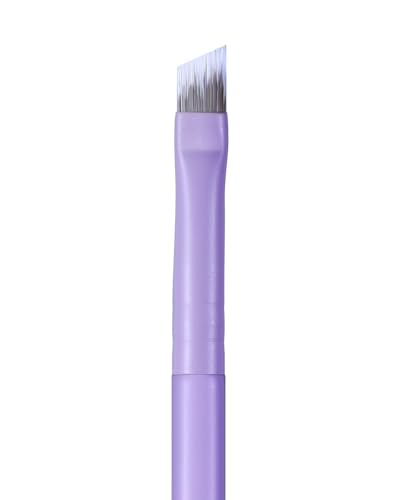
- ✅ The ultra-thin angled head keeps placement narrow and directional
- ✅ One brush works across several listed brush-applied liner formulas
- ✅ A wood handle and aluminum ferrule give it a familiar full-size build
- ❌ Broad press-and-stamp work is not the natural job for this head
- ❌ The listed silver-ion feature does not prove a separate performance benefit

🧪 Lash Lab Notes — Engr. Nusrat (Engineer & Beauty Enthusiast)
I care less about the word precision and more about the edge itself. If a narrow angled head stays aligned with light pressure, the contact point is much easier to understand and control.
- 💡 Editor’s Note: We like the clear purpose here. The brush can handle several liner formulas without turning into a vague do-everything tool. For fine wings and lash-line strokes, that balance makes sense.
Want to compare what buyers say about handling? Check the EIGSHOW E835MP Liner Brush.
Pick this when fine angled placement is our usual way to apply brush-on liner.
Care tip: Use a suitable brush cleanser, reshape the damp bristles, and keep the ferrule out of a soak.
That slim angled head sets our baseline. And the next brush? It takes a simpler, more traditional route.
Bobbi Brown Eyeliner Brush
Best Classic Fine Liner
This one keeps the idea simple: fine tapered control without a specialty head.
The brush is a small angled liner tool made for precise placement. Its documented formula fit includes gel and powder. There is no bundle or second head to manage.
Why might that simplicity be useful? Short strokes can feel easier when the tool itself is familiar. We are steering one small edge rather than learning a new stamping motion.
That also defines the trade-off. This is not a dedicated flat brush. If pressing pigment into the lash line is the goal, another shape fits that motion better.
Bottom line: Choose it for classic fine-liner control when a straightforward single brush feels easier than a specialty geometry.
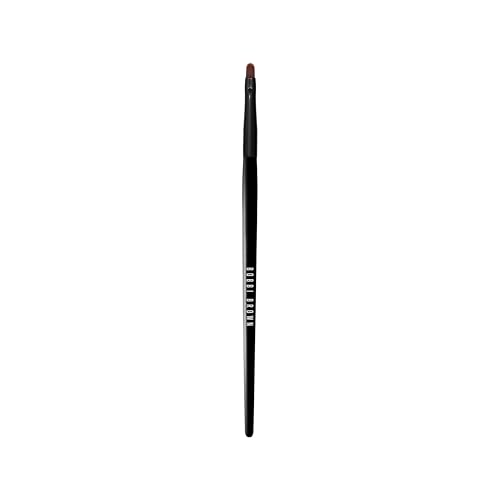
- ✅ The angled liner head is built for detailed eyeliner placement
- ✅ A single-brush format keeps the setup simple
- ✅ Its documented uses include both gel and powder liner
- ❌ A flat brush is the closer match for press-and-stamp placement
- ❌ Our supplied data does not prove a separate durability or performance advantage here
🧪 Lash Lab Notes — Mahmuda (Homemaker & Beauty Enthusiast)
For me, the useful part is how easy the shape is to read. A familiar fine edge makes short, controlled strokes feel straightforward without asking us to learn a more specialized motion.
- 💡 Editor’s Note: We would pick this for simplicity, not a long feature list. The fine-liner format is easy to understand. That is exactly why it has a place beside the more specialized shapes.
Wondering how buyers describe everyday feel? Browse the Bobbi Brown Ultra Fine Brush.
Choose it for classic short-stroke control with gel or powder liner.
Care tip: Wash gently, reshape while damp, then dry flat or bristles-down without soaking the ferrule.
Bobbi Brown keeps things traditional. Beauty Junkees takes that precision idea closer to the lash roots.
Beauty Junkees Precision Eyeliner Brush
Best for Tightlining
A slim angled edge gives this brush a clear close-root role. That is what separates it from the broader angled picks.
The listing describes an ultra-thin angled synthetic brush for upper and lower lash lines. It also lists gel, powder, cream, and eyeshadow among the intended uses.
So where does it fit best? Close to the lash roots. The small edge can also handle wings and other fine details. Tightline-oriented placement is still the strongest reason to choose it here.
That narrow shape has a limit too. It is less natural for broad pigment deposit. And our supplied data does not include systematic review-theme findings, so stronger performance claims would go too far.
Bottom line: This is best for tightlining control when close-root placement matters more than covering a wider area.

- ✅ Thin angled synthetic bristles keep placement small and controlled
- ✅ The listing specifically includes upper- and lower-lash-line use
- ✅ A wood handle keeps the brush in a familiar full-length format
- ❌ The narrow angled head is less suited to broad, flat pigment deposit
- ❌ Systematic review-theme findings were not available in our supplied data
🧪 Lash Lab Notes — Dr. Rabeya (Dentist & Beauty Enthusiast)
I would keep the judgment focused on placement and control. Close-root work benefits from a small, clean edge, but the brush shape itself does not tell us anything extra about eye comfort.
- 💡 Editor’s Note: We see this as the most purpose-specific angled option in the five. It makes the most sense when the lash-root area is exactly where we want more control. For broad graphic lines, the advantage becomes much smaller.
Curious how buyers use that tightline-focused shape? Read feedback for the Beauty Junkees Precision Brush.
Use it when close-root detail matters more than covering a wide lash-line area.
Care tip: Clean and reshape the bristles, let them dry fully, and store the brush without crushing the tip.
Tightlining is not only about buying the right brush. The placement technique still matters, and that deserves its own guide.
That gives us a small contact point for close detail. Next, we switch motions completely and press pigment with a flat edge.
Laura Mercier Flat Eye Liner Brush
Best Flat Brush
Here the standout is simple: a flat straight edge instead of another tiny point.
The head is flat nylon/synthetic with an aluminum ferrule. The product data also notes use with wet, powder, and cake liner formulas. That makes the motion more about pressing than freehand drawing.
Why choose that? A flat edge can work close to the lashes in short sections. It gives us a straight contact surface to place against the lash line.
Buyer themes in the supplied data also describe the fine flat head as accurate with wet or powder-to-wet cake liner. Those are buyer observations, not independently verified performance results.
Bottom line: Pick it for flat lash-line placement when pressing or stamping pigment feels easier than drawing from a tiny tip.
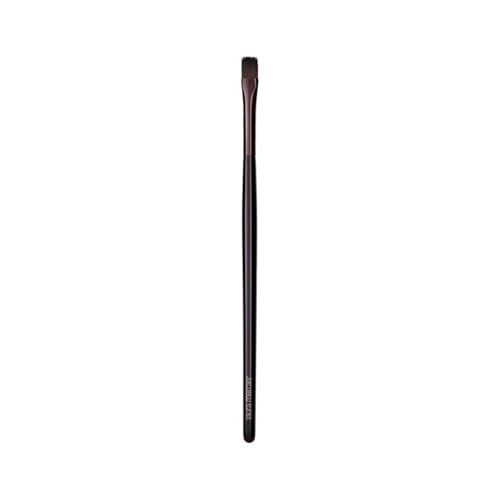
- ✅ The flat nylon edge creates a clearly different straight contact surface
- ✅ Documented formula fit includes wet, powder, and cake-style liner
- ✅ Buyer themes support its role for fine under-lash and lash-line work
- ❌ A flat edge is less point-like when tiny freehand detail is the main goal
- ❌ Some listing reviewers say the fine flat shape can lose definition with heavy use over time
🧪 Lash Lab Notes — Engr. Nusrat (Engineer & Beauty Enthusiast)
I look at the contact pattern here, not a generic precision label. A flat edge changes the motion from drawing with a point to pressing pigment along a short section, and that is why the geometry earns its own slot.
- 💡 Editor’s Note: This brush belongs here because the motion really is different. If we naturally press liner into the lash line, a flat edge is easier to read than another ultra-thin angled tip. That is the whole appeal.
Want to see how buyers feel about the flat shape? Check the Laura Mercier Flat Eye Liner.
Choose it for wet, powder, or cake liner when a pressing motion feels natural.
Care tip: Wash gently, reshape the flat edge while damp, and keep the ferrule out of a soak so the head holds its form.
Flat brushes pair naturally with formulas we can press along the lash line. If cake liner is on our list, the formula itself deserves a separate comparison.
Laura Mercier changes the motion. JASSINS goes back to an angled edge, then changes the value proposition with three brushes.
JASSINS Angled Eyeliner Brush Set
Best Value Set
Three similar fine angled brushes make rotation and backup the real reason to consider this set.
The set contains three ultra-fine angled synthetic brushes. Each is roughly 6.5 inches long, and eyeliner is among the recommended uses. The shape stays familiar across all three tools.
So what do we gain? Convenience. One brush can be drying after cleaning while another is ready. We can also keep separate brushes with different products.
What do we not gain? Three different geometries. These are similar angled heads, so the set does not replace a dedicated flat or pointed brush.
Bottom line: This is the best value-oriented brush set when multiple fine angled tools matter more than several different head shapes.

- ✅ Three ultra-fine angled brushes give us practical rotation or backup
- ✅ Synthetic bristles support several listed brush-applied liner formats
- ✅ The set can reduce how often we reuse one brush across different products
- ❌ Three similar angled heads do not replace a dedicated flat or pointed geometry
- ❌ Our supplied data has no systematic review themes for separate wear or durability conclusions
🧪 Lash Lab Notes — Fauzia (University Student & Beauty Enthusiast)
I see the value in simple rotation and redundancy, especially while one brush is drying after cleaning. Still, quantity only matters if the edge shape and handling already suit the way we apply liner.
- 💡 Editor’s Note: We would choose this only after deciding that a fine angled brush already works for our routine. The three-piece format is the whole point. It is about backups, not experimenting with new geometry.
Thinking about the three-brush format? Compare current buyer impressions for the JASSINS 3Pcs Angled Brush Set.
Buy this when backup brushes matter more than adding new head shapes.
Care tip: Clean each brush, reshape the fine edge, let it dry fully, and store it without crushing the tip.
That closes the list with a practical set instead of another near-duplicate single brush. Now we can match the geometry to our usual line.
Which Eyeliner Brush Shape Should You Choose?
Where should we start? With the motion, not the brand.
For a narrow wing or directional lash-line stroke, an ultra-thin angled brush gives us a slanted edge. That edge can be steered in short sections.
Prefer a smaller point-like contact area? A fine tapered brush fits that style. It makes sense when we build the line gradually instead of stamping it into place.
A flat brush is different. We press pigment into a short section of lash line. The wider straight edge is the whole point, so this is not just another version of an angled brush.
Tightlining needs a small, controlled contact point. A fine or angled head fits that narrow placement area. The full technique is a separate job; the brush only solves the tool side.
And bent-neck brushes? They change how the hand approaches the eye. One Reddit user in the research found a bent liner brush helpful while learning wings. That is a personal account, not proof that bent designs are easier for every beginner.
Gel is another common reason to buy a separate liner brush. If the formula is still undecided, it makes sense to separate that choice from brush geometry.
The shortcut is to match the head to the line. Angled works for directional control. Fine-point or tapered heads suit tiny detail. Flat heads suit pressing, while tightline-focused small heads help with close-root placement.
Keep Your Eyeliner Brush Clean Without Ruining the Edge
A liner brush works right beside the eye. So is cleaning really optional? No. Cleanliness is part of choosing and keeping the tool useful.
According to the FDA, hands should be washed before applying eye cosmetics, and any instrument placed in the eye area should be clean. That guidance is simple, but important.
The FDA also advises against sharing eye cosmetics. For a reusable liner brush, that supports a basic rule: keep it clean and personal instead of passing it between users without proper sanitation.
Shape matters during cleaning too. A fine or flat edge only helps while the bristles stay aligned. Gently reshaping the damp head and drying it without crushing the tip helps preserve that contact pattern.
What if the edge is frayed or rough? Do not treat that as a harmless cosmetic annoyance if it can scratch the eye area. Stop using a brush when damaged bristles, a loose ferrule, or a rough edge makes safe placement uncertain.
The goal is clean, aligned bristles. We do not need a complicated ritual. A short, consistent care routine supports both hygiene and the geometry that makes the brush controllable.
Eyeliner Brush Questions, Answered
Once we ignore the product names, the same questions keep coming back. What do they have in common? Almost all of them come down to geometry, formula fit, and how we move the brush.
❓ Is an angled or pointed eyeliner brush better?
Neither shape wins automatically. An angled brush gives us a directional edge for wings and short lash-line strokes. A pointed or tapered brush puts the contact at the tip for tiny detail.
❓ What brush shape works best with gel eyeliner?
There is no single shape that wins for every gel look. Angled brushes suit directional strokes. Fine brushes help with tiny detail, while flat brushes can press color along the lash line when that motion fits.
❓ What kind of brush is useful for tightlining?
A small angled or fine head fits the job best because the placement area is narrow. We want predictable contact close to the lash roots without turning this brush guide into a full tightlining tutorial.
❓ Is the smallest eyeliner brush always the most precise?
No. A tiny contact point can help, but size is not everything. If a narrow edge splays or bends unpredictably, a slightly wider edge that stays aligned may be easier to control.
Final Thoughts
What is the easiest buying shortcut? Pick the contact pattern we can control, then find a brush that supports that motion. A tiny-looking tip is not the goal by itself. Predictable contact matters more.
The brush solves only half the equation. Once we know the head shape, the eyeliner formula becomes the next decision.
Last update on 2026-10-10 / Affiliate links / Images from Amazon Product Advertising API