⚡ TL;DR: best eyeliner stamp
The best eyeliner stamp should make the wing easier to repeat. It should not move the hard part somewhere else.
What matters first? Stamp size, left-right orientation, and the liner setup. Even a strong option still needs careful placement and a clean connection.
Top Picks
- 🏆 Best Overall — The Flick Stick 10mm Classic — balanced 10 mm stamp workflow
- 🥈 1st Runner-up — iMethod 10mm New — clear left-right stamp pairing
- 🥉 2nd Runner-up — The Quick Flick Grand 12mm — larger 12 mm wing geometry
Matching the outer flick on both eyes can get annoying fast. That is exactly where a stamp can help.
In this best eyeliner stamp guide, we stay focused on the part that changes. We compare wing geometry, stamp direction, connector design, and the technique still left to us.
✨ Inside This Liner Guide
Quick Comparison: Best Eyeliner Stamp
So what changes first from one pick to another? Usually, it is the stamp footprint and the way we finish the line.
These five options solve the same problem in different ways. Comparing the format first makes the extra formula claims much easier to judge.
| Product | Stamp format / size | Liner included? | Best for | Main trade-off |
|---|---|---|---|---|
| The Flick Stick 10mm Classic | Dual-ended left/right pens, 10 mm | Yes | Balanced everyday wings | Fixed 10 mm shape limits customization |
| iMethod 10mm New | Two left/right pens, 10 mm | Yes | Beginners who want clear orientation | Placement and pressure still need practice |
| The Quick Flick Grand 12mm | Two-pen Grand wing, 12 mm | Yes | Larger, dramatic wings | Bigger footprint needs more outer-lid room |
| MCoBeauty Winged Stamp & Liner | Dual-ended thick-tip duo | Yes | Bolder connector lines | Thick tip is less flexible for fine lines |
| VAMP STAMP Vixen | Reusable stamp applicator | No | Choosing a separate liner formula | More setup and tracing than pre-inked pens |
How to Choose the Right Eyeliner Stamp
Stamp size changes the look before formula details matter. A shorter stamp takes up less space. A 12 mm format reaches farther outward and looks more dramatic.
Does that make the larger format better? Not by itself. Lid space, preferred angle, and our usual wing shape all affect the fit.
Next comes the workflow. Dual-ended systems put the stamp and liner tip together. Separate left/right pens make direction easy to see.
A reusable tool such as Vixen works differently. It separates the wing shape from the liner formula. That gives us more control, but adds a coating-and-fill step.
What about the connector tip? A thick tip can build a bold lash line quickly. It also gives us less room for a very fine finish.
So the better question is not only whether a stamp exists. It is how much work the format removes.
And symmetry still needs us. Curved lids, outer-corner angles, pressure, and placement can change the result. Two identical stamp faces can still look different on the eyes.
The Best Eyeliner Stamps
Why do these five make sense together? Each one solves the stamp problem in a different way.
We compare the specific format and variant for every pick. Waterproof or smudge-proof wording stays a listing claim unless independent evidence supports more.
The Flick Stick Winged Eyeliner Stamp 10mm Classic
A balanced 10 mm wing keeps the process simple. We stamp the shape, then use the liquid-liner tip to connect it.
The 10 mm Classic sits in the middle of The Flick Stick’s current size range. That makes it the most neutral starting point in this group.
There are two pens, one for each eye direction. After stamping, the liner end handles the upper lash line and the connection.
So what is the real appeal? Balance. We get a fixed wing without jumping straight to the especially bold footprint of a 12 mm stamp.
That fixed shape is also the limit. It cannot give us every custom angle we may want.
Bottom line: Best balanced stamp workflow. Pick it when a medium wing and built-in liner fit our routine, while remembering the preset shape limits custom angles.

- ✅ The 10 mm Classic gives us a useful middle-ground wing size
- ✅ Separate left/right stamp-and-liner pens make direction easier to follow
- ✅ The listing includes long-wear and waterproof attributes
- ❌ A fixed 10 mm shape gives us less freedom when a custom wing angle matters most
- ❌ Independent wear testing was not available here, so the performance wording stays a claim
🧪 Lash Lab Notes — Engr. Nusrat (Engineer & Beauty Enthusiast)
I see the 10 mm stamp as a repeatability tool. I would keep the same outer-corner reference point on both eyes, then connect the wing. The stamp sets the footprint, while the liner tip still controls that final join.
- 💡 Editor’s Note: The setup makes sense because every end has one clear job. The bigger question is whether this 10 mm footprint matches the wing we normally wear. If it does, the format feels much more useful.
Want the part product copy that cannot show us? See what current buyers say about day-to-day stamping with The Flick Stick 10mm Classic.
A solid fit for symmetrical cat-eye wings when a medium preset shape feels simpler than freehand drawing.
Care tip: Keep the strokes controlled and the caps tight. At removal time, use a suitable eye-makeup remover and avoid rubbing.
The next pick keeps the 10 mm idea. But iMethod makes the left-right setup even easier to read.
iMethod Winged Eyeliner Stamp 10mm New
The left/right stamp pairing takes one decision off our plate. We can see which stamp belongs on each eye before we start.
This 10 mm New Black set uses two liquid eyeliner pens. Each one has a wing stamp and a liner tip for the connection.
The listing also names easy-to-use, smudge-proof, waterproof, cruelty-free, and vegan attributes. Those performance and ethical statements remain product-listing claims unless independently supported.
So why is this the beginner pick? The format reduces the mental flip between left and right. That sounds small, but it removes one easy point of confusion.
The stamp still cannot choose our angle or pressure. A clear label helps, but placement remains part of the skill.
Bottom line: Best beginner-oriented layout. The left/right setup removes one layer of guesswork, while steady placement still needs a little practice.
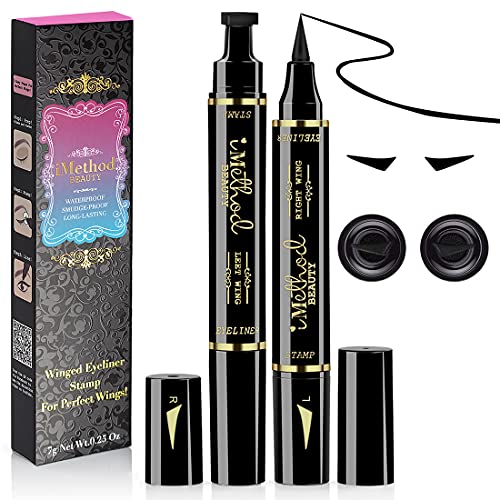
- ✅ Two dedicated pens make the left/right direction obvious at a glance
- ✅ The 10 mm stamp keeps the wing size in a moderate range
- ✅ Built-in liner tips keep the stamp and connector in one setup
- ❌ A fixed 10 mm shape may feel restrictive once we want custom wing length or angle
- ❌ If independent wear proof matters most, the evidence available here is limited to listing claims
🧪 Lash Lab Notes — Zayba (A-Level Student & Beauty Enthusiast)
I like how the left/right labels simplify that first decision. There is less guessing about which direction the wing should face. Light, even pressure still matters, and the connector line is where we can tidy the finish.
- 💡 Editor’s Note: This one explains itself through the layout. We would choose it when fewer setup decisions matter more than total customization. The short learning curve does not disappear, but it becomes easier to understand.
Wondering how that two-pen setup feels outside the product page? Read feedback for iMethod 10mm New.
A practical choice for first-time stamp users who want a clear left/right system for cat-eye wings.
Care tip: Keep both pens capped when we are done. Store them as directed, then remove the formula gently after wear.
Need something bolder than 10 mm? The next option deliberately takes up more space.
The Quick Flick Winged Eyeliner Stamp Grand 12mm
A 12 mm dramatic wing gives this two-pen set the biggest stamp footprint among these picks.
The Grand variant uses a 12 mm wing shape in Intense Black. After stamping, a felt-tip liquid liner handles the rest of the line.
The product listing names waterproof, cruelty-free, vegan, and related formula attributes. But that is not why this pick stands out.
The key difference is geometry. A larger footprint can work well when the goal is a clearly visible cat eye.
And the catch? That same 12 mm shape needs more outer-lid room. On a compact look, it can simply feel too large.
Bottom line: Best for intentionally bold wings. Choose the Grand size when drama is already the goal, not because a larger stamp is automatically easier.
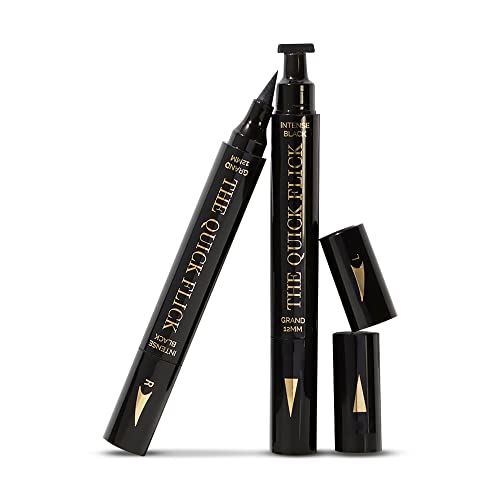
- ✅ The Grand 12 mm shape gives us a noticeably larger wing footprint
- ✅ The stamp-and-liner setup keeps both steps inside one system
- ✅ The listing includes waterproof and vegan attributes
- ❌ Smaller lids or subtle-wing styles may make the 12 mm footprint feel too large
- ❌ “Hypoallergenic” or sensitivity-friendly wording still should not be read as a clinical guarantee
🧪 Lash Lab Notes — Fauzia (University Student & Beauty Enthusiast)
I would treat the larger stamp as a shortcut only when a bold wing is already the plan. The size can save shaping work. It also makes placement more important because a misplaced outer edge has less room to hide.
- 💡 Editor’s Note: Start with the look we want, not the feature list. If a long wing is the goal, Grand makes sense. If we usually wear something compact, its biggest strength becomes its main trade-off.
Is that bigger footprint comfortable for everyday wear? Check what buyers say about the 12 mm footprint in reviews for The Quick Flick Grand 12mm.
A strong match for larger cat-eye looks where a 12 mm preset wing suits the makeup style we already want.
Care tip: Use controlled strokes and close both pens firmly. For removal, reach for a gentle eye-makeup remover instead of rubbing.
Maybe the wing can stay bold, but the connector needs more presence too. That is where MCoBeauty changes the feel.
MCoBeauty Winged Eyeliner Stamp & Liner Duo
A thick-tip workflow pairs the wing stamp with liquid liner. The result is built for a bolder connection along the lash line.
The Black Thick Tip variant is dual-ended. So the stamp and liner live in one pen instead of a left/right pair.
Its listing names a unique applicator design plus waterproof, long-lasting, cruelty-free, and vegan attributes. Those details matter, but the thick connector changes the decision more.
Do we already like a stronger black line? Then this geometry can make sense. A very fine lash line gives us less room to work with this tip.
Bottom line: Best for a bolder connector line. It fits a more dramatic finish better than a very fine, barely-there wing.
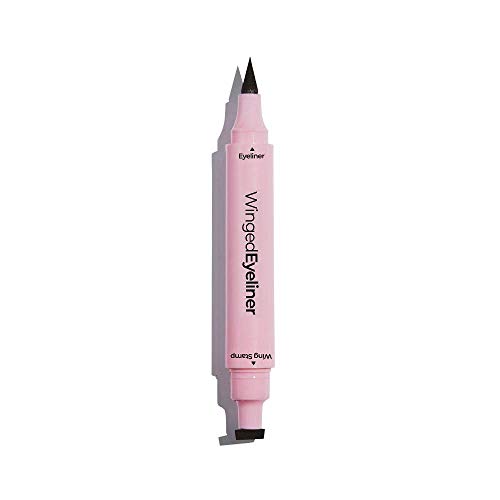
- ✅ The dual-ended design keeps the wing stamp and liquid liner together
- ✅ A thick tip naturally suits a stronger lash-line finish
- ✅ The listing includes waterproof, long-lasting, cruelty-free, and vegan attributes
- ❌ The thicker connector gives us less flexibility when an extremely fine line is the goal
- ❌ Independent performance testing was not available here, so durability wording stays listing-based
🧪 Lash Lab Notes — Mahmuda (Homemaker & Beauty Enthusiast)
I would match this thicker tip with a look that already wants a visible lash line. That helps the connector feel intentional beside the stamped wing. For a very delicate finish, the same thickness gives us less flexibility.
- 💡 Editor’s Note: Think about the personality of the finished line. We would not choose a thick tip just because it sounds easier. We would choose it when the stamped wing needs a bold connector to look balanced.
Want a reality check on that thicker pairing? See how current buyers describe the stamp-and-thick-tip pairing for MCoBeauty Winged Stamp & Liner.
Best suited to bolder winged looks where a thicker connector line already belongs in the plan.
Care tip: Close both ends securely after use. Store the tool as directed, and keep removal gentle around the eye area.
Our last pick drops the pre-inked pen completely. That changes the whole rhythm of the process.
VAMP STAMP Vixen Winged Eyeliner Stamp
A reusable stamp tool keeps the wing shape separate from the liner formula.
Vixen is an applicator, not a pre-inked liquid-liner pen. We use it with a separate liner product.
That means the order changes. Coat the tool, stamp the shape, then trace or fill it instead of flipping to a built-in connector tip.
Does the extra step have a purpose? Yes. It gives us more freedom over the separate liner formula.
The trade-off is convenience. We lose the one-pen workflow of a dual-ended option. At our latest check, the item was marked currently unavailable.
Bottom line: Best reusable stamp mechanism. It fits us better when separate liner choice matters more than a one-pen routine.

- ✅ The reusable format lets us separate the wing shape from the liner we choose
- ✅ The standalone applicator works differently from the dual-ended pen options
- ✅ The listing includes a cruelty-free material feature
- ❌ A separate-liner setup adds more work when we want one-tool stamping and connecting
- ❌ Availability needs another check because the listing was marked currently unavailable at our latest check
🧪 Lash Lab Notes — Engr. Nusrat (Engineer & Beauty Enthusiast)
I think about this as two separate jobs: shaping the wing and choosing the formula. Coating the stamp evenly becomes part of the mechanism. The first press gives us the blueprint, but we still trace or fill it afterward.
- 💡 Editor’s Note: This one makes more sense once we stop comparing it like a pre-inked pen. The extra setup is real. It is also the trade-off for choosing the stamp shape separately from the liner formula.
Not sure whether the reusable setup is worth that extra step? Before choosing it, see what real buyers report about VAMP STAMP Vixen.
A better fit when separate liner choice matters more than the convenience of a single pre-inked pen.
Care tip: Follow the package care directions. Keep the stamp edge free from dried product between uses.
Now we have five very different workflows. The next question is whether a fixed stamp fits the way our wing actually sits.
Who an Eyeliner Stamp Is For — and When to Skip One
A stamp makes the most sense when repeatability matters more than total freedom. It can remove the hardest freehand shape from the process.
That can help with beginner routines, quick makeup, or a wing size we wear again and again. But what if the angle changes every time?
Then a fixed stamp may start fighting us. The same problem can show up when a tiny custom flick is the goal, or a lid fold cuts across the preset shape.
Hooded eyes are not an automatic “no.” They simply make the fit more personal. We need to judge the shape with the eye open and relaxed, instead of trusting an “all eye shapes” claim by itself.
A stamp is a niche alternative inside the wider eyeliner category. Traditional formats give us more flexibility when the preset shape feels too fixed.
So what should a stamp actually do for us? Reduce the amount of wing drawing we have to improvise.
If we spend more time fighting the preset shape than drawing the flick, the tool has stopped solving the problem.
Stamp Limitations, Eye Shape, and Eye-Area Safety
A stamp can look perfect on the back of a hand. An eyelid is different. It curves, moves, and blinks.
Independent first-hand testing of wing-stamp tools has described a short learning curve around the stamping motion. So “easy” is better read as fewer shape decisions, not zero technique.
What changes on hooded folds? A fixed wing may look different once the eye opens. Checking placement with the eye relaxed helps us see the shape before committing to the connector line.
The stamp handles the outer flick. We may still need liner to connect and refine it, which is where the full technique guide becomes useful.
And safety? Convenience does not replace basic eye-area hygiene.
The American Academy of Ophthalmology advises safe cosmetic practices around the eyes. So we keep applicators clean, avoid sharing eye makeup, and stop if the eye area becomes irritated.
These stamps do not need to become waterline tools to earn a place here. Their job is the outer wing. Keeping that scope clear stops us from asking the format to do something it was not chosen for.
Common Questions About Eyeliner Stamps
Still deciding whether a stamp fits our routine? These are the practical questions that usually settle it.
We will keep the answers focused on the stamp decision. Full wing technique belongs in the dedicated guide.
❓ Do eyeliner stamps actually work?
They can make the outer wing shape more consistent and cut down freehand drawing. But one press does not make both eyes identical.
Placement, pressure, lid shape, and the connector line still affect the finish. So a short learning curve is normal.
❓ What eyeliner stamp size should I choose?
Start with the wing we already like wearing. A smaller stamp generally takes up less lid space.
A 12 mm style creates a longer, more dramatic shape. So the best eyeliner stamp size is about fit, not a higher quality score.
❓ Are eyeliner stamps good for beginners?
They can help because the outer shape is already set. Clear left/right stamps can make the setup easier too.
The beginner work does not disappear. We still need a consistent angle and a clean connection to the lash line.
❓ Do all eyeliner stamps include eyeliner?
No. The Flick Stick, iMethod, The Quick Flick, and MCoBeauty options here include liner functionality in the same system.
VAMP STAMP Vixen works differently. It is a reusable applicator used with a separate liner product.
Final Thoughts
So what is the simplest decision rule? The best eyeliner stamp should already resemble the wing we want to wear.
That is what reduces work. Start with stamp size and workflow, then treat waterproof or long-wear claims as supporting details. They cannot rescue a shape that does not fit.
A useful stamp should make the outer flick more repeatable. It should not turn alignment into a new project.
If the fixed shape keeps fighting the eye or the look, a broader eyeliner option or full freehand technique makes more sense.
Last update on 2026-10-09 / Affiliate links / Images from Amazon Product Advertising API