
⚡ TL;DR: best eyeshadow primer for oily lids
Oily-lid performance depends more on resisting oil, smudging, and transfer—and on letting a thin layer set—than on chasing the biggest wear-time number.
The strongest choice is the primer that matches how your makeup actually fails, whether that is crease migration, lid-to-lid transfer, visible base color, or budget.
Top Picks
- 🏆 Best Overall — Too Faced Shadow Insurance — Strongest direct oil-control evidence
- 🥈 1st Runner-up — NARS Smudge Proof Base — Best matte fast-dry grip
- 🥉 2nd Runner-up — Milani Eye Shadow Primer — Best budget value
Shadow can look crisp at breakfast and collect in the crease by lunch when lids get oily.
Finding the best eyeshadow primer for oily lids comes down to direct oil-control evidence, smudge and transfer resistance, a clean dry-down, and a formula you can apply thinly.
This guide stays focused on oily lids; mature- or sensitive-eye needs deserve their own decision framework.
✨ Inside This Eye Shadow Guide
🌸 Psst…
Some links in this post are affiliate links. If you shop through them, we may earn a small commission at no extra cost to you — like a little coffee while we keep testing beauty favorites. ☕💄
Quick Comparison: Best eyeshadow primer for oily lids
These six primers solve different oily-lid problems, so the most useful comparison is role first, wear claim second.
Brand wear claims are not interchangeable laboratory results.
| Product | Best For | Finish/Base | Wear Claim | Main Trade-Off |
|---|---|---|---|---|
| Too Faced Shadow Insurance | Direct oil-control focus | Gel, natural finish | 24-hour, waterproof claim | Mixed texture and applicator feedback |
| NARS Smudge Proof Base | Matte fast-dry grip | Cream/powder hybrid, matte | All-day wear claim | Premium value is debated |
| M·A·C Prep + Prime 24-Hour | Long crease-resistant wear | Liquid, matte | 24-hour claim | Can feel dense or dry |
| Milani Eye Shadow Primer | Budget daily wear | Gel, matte/semi-matte | Extended-wear positioning | Consistency can separate |
| Sigma Persuade Base Primer | Stick-format control | Solid matte crayon | 8+ hour claim | Texture may feel dry |
| NYX Ultimate Primer | Deeper tinted base | Cream, Deep shade | Long-wear claim | Sensitivity feedback is mixed |
What Oily Lids Need From an Eyeshadow Primer
An oily lid has more than one way to break down eye makeup.
Surface oil can loosen the bond between shadow and skin, while hooded or folded lids add repeated skin-to-skin contact that can move pigment even when the formula itself resists water.
That is why a big “24-hour” or “waterproof” claim does not automatically answer the oily-lid question.
The practical first move is a thin layer, fully set.
Current directions across several primer brands converge on clean, dry lids, a small amount of product, and a short setting period before color goes on.
Too much primer can create a thicker, more mobile layer, so adding more is not always the fix when shadow still creases.
Formula architecture matters more than hunting for one magic ingredient.
Fast-setting carriers, film-forming materials, and powders can all contribute to a base that grips color and limits transfer, but no single ingredient guarantees the same result on every oily lid.
The useful question is whether the whole formula dries into a stable, comfortable layer and matches the kind of breakdown you see most often.
The Best Eyeshadow Primers for Oily Lids
Each pick below earns a distinct role rather than repeating the same long-wear promise six times.
The comparison stays centered on oil breakthrough, smudging, transfer, dry-down, and practical fit.
Too Faced Shadow Insurance Eye Shadow Primer
Best Overall for Oily Lids
This gel primer stands out because its current positioning goes beyond generic long wear and directly addresses breakthrough oil while also carrying waterproof and 24-hour claims.
That specificity matters on oily lids.
A waterproof claim is useful, but the stronger reason to put this at the top is that the brand explicitly connects the formula to oily eyelids; the primer is also a light-coverage gel with a doe-foot applicator.
The catch is that the user experience is not uniformly silky.
Feedback around thickness, greasiness, durability, and the flat doe-foot is mixed, so this is still a product that rewards a controlled, thin application rather than a heavy swipe.
Bottom line: Best direct oily-lid case. Choose it when oil breakthrough is the main problem, but keep the layer light and let it settle before shadow.

- ✅ Direct oily-eyelid and breakthrough-oil positioning
- ✅ Waterproof and long-wear claims
- ✅ Light-coverage gel format
- ❌ Anyone who dislikes a flatter doe-foot applicator
- ❌ Lids that feel uncomfortable with thicker or drier textures

🧪 Lash Lab Notes — Engr. Nusrat (Engineer & Beauty Enthusiast)
A thin, even film matters more than piling on product. The useful combination here is oil-focused positioning plus a base designed to set before shadow, so application control is part of the performance story.
- 💡 Editor’s Note: We would pay more attention to the direct oil language than to the headline 24-hour number. If the applicator deposits more than you need, wiping off the excess first is a sensible way to keep the base thin without changing the product itself.
See current buyer feedback for Too Faced Shadow Insurance before deciding.
Best for oily lids that need direct oil-focused positioning and waterproof wear support.
If your main issue is a visibly matte, quick-setting surface rather than direct oil-breakthrough messaging, the next pick takes a different route.
NARS Smudge Proof Eyeshadow Base
Best Matte Fast-Dry Grip
This lightweight matte base is the cleaner fit when you want matte, fast-dry grip without making a direct breakthrough-oil claim the deciding factor.
The cream/powder-hybrid formula dries to a matte finish, and user feedback strongly favors crease prevention and long wear on oily and hooded lids.
It is also repeatedly used under both shadow and liquid liner, which fits a makeup routine where transfer, not just fading, is the annoyance.
The trade-off is value.
Some users consider the small amount worth the premium because of the wear, while others do not, and there are isolated marketplace-condition complaints about older-looking or under-filled units.
Those reports are product-condition concerns rather than evidence that the formula itself fails broadly.
Bottom line: Best for matte grip. Pick it when crease control and a lightweight matte base matter more than a direct oil-control claim.

- ✅ Matte, lightweight base
- ✅ Strong crease-prevention feedback
- ✅ Frequently praised for long wear
- ❌ Budget-focused shoppers who want more product for the spend
- ❌ Anyone uneasy about inconsistent third-party seller condition reports
🧪 Lash Lab Notes — Mahmuda (Homemaker & Beauty Enthusiast)
The matte finish can keep an everyday eye look tidy without needing a visibly thick base. That makes a thin application especially useful when comfort and simple makeup steps matter.
- 💡 Editor’s Note: We like this role for someone who already knows that a matte base works well on their lids. The decision is less about a flashy wear-time promise and more about whether a light, dry-feeling grip is worth the premium for your routine.
Check recent impressions of NARS Smudge Proof Base before you choose.
A strong fit for oily or hooded lids that prefer a lightweight matte primer under shadow.
For a longer headline wear claim with a more explicit set-time habit, M·A·C is the better comparison.
M·A·C Prep + Prime 24-Hour Extend Eye Base
Best for Long, Crease-Resistant Wear
This liquid matte primer is built around long wear, color fidelity, and crease resistance, with a practical full-minute set time that makes the application step easy to understand.
M·A·C claims up to 24-hour wear and says the formula helps prevent fading and creasing.
User feedback also leans positive on humidity resistance, smooth application, and stronger-looking shadow color, including use with both cream and powder formulas.
It is not the most oily-lid-specific claim set in the roundup, which is why it sits below Too Faced for this keyword.
A small minority also describe the texture as dense or dry and harder to spread, so the thin-layer rule matters here too.
Bottom line: Best for long set wear. Choose it when crease resistance and a deliberate dry-down step suit your routine better than a direct oil-control claim.

- ✅ 24-hour crease- and fade-resistance claim
- ✅ Positive humidity-resistance feedback
- ✅ Works with cream and powder shadow formats
- ❌ Anyone who wants the most oil-specific brand positioning
- ❌ Lids that dislike a denser or drier-feeling base
🧪 Lash Lab Notes — Dr. Rabeya (Dentist & Beauty Enthusiast)
Letting a thin layer dry for the full minute is a small precision step with a clear purpose. It gives the base time to settle before color is pressed on top, rather than asking wet primer to hold more product immediately.
- 💡 Editor’s Note: We would choose this for someone who does not mind building a short pause into eye makeup. That waiting step is easy to skip, but it is also one of the clearest ways to use this formula as intended without adding more product.
Compare current reviews for M·A·C Prep + Prime 24 hours before committing.
Good for long makeup days when a matte base and deliberate set time fit your routine.
Apply a thin layer and allow roughly one to two minutes before adding eyeshadow.
If price is the bigger constraint, the next primer keeps the decision centered on everyday value.
Milani Eye Shadow Primer
Best Budget
This gel primer makes the strongest budget value case in the group without relying on low price alone as proof of performance.
The lightweight gel has a matte-to-semi-matte finish and is positioned to extend color wear, while user patterns repeatedly praise longevity, easy blending, color vibrancy, and value.
Oily-lid users also report less disappearing and creasing, but that remains user-reported rather than independent testing.
Consistency is the main watch-out.
Some users report separation in the tube, especially after temperature changes, and an isolated reviewer reported burning or possible irritation.
Those are not broad manufacturer warnings, but they are enough reason to shake the tube when needed and stop using it if the eye area becomes uncomfortable.
Bottom line: Best budget daily pick. Choose it when you want a lower-cost primer with solid everyday wear feedback and can manage occasional consistency quirks.

- ✅ Strong value-for-money feedback
- ✅ Smooth, non-greasy application reports
- ✅ Crease-resistance and color-wear praise
- ❌ Anyone who wants completely consistent tube texture every time
- ❌ Sensitive lids that react to a new formula
🧪 Lash Lab Notes — Fauzia (University Student & Beauty Enthusiast)
The value case is strongest for daily wear, where a small amount can keep primer from becoming the expensive step in the routine. Using less also fits the thin-layer approach oily lids usually need.
- 💡 Editor’s Note: We would keep this on the shortlist when budget matters but still judge it by how it behaves on your lids, not by price alone. If the tube has separated, shaking before application is a practical first check before assuming the formula has stopped working for you.
Read more buyer experiences with Milani Eye Shadow Primer before ordering.
A practical choice for everyday wear when value matters as much as crease control.
Shake if the formula separates, then use a small dab per eye and blend thinly.
For more targeted placement than a squeeze-tube or doe-foot base, Sigma changes the format entirely.
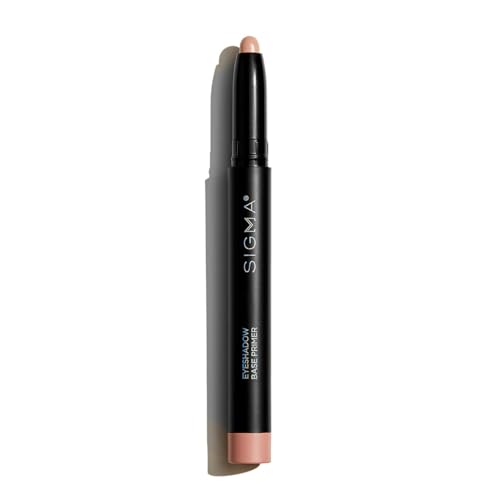
Sigma Beauty Eyeshadow Base Primer — Persuade
Best Stick Primer
This matte crayon earns its place through stick-format control, giving you a different application style from the liquid and gel primers above.
The Persuade shade is a light pink-beige matte tint, and the product is positioned for more than eight hours of crease- and fade-resistant wear.
The retractable tip makes it easy to place primer only where you want it, then blend the deposited color with a finger or brush before shadow.
Texture is the trade-off.
Some users describe it as creamy and smooth, while others find it too dry, and at least one report describes immediate creasing and more difficult removal.
A stick also makes it easy to swipe on too much, so controlled placement still needs a thin final layer.
Bottom line: Best for precise placement. Pick it if you prefer a targeted crayon base and matte tint, but blend each swipe down before layering shadow.
- ✅ Retractable stick for targeted placement
- ✅ Matte tinted base
- ✅ 8+ hour crease- and fade-resistant positioning
- ❌ Anyone who dislikes potentially drier stick textures
- ❌ Heavy-handed application that leaves a thick primer layer
🧪 Lash Lab Notes — Zayba (A-Level Student & Beauty Enthusiast)
The crayon format makes placement straightforward because the base goes only where it is needed. The useful beginner habit is still to blend the swipe thinly instead of treating the stick like a shadow crayon.
- 💡 Editor’s Note: We see the format as the real reason to choose this over another matte primer. If precise placement feels easier than controlling a wand or squeeze tube, that convenience can matter more than chasing another hour on the wear claim.
See how buyers rate Sigma Persuade Base Primer before you decide.
Best for anyone who prefers a retractable stick and a matte tinted base.
Blend the crayon layer with a finger or brush; removal may take more effort for some users.
The last pick shifts from application format to visible base color on deeper skin tones.
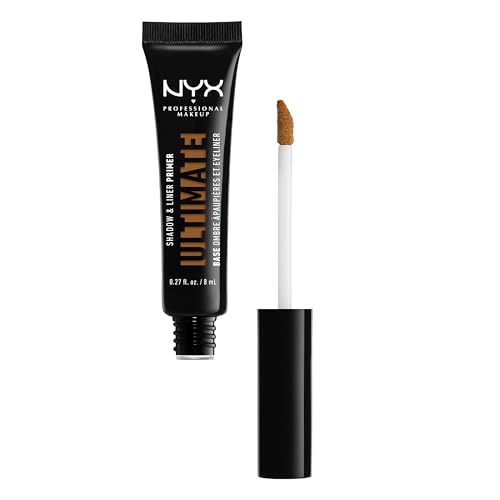
NYX Ultimate Shadow & Liner Primer
Best Tinted Option for Deeper Skin Tones
The Deep shade gives this cream primer a deeper tinted base that can sit closer to darker lid tones than the beige or pale bases many users complain about.
NYX positions the formula to extend shadow and liner wear, with a creamy, lightweight feel and soft-blurring effect.
Users of the Deep shade specifically praise stronger color payoff and the rarity of finding a primer that does not look beige, white, or pearly on deeper skin.
Tint is not oil control by itself.
Feedback also includes isolated sensitivity and product-condition complaints, so the shade benefit should be treated as a visibility and color-base advantage, not proof that Deep resists oil better than another shade or another primer.
Bottom line: Best deeper tinted base. Choose it when visible primer color is part of the problem and you still want a long-wear cream base.
- ✅ Deep tint avoids a visibly pale base for many darker complexions
- ✅ Creamy doe-foot application
- ✅ Positive color-payoff and wear feedback
- ❌ Anyone who needs a sensitivity-focused formula choice
- ❌ Shoppers who want tint to double as proof of stronger oil resistance
🧪 Lash Lab Notes — Dr. Sazia (Medicine Specialist & Beauty Enthusiast)
A closer-to-skin-tone base can reduce the urge to over-layer primer just to cover visible contrast. Keep the layer thin, and stop using the product if the eye area becomes irritated.
- 💡 Editor’s Note: We would choose the Deep shade for its color-base advantage, not because darker tint changes the physics of oily-lid wear. That distinction keeps the recommendation useful for deeper complexions without overpromising what the shade itself can do.
Check current feedback on NYX Ultimate Primer before choosing the Deep shade.
Best for deeper complexions that want a tinted cream base instead of a pale primer cast.
Apply a small amount with the doe-foot, blend evenly, and let it set before color.
Whichever formula you choose, technique is the next place to look when creasing refuses to stop.
How to Apply Eyeshadow Primer on Oily Lids
Start with clean, dry lids.
Skincare or leftover makeup on the lid can give primer another slippery layer to sit on, so the goal is a simple, even surface before you add the base.
Use less than feels necessary and spread it into one thin layer from the lash line through the area where shadow will sit.
Then give it time to set before adding color; with M·A·C, the guidance is especially clear about allowing about a minute before shadow.
If creasing persists, try less product, more set time before replacing the primer.
A heavier layer can stay mobile, while hooded-lid contact can create transfer even when the shadow itself has good grip.
Concealer can even the lid tone, but it is not automatically a substitute for a primer designed to extend eye-makeup wear.
Primer solves the shadow base, not every wear problem around the eye.
A broader oily-eye routine can help separate what is caused by the lid base from what belongs to liner or the rest of the look.
Liner can still transfer even when the shadow stays in place.
If liner keeps sliding while a good primer already keeps shadow in place, the fix usually lives in liner formula and technique rather than another shadow product. A dedicated guide walks through the specific steps that help liner grip an oily lid.
If that is the part of the look that keeps moving, it needs its own product decision rather than another layer of eyeshadow primer.
Technique cannot turn the wrong formula into the right one, but it is the quickest variable to fix before you start buying replacements.
Common Questions About Eyeshadow Primer for Oily Lids
A few recurring questions come down to separating primer function from other makeup steps.
These answers stay focused on oily-lid wear rather than expanding into other skin-type needs.
❓ Can I use concealer instead of eyeshadow primer on oily lids?
You can use concealer to even lid tone, but it does not automatically provide the same crease, smudge, or wear-extension behavior as a dedicated primer.
For the best eyeshadow primer for oily lids, the more useful test is how well the base sets and controls transfer on your own lid rather than whether it doubles as coverage.
❓ Is waterproof primer automatically better for oily lids?
No.
Waterproof describes resistance to water, while oily-lid wear also depends on oil breakthrough, friction, transfer, and how fully the base sets.
Treat waterproofing as one useful feature, not a guarantee of better oil control.
❓ What if a matte primer looks patchy?
First reduce the amount and make sure the layer is evenly spread rather than trying to cover patchiness with more primer.
If mature or textured lids are the actual concern, a different primer decision framework may be more useful than pushing a very matte base harder.
❓ Do hooded oily lids need anything different?
They often have an extra transfer challenge because folded skin can touch itself through the day.
A thin, fully set base is still the starting point, but persistent lid-to-lid transfer may require adjusting both primer amount and the eye products layered above it.
Final Thoughts on Eyeshadow Primer for Oily Lids
The simplest decision rule is to match the failure mode: direct oil breakthrough, matte grip, long crease-resistant wear, budget, stick placement, or visible base color.
Then use the primer in a thin, fully set layer so the fix does not become another mobile layer that leaves you asking where your shadow went by midday.
If oily-lid performance is only one part of your shopping decision, the broader primer roundup gives you the next comparison point.
It opens the choice beyond this article’s oily-lid boundary without undoing the fit you have already narrowed down.
Last update on 2026-10-18 / Affiliate links / Images from Amazon Product Advertising API