
⚡ TL;DR: best false eyelash applicator tool
A good applicator gives the lash band enough contact to feel controlled without putting our whole hand in the way. Wide curved jaws suit steady placement, while angled, dual-ended, and soft-tip tools make more sense when visibility, pressing, finishing, or contact feel is the bigger issue.
Top Picks
- 🏆 Best Overall — Tweezerman Wide Grip Applicator — broad contact, easy control
- 🥈 1st Runner-up — SEPHORA COLLECTION Angled Applicator — clear 90-degree sightline
- 🥉 2nd Runner-up — Ardell Dual Lash Applicator — place then press precisely
False lashes can feel fiddly for one very simple reason. We are trying to hold a curved band while a narrow tool pinches one tiny spot or sits right in front of the mirror. So our search for the best false eyelash applicator tool comes down to contact area, sightline, and how naturally the grip lets us position and press the band.
This guide stays with applicator tools, not false-lash styles. Finishing features and cleanability still matter. But geometry and control carry more weight because we feel those differences through every placement move.
✨ Inside This Lash Guide
🌸 Psst…
Some links in this post are affiliate links. If you shop through them, we may earn a small commission at no extra cost to you — like a little coffee while we keep testing beauty favorites. ☕💄
Quick Comparison: Best False Eyelash Applicator Tool
What changes from one tool to the next? Mostly the way it solves a control problem. The table keeps those design differences easy to scan before we get into the details.
| Editorial Short Name | Pick | Design | Best For | Main Trade-Off |
|---|---|---|---|---|
| Tweezerman Wide Grip Applicator | Best Overall | Wide curved stainless grip | Broad strip-band control | Rigid feel for fine adjustments |
| SEPHORA COLLECTION Angled Applicator | Best for Beginners | 90-degree angled stainless tool | Clearer placement sightline | User fit varies by hand position |
| Ardell Dual Lash Applicator | Best Dual-Ended | Grip plus rubber pressing tip | Placing and securing corners | Durability feedback is mixed |
| JAPONESQUE False Lash Applicator | Best for Placement + Finishing | Cushioned grip plus comb | Positioning and blending | Some tips may align imperfectly |
| Ardell Silicone Lash Applicator | Best Soft-Tip | Soft silicone contact | Softer-feeling band handling | Grip can vary with residue |
Best False Eyelash Applicator Tools
All five tools do the same basic job: hold and position false lashes. The difference is how they give us control. Is the annoying part gripping the band, seeing the lash line, pressing a corner, or finishing the lashes afterward? That answer points us toward the right design.
Tweezerman Wide Grip Lash Applicator
Best Overall — broad contact, steady control
A broad curved jaw gives more of the lash band somewhere to sit. The wide-grip body is also easier to steady than a narrow pointed tweezer. Put those two things together, and this becomes our most balanced option for strip-lash placement.
The curve is shaped to follow the lash strip and lash line. Flip to the opposite end and it can press the band into place too. So one tool covers pickup, positioning, and that last bit of pressure.
So what is the trade-off? There is a learning curve if very narrow tweezers already feel familiar. The rigid stainless build and wider mouth can also feel less nimble for tiny cluster adjustments or very fine corner work.
Bottom line: Best all-around control when we mainly want a secure strip-lash hold plus an easy pressing finish.

- ✅ Wider gripping area supports more of a strip band
- ✅ Curved stainless edge follows the shape of the lash line
- ✅ The opposite end can press the band once it is placed
- ✅ Reusable stainless steel is simple to clean between uses
- ❌ Tiny cluster adjustments can feel less precise with the broad curve
- ❌ The rigid squeeze may feel unfamiliar if we prefer softer contact
- ❌ Firmer-feeling edges still need careful, controlled movement near the eye
🧪 Lash Lab Notes — Engr. Nusrat (Engineer & Beauty Enthusiast)
I look at the pressure spread first. A wider gripping body spreads hand pressure over more of the tool, so small angle changes can feel less fiddly. The trade-off is simple: a broader jaw gives us less pinpoint maneuverability.
- 💡 Editor’s Note: This one works because its main features support each other. The wider body helps steady the hand, and the curve supports more of the band at once. For full strips, that balance is useful. For tiny cluster-by-cluster work, the same width can feel like too much tool.
Want another perspective before choosing? See current buyer feedback for Tweezerman Wide Grip Applicator before deciding.
It suits strip lashes when broad, front-on control matters more than tiny adjustments.
Care tip: Wipe both gripping and pressing surfaces after use. Dried adhesive can get in the way of clean contact next time.
That broad-contact shape gives us a useful baseline. What if the bigger problem is seeing past our own hand? The next pick changes the angle instead.
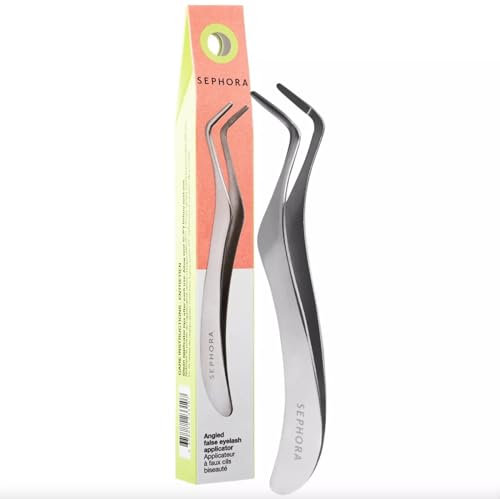
SEPHORA COLLECTION Angled False Eyelash Applicator
Best for Beginners — a clearer 90-degree sightline
When our hand keeps blocking the view, a 90-degree angle can matter more than a wider jaw. The offset shape lets the gripping end approach the lash line while more of the hand stays outside the direct sightline.
That idea is easy to understand for newer lash wearers. Hold. Align. Release. Then make a small correction without parking a straight tweezer directly in front of the eye. The stainless construction also keeps the tool reusable and straightforward.
Does the angle suit every hand? Not necessarily. Hand position, tip alignment, adhesive residue, and the way we naturally approach the eye can all change how controlled an angled tool feels.
Bottom line: Best for clearer sightlines when a straight applicator makes placement feel visually crowded.
- ✅ Offset geometry can keep more of the hand out of the direct view
- ✅ The purpose-built shape supports both placement and small adjustments
- ✅ Stainless construction makes the tool reusable
- ❌ A fixed angle may feel awkward if a straight-on grip already works well
- ❌ Adhesive buildup can make handling less clean until the tool is cleaned
- ❌ Our available record does not include deep, consolidated buyer feedback for this exact listing
🧪 Lash Lab Notes — Zayba (A-Level Student & Beauty Enthusiast)
For me, the useful idea is visibility. Keeping the hand a little farther from the direct sightline can make the band easier to judge while we are still learning placement. The angle matters most when seeing clearly is the problem, not squeezing strength.
- 💡 Editor’s Note: The appeal is geometry, not a pile of extra features. If a straight tool keeps sitting between the eye and the mirror, this offset shape changes the working angle. That is the whole point, and it does not complicate the routine.
See how shoppers rate SEPHORA COLLECTION Angled Applicator before deciding whether the offset shape suits the routine.
This is the beginner-friendly pick when a little more visual room around the lash line would help.
Care tip: Keep the gripping surfaces clean after use. Around the eye, rigid edges still deserve slow, controlled movement.
A clearer view can make placement easier. But what if the band is already in place and the corners still need help? That is where the next design gets interesting.
Ardell Dual Fake Lash Applicator
Best Dual-Ended — grip first, then press
One gripping edge often has to do too many jobs. This design splits them. One end picks up and places the lash, while the other uses an angled rubber tip to press the band and corners into position.
That place, then press setup is handy when the center looks right but an inner or outer corner still needs a controlled nudge. We also do not have to keep turning the same rigid edge toward the lash line for every adjustment.
But here is the honest part. Customer feedback in the product record is positive about ease of application, especially for beginners, while durability is the obvious catch. Several supplied reviews report breakage. Some users also do not love the shape or overall value.
Bottom line: Best two-stage workflow when we want separate gripping and pressing functions in one compact tool.

- ✅ Two ends keep placement and pressing as separate jobs
- ✅ The angled rubber tip gives corners a different contact surface
- ✅ Supplied feedback often describes application as easier
- ❌ Durability feedback matters if small tools tend to get knocked around
- ❌ The overall shape may not feel natural in every hand position
- ❌ Adhesive buildup can make either end harder to control until it is cleaned
🧪 Lash Lab Notes — Mahmuda (Homemaker & Beauty Enthusiast)
I like the logic of giving pressing its own end. It can mean less wrist twisting and no tool swap after the band is placed. That is especially practical when the center is secure but one corner still needs a gentle, targeted press.
- 💡 Editor’s Note: This is the most task-specific option here. Its whole appeal is the handoff from gripping to pressing. That convenience is useful, but the durability feedback deserves equal weight, especially if the tool will be carried loose rather than stored with some protection.
Want to compare buyer experiences on the two-ended format? Check current reviews for Ardell Dual Lash Applicator.
It makes the most sense for strip or cluster users who want a separate pressing end once placement is done.
Care tip: Clear adhesive residue after each use. Both the gripping end and the pressing tip work better when their contact surfaces stay clean.
The next tool combines two jobs too. The difference? Instead of a pressing end, it adds a finishing comb.
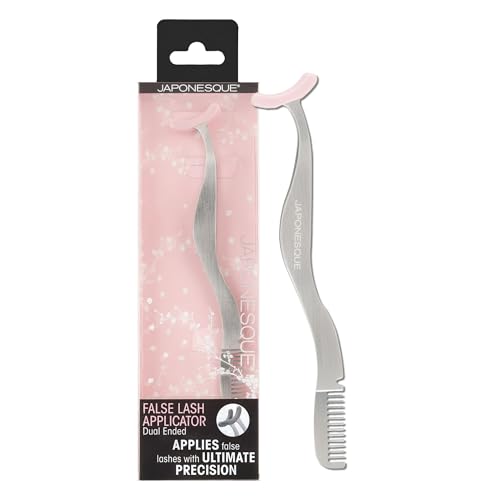
JAPONESQUE False Lash Applicator Tweezers
Best for Placement + Finishing — cushioned pads plus a comb
A cushioned gripping surface changes how band contact feels. Then the built-in comb gives us a finishing step without reaching for another tool. The curved stainless body follows the eye area, while the soft pads are intended to grip and press natural and false lashes together.
And the other end? It is a stainless-steel lash comb. That gives this tool a second job after placement: tidying mascara clumps or helping blend the finished lash look.
The compromise is precision consistency. Some supplied reviews say the cushioned tips do not close fully flush. Others would prefer tighter spacing between the comb teeth.
Bottom line: Best placement-plus-finishing combo when we want a cushioned grip and an integrated comb in the same tool.
- ✅ Cushioned pads give the gripping end a softer contact surface
- ✅ The curved applicator can support strip or cluster positioning
- ✅ The built-in comb adds blending and de-clumping help
- ✅ Stainless construction is made for repeated use
- ❌ Tip alignment on some units can make grip precision less consistent
- ❌ Wider comb-tooth spacing may not suit very fine separation work
- ❌ The comb adds little value if placement is the only job we need
🧪 Lash Lab Notes — Dr. Rabeya (Dentist & Beauty Enthusiast)
I separate the two roles in my head. The padded end is for placement; the comb is for finishing. That distinction can keep us from squeezing harder with the gripping end when the lashes actually need blending or de-clumping instead.
- 💡 Editor’s Note: We would pick this for the combined workflow, not for maximum grip pressure. The cushioned contact and comb make sense as a pair for tidying the finished look. But tip alignment matters more here than it does with a simple solid-metal jaw.
Interested in how the padded grip performs for other shoppers? Read current feedback for JAPONESQUE False Lash Applicator.
It is a good fit when we want lash placement and basic blending in one dual-purpose tool.
Care tip: Clear adhesive and mascara residue from both ends. Then dry the tool before putting it away.
A comb adds finishing flexibility. The last pick goes the other way and keeps the idea simple: softer contact at the gripping tip.
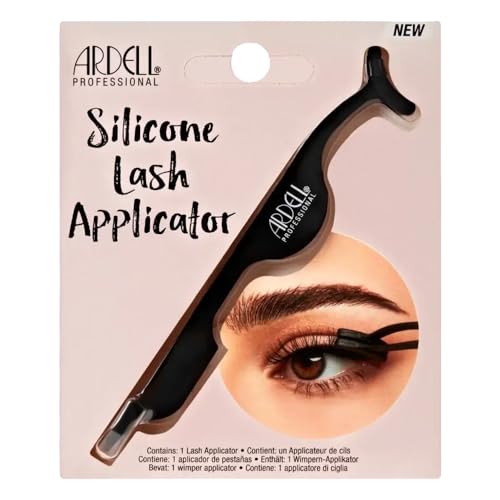
Ardell Silicone Lash Applicator Tool
Best Soft-Tip — soft silicone at the contact point
Bare metal near the lash band can feel a little intimidating. If that is the hesitation, the soft silicone tip is the point of this design. It is still a reusable placement tool; the difference is how the gripping and pressing surface feels.
Supplied customer feedback is especially positive for cluster work. It also says the tool grips well and makes application easier. So this makes sense when the problem is not visibility or extra finishing features, but a preference for softer-feeling contact during placement.
Soft does not mean fuss-free. Grip, alignment, curvature, and adhesive residue can all affect handling. We still need clean surfaces and controlled movement around the eye.
Bottom line: Best softer-contact option when strip or cluster placement feels better with silicone at the gripping surface.
- ✅ Silicone gives the contact point a softer feel than bare metal
- ✅ Supplied feedback is positive about cluster handling and grip
- ✅ The reusable compact format keeps the tool uncomplicated
- ❌ Residue can still make the grip less clean between uses
- ❌ There are fewer extra functions if we want an angled view or built-in comb
- ❌ Alignment and curvature can still feel different from one person to another
🧪 Lash Lab Notes — Fauzia (University Student & Beauty Enthusiast)
I think the softer tip matters most when bare metal near the lash line is the thing making placement feel intimidating. We still need deliberate pressure, though. Softness does not make up for residue or poor alignment.
- 💡 Editor’s Note: This is the most preference-driven pick in the lineup. We would not choose it simply because silicone sounds gentler. It earns the spot when soft contact is the feature that makes the routine feel easier to control.
Check what current reviewers report about grip and cluster handling for Ardell Silicone Lash Applicator.
This is the straightforward choice when we prefer a soft contact surface for strip or cluster positioning.
Care tip: Clean the silicone contact area after application. Leftover adhesive can still interfere with grip.
Once the five designs are side by side, the choice gets much simpler. We just need to match the geometry to the part of application that feels awkward.
What Makes a Lash Applicator Easier to Control
For the best false eyelash applicator tool, extra features are not automatically the answer. The useful question is simpler: does the design change the exact movement giving us trouble?
A broad curved jaw gives the band more contact. That means the hand does not have to pinch one tiny spot quite so precisely. An offset angle changes the sightline, while a separate pressing end lets placement and final pressure happen on different surfaces. When narrow tweezers feel unstable, more contact, less pinching is a helpful way to think about it.
What about a comb? That solves a different problem: finishing and separation after placement. A soft tip changes something else again. It affects contact feel rather than the basic geometry of the placement move.
So before choosing, we can name the actual frustration: grip, visibility, pressing, finishing, or contact feel. Once we do that, the designs stop looking like tiny cosmetic variations. They become real decision points.
How to Use and Clean a Lash Applicator
The applicator itself only needs a short, tool-specific routine. The bigger false-lash process belongs in the full technique guide. Here, the main goal is to move slowly enough that we can control the gripping surface and still see the band.
Step 1:
Hold the lash band near its center with the applicator surface instead of pinching one tiny edge.
Step 2:
Bring the band toward the lash line at the angle that gives the clearest view. Once placement lines up, release or relax the grip.
Step 3:
Use the tool’s intended pressing surface—opposite end, rubber tip, cushioned pad, or silicone contact—to settle the band or corners without poking toward the eye.
Step 4:
Clear adhesive or mascara residue from the contact surfaces after use. Then dry the tool before storage when its material requires it.
The applicator is only one part of the full routine. Prep, adhesive timing, and final placement still matter too. When the tool motion makes sense but the larger sequence feels uncertain, the dedicated guide is the better next stop.
Why bother cleaning right away? Dried residue can make the same tool feel less predictable next time. And if an edge becomes rough, bent, or damaged, stop using that tool around the eye area.
False Eyelash Applicator Questions
A few practical questions come up again and again with applicator design. We do not need another full section for each one. These are the questions that actually change whether a tool is likely to make placement feel easier.
❓ Are lash applicators better than regular tweezers?
They can be when contact area or hand position is the problem. A curved lash applicator can hold more of the band than narrow pointed tweezers. A familiar tweezer may still feel more precise, though, when we are making very small adjustments.
❓ Is an angled lash applicator easier for beginners?
It can be if visibility is the main difficulty. An offset or 90-degree shape can move more of the hand away from the direct sightline. Comfort still depends on grip style and the way the tool approaches the eye.
❓ Do I need a lash applicator with a comb?
No. The comb is mainly a finishing feature for blending, separating, or de-clumping after placement. We do not need one just to position the lash band.
If blending and separation are the bigger issue, the applicator’s built-in comb is only a starting point. A dedicated comb guide compares tools made specifically for that finishing job.
❓ Can I use one applicator for strip and cluster lashes?
Some applicators are listed for both, but that support is product-specific rather than universal. Broader curved tools may favor full strip bands. More compact or soft-tip options can feel better suited to smaller pieces, depending on the design.
So the choice comes back to the lash-piece size and the amount of control the jaw or tip gives us.
If clusters are the format we use, the applicator is only one part of the placement sequence. The dedicated cluster guide covers the application steps this tool roundup intentionally leaves out.
Final Thoughts on Choosing a Lash Applicator
The simplest rule is still the best one. Pick the geometry that lets us see the band, hold enough of it securely, and press it without awkward hand repositioning. The right applicator does not replace technique. It just makes those clumsy-feeling placement moves easier to control.
Last update on 2026-10-14 / Affiliate links / Images from Amazon Product Advertising API