⚡ TL;DR: best full coverage foundation for mature skin
Choose a genuinely high-opacity formula that matches your skin’s finish preferences, then use less pigment around moving lines and more where discoloration needs concealing. No foundation reliably prevents all creasing, but light, targeted application can help avoid a heavy-looking base.
Top Picks
- 🏆 Best Overall — tarte Face Tape — Full coverage, natural matte finish
- 🥈 1st Runner-up — KVD Good Apple Balm — Concentrated cream coverage for spots
- 🥉 2nd Runner-up — bareMinerals ORIGINAL — Luminous, buildable mineral powder
A dark spot can be hidden by foundation, yet the same layer can make a smile line stand out. That is the balance behind finding the best full coverage foundation for mature skin.
The four picks here get to opacity in different ways: liquid, cream balm, and loose mineral powder. The aim is to cover what bothers you without laying a uniform mask across the skin that moves.
✨ Inside This Foundation Guide
🌸 Psst… A Little Beauty Note!
Some links in this post are affiliate links. If you spot something you love and shop through our links, we may earn a small commission—at no extra cost to you. Our picks are based on thoughtful research and, where mentioned, hands-on experience. Thanks for supporting Dappered Chic! 💕 Read our Affiliate Disclosure
Quick Comparison: Best Full Coverage Foundation for Mature Skin
All four picks can give you substantial coverage. What changes is the texture, finish, and the way you apply them. Here is where each one earns its place.
| Product | Best For | Coverage and Finish | Main Caution |
|---|---|---|---|
| tarte Face Tape | Everyday liquid coverage | Full; natural matte | Go lighter over dry creases |
| KVD Good Apple Balm | Localized opaque coverage | Full; fresh matte balm | Rich pigment is easy to overapply |
| bareMinerals ORIGINAL | Gradually built powder coverage | Sheer-to-full; luminous | Buff sparingly over dry patches |
| Phoera Full Coverage Matte | Matte liquid alternative | Full; matte | Prep flaky areas first |
For a broader look at opaque foundations when age-specific texture is not your main concern, the full-coverage roundup is the more direct next stop. It expands the decision beyond this focused mature-skin selection.
How to Choose Full Coverage for Mature Skin
Full coverage tells you how much a foundation can conceal; it does not promise that the formula will look smooth in expression lines. Finish, skin preparation and the amount you apply matter just as much.
You may have dry cheeks and an oily nose at the same time. For that combination, a thin natural-matte layer through the center and lighter application on the cheeks can be a useful place to begin.
You do not need a thick layer all over to get full coverage where it counts. Put the strongest pigment over discoloration, then soften the edges into a lighter veil across the rest of the face.
Your preferred coverage may also change with your needs. Someone who wants medium coverage on most days may benefit more from the broader mature-skin guide than from another high-opacity formula.
Shade and cost can narrow the field before you buy. If cost limits your options, a mature-skin drugstore roundup compares more budget-oriented foundations than this four-product selection.
Our Top Full-Coverage Foundation Picks
Each of these foundations offers a different route to greater coverage. The shades mentioned below identify specific products in the catalog; they are not universal shade recommendations.
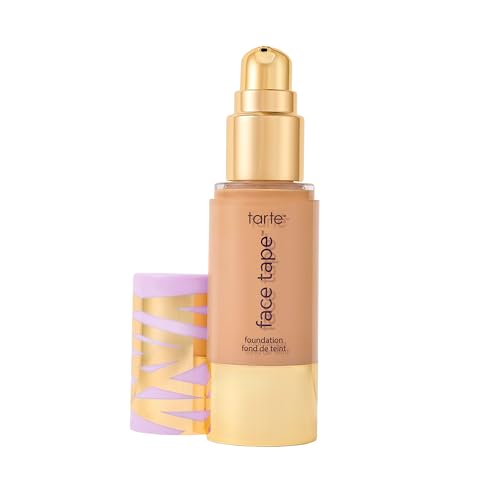
tarte face tape Foundation
Best Overall
Start here if you want the pigment payoff of a full-coverage liquid and prefer a natural-matte finish to a rich cream balm.
The natural-matte finish makes this a practical first comparison for visible discoloration and combination skin. Tarte describes its Face Tape formula as full coverage and promotes a blurring appearance around pores and lines. That is a cosmetic claim, not proof that a foundation will stay out of every crease.
The brand also markets extended wear. Real wear still depends on skin prep, application amount, and how frequently the face moves. Use the opacity to cover spots, not as a reason to build multiple layers across the whole face.
Bottom line: An appealing first stop for opaque liquid coverage with a natural-matte finish. Use a lighter hand around dry or mobile areas.
- ✅ Verified full-coverage liquid format.
- ✅ Natural-matte finish for a controlled rather than overtly glossy look.
- ✅ Easy to distribute opacity selectively by area.
- ❌ A single heavy layer may be too noticeable on very dry, mobile skin.
- ❌ A matte look may be less appealing if you prefer obvious radiance.

🧪 Lash Lab Notes — Mahmuda (Homemaker & Beauty Enthusiast)
Begin with a small amount near the center of the face, then build over discoloration. Keeping product lighter at smile lines matters more than chasing equal coverage everywhere.
- 💡 Editor’s Note: We like this as a reference point when you want true opacity without switching to a cream compact. The natural-matte description makes the finish easier to picture, but no blur claim is a promise about long-day wear. Start with one light layer before deciding which spots need more.
Before deciding on a shade, read recent buyer feedback for tarte Face Tape and check the exact listing details.
A fit for liquid-foundation wearers who prefer strong coverage and a natural-matte finish.
One careful pass is a more useful starting point than a blanket second coat.
KVD Beauty Good Apple Lightweight Full-Coverage Cream Foundation Balm
Best Cream Balm
A cream compact with concentrated pigment that makes it easier to focus coverage on stubborn discoloration.
A cream balm behaves differently from a pumpable liquid. KVD Good Apple Balm is promoted as a hydrating, full-coverage cream with a fresh matte finish. The useful feature here is how little product is needed at first: retailer instructions recommend starting small and patting more where necessary.
That is especially helpful when spots need more coverage than the skin next to a smile line. The compact format can make targeted placement feel intuitive, but concentrated pigment is not an invitation to rub on a thick layer. The exact product in this article is Medium 036, not the separate Good Apple Serum Foundation.
Bottom line: Best suited to concentrated spot coverage in a cream format, provided you resist building it thickly in expression lines.

- ✅ Full-coverage cream-balm format.
- ✅ Small-amount, pat-on application allows targeted coverage.
- ✅ Fresh matte finish as described by product sellers.
- ❌ Heavy application may feel less forgiving over pronounced dry texture.
- ❌ The listed Medium 036 shade is unsuitable if your skin tone requires a different match.
🧪 Lash Lab Notes — Mahmuda (Homemaker & Beauty Enthusiast)
Pat a very small amount onto a dark spot before adding a second layer. Concentrated balm is easier to control locally than when spread across every moving crease.
- 💡 Editor’s Note: We would approach this balm with a small brush or fingertip rather than treating it like a face-wide cream. That lets its opacity do the work in the areas that actually need it. Check the shade carefully, since the listing is for a specific Medium 036 variant.
For shade-specific feedback and buying details, browse the latest reviews for KVD Good Apple Balm.
Consider this for focused cream coverage when a lightweight veil elsewhere is enough.
The next choice is less creamy and takes a very different path to full opacity.
bareMinerals ORIGINAL Loose Powder Foundation SPF 15
Best Buildable Mineral Powder
This loose mineral powder has a naturally luminous finish, and you can buff it from a fine veil toward stronger coverage.
Powder does not automatically mean matte or sheer. bareMinerals calls this its ORIGINAL loose foundation, a sheer-to-full buildable powder with a naturally luminous finish. It is different from the brand’s ORIGINAL MATTE product, and that distinction matters if you are hoping to avoid a flat-looking base.
The usual swirl, tap and buff application is central to the result. Build gradually where pigmentation remains visible, rather than loading more powder directly on dry creases. The foundation carries SPF 15, but that label alone should never replace your separate sun-protection routine.
Bottom line: A good format to consider for luminous, buildable mineral coverage—if you enjoy a powder technique and keep the layers light.

- ✅ Verified sheer-to-full buildable coverage.
- ✅ Naturally luminous finish rather than the line’s matte version.
- ✅ Loose-powder format offers gradual coverage control.
- ❌ Dry patches may look more apparent when powder is buffed on too heavily.
- ❌ Reaching full opacity may take several light buffed applications.
🧪 Lash Lab Notes — Mahmuda (Homemaker & Beauty Enthusiast)
Swirl, tap away the excess and buff one fine layer before judging the coverage. Repeat over spots rather than building a powder ridge along a crease.
- 💡 Editor’s Note: We would not rule out powder solely because your skin is mature. The more meaningful question is whether its luminous finish and gradual layering suit your dry patches. It rewards careful technique more than an impatient heavy application.
See how users discuss coverage build-up in recent feedback on bareMinerals ORIGINAL.
A sensible powder choice if you want controlled opacity with a luminous finish.
For readers who prefer a conventional liquid, the final option offers another matte direction.
Phoera Full Coverage Matte Liquid Foundation
Best Soft-Matte Alternative
This opaque liquid suits someone who prefers the look of matte coverage over the luminosity of a loose powder.
This formula’s canonical product record confirms a full-coverage liquid foundation. Phoera’s current brand catalog uses the name Soft Matte Liquid Foundation for its foundation range, but that page does not independently verify the exact Nude variant attached to this record. Choose by the listing’s precise shade and size, not by assuming every brand-page photograph represents the same item.
A matte finish may appeal when oiliness is the concern. On drier cheeks, however, the more important variable can be the condition of the surface beneath the pigment. Apply less on textured areas and build only where the remaining discoloration warrants it.
Bottom line: A matte liquid option for opaque coverage; give extra attention to dry areas and to confirming the exact shade and listing.

- ✅ Canonical Nude record identifies a full-coverage liquid.
- ✅ Matte-style finish differs from the luminous powder option.
- ✅ Allows localized building rather than one opaque full-face coat.
- ❌ Very dry, flaky patches need preparation before a matte base.
- ❌ Shoppers needing another shade should not assume this Nude listing represents it.
🧪 Lash Lab Notes — Mahmuda (Homemaker & Beauty Enthusiast)
If matte pigment catches on a dry cheek, targeted moisturizing first may make the surface easier to work with. Leave mobile creases lighter than the areas covering spots.
- 💡 Editor’s Note: We value a clear identity check as much as a finish description here. The exact Nude listing is the product to compare, not a blanket guarantee about the entire collection. If your priority is a more luminous look, the mineral option above may match your preference better.
To confirm you are considering the Nude listing, review the details and comments for Phoera Full Coverage Matte.
A possible pick for matte liquid coverage once the exact shade has been checked.
If dry patches dominate your decision, a dedicated dry-skin foundation roundup offers more formula choices. It helps you compare full-coverage alternatives without assuming this exact matte Nude listing will fit.
The next step is making whichever formula you choose sit more lightly on the face.
Prepare and Apply Full-Coverage Foundation Without Emphasizing Lines
You can usually learn more from where you place foundation than from applying another coat everywhere. Keep preparation gentle, then build only where coverage remains visibly lacking.
Step 1 — Moisturize and Protect
Apply a suitable moisturizer to dry areas before foundation. The American Academy of Dermatology advises moisturizing dry skin and using broad-spectrum, water-resistant sunscreen with SPF 30 or higher; do not count on the SPF 15 in foundation as your sole sun protection.
Allow skincare layers to settle before adding makeup. If the cheeks are dry while the center of the face is oily, prep those areas according to their different needs instead of assuming your entire face behaves the same way.
Step 2 — Place Pigment Strategically
Apply a small starting amount at the center of the face or wherever discoloration is most visible. Blend outward while reducing product over smile lines and the folds beside the nose.
For a liquid foundation, the general application order and tool choice can be explored more fully in the dedicated technique guide. The point here is to avoid creating a thick layer where your face moves most.
Step 3 — Build Only Where Needed
Check the result in natural light before adding product. Pat a little more over a dark spot or buff another tiny amount of mineral powder there, but do not automatically repeat every stroke across the cheeks.
After the makeup has settled, move your face and watch the areas that crease. If the finish looks heavy, reduce excess product at that spot instead of covering the buildup with another layer.
What to Do When Foundation Looks Cakey or Settles
Cakiness over a dry patch and a streak of pigment gathering inside a smile line can look similar from a distance. They call for different responses: improve the skin-prep routine for persistent flaking, but look first at product quantity where the makeup collects during facial movement.
If the forehead or nose looks shiny while the cheeks remain dry, don’t use the same extra layer on all three areas. You may be dealing with different surface conditions, not a foundation that is universally wrong for mature skin.
Detailed troubleshooting can help when the base looks uneven even after you reduce the amount. It separates common causes of patchiness from quick cosmetic cover-ups.
Questions About Full-Coverage Foundation and Fine Lines
A few common doubts come down to the distinction between coverage, finish and application quantity. Use these quick answers before deciding which texture fits your routine.
❓ Can a full-coverage foundation avoid all fine-line settling?
No formula can promise a crease-free finish for every person. Apply less over moving areas and choose coverage primarily for the discoloration you want to hide.
❓ Can loose powder provide genuinely full coverage on mature skin?
The bareMinerals ORIGINAL formula is officially described as sheer-to-full buildable, not permanently sheer. Small successive applications can raise opacity, while a heavy application may emphasize a dry area.
❓ Is SPF 15 in foundation enough to replace sunscreen?
No. The foundation’s SPF 15 label is not the same as following a dedicated broad-spectrum, water-resistant SPF 30-or-higher sun-protection routine.
❓ Which finish should I choose if my face is both oily and dry?
Match the formula and application amount to different zones. An oily center may suit a more matte look, while dry cheeks need extra restraint and prep.
Final Thoughts: Coverage Without the Heavy Look
The best decision is not which foundation gives the thickest coat. Choose the format and finish you can control, then leave moving lines lighter while covering the spots that made you want full coverage in the first place.
Last update on 2026-11-18 / Affiliate links / Images from Amazon Product Advertising API