
⚡ TL;DR: best medium coverage foundation
The best medium coverage foundation evens out the look of skin without hiding everything. We can add a little where uneven tone still shows. These picks offer natural, matte, serum, stick, and powder finishes. But their first layers differ. A light serum and a concentrated stick need very different approaches.
Top Picks
- 🏆 Best Overall — L’Oréal True Match — Natural medium control
- 🥈 1st Runner-up — Estée Lauder Double Wear — Buildable matte wear
- 🥉 2nd Runner-up — Anastasia Impeccable Blurring — Soft-focus velvet matte
Looking for the best medium coverage foundation? It is easy to get stuck between a tint that barely changes anything and a heavy-looking base. We want a better balance. Start with a light layer that evens tone, then add coverage only where needed.
That is the idea behind our six choices. One is a medium-first everyday liquid. Others offer a lighter serum feel or a more concentrated stick for small areas. We used product descriptions to guide our choices, not a made-up head-to-head skin test.
✨ Inside This Foundation Guide
🌸 Psst… A Little Beauty Note!
Some links in this post are affiliate links. If you spot something you love and shop through our links, we may earn a small commission—at no extra cost to you. Our picks are based on thoughtful research and, where mentioned, hands-on experience. Thanks for supporting Dappered Chic! 💕 Read our Affiliate Disclosure
Quick Comparison: Best Medium Coverage Foundation
Natural finish does not automatically mean light coverage. And matte does not automatically mean full. Look at the coverage from the first layer and the formula itself. Then choose the surface finish you like.
| Foundation | Starting coverage | Finish | Best for | Main caveat |
|---|---|---|---|---|
| L’Oréal True Match | Medium | Natural | Everyday balance | Match undertone |
| Estée Lauder Double Wear | Medium to full | Matte | Longwear-minded wearers | Use thin layers |
| Anastasia Impeccable Blurring | Medium to full | Velvet matte | Soft-focus appearance | Not luminous |
| Neutrogena Healthy Skin Serum | Light to medium | Natural | Minimal-coverage routines | Not opaque medium |
| Hourglass Vanish Stick | Full, can be sheered | Satin | Targeted coverage | Easy to overapply |
| Fenty Pro Filt’r Powder | Medium to full | Matte powder | Powder-format preference | Stop before it looks heavy |
How Medium Coverage Works
Medium coverage usually means skin tone appears more even, yet the complexion still looks recognizably like skin. The key is the starting coverage, not the maximum that a formula might reach with multiple coats. A sheer serum may build toward a modest medium look; a concentrated stick may need to be spread very thinly to keep from looking full.
Finish tells us something different. Medium coverage may look matte or radiant while hiding a similar amount of skin. What matters here? Check the first light layer before judging what extra coats could do.
Light and full foundations can solve different problems from a deliberately medium finish. The coverage guide explains how those opacity categories compare before you buy.
A medium foundation is not necessary when you want most skin details to show through. The light-coverage roundup compares options designed around that narrower goal.
Top Medium Coverage Foundations
Each pick has a reason to be here. We have different textures, finishes and ways to control opacity. The shades listed are the exact linked variants. They are not shade recommendations for everyone.
L’Oreal Paris True Match Super-Blendable Foundation
Best Overall — Everyday Medium
An easy-to-blend liquid made for an adjustable, natural-looking medium result.
Everyday foundation is easier when the first layer does enough. True Match begins at medium coverage and leaves a natural-looking finish. We can add a touch more where uneven tone still shows instead of coating every area twice.
Shade matching can feel like guessing. The warm, neutral, and cool undertone choices give us a useful place to start. Before adding more makeup, check how a thin first pass looks around the nose and cheeks.
Bottom line: Best everyday starting point — Choose it when you want controlled medium coverage and a natural-looking finish, not an intentionally matte or luminous statement.

- ✅ Medium coverage is a straightforward starting point
- ✅ Natural finish keeps the coverage and texture decisions separate
- ✅ Undertone categories help narrow shade choices
- ❌ Not the obvious choice if a dramatic matte finish is the goal
- ❌ The linked N3 shade is only one match, not a shade recommendation for everyone

🧪 Lash Lab Notes — Fauzia (University Student & Beauty Enthusiast)
If the first pass looks even, stop there; adding more by habit can overshoot a medium target. Its natural finish lets the shade match remain the main decision.
- 💡 Editor’s Note: We prefer this option as an easy reference point for the category, rather than promising one foundation suits every complexion. Check the exact N3 shade only after comparing a settled swatch to your jawline.
For a closer look at buyer impressions of its shade and blending, browse L’Oréal True Match.
For routine medium coverage with a natural finish, this is our starting choice.
Prefer a more matte look? The next two picks approach it differently.
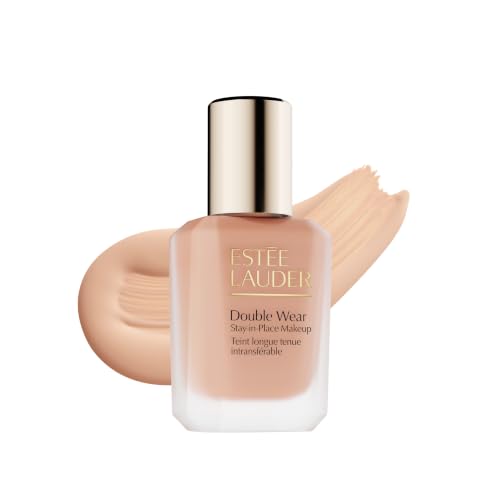
Estée Lauder Double Wear Stay-in-Place Foundation
Best Long-Wear Matte
A buildable matte liquid for routines where longer wear matters.
Want a matte complexion and a formula aimed at staying put? Double Wear is the alternative to our natural-finish pick. This linked New Formula is described as medium-to-full and buildable. We would judge it from one thin layer first.
We can keep it near medium coverage by adding a little only where tone looks uneven. There is no need to use its full-coverage potential over the entire face.
Bottom line: A matte, coverage-flexible option — Consider it if you want the option to increase coverage without starting with a heavy full-face application.
- ✅ Matte finish for readers who prefer less surface shine
- ✅ Medium-to-full range leaves room to concentrate coverage
- ✅ New Formula variant is specifically identified in the product data
- ❌ May feel like too much coverage if every area receives repeated layers
- ❌ The linked 2C3 Fresco cool-rosy shade will not suit every undertone
🧪 Lash Lab Notes — Dr. Rabeya (Dentist & Beauty Enthusiast)
The New Formula designation matters: do not assume an older Double Wear listing has the same formula or shade labeling. A narrow second pass preserves the intended medium effect more reliably than an all-over repeat coat.
- 💡 Editor’s Note: We distinguish this pick from the natural-finish default by its matte and long-wear positioning, not by an unverified test of hours worn. Evaluate finish and shade alongside the exact New Formula listing.
To compare recent buyer observations on this New Formula listing, see Estée Lauder Double Wear.
This one makes sense when a matte finish matters more than a soft glow.
Our next matte option puts visual blur ahead of longwear positioning.
Anastasia Beverly Hills Impeccable Blurring Foundation
Best Soft-Focus Matte
A velvet-matte base chosen for its intended soft-focus look.
Not every matte formula aims for the same effect. Impeccable Blurring is described as second-skin and soft-focus. That makes it a more specific choice for us when the look of blur matters.
Its stated coverage runs from medium to full. How do we stay closer to medium? Start with less, even out the larger areas, and add a little more only over marks that still bother us.
Bottom line: A blur-focused matte choice — Its appeal is the velvet-matte finish; it is less suitable when you specifically want a fresh luminous appearance.

- ✅ Blur-focused product concept gives it a clear visual role
- ✅ Medium-to-full coverage range allows selective building
- ✅ Matte finish offers a clear alternative to natural and radiant looks
- ❌ A luminous-skin preference is better served by another finish
- ❌ A 4WP warm-peach variant is not a universal shade match
🧪 Lash Lab Notes — Engr. Nusrat (Engineer & Beauty Enthusiast)
Make the finish decision before deciding how many layers to apply. The blurring language describes the product’s intended appearance, not proof that texture will disappear on every face.
- 💡 Editor’s Note: We would not interpret the second-skin wording as an assurance of undetectable makeup or uniform results across skin types. Use it as a finish preference, then judge the first thin application in your own lighting.
If the blur-focused finish interests you, check shopper feedback associated with Anastasia Impeccable Blurring.
Choose it when a soft-focus matte finish outranks a luminous look.
Not everyone wants to start at a true medium layer, which is where the next formula differs.
Neutrogena Healthy Skin Sensitive Skin Serum Foundation
Best Lightweight Serum Feel
A serum-format base for anyone comfortable starting sheer or light.
Here is the gentle end of the roundup, not a substitute for a dense medium-coverage formula. Its verified coverage is light to medium, and the serum format can suit a makeup routine where a lighter-looking first layer is desirable.
That distinction matters if your goal is to soften general redness while keeping more of the original skin visible. Someone seeking opaque coverage over pronounced discoloration may find this is simply not the right starting point.
Bottom line: Lighter-edge flexibility — Choose it for sheer-to-light first-pass comfort with the option of some building, not for guaranteed opaque medium coverage.

- ✅ Serum format provides a nontraditional liquid texture
- ✅ Light-to-medium description makes the lighter starting point clear
- ✅ Natural finish is consistent with subtle daytime makeup
- ❌ May not provide enough opacity for concentrated spots or heavy discoloration
- ❌ Sensitive-skin branding cannot guarantee no individual reaction
🧪 Lash Lab Notes — Dr. Sazia (Medicine Specialist & Beauty Enthusiast)
Its 202 Light-Medium shade identifies the actual linked variant, not a recommendation for every complexion. The coverage label says light to medium, so decide early whether the first layer is enough for your goals.
- 💡 Editor’s Note: We treat the sensitive-skin name as product positioning, not medical reassurance. If your skin regularly reacts to cosmetics, plan small-area testing before applying a new base across the entire face.
To see whether buyers describe the texture as light enough for their routine, visit Neutrogena Healthy Skin Serum.
Choose this for a light-first serum finish rather than strong medium opacity.
Sensitive skin calls for a broader look at ingredient tolerance and individual reactions than any one foundation can answer. The dedicated guide focuses on that concern across foundation choices.
A full-coverage stick is useful when we need more coverage in specific spots, not a heavy layer everywhere.
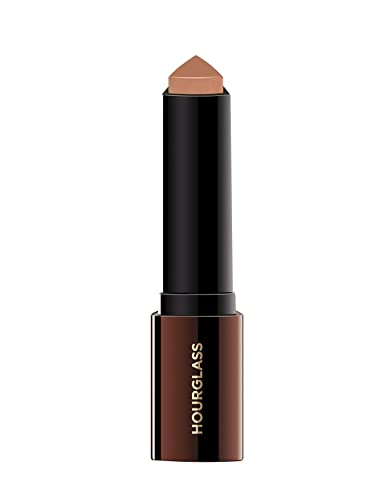
Hourglass Vanish Seamless Finish Foundation Stick
Best Targeted Stick Coverage
A concentrated stick formula for selectively increasing coverage in small areas.
A foundation stick can simplify targeted placement when the rest of the face needs very little. Vanish is a concentrated full-coverage formula, so its place here is technique-based rather than a claim that it naturally begins at medium opacity.
One short swipe followed by prompt blending may do more than another layer of liquid across the whole face. This approach is especially relevant when the challenge is local coverage rather than a fully covered complexion.
Bottom line: Precision over all-over opacity — Best considered for small coverage adjustments if you are comfortable controlling a richer foundation product.
- ✅ Stick format supports direct, targeted placement
- ✅ Buildable full-coverage capacity helps with localized areas
- ✅ Different application style expands the options beyond liquid bases
- ❌ Too much stick product can move the look beyond medium coverage quickly
- ❌ Less intuitive for someone seeking an automatically medium-first wash
🧪 Lash Lab Notes — Zayba (A-Level Student & Beauty Enthusiast)
A thin, localized application is a deliberate editorial technique, not a claim that the formula’s specified coverage changes. The linked Light Beige 9.5 shade is a selected commercial variant; verify your own color match separately.
- 💡 Editor’s Note: We include this one to show that coverage control can come from placement, not merely from choosing a lower-pigment bottle. Consider it a specialist alternative rather than the easiest general-purpose medium foundation.
Want buyer perspectives on how much product is practical per application? Explore Hourglass Vanish Stick.
Try it for targeted coverage if an all-over heavy layer is unnecessary.
A full-coverage finish is a distinct goal when medium opacity still leaves more visible unevenness than you prefer. The full-coverage roundup compares formulas selected for that stronger starting point.
Powder offers one more way to control the medium-coverage result without liquid texture.
Fenty Beauty Pro Filt’r Soft Matte Powder Foundation
Best Soft-Matte Powder
A powder-format, soft-matte option with medium-to-full coverage potential.
If a liquid base is not your favorite format, soft-matte powder gives you a distinct application choice. The selected Pro Filt’r record identifies powder texture, a matte finish and medium-to-full coverage, which together support a carefully built medium result.
A light initial application lets you assess unevenness before building more powder over the same areas. Because finish and coverage are separate decisions, choose powder for its feel and finish rather than assuming it will always look lighter than liquid.
Bottom line: A powder alternative with flexibility — Consider it if you prefer a matte powder base and can stop building once the skin appears even.

- ✅ Powder format gives a distinct application route
- ✅ Matte finish for a less luminous complexion effect
- ✅ Medium-to-full described coverage allows the layer count to set the result
- ❌ Heavy layering may exceed the subtle medium-coverage goal
- ❌ Its selected shade 250 is one warm-peach variant, not a universal match
🧪 Lash Lab Notes — Engr. Nusrat (Engineer & Beauty Enthusiast)
A powder’s application method can change how much pigment lands on the skin. Start with less and inspect in normal daylight before deciding the whole face needs more.
- 💡 Editor’s Note: We are not claiming this powder outperforms any liquid formula on texture or longevity. Its value in this lineup is simply a clearly different format with a documented matte, buildable coverage profile.
For shopper reports on this exact powder variation, review Fenty Pro Filt’r Powder.
Choose it if a soft-matte powder works better for your usual application style.
We have seen the different formats. Now we can match finish and shade to our own skin.
How to Choose a Medium Coverage Foundation
First, what are we trying to even out? Mild unevenness may suit a medium-first, buildable base. When we need stronger coverage in a few spots, that does not mean every inch needs a thicker layer.
Now think about finish and feel. Natural-looking does not mean sheer. Matte does not mean full coverage. Liquid, powder, and stick formulas can each reach a medium-looking result, but they feel and apply differently.
Shade deserves as much attention as opacity. Compare a candidate around the jawline, consider cool, neutral, warm, or olive undertones, and allow a fresh swatch to settle before deciding. The exact shades in the links are examples of selected retail variations, not universal shade recommendations.
If makeup routinely clogs pores or worsens breakouts, the American Academy of Dermatology recommends considering non-comedogenic or oil-free labeling and removing makeup before bed. Such labels still cannot promise every person will tolerate a formula.
For new cosmetics, small-area testing can help identify a reaction before a full-face application; the American Academy of Dermatology gives practical testing guidance. Stop using a product that causes irritation and seek professional advice for persistent or severe reactions.
Texture, dryness, and where product settles may matter more than a medium-opacity label on its own. The mature-skin foundation guide considers those age-related application needs more closely.
A foundation may have a labeled SPF, but makeup is often applied in a thinner layer than a dedicated sunscreen. The SPF foundation guide explains why that difference deserves a separate decision.
Build Medium Coverage Without Caking
Begin with skin that feels comfortable and prepared. We do not have to cover every patch twice. One thin layer will show whether the pigment and finish work before we add more.
Step 1:
Apply a small amount. Spread the first pass evenly over the areas that need evening, keeping the edges soft. A brush gives more targeted control; a damp sponge may distribute a sheerer-looking layer.
Step 2:
Check the result in natural light. Look at the center of the face and the jawline rather than judging only a mirror under artificial lighting. If the skin already looks even, that is the moment to stop.
Step 3:
Build only where necessary. Tap a small second amount over visible redness or discoloration and blend its edge into the first pass. Avoid adding a full-face second coat when only one small area still needs attention.
Step 4:
Respect the formula. Loose powder is usually built by controlled buffing rather than liquid dabs, while a concentrated stick benefits from lighter placement and quick blending. A formula described as full coverage can overtake a medium target surprisingly fast.
Common Questions About Medium Coverage Foundation
The questions below separate surface finish from opacity. That is especially useful when one foundation can build to different coverage levels.
❓ Is medium coverage enough for redness and uneven tone?
Often it can even the appearance of general redness and discoloration, but a stronger spot may still show through. Try a thin targeted second layer rather than building everywhere.
❓ Does a matte finish mean full coverage?
No. Finish is how the surface looks. Coverage is how much underlying skin we can still see. Medium foundation may have a matte, natural, or luminous finish.
❓ Should I use a foundation brush or sponge?
Either can work, and the amount picked up matters more than an absolute tool rule. A brush can place coverage precisely, while a sponge can soften a thin blend.
❓ Will a light-to-medium serum hide dark spots?
Not necessarily. The Neutrogena serum starts closer to sheer or light coverage. We would pick something else when hiding a dark spot completely is the main goal.
❓ Can I build a full-coverage stick down to medium?
Sometimes, by applying very little and blending it broadly. The Hourglass stick still begins as a concentrated full-coverage product, so placement and stopping point matter.
❓ Is medium foundation with SPF enough sunscreen?
Do not infer full sunscreen protection from a foundation label alone. The amount applied for a natural makeup finish may differ from the amount required for labeled sunscreen protection.
Final Thoughts on Buildable Coverage
Start with the foundation whose first thin layer comes closest to the look we want. Then add coverage only in the places that still need evening. That approach keeps us in control of the result without assuming more product is the right choice.
Last update on 2026-11-18 / Affiliate links / Images from Amazon Product Advertising API