
⚡ TL;DR: contour for dry skin
For contour for dry skin, creamy sticks and thin liquids often feel easier to manage than heavy powder. First, moisturize well. Then use a trace of pigment and check whether the shadow clings to dry texture.
Top Picks
- 🏆 Best Overall — Milk Quick Sculpt — Cool sculpt with creamy glide
- 🥈 1st Runner-up — e.l.f. Halo Glow Contour Wand — Thin liquid with natural radiance
- 🥉 2nd Runner-up — wet n wild MegaGlo Stick — Budget stick for lighter dryness
Finding contour for dry skin can be frustrating. The shade looks lovely in its packaging, then settles around every rough spot. But we do not need to skip contour. We just need a texture that suits our skin and a gentler way to blend it.
✨ Inside This Contour Guide
🌸 Psst… A Little Beauty Note!
Some links in this post are affiliate links. If you spot something you love and shop through our links, we may earn a small commission—at no extra cost to you. Our picks are based on thoughtful research and, where mentioned, hands-on experience. Thanks for supporting Dappered Chic! 💕 Read our Affiliate Disclosure
Quick Comparison: Best Contour for Dry Skin
Each of these five options has a different strength. Some give us a thin liquid wash; others offer precise stick placement. Even a matte product may glide on smoothly. A cream-to-powder stick, though, may need quicker blending.
| Contour | Best for | Format | Finish | Main trade-off |
|---|---|---|---|---|
| Milk Quick Sculpt | Balanced sculpting | Cream stick | Matte | Less glow |
| e.l.f. Halo Glow Contour Wand | Soft diffusion | Liquid wand | Natural | Dispensing control |
| KIKO Sculpting Touch | Creamy blending | Stick | Matte | Shade matching |
| Mario SoftSculpt Shaping Stick | Precise placement | Dual-ended stick | Matte | Brush pressure |
| wet n wild MegaGlo Stick | Lower-cost routine | Cream-to-powder stick | Powder-like set | Can catch on flakes |
Why Dry Skin Makes Contour Look Patchy
Contour adds depth with a darker shade. But on a flaky cheek, that shade may collect around lifted skin. Suddenly, a tiny amount looks much darker in one spot. More coverage rarely solves that problem.
The American Academy of Dermatology recommends gentle care and moisturization for dry skin. A moisturizer can improve comfort, but no makeup formula can guarantee that existing flakes disappear. If skin is persistently painful, cracked, or irritated, skincare and professional advice take priority over contour.
Best Contour Products for Dry Skin
Do we want a cool, matte shadow, a soft liquid finish, or a stick we can tuck into a bag? That choice matters most. These five options serve different needs. None is a promise to fix dry skin.
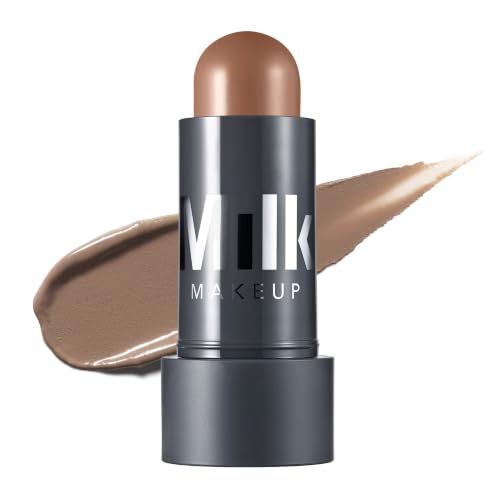
Milk Makeup Quick Sculpt Contour Stick
Best Overall
A flexible shadow stick with a comfortable-feeling glide and a softly matte look.
A convincing cheek shadow should not take hard rubbing. Milk Quick Sculpt feels creamy in stick form. The brand highlights hyaluronic acid, ceramides, and jojoba oil in its ingredient story. That gives us a useful detail to weigh alongside the finished matte look.
This stick is designed for cool-toned definition, not extra warmth. Its finish is matte. But that word describes how it looks after blending; it does not automatically describe how dry the formula feels during application.
Bottom line: For cool, controlled shadow, this is a persuasive first pick. We get a creamy stick rather than a liquid wand, especially useful when definition matters more to us than shine.
- ✅ A creamy stick makes precise cheek placement easier.
- ✅ The brand highlights both ceramides and hyaluronic acid.
- ❌ A matte look may disappoint anyone wanting a radiant sheen.
- ❌ Toasted – Light is a specific shade, not a universal match.

🧪 Lash Lab Notes — Mahmuda (Homemaker & Beauty Enthusiast)
I would let moisturizer settle first, then soften a creamy stick with a slightly damp sponge. Light tapping can help us avoid dragging across rough patches.
- 💡 Editor’s Note: That is why I look beyond the word matte. This formula also highlights moisturizing ingredients. I would use it for measured cheek definition, then judge how the finish feels on the skin.
Want to compare buyer experiences with the matte finish? See what current buyers say about Milk Quick Sculpt.
Reader recommendation: This suits us best when we like precise, cool-leaning contour. Blend softly before deciding whether we need a second pass.
Care tip: Instead of rubbing a full stick over a rough patch, pick up a little pigment with a brush.
e.l.f. Halo Glow Contour Beauty Wand
Best Liquid Wand
A fluid cushion-tip option for lighter, more diffused shadow.
Prefer not to drag a stick across textured skin? A liquid contour may feel more manageable. The e.l.f. Halo Glow wand has a fluid formula and cushion tip, which can help us place small amounts where we want shadow.
The brand highlights squalane and describes a naturally radiant look. This makes the wand worth considering when we want a soft, skin-like finish rather than a sharply carved matte contour.
Bottom line: A thin layer of definition, with a hint of radiance, is the reason to choose this liquid option.

- ✅ The fluid texture works well in tiny dots.
- ✅ Squalane appears among the featured ingredients.
- ❌ The cushion tip may release more color than we need.
- ❌ Light/Medium still needs the right skin-tone and undertone match.
🧪 Lash Lab Notes — Engr. Nusrat (Engineer & Beauty Enthusiast)
I would be sparing with a cushion tip because it can deposit concentrated color. A small amount on my hand or brush makes pressing it over textured skin easier to control.
- 💡 Editor’s Note: For me, the appeal is simple: a little goes a long way. I would first put a trace on my hand or brush. Repeated blending can still disturb a dry base, even with a liquid formula.
Wondering whether the cushion tip feels manageable for daily makeup? Read current buyers’ comments about e.l.f. Halo Glow Contour Wand.
Reader recommendation: This makes sense when we favor light liquids and prefer not to press a stick straight onto dry patches.
Care tip: Start with two tiny dots. Press outward, rather than sweeping color across the entire cheek.
A cushion wand feels different from a pot or stick. What changes? Mainly how we dispense the pigment and how much reaches a dry area at once. The wand guide explains those applicator choices in more detail.
KIKO Milano Sculpting Touch Creamy Stick
Best Creamy Stick
A creamy, matte stick made for softer edges, not harsh stripes.
KIKO’s creamy stick keeps traditional contour placement simple without adding a heavy powder step. The brand emphasizes easy blending, along with African walnut oil and pistachio extract.
This selected shade is 200 Hazelnut. The smooth-application positioning is useful to consider for dry-feeling skin. Still, the finish is matte, so we would use a gentle touch near visible flakes.
Bottom line: An appealing classic stick for softly blended, natural-matte cheek definition, especially when a stick is easiest for us to control.

- ✅ Creamy stick placement gives us control over the shadow.
- ✅ Easy blending is central to the brand’s description.
- ❌ A matte finish cannot make existing flakes vanish.
- ❌ Hazelnut needs a careful undertone match.
🧪 Lash Lab Notes — Dr. Rabeya (Dentist & Beauty Enthusiast)
I would warm a little pigment between clean fingers first. Then I would stipple lightly, rather than rubbing over visibly flaky skin.
- 💡 Editor’s Note: I would look here when a stick format appeals but a soft blend still matters. Feather the edges. Building more color across a flaky area is less likely to give us the look we want.
For more detail on its feel and the 200 Hazelnut shade, explore real buyers’ views on KIKO Sculpting Touch.
Reader recommendation: Think about this one if we like a familiar retractable stick and do not need a dewy result.
Care tip: Warm a tiny trace on a clean fingertip. Tap it softly along the cheek edge.
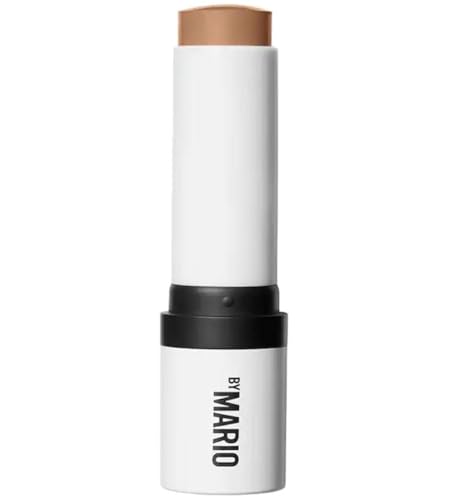
MAKEUP BY MARIO SoftSculpt Shaping Stick
Best for Controlled Placement
A dual-ended shaping stick for people who value neat placement.
The brush attached to Mario SoftSculpt is the key convenience. We get a buildable shaping stick and a blending end together. That combination fits a routine built around deliberate placement, without juggling several tools.
The brand describes a matte, natural-looking sculpt. On dry skin, the technique still matters: use only a little color, tap gently, and avoid buffing the same patch again and again.
Bottom line: A practical choice when we like deliberate placement and want a blending brush attached to the stick.
- ✅ Dual-ended format offers built-in blending control.
- ✅ Buildable pigment lets us add depth gradually.
- ❌ Too much brush pressure can lift a dry base.
- ❌ Light will not be the right undertone for everyone.
🧪 Lash Lab Notes — Engr. Nusrat (Engineer & Beauty Enthusiast)
For me, the built-in brush makes it easier to work along the cheek edge. I would use short taps, keep the brush clean, and avoid pushing product back and forth.
- 💡 Editor’s Note: Convenience is the best reason to choose it over a simpler stick. I would keep that brush clean and press gently on dry areas. Any firmer blending belongs on smoother skin.
If brush design affects your choice, look at what verified shoppers say about Mario SoftSculpt Shaping Stick.
Reader recommendation: Choose the all-in-one approach if a matte sculpt suits us better than an added glow.
Care tip: Use very small tapping motions with the brush. Keep it clean between applications.
Wet n Wild MegaGlo Makeup Stick
Best Budget
A budget-minded contour stick that moves from cream toward powder.
We should not have to buy a luxury contour just to create subtle definition. This Wet n Wild MegaGlo stick is a lower-cost option, here in the Where’s Walnut? shade.
The important trade-off is its cream-to-powder behavior. After blending, the surface can feel more powder-like. So we would apply a little, blend one side of the face, then move to the other.
Bottom line: A lower-cost pick for mild dryness and fast blending, but not my first suggestion for visibly peeling cheeks.

- ✅ Sits in an approachable, budget-friendly stick category.
- ✅ Portable stick lets us place color where needed.
- ❌ Its powder-like set may reveal rough patches on some skin.
- ❌ Where’s Walnut? is one shade and may look too warm or deep on some complexions.
🧪 Lash Lab Notes — Fauzia (University Student & Beauty Enthusiast)
I would blend a tiny amount straight away. A cream-to-powder stick can lose its movement as it sets, so I would check for color catching around dry patches before adding more.
- 💡 Editor’s Note: I would be cautious with this on active flakes. It is worth considering on a small budget. But I would blend gently and immediately, then skip extra layers if the surface already looks uneven.
Curious how the cream-to-powder finish behaves for other users? Browse the latest buyer notes on Wet n Wild MegaGlo Stick.
Reader recommendation: This works best when saving money matters and our dryness is mild rather than visibly peeling.
Care tip: Blend each small dab completely before adding another.
Cream Contour vs Liquid: Which Is Gentler?
Cream and liquid contour may both look smooth over a moisturized base. The feel while applying them is different, though. A creamy stick places color precisely and often softens with fingertip warmth. A liquid spreads more thinly with a brush or sponge.
The words matte and hydrating are not opposites. Milk’s Quick Sculpt has a matte finish and includes hyaluronic acid and ceramides; the liquid e.l.f. wand highlights squalane and a natural finish. With either form, pressing and tapping often disturbs a fragile base less than aggressive sweeping.
A powder-like set is not automatically a problem. But when dry texture is pronounced, working back over it may be less forgiving. Beyond these five picks, compare the feel of other cream textures before choosing.
Two creams may look alike in the packaging yet blend very differently. Slip, undertone, and setting behavior all matter. A broader cream guide helps us compare those differences before deciding.
Once we know we prefer a cream, a dry-skin-focused shortlist makes the next choice easier. It keeps the attention on texture instead of sending us back to liquid wands.
A Low-Drag Routine for Dry Patches
Step 1:
Settle your moisturizer. Gently cleanse, apply a suitable moisturizer, and give it time to absorb; do not scrape at loose skin right before makeup. For daytime wear, apply sunscreen as part of the skincare steps before makeup, as outlined by the American Academy of Dermatology.
Step 2:
Begin with less than we expect to need. Put a tiny amount on a clean hand or soft brush. Aim just below the cheekbone, rather than shading the entire cheek.
Step 3:
Press instead of scrubbing. Gently tap the shadow edge with clean fingers or a sponge. Once the edge looks soft, stop; repeated dragging may lift foundation and make texture stand out.
Step 4:
Fix only the uneven spot. If one patch turns crumbly, skip another layer of contour. Soften the edge around it. Or remove that small area, then restore moisturizer and base as appropriate.
Gentle tapping helps with a dry patch, but what about the rest of the face? The full application guide covers placement and blending after our base feels comfortable.
How to Choose a Dry-Skin-Friendly Contour
Start with a shade that looks like a natural shadow. A good contour undertone suggests depth without adding obvious orange warmth. That is also why a bronzer is not automatically the right substitute.
Choose a format our skin can tolerate. A liquid wand may mean less friction, while a creamy stick offers more precise placement. For pronounced roughness, take care with formulas that set quickly.
Pay attention to the finish on skin, not just ingredient names. Formula descriptions may mention glycerin, squalane, or ceramides. Comfort still varies by skin and finished product. Try a thin layer before building up.
Texture is one piece of the buying decision. Need to compare finish and price too? The broader contour guide covers those details after we have narrowed our dry-skin priorities.
Questions About Contour for Dry Skin
Some questions come down to technique. Others concern what a product label really means. Here is what matters before we apply that first small amount.
❓ Is cream contour better than powder for dry skin?
Creams and liquids often give us more time to soften an edge, making them sensible starting points for visible dryness. Powder may still work in a little amount over a settled base. Adding more powder, however, is not a reliable fix for flakes.
❓ Does a matte contour stick always dry out skin?
No. Matte tells us how the finish looks, not everything about the ingredients or application feel. Milk Quick Sculpt, for instance, is matte and still highlights moisturizing ingredients.
❓ Is Milk Quick Sculpt fragrance-free and safe for everyone?
The brand says the current formula has no added fragrance, but that does not guarantee tolerance for every sensitive or acne-prone user. Read the current label, avoid applying over irritated skin, and test a small area if you tend to react.
❓ Where should contour go on a dry face?
Contour placement follows facial structure and the shadow we want, more than skin dryness. Over flaky areas, we should keep pressure gentle. Heavier lines are not a substitute for finding the right placement.
Comfortable contour does not automatically tell us where the shadow belongs. The face-shape placement guide helps us map that next step without losing focus on dry-skin choices.
Final Thoughts: Your Smoothest Contour Starts With Less
If makeup catches on our cheeks, adding thicker layers is rarely the answer. We can build our shadow slowly instead. Choose Milk Quick Sculpt for creamy matte definition, e.l.f. Halo Glow for a thin liquid look, or Wet n Wild MegaGlo when a budget matters. Above all, use a light hand near rough spots.
Last update on 2026-11-20 / Affiliate links / Images from Amazon Product Advertising API