⚡ Quick Answer
Yes — eyelash glue is generally safe when used correctly.
Problems happen when it’s expired, overused, or applied too close to the skin, which can cause irritation or allergic reactions.
⚠️ Seek medical help if you notice severe swelling, pain, or vision changes.
Simple rule: keep glue on the lash band, not your skin.
Eyelash glue safety is a common concern because lash adhesive sits extremely close to the eyes. Even though most cosmetic glues are made specifically for this area, the skin and eye tissues are very sensitive, so even small mistakes can quickly lead to irritation or discomfort.
In this guide, we are focusing only on cosmetic eyelash glue used for strip lashes or temporary false lashes. Professional lash extension adhesives are stronger chemical systems designed for trained technicians, not home use.
Understanding how cosmetic lash glue works—and how to use it safely—helps reduce irritation risk and makes wearing false lashes much safer overall.
👀 Before We Dive In
We are not here to scare anyone. Our goal is to explain eyelash glue safety clearly so you understand the real risks—and how to avoid them.
Most people wear false lashes without serious problems. The key is knowing how lash adhesive behaves and how small mistakes can affect such a sensitive area.
Why Eyelash Glue Safety Matters More Than Most People Realize
Our eyes are delicate. Very delicate. And eyelash glue sits only millimeters away from the eye surface, lash line, and surrounding skin.
That is why eyelash glue safety is not just about whether the adhesive works. It also depends on:
- where the glue is placed
- How much is used
- How fresh the product is
- How clean the lash area is
When lash adhesive is used incorrectly, you might notice:
- stinging or burning
- watery eyes
- redness or itching
- mild swelling
Here’s the key difference:
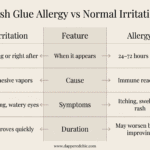
- Irritation usually happens quickly and improves once the glue is removed
- Allergic reactions can develop more slowly and may worsen over time
In rare cases, poor hygiene or improper use can increase the risk of infection.
That does not mean lash glue is dangerous. It simply means the margin for error is smaller around the eyes than anywhere else on the face.
Used properly, lash adhesive is usually safe for temporary lashes. Used carelessly, problems can develop quickly.
What Eyelash Glue Is Made Of (And Why Ingredients Matter)
Eyelash glue may look like a tiny drop of black or clear liquid, but it is a fast-acting adhesive system designed to bond quickly. Understanding the ingredients helps explain both its effectiveness and its risks.
Most modern lash adhesives rely on cyanoacrylate compounds, which harden when they react with moisture in the air. This is what creates the bond that holds the lash in place.
Because this reaction happens quickly, application control matters. Using too much glue or placing it too close to the skin increases the chance of irritation.
Some strip lash glues use latex-based adhesive, which is more flexible and slower drying. However, latex can trigger allergic reactions in people sensitive to natural rubber.
Some formulas also include carbon black pigment, which helps the glue blend into the lash line. If you are sensitive to pigments, clear adhesives are often a better option.
You might notice a slight stinging sensation during application. This usually happens because cyanoacrylate releases small vapors as it cures.
What this means for you: More glue = more vapor = higher chance of eye irritation
That is why many “sensitive” lash glues are designed to cure more slowly and produce fewer fumes. They may feel gentler, but they often take longer to dry.
🧪 Engineer Nusrat (An Engineer & Beauty Enthusiast)
Cyanoacrylate lash adhesives harden when they react with moisture in the air. When too much glue is applied, the reaction produces more vapor, which is why excess adhesive often leads to stronger fumes and irritation.
Is Eyelash Glue Safe for Your Eyes?
The honest answer is that eyelash glue can be safe when used correctly—but it becomes risky when basic safety rules are ignored.
Most cosmetic-grade adhesives designed for temporary strip lashes are formulated for the eye area. When applied carefully and in small amounts, many people tolerate them without serious problems.
⚠️ What matters most is how you use it. Even small mistakes can quickly lead to irritation because the eye area is extremely sensitive.
Understanding when lash glue is generally safe—and when it becomes risky—helps reduce the chance of irritation or complications.
When Lash Glue Is Generally Safe
Lash adhesive is usually safer when a few basic conditions are followed:
- Use a cosmetic-grade adhesive made specifically for false eyelashes
- Apply glue only to the lash band, not the eyelid or natural lashes
- Use a thin, controlled amount
- Keep tools and products clean and fresh
What this means for you: When glue stays on the lash band, is used sparingly, and applied cleanly, the risk of irritation stays low for most people.
When Eyelash Glue Becomes Risky
Problems usually appear when lash adhesive is used incorrectly or when the product itself is of poor quality.
Common risk situations include:
- Using counterfeit or low-quality adhesives
- Letting glue touch the eyelid skin instead of the lash band
- Using expired or degraded glue
- Allowing glue to enter the eye
⚠️ Caution: Adhesive is not designed for direct contact with the eye surface. Even a small amount can cause intense irritation.
What this means for you: Most problems are not caused by the glue itself—but by placement, quantity, or product condition.
Common Eye Reactions to Eyelash Glue
Because lash adhesive sits so close to the eyes, reactions can happen even when the product is used properly.
The key is understanding what type of reaction you are seeing—because not all reactions mean the same thing.
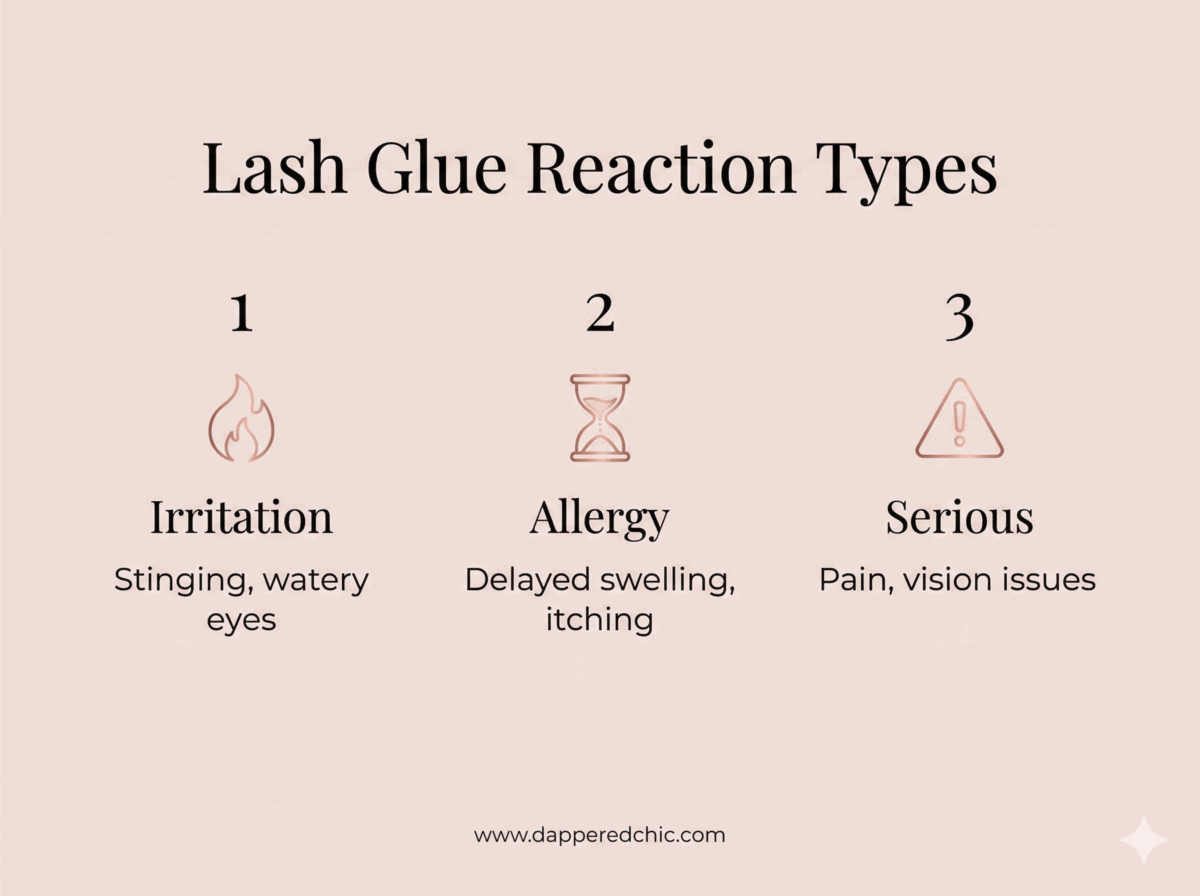
Mild Irritation
The most common reaction is temporary irritation. This usually appears quickly and improves once the adhesive finishes curing.
Typical signs include:
- Stinging or burning near the lash line
- Watery eyes during or shortly after application
- Temporary redness of the eye or eyelid
This often happens because adhesive releases small vapors as it dries—especially if too much glue is used or it sits too close to the eyelid.
What this means for you: If symptoms improve after drying or removal, it is usually irritation—not a long-term issue.
Allergic Reactions
Some people experience a true allergic reaction to lash adhesive ingredients. This is different from irritation and usually appears later.
Common triggers include:
- Latex sensitivity (in latex-based glues)
- Acrylate sensitivity (cyanoacrylate compounds)
Allergic reactions often show up as:
- Swelling of the eyelids
- Persistent itching
- Red or inflamed skin around the eyes
Key difference: Allergic reactions may appear hours or even days later and can worsen with repeated use.
What this means for you: If symptoms repeat or get worse over time, it may indicate an allergy—not simple irritation.
Rare but Serious Problems
Serious complications are uncommon, but they can happen—especially with poor hygiene, expired products, or incorrect use.
Examples include:
- Eye infections from bacteria around the lash line
- Chemical irritation if the glue contacts the eye surface
- Contamination from old or poorly stored adhesive
⚠️ Stop using immediately and seek medical advice if you notice:
- Severe pain
- Significant swelling
- Vision changes
- Persistent redness
What this means for you: Mild irritation is common. Severe or lasting symptoms are not—and should not be ignored.
🧪 Dr. Rabeya (Dental Surgeon & Beauty Enthusiast)
The eye area is extremely delicate, and even cosmetic adhesives can irritate the surface of the eye if they are placed too close or used in excess. Good hygiene and proper placement are essential to reduce irritation risk.
🌐 According to the American Academy of Ophthalmology, adhesives used near the eye can cause irritation, allergic reactions, or ocular surface complications if misapplied.
Who Should Be Extra Careful With Eyelash Glue
While many people can use lash glue without major problems, some individuals are naturally more sensitive.
You should be extra careful if you:
- Have sensitive eyes
- Wear contact lenses
- Have a latex allergy
- Experience dry eye symptoms
These factors can make you more reactive to adhesive vapors or ingredients.
What this means for you: If your eyes are already sensitive, even small exposure can feel stronger—so extra caution matters.
If you often react to eye products, it helps to stick with gentler formulas and careful application habits.
- 📌 Eye Makeup for Sensitive Eyes
Safe Ways to Use Eyelash Glue
Using eyelash glue safely comes down to simple habits and careful application.
Most irritation happens from small mistakes—like using too much glue or placing it incorrectly. Avoiding those mistakes makes a big difference.
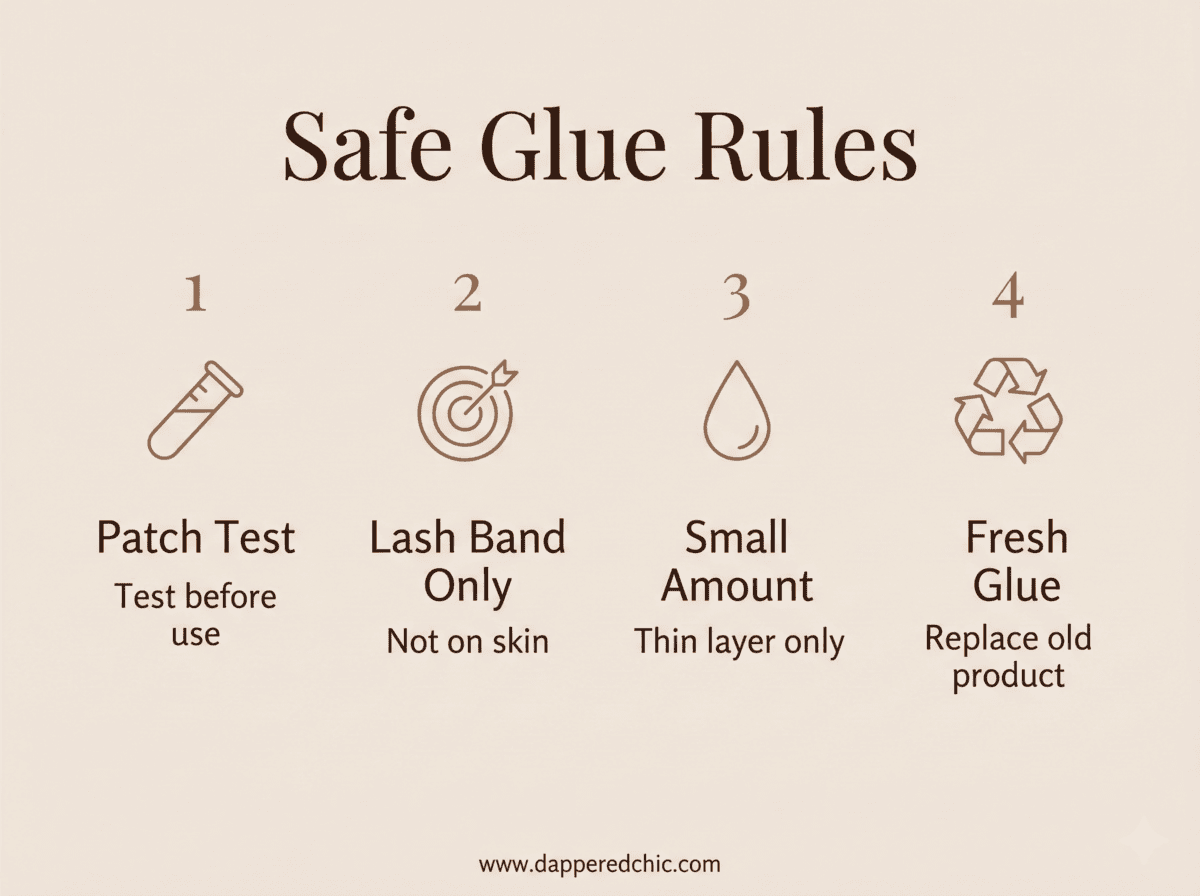
Always Patch Test
A patch test helps identify sensitivity before the glue goes near your eyes.
Even cosmetic adhesives can trigger reactions in some people. Testing on a small area first gives you a safer way to check.
What this means for you: Patch testing does not guarantee safety—but it reduces surprise reactions during application.
Apply Glue Only to the Lash Band
This is one of the most important safety rules. Glue should bond the false lash—not your skin or natural lashes.
When adhesive touches the eyelid, blinking creates friction that can cause irritation.
What this means for you: Keeping glue off the skin reduces both irritation and accidental eye exposure.
Use a Small Amount
More glue does not mean better hold—it usually means more problems.
Excess glue:
- Takes longer to dry
- Releases stronger vapors
- Increases irritation risk
What this means for you: A thin layer holds better, dries faster, and feels more comfortable.
Replace Old Lash Glue
Lash adhesive changes over time due to exposure to air, moisture, and light.
As it ages, it may:
- Thicken or separate
- Lose proper bonding ability
- Become more irritating
What this means for you: Fresh glue behaves more predictably and is less likely to irritate your eyes.
If you’re removing lashes regularly, using the right method matters just as much as the glue itself.
Signs Your Lash Glue Is Unsafe to Use
Sometimes the safest decision is knowing when not to use a product.
Common warning signs include:
- Strong chemical odor
- Thick, clumpy, or separated texture
- Color changes or cloudiness
- Burning or intense stinging during use
What this means for you: If something feels off, it is safer to stop using the glue than to risk irritation.
If you’re unsure whether your glue is still usable, understanding its shelf life can help you decide.
- 📌 How Long Does Eyelash Glue Last
Eyelash Glue vs Lash Extension Adhesive
Many people assume all lash adhesives are the same. In reality, strip lash glue and lash extension adhesive are designed for completely different uses—and mixing them up can increase risk.
Strip lash glue is made for temporary wear. It stays flexible after drying and allows lashes to be removed easily at the end of the day. These formulas cure more slowly and are easier to control, which makes them suitable for everyday use.
Lash extension adhesive is very different. It is stronger and faster-curing, designed to bond individual extensions to natural lashes for weeks—not hours.
What this means for you:
- Strip lash glue = temporary, flexible, beginner-friendly
- Extension adhesive = strong, fast-curing, professional-only
Another key difference is who the product is designed for.
- Strip lash glue is made for at-home use
- Extension adhesive is used by trained technicians under controlled conditions
⚠️ Because of this, extension adhesive should not be used for strip lashes at home.
Understanding this distinction helps prevent using the wrong adhesive in the wrong situation, which is one of the biggest avoidable risks.
Can Eyelash Glue Damage Your Natural Lashes?
Eyelash glue itself usually does not damage natural lashes when used correctly. Most problems happen during removal or rough handling.
One of the most common issues is pulling lashes off without loosening the adhesive first. When glue still holds the lash in place, it can pull out natural lashes along with it.
Repeated pulling over time can make lashes appear thinner.
Another issue is rubbing or tugging lashes while the adhesive is still active. This creates mechanical stress that can weaken the natural lash and lead to premature shedding.
Adhesive buildup can also become a problem if residue is not cleaned properly. Thick layers of glue can stiffen lashes and increase breakage during removal.
What this means for you: Lash glue damage is usually not from the glue itself—but from how lashes are removed and handled.
Using a gentle removal method helps protect your natural lashes and prevent unnecessary breakage.
How to Choose a Safer Eyelash Glue
Not all lash adhesives feel the same in use. Some formulas are designed to be more comfortable, especially for sensitive eyes.
If you want to reduce irritation risk, a few factors matter:
- Latex-free formulas → helpful if you are sensitive to latex
- Sensitive-eye adhesives → often produce fewer vapors
- Clear ingredient lists → make it easier to spot triggers
- Ophthalmologist-tested claims → indicate testing around the eye area
What this means for you: Choosing the right formula can reduce irritation—but no glue is completely risk-free for everyone.
If you’re looking for safer options, comparing well-reviewed formulas can make the decision easier.
Frequently Asked Questions About Eyelash Glue Safety
❓ Can eyelash glue cause eye infections?
Eyelash glue itself does not usually cause infection. However, poor hygiene can increase risk. When residue and bacteria collect around the lash line, irritation or infection can develop.
❓ Is latex-free eyelash glue safer?
Latex-free glue is safer for people with latex allergies, but not automatically safer for everyone. Other ingredients can still cause irritation.
❓ Can eyelash glue damage eyesight?
When used correctly, lash glue is not intended to affect eyesight.
⚠️ However, direct contact with the eye surface can cause irritation or chemical injury.
❓ Is it safe to wear lash glue every day?
Many people use lash glue regularly without major problems.
What this means for you: Daily use increases the importance of gentle removal, clean tools, and fresh adhesive.
❓ What should you do if eyelash glue gets in your eye?
If glue enters the eye, rinse gently with clean water to dilute the adhesive.
⚠️ Seek medical advice if you notice:
• Ongoing pain
• Persistent redness
• Blurred vision
Final Takeaway
Eyelash glue can be safe when used correctly—but it is still a product applied extremely close to a sensitive area.
Most cosmetic adhesives are designed for temporary use and are generally well tolerated when:
- used in small amounts
- applied carefully
- kept on the lash band, not the skin
Problems usually appear when glue is misused, expired, contaminated, or placed too close to the eye.
What this means for you: Safety comes down to careful use, good hygiene, and paying attention to how your eyes respond.
If something feels wrong, it is better to stop and reassess than to push through discomfort.
Before You Move On
If you’re exploring eyelash glue safety, these related topics can help you use lash adhesives more safely:
- 📌 How to Remove Eyelash Glue Safely
- 📌 How Long Eyelash Glue Lasts (And When to Replace It)
- 📌 Eyelash Glue Allergy: Signs and What To Do
- 📌 Best Eyelash Glue for Sensitive Eyes