⚡Quick Answer
Eyelash extensions are applied by isolating one natural lash, dipping a single extension into adhesive, and attaching it about 0.5–1 mm away from the eyelid. This professional lash-by-lash process is done with the eyes closed and repeated across the lash line to create a fuller look.
If you’re wondering how to apply eyelash extensions, it’s important to understand one key thing first: true eyelash extensions are normally applied by trained lash technicians rather than by yourself.
The process requires patience, precision, and a steady hand because each extension must be attached to one natural lash at a time. A full professional set usually takes 1–2 hours to complete.
Professional lash artists train extensively for this technique because several factors affect comfort and retention:
- Isolation – separating one natural lash at a time
- Placement distance – attaching the extension about 0.5–1 mm from the eyelid
- Adhesive control – using only a tiny amount of lash adhesive
- Eye safety – keeping the eyes closed during the entire process
Professional lash adhesives are also designed for salon-style application with the eyes closed, which is why true extensions are typically applied by trained technicians rather than as a self-application process.
For most beginners, this guide explains:
- How professional eyelash extension application works
- What the full lash-by-lash process looks like
- How salon extensions differ from DIY lash systems
👀 Before We Dive In: True eyelash extensions are very different from DIY lash kits.
- Professional extensions are applied lash-by-lash with the eyes closed
- DIY kits usually use clusters or lash segments designed for short-term wear
Understanding this difference early helps avoid confusion, because many tutorials online labeled “lash extensions” are actually demonstrating DIY cluster lashes, not true professional extensions.
If you’re new to lash extensions, these guides will help first:
- 📌 What Are Eyelash Extensions
- 📌 Eyelash Extensions vs Clusters
✨ Inside This Lash Guide
How Professionals Apply Eyelash Extensions
Professional lash artists apply eyelash extensions using a one-to-one technique. Each synthetic extension is attached to a single natural lash, never to multiple lashes at once. This individual attachment helps extensions look natural and prevents unnecessary strain on the lash line.
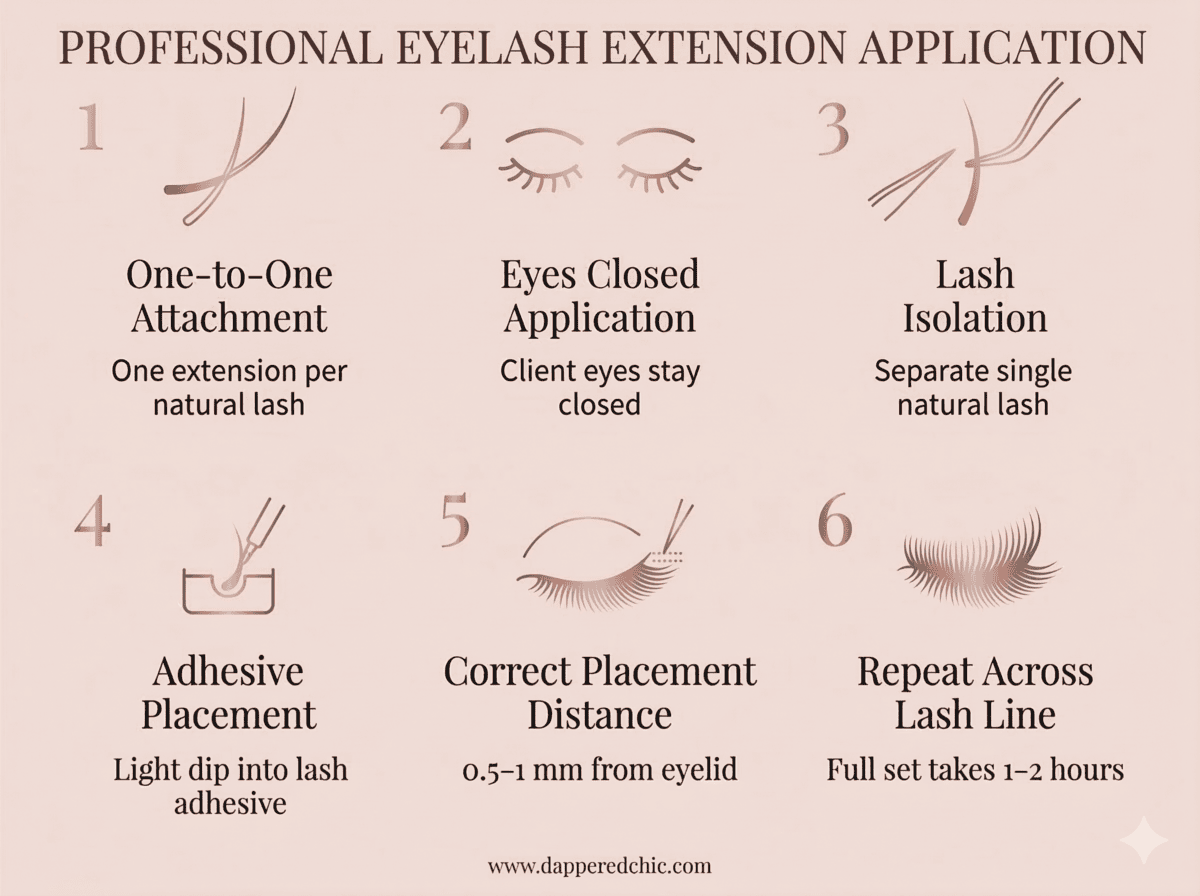
During a professional service, the client’s eyes remain fully closed while the technician works across the lash line, one lash at a time.
The process usually follows a consistent pattern:
- A technician isolates one natural lash using precision tweezers.
- A single extension is dipped lightly into lash adhesive.
- The extension is placed about 0.5–1 mm away from the eyelid and bonded to that lash.
- The process is repeated across the entire lash line.
Because every lash is placed individually, a full professional set typically takes about 1–2 hours to complete.
When applied correctly, extensions stay attached until the natural lash they are bonded to sheds. Since natural lashes grow and fall out in cycles, most people need periodic refill appointments to maintain fullness.
DIY lash kits may look similar at first glance, but they work very differently. Most at-home kits use cluster lashes or lash segments, which attach to several natural lashes at once and are designed for shorter wear rather than full lash-cycle retention.
What Are Eyelash Extensions and How Do They Work?
Eyelash extensions are individual synthetic fibers attached directly to natural lashes using a specialized adhesive. Their purpose is simple: to add length, fullness, and definition without needing mascara.
Instead of sitting on the eyelid like strip lashes, extensions are bonded to the natural lash shaft itself. This allows the extension to move naturally as the lash grows.
Because each extension is attached individually, they follow the natural lash growth cycle. As natural lashes shed, the extensions attached to them fall out as well. This natural shedding is why refill appointments are needed over time to maintain a full look.
It also helps to understand how extensions differ from other lash options:
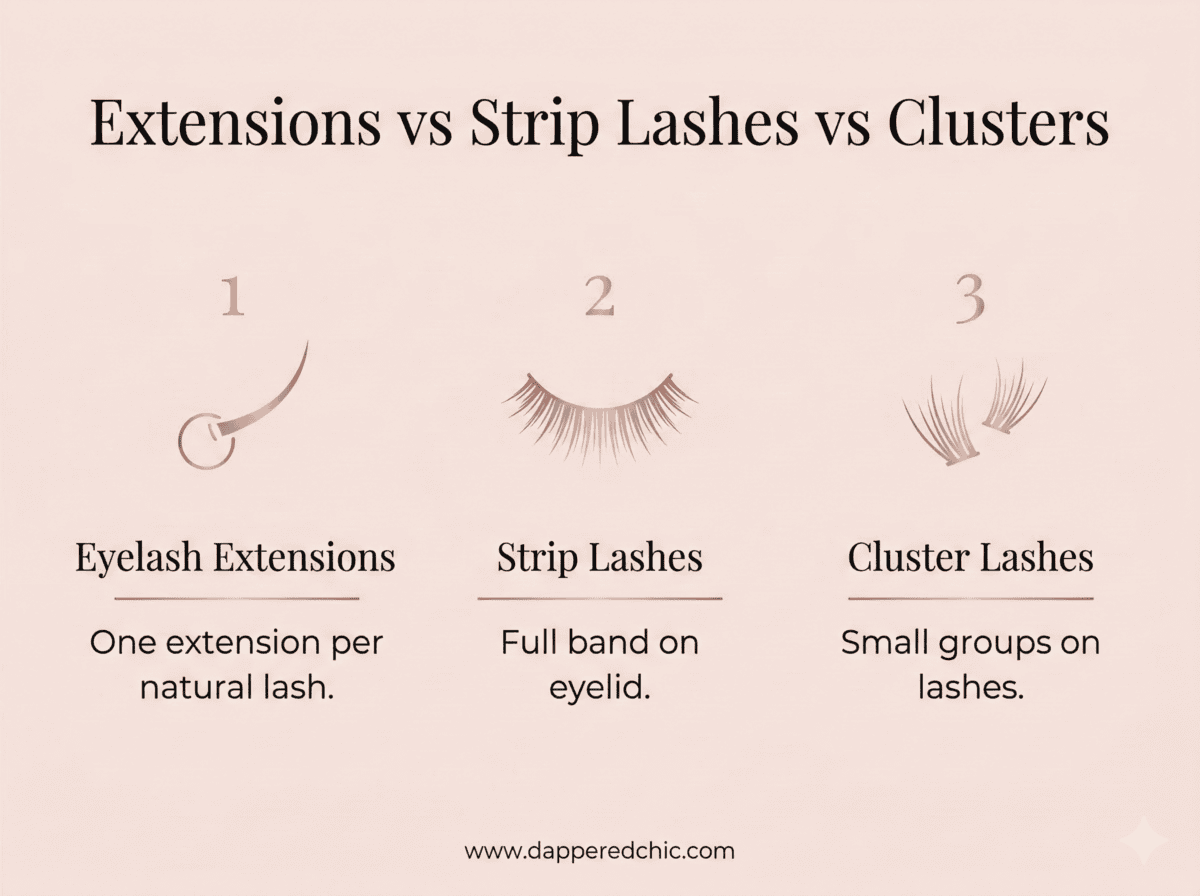
- Eyelash extensions: Individual fibers bonded to one natural lash at a time
- Strip lashes: A full band applied to the eyelid skin with temporary glue
- Cluster lashes: Small lash segments applied to multiple lashes for short-term DIY wear
If you want a deeper explanation of the basics behind lash extensions, start here:
Can You Apply Eyelash Extensions Yourself?
Technically, yes — but true eyelash extensions are extremely difficult to apply on yourself safely.
Professional lash artists train for months because the process requires:
- isolating a single natural lash
- controlling adhesive placement precisely
- placing the extension without touching the eyelid or nearby lashes
Achieving that level of isolation on your own lashes while your eyes are open is extremely challenging.
This is why most at-home lash kits use clusters or lash segments instead of true extensions. These small groups of lashes attach to multiple natural lashes at once and are designed for short-term wear rather than long-term retention.
So while DIY kits can create a similar visual effect, they function very differently from salon eyelash extensions.
Professional vs DIY at a Glance
| Professional Extensions | DIY Lash Clusters |
|---|---|
| One extension per natural lash | Small lash segments |
| Eyes closed during application | Eyes open |
| Last through a natural lash cycle | Lasts 3–7 days |
| Precision technique required | Beginner friendly |
If you’re deciding between the two methods, this comparison guide explains the differences in more detail:
- 📌 Eyelash Extensions vs Clusters
Tools and Products Needed to Apply Eyelash Extensions
Applying eyelash extensions safely requires a small set of specialized tools. Each one improves precision, hygiene, and control during the application process.
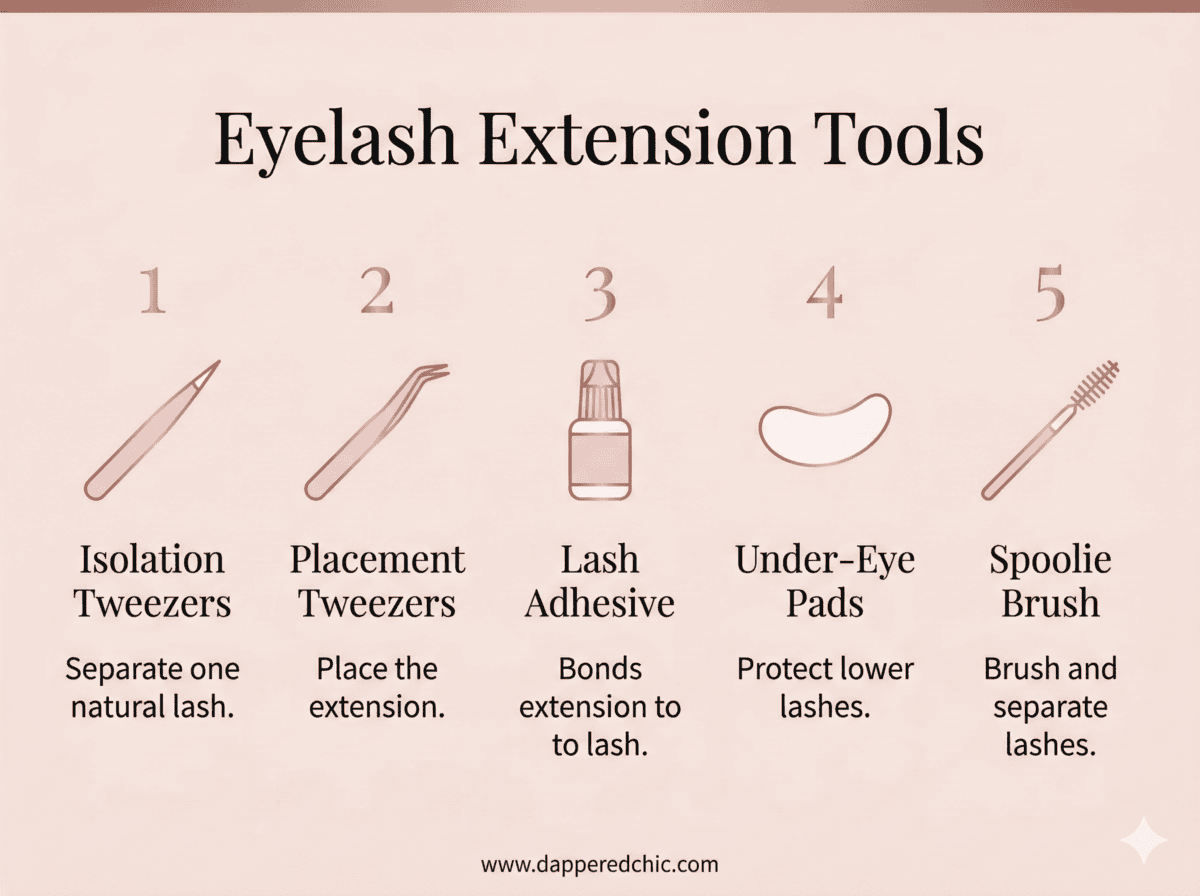
Essential Tools
- Individual lash extensions: These are the synthetic fibers attached to natural lashes. They come in different lengths, curls, and diameters to create different lash looks.
- Lash adhesive: A professional adhesive bonds the extension to the natural lash. Most formulas use cyanoacrylate-based adhesives, which cure when exposed to moisture in the air and form the bond that holds the extension in place.
- Isolation tweezers: A thin, pointed tweezer is used to separate one natural lash from the rest of the lash line. Proper isolation prevents multiple lashes from sticking together.
- Placement tweezers: A second tweezer is used to pick up the extension and place it onto the isolated natural lash with precision.
- Under-eye pads: These pads protect the lower lashes and skin during application and help keep lower lashes from sticking to the upper lashes.
- Lash cleanser: An oil-free cleanser removes makeup, oils, and residue from natural lashes before application so the adhesive can bond properly.
- Spoolie brush: A small brush used to comb through lashes during and after application to keep them separated and aligned.
Optional Tools That Help
These tools are not always required, but can make the process easier during a professional application.
- Nano mister: Produces a fine mist that can help stabilize adhesive curing after the set is finished.
- Lash fan: Used to circulate air and help adhesive vapors dissipate during the service.
- Magnifying mirror: Provides a closer view of the lash line, improving placement accuracy.
- Lash tape: Helps lift layers of lashes or secure pads in place to improve isolation.
Before You Start Applying Eyelash Extensions
Preparation plays a major role in how well eyelash extensions apply and how securely the adhesive bonds during the service. Even small preparation mistakes can affect bonding, lash comfort, or cause extensions to stick to neighboring lashes.
Clean Lashes First
Before starting, natural lashes should be completely clean.
- Remove all makeup, mascara, and oil residue from the lash line.
- Use an oil-free lash cleanser so the adhesive can bond properly.
Oils act as a barrier on the lash surface, which can weaken the adhesive bond and shorten retention.
Use Strong Lighting
Good lighting is essential when working with individual lashes.
- Bright lighting improves precision and visibility.
- It reduces placement mistakes and helps you see isolation clearly.
Many lash artists use magnifying lights or lamps because lashes are extremely small and delicate.
Isolation Is Critical
Isolation means separating one natural lash at a time before attaching an extension.
- Only one natural lash should be exposed in the isolation window.
- This prevents neighboring lashes from sticking together.
Poor isolation is one of the most common beginner mistakes and can lead to discomfort or lash damage if multiple lashes become bonded.
Beginners Should Expect a Learning Curve
Lash extension application is a precision skill. Professional lash technicians typically spend months practicing isolation, adhesive control, and placement techniques before working on real clients.
If the process feels difficult at first, that’s completely normal. Developing consistent isolation and placement takes time and practice.
Quick Steps: How to Apply Eyelash Extensions
These steps summarize the professional lash application workflow used during a full set.
- Clean natural lashes thoroughly.
- Isolate one natural lash using tweezers.
- Dip the extension lightly into adhesive.
- Attach the extension about 0.5–1 mm from the eyelid.
- Allow the adhesive to cure.
- Brush lashes and check for lashes stuck together.
Step-by-Step: How to Apply Eyelash Extensions
This is the full process professional lash technicians follow when applying eyelash extensions. Each step focuses on accuracy, lash safety, and proper adhesive bonding.
Step 1 – Clean and Prep the Natural Lashes
Start by preparing the natural lashes.
• Remove any makeup, oils, or skincare residue around the eyes.
• Use a gentle oil-free lash cleanser to wash the lashes.
• Dry the lashes completely before beginning the application.
Clean lashes provide a better bonding surface because oil and debris weaken adhesive adhesion.
Step 2 – Isolate One Natural Lash
Isolation is the most important technical step.
Using isolation tweezers, separate a single natural lash from the rest of the lash line and keep surrounding lashes pushed aside. This creates a small isolation window where the extension can be attached safely.
⚠️ Attaching extensions to multiple natural lashes can cause tension and damage as lashes grow at different speeds.
Step 3 – Dip Extension Into Adhesive
Pick up the extension with placement tweezers and dip the base lightly into the adhesive.
• Use a very small amount of glue.
• The adhesive should coat the base in a thin layer, not a large bead.
Too much adhesive can create clumps and increase the chance of lashes sticking together.
Professional lash adhesives are designed for controlled salon use with the eyes closed, which is why precise adhesive handling is important during application.
Step 4 – Attach Extension to the Natural Lash
Place the extension onto the isolated natural lash.
• Position it about 0.5–1 mm from the eyelid.
• Align the extension so it follows the same direction as the natural lash.
This placement distance matters because extensions placed too close to the skin can cause irritation, while extensions placed too far away may twist or detach sooner.
Step 5 – Allow Adhesive to Cure
After placing the extension, allow the adhesive time to cure.
Cyanoacrylate lash adhesives cure through exposure to moisture in the air, which triggers polymerization and hardens the bond. Because of this, room humidity and temperature can affect how quickly the adhesive cures during the service.
During this stage:
• Avoid excessive blinking or movement.
• Maintain stable room conditions such as temperature and humidity.
Step 6 – Brush and Check the Lash Line
Once several extensions are applied, gently brush through the lashes using a spoolie brush.
This final step helps you:
• Separate the lashes
• Check for lashes stuck together (“stickies”)
• Make sure each extension moves independently
Professionals perform a final inspection to confirm that every extension is attached cleanly and safely.
🧪 Tester Insight – Trona (University Student)
“Isolation is the hardest step for beginners. When I practiced on a mannequin head, I realized why lash technicians train for months before working on real clients.”
Tips That Make Eyelash Extensions Look Natural
Natural-looking eyelash extensions usually come down to balance and proportion. When extensions complement the natural lashes instead of overpowering them, the result looks fuller while still believable.
Match Extension Length to Natural Lashes
A common guideline is to keep extensions close to the natural lash length. Extensions that are dramatically longer than the natural lashes can look heavy and may not sit correctly.
Avoid Overly Thick Lashes
Thicker lash fibers add more weight. If they are too heavy for the natural lash, they can droop or twist over time.
Lighter lash diameters typically place less mechanical stress on the natural lash, helping maintain comfort and better retention.
Follow the Natural Lash Direction
Extensions should be aligned with the natural growth direction of the lash. When placed at the correct angle, the lash line appears smoother, more even, and more natural overall.
If you want to understand how lash length, curl, and thickness influence the final look, this technical guide explains it in more detail:
Common Mistakes Beginners Make
Beginners often struggle with technique when first learning how eyelash extensions are applied. Most problems come from small application errors that affect comfort and lash health.
Using Too Much Adhesive
Too much adhesive can create clumping at the base of the extension, increasing the chance of lashes sticking together and looking bulky.
Not Isolating Lashes Properly
If multiple natural lashes are attached to the same extension, the lashes cannot move independently. As they grow at different speeds, this can create pulling or tension along the lash line.
Placing Extensions Too Close to the Eyelid
Extensions that touch the skin may cause irritation or redness because the adhesive sits too close to the eyelid.
Choosing Lashes That Are Too Heavy
Extensions that are significantly thicker or longer than the natural lash can place mechanical stress on the follicle.
Over time, excessive lash weight can increase the risk of lash weakening or premature shedding.
Are Eyelash Extensions Safe for Your Natural Lashes?
Eyelash extensions can be safe when applied correctly, but improper application can create problems for the natural lashes and the delicate skin around the eyes.
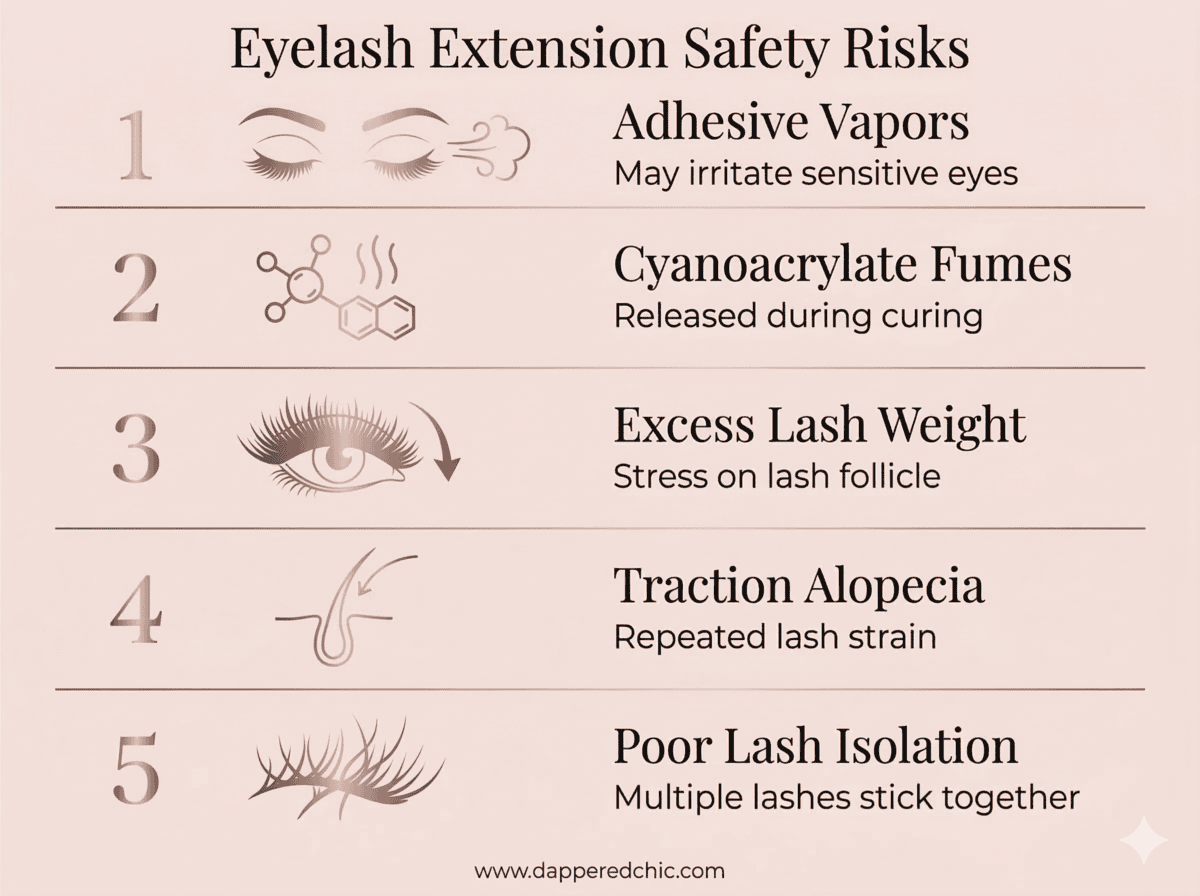
Several factors influence lash safety.
Irritation Risks
Adhesive vapors can sometimes irritate sensitive eyes, especially if the eyes are not fully closed during the application process.
Adhesive Fumes
Professional lash adhesives often contain cyanoacrylate compounds, which cure when exposed to moisture. During curing, these adhesives can release vapors that may cause temporary irritation for sensitive eyes.
Excessive Lash Weight
Extensions that are significantly longer or thicker than the natural lash can place mechanical stress on the follicle.
Traction Alopecia Risk
Repeated strain from overly heavy extensions may eventually weaken the follicle, which can contribute to lash thinning over time.
🧪 Dr. Rabeya (Dental Surgeon & Beauty Enthusiast)
Improper isolation can cause multiple lashes to grow together, creating tension and potential lash damage.
🌐 According to the American Academy of Ophthalmology, eyelash extension safety guidance highlights irritation, allergic reactions, and follicle stress as the primary safety concerns when lash extensions are applied incorrectly.
How Long Do Eyelash Extensions Last?
Eyelash extensions remain attached until the natural lash they are bonded to sheds, which is why refill appointments are usually needed after a few weeks to maintain fullness.
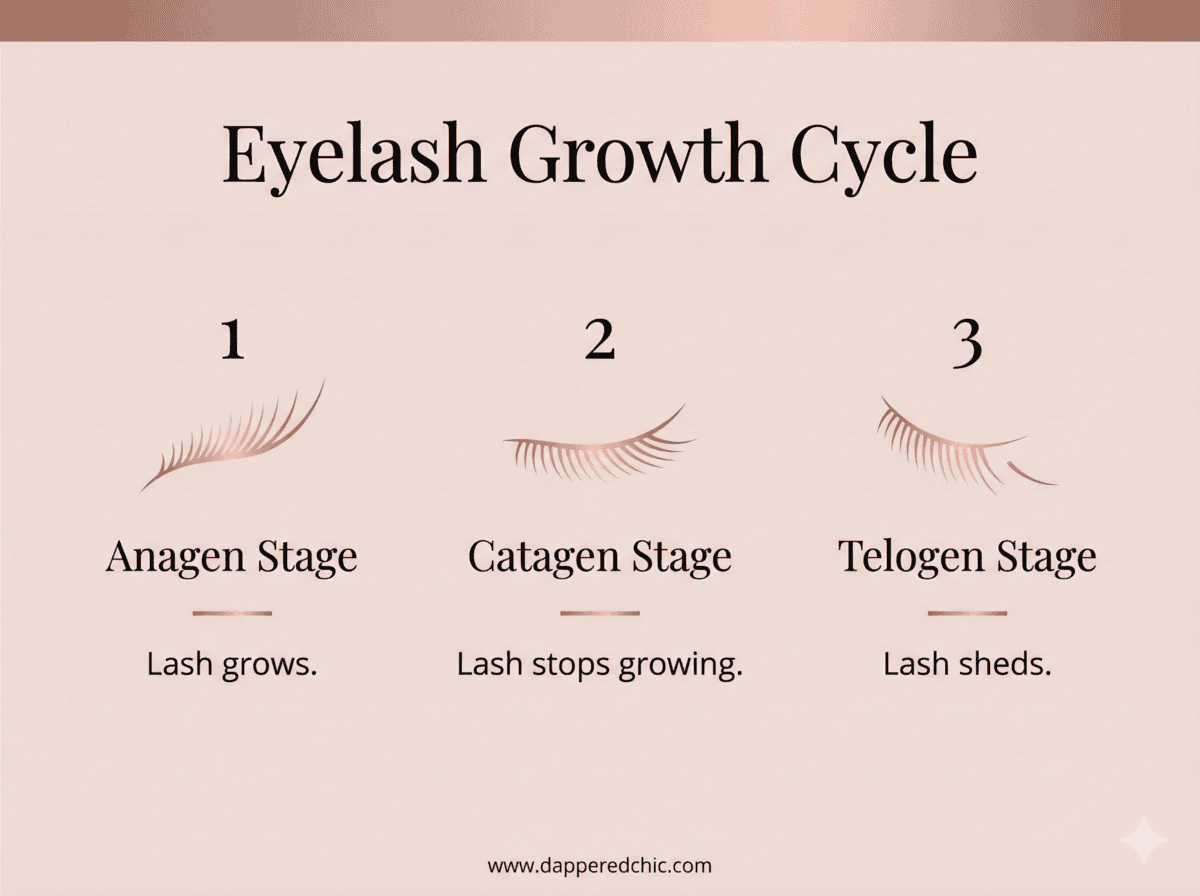
Because natural lashes shed gradually throughout the lash growth cycle, extensions fall out with them over time. As more lashes naturally shed, the lash line slowly appears less dense until a refill replaces the lashes that have fallen out.
If you want a deeper explanation of retention timelines and refill cycles:
- 📌 How Long Do Eyelash Extensions Last
Aftercare: How to Maintain Eyelash Extensions
Good aftercare helps extensions stay cleaner and keeps the natural lashes healthy. Small daily habits can make a noticeable difference in how well lashes hold up between refill appointments.
What to Avoid
- Oil-based skincare: Oils can slowly break down lash adhesive. Avoid heavy creams, cleansing oils, or oil-based makeup removers near the lash line.
- Rubbing your eyes: Rubbing or pulling on lashes can loosen extensions and cause them to fall out prematurely.
- Waterproof mascara: Waterproof formulas are harder to remove and often require rubbing, which can weaken extensions.
Daily Care Tips
- Gentle lash cleansing: Clean lashes regularly using a gentle, oil-free cleanser to remove oil, makeup, and debris.
- Brushing lashes: Use a spoolie brush to lightly comb through the lashes. This helps keep them separated and aligned.
- Sleeping carefully: Try to avoid pressing your lashes into the pillow while sleeping. Sleeping on your back or side with minimal pressure on the eyes can help extensions stay intact longer.
If you want a full routine and detailed care rules:
- 📌 How to Take Care of Eyelash Extensions
Signs Your Lash Extensions Were Applied Incorrectly
When eyelash extensions are applied properly, they should feel lightweight and comfortable. If something feels painful, heavy, or irritating, it may indicate the application technique was incorrect.
Common warning signs include:
- Pain when blinking: Extensions should never hurt during normal eye movement. Pain when blinking may mean extensions were placed too close to the eyelid or attached incorrectly.
- Lashes stuck together: Each extension should attach to one natural lash only. If multiple lashes are glued together, they cannot move independently, which can create tension as the lashes grow.
- Redness or swelling: Persistent redness, irritation, or swelling around the eyelid can indicate an adhesive reaction or improper placement.
If you notice these issues, it may help to review common lash problems and how they occur:
🌐 According to the American Academy of Ophthalmology, Eyelash Extension Safety guidance notes that irritation, allergic reactions, and lash damage can occur when extensions are applied incorrectly or when adhesive comes into contact with the eye area.
When You Should See a Professional Lash Technician
Most lash concerns can be resolved by a trained lash technician, but certain symptoms should not be ignored.
You should contact a professional if you notice:
- Persistent irritation that does not improve after a short period
- Painful pulling or tension along the lash line
- Excessive lash loss after an extension application
A lash technician can safely check the extensions, separate stuck lashes, or remove the set if necessary.
⚠️ If symptoms such as significant swelling, severe irritation, or vision discomfort occur, medical evaluation may be necessary rather than attempting to manage the issue at home.
Frequently Asked Questions
❓Can beginners apply eyelash extensions at home?
Beginners can attempt DIY lash systems, but true eyelash extensions require precise isolation and adhesive control. Because the process involves attaching one extension to one natural lash, most people find it difficult to perform safely on themselves.
For this reason, many at-home kits use lash clusters or segments instead of individual extensions.
❓How long does it take to apply eyelash extensions?
A full set of eyelash extensions typically takes 1–2 hours because each extension is attached individually to a natural lash.
For a deeper explanation of appointment timing:
📌 How Long Do Eyelash Extensions Take
❓What type of glue is used for eyelash extensions?
Most professional lash adhesives are based on cyanoacrylate, a fast-curing compound that hardens when exposed to moisture. This adhesive forms the bond between the extension and the natural lash.
❓Do eyelash extensions damage natural lashes?
Eyelash extensions usually do not damage natural lashes when applied correctly. Problems are more likely when extensions are too heavy, placed incorrectly, or attached to multiple lashes at once.
Final Takeaway
Learning how eyelash extensions are applied takes patience, precision, and practice. The core idea is simple — isolate one natural lash, attach a single extension with adhesive, and repeat across the lash line — but the technique requires steady hands and careful attention to detail.
For beginners, the most important things to remember are:
- Always isolate one natural lash at a time
- Place the extension 0.5–1 mm away from the eyelid
- Use minimal adhesive to avoid clumping
- Make sure each lash can move independently
When applied correctly, eyelash extensions can look natural and feel comfortable while the attached natural lashes remain in their normal growth cycle.
But if something feels painful, heavy, or irritating, it may indicate an application issue — and it is safer to have a trained lash technician check or remove the set.
With the right technique and proper aftercare, eyelash extensions can be a beautiful, low-maintenance way to enhance natural lashes.
🎁 Before You Go
Now that you understand how eyelash extensions are applied, the next step is learning how to maintain them properly and recognize common issues that can happen with lash sets.
These quick guides will help you avoid beginner mistakes and keep your extensions looking their best:
If you’re still exploring the basics of eye cosmetics and where lash extensions fit in, this beginner guide explains the full routine:
- 📌 Eye Makeup for Beginners