⚡ Quick Answer
To apply strip false eyelashes, trim the strip to fit your eye, apply a thin layer of glue, wait until the glue becomes tacky instead of wet, then place the lash starting from the center before securing the outer and inner corners. This strip-lash sequence helps prevent sliding, crooked placement, and lifting edges.
Applying strip false eyelashes at home can feel much harder than it looks, especially the first few times. When learning how to apply false eyelashes, most problems usually come down to fit, glue timing, and placement angle, not skill.
If you’ve ever tried and thought, “Why is this not working?” — we’ve been there. The good news? It’s usually the same few fixable things.
👀 Before We Dive In
This guide is for glue-on strip lashes only. False lashes get much easier once the sequence clicks.
⚠️ Caution: Make sure your eyelids and tools are clean before you start, and stop immediately if you feel stinging, burning, swelling, or ongoing irritation. Lash glue sits very close to the eye, so even small reactions should not be brushed off.
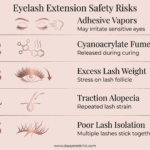
If you’re unsure what ingredients or reactions to watch for, it helps to understand common safety concerns first.
✨ Inside This Lash Guide
Why Strip Lashes Usually Feel Hard at First
If strip lashes have ever felt awkward, frustrating, or just plain impossible to place, that is completely normal. Most beginners run into the same few problems during their first attempts, and they usually come from a few very fixable things.
First, the lash strip is often too long. Lash bands are made to fit a wide range of eye shapes, so they often extend past the outer corner straight out of the box. When the strip is too long, the inner corner can poke, and the outer edge can lift.
That is why trimming matters so much. It helps the lash sit more comfortably and stay in place.
Second, the glue is often applied while it is still too wet. Lash adhesive needs a short moment to become slightly tacky before placement. This is usually around 30–60 seconds, but it can shift a bit depending on the formula, room humidity, watery eyes, or how much glue you used.
If the strip goes on too early, it slides instead of gripping. If you wait until the glue feels sticky instead of shiny-wet, it usually grabs much more easily.
Third, the lash strip can sit too high or too low on the lid. If it sits above the natural lash line, the band becomes visible. If it sits too low, it can press against the eyelid skin and feel uncomfortable.
A small positioning trick that helps: look slightly downward into a mirror placed below eye level. That angle makes it easier to see your lash line and place the strip where it should sit.
Once the sequence becomes clear — trim for fit, wait for tacky glue, then place the center first — strip lashes usually start feeling much easier to control.
Which False Eyelashes Are Easiest to Apply?
Before jumping into the full tutorial, it helps to know why strip lashes are the best place to start for this method.
To keep things clear, this guide stays focused on strip lashes only. Other types are mentioned briefly, so the difference makes sense, but the tutorial below is for strip lashes.
Strip Lashes
Strip lashes are the main focus of this guide, and they are usually the easiest starting point for beginners once a few basics are learned.
A strip lash is one flexible band that sits across the lash line. After trimming the strip to match your eye width and letting the glue become tacky, the lash can be placed in one controlled movement.
Because the entire lash sits on one band, beginners only need to learn three core things:
- Fitting the strip to their eye width
- Waiting for the glue to become tacky
- Placing the strip starting from the center
Once those steps are complete, strip lashes usually become much easier to apply consistently.
If you’re still figuring out which styles are easiest to control as a beginner, starting with simpler options can make a noticeable difference.
- 📌 Best Eyelash Strips
Individual or Cluster Lashes
Individual or cluster lashes can create a more natural look because they are placed in small sections instead of one full strip.
However, they usually require more precision and patience, since each piece has to be positioned separately. For most beginners, that feels more technical than placing one flexible strip.
Magnetic Lashes
Magnetic lashes are another option some beginners try because they do not use traditional lash glue.
Instead, they attach with magnetic eyeliner or a different magnetic system. For some people, that feels easier, but it is a different method from glue-on strip lashes.
Because this guide focuses only on strip lashes, the step-by-step tutorial below stays centered on that technique.
What You Need Before You Start
Before applying false eyelashes, it helps to set up a few basic tools. Having everything ready makes the process much smoother, especially the first few times.
Here is a simple prep checklist:
- Strip lashes
- Lash glue
- Tweezers or a lash applicator
- Small scissors
- Eyeliner (optional)
- A mirror placed slightly below face level
- Clean, dry, oil-free eyelids
That mirror angle matters more than people expect. Looking slightly downward makes it much easier to see your lash line and place the strip accurately.
⚠️ Before you begin, make sure your tools are clean, and your eyelids are oil-free, especially if your eyes are sensitive. Lash glue grips best on clean skin, and oils can cause the strip to lift.
Also, keep in mind that oily eyelids, watery eyes, and rushed glue timing can all make strip lashes harder to apply. Cleaning the lids and letting the glue reach a tacky stage usually makes a noticeable difference.
If you’re still struggling with control or placement, using the right tool can make the process feel much easier.
- 📌 Best False Eyelash Applicator Tool
Step-by-Step: How to Apply False Eyelashes
Applying strip false eyelashes becomes much easier once the sequence clicks. These steps follow a beginner-friendly method: fit the lash first, wait for the tacky glue, then place the strip starting at the center.
Step 1 – Measure the Lash Against Your Eye
Start by holding the lash strip gently against your natural lash line without glue.
The goal here is simply to check the fit.
Look at both ends of the band and see whether it extends past your eye. The strip should follow your lash line comfortably, without poking the inner corner or hanging too far outward.
If the strip is slightly longer than your eye, that is completely normal. Most strip lashes are made a bit wider so they can be adjusted.
📌 If you’re not sure exactly how much to remove or where to cut, this quick guide breaks it down step by step: How to Trim False Eyelashes
Step 2 – Trim the Outer Edge if Needed
If the lash strip is too long, trim only the outer edge using small scissors.
Avoid cutting the inner corner. The inner section usually has shorter fibers, so it blends more naturally near the tear duct.
Trimming from the outer edge keeps the lash shape balanced and helps prevent inner-corner poking and outer-edge lifting later.
Step 3 – Apply a Thin Layer of Glue and Wait Until It Turns Tacky
This step is where many beginner attempts fail.
Apply a thin line of lash glue along the band, making sure a little extra adhesive reaches the corners. Then pause and let the glue become tacky.
If the glue is still wet, the strip will slide instead of gripping the lash line.
Most lash glues take about 30–60 seconds to reach that slightly sticky stage.
A simple cue: the glue should look less shiny and feel slightly sticky, not liquid.
Timing can shift depending on humidity, temperature, watery eyes, and how much glue you applied. In more humid conditions, glue can turn tacky faster.
If your eyes water during application, the adhesive can stay wetter longer and lose grip.
If your glue feels inconsistent or stops working the way it used to, the issue is often shelf life rather than technique.
• 📌 How long does eyelash glue last
🧪 Trona (University Student & Beauty Enthusiast):
“The first few times we tried false lashes, placing them while the glue was still wet made everything slide. Waiting until the glue turned tacky made a huge difference — the lash stayed where it was placed.“
Step 4 – Place the Lash in the Center First
Look slightly downward into a mirror placed below your face.
Using tweezers or your fingers, position the center of the lash strip onto the middle of your lash line first.
Once the center is sitting correctly, guide the outer corner into place. Then finish by pressing the inner corner down.
Placing the center first keeps the strip balanced and prevents it from shifting during placement.
Step 5 – Press the Band Into Place Gently
Once the strip is positioned, press lightly along the lash band using tweezers or an applicator.
Move slowly from the center toward the corners, making sure the band sits as close to your natural lash line as possible.
If the placement looks slightly off, you still have a short adjustment window before the glue fully sets.
Step 6 – Blend the Lash So It Looks More Natural
After the strip is secure, you can blend it slightly so it looks more natural.
A thin line of eyeliner along the lash band can help hide the strip and make the lashes look more seamless.
Some people also apply a very light coat of mascara to merge their natural lashes with the false ones. If you do this, use a small amount and avoid overloading reusable lashes, since buildup can shorten their lifespan.
Beginner Tricks That Make False Lash Application Easier
A few small adjustments can make a noticeable difference when applying strip lashes, especially if the process still feels awkward.
- Bend the lash band into a soft U shape first: Gently flex the strip between your fingers before applying glue so it follows the curve of your eye instead of lifting at the corners.
- Use a chest-level mirror: Looking slightly downward exposes the lash line and improves placement accuracy.
- Let the glue get tacky: Wet glue slides, while tacky glue helps the strip stay in place.
- Do one eye at a time: Working one eye at a time reduces rushed placement.
- Start with flexible, natural styles: Softer bands and lighter styles are usually easier to control.
- If your eyes water during application, pause first: Watery eyes can weaken the adhesive grip and make placement harder.
- If your hands feel shaky, rest your elbow on a table: Stabilizing your hand helps with more precise placement.
These small adjustments may seem simple, but together they remove a lot of the frustration beginners usually run into.
If you’re still figuring out what works best, starting with beginner-friendly options can make the process feel easier.
- 📌 Best Eyelash Strips
Common False Eyelash Mistakes and How to Fix Them
Even when the steps are correct, small mistakes can still happen. Understanding what caused the issue makes it easier to fix next time.
The Corners Keep Lifting
If the corners keep lifting, the strip usually does not fit properly, or the adhesive did not grip well enough.
Common causes include:
- The strip is too long
- Not enough glue was applied near the corners
- Placing the lash while the glue is still too wet
The edges are usually the first areas to lose contact when fit or adhesion is off. Trimming the outer edge and letting the glue reach a tacky stage usually solves this.
The Lash Looks Crooked
A crooked lash often happens when the strip is placed unevenly across the lash line.
This usually happens because:
- One corner was placed first instead of the center
- There was no downward mirror angle
- The lash was not adjusted before the glue began to set
Starting with the center and then guiding each corner into place helps keep the strip balanced.
The Glue Looks Messy
Visible glue usually means too much adhesive was used or the lash was adjusted too much while the glue was still wet.
Common causes include:
- Applying too much glue
- Not waiting long enough for the glue to become tacky
- Trying to fix placement while the glue is still sliding
When glue is wet, it spreads instead of staying in place.
Using a thinner layer and letting it reach a sticky stage (which can vary based on environment and formula) helps prevent this.
The Lash Feels Uncomfortable
Strip lashes should feel lightweight once placed. If they feel scratchy or irritated, the fit may need adjustment.
Possible causes include:
- The inner corner is too long
- The band is placed too high or too low
- Sensitivity to lash adhesive
Discomfort usually comes from pressure points or placement, not the lash itself.
If irritation appears, remove the lash and check the fit before reapplying. If stinging, burning, swelling, or ongoing irritation continues, stop using the adhesive and avoid reapplying until your eyes feel normal again.
If you’re not sure whether the reaction is normal or related to the glue itself, it’s safer to check common ingredient risks and warning signs before trying again.
How to Make False Eyelashes Look More Natural
False lashes look most natural when they blend into your lash line instead of sitting on top of it. A few small adjustments make a noticeable difference.
- Choose a softer lash style: Lighter density and flexible bands usually blend more easily.
- Trim the strip to fit your eye width: A proper fit helps prevent corner lifting and keeps the strip aligned.
- Keep the band close to your natural lash line: If it sits too high, the band becomes visible.
- Blend the band with a thin line of eyeliner: This helps hide the strip and smooth the transition.
- Avoid very heavy styles for daytime: Lighter styles tend to look more natural in everyday lighting.
Small adjustments, such as these, help strip lashes feel less like an add-on and more like part of your natural lash line.
How Long Do False Eyelashes Stay On?
When applied correctly, strip false eyelashes usually stay in place for a full day.
Wear time can vary depending on:
- The type of lash glue
- How oily your eyelids are
- Humidity or sweat
- Touching or rubbing your eyes
If the strip does not fit well or the glue is still wet during placement, the corners may lift earlier.
Proper trimming and letting the glue reach a tacky stage usually improve hold and stability.
How to Remove False Eyelashes Safely
Removing strip lashes gently is just as important as applying them correctly. Pulling too quickly can irritate the eyelid or damage the lash band.
A simple removal sequence works best:
- Loosen the lash first.
- If the adhesive still feels firm, pause or soften it slightly so the band releases more easily.
- Lift from the outer edge.
- Starting at the outer corner helps the strip detach gradually.
- Never yank the lash off.
- Slow removal helps avoid discomfort and irritation.
- Remove leftover glue carefully.
- Clean any adhesive gently instead of scraping.
- Store reusable lashes properly.
- Place them back in their tray to keep their shape.
🧪 Dr. Rabeya (Dental Surgeon & Beauty Enthusiast):
When removing false lashes, avoid pulling directly on the lash line. If you feel resistance or irritation, pause and loosen the adhesive first.
🌐 According to the American Academy of Ophthalmology, proper removal and hygiene of eye cosmetics help reduce irritation and eye-area injury risk.
If you want a more detailed step-by-step walkthrough specifically for safe removal, start here:
- 📌 How to Remove False Eyelashes
If leftover glue feels stubborn or doesn’t come off easily, this guide focuses specifically on removing adhesive safely:
- 📌 How to remove eyelash glue
Can You Reuse False Eyelashes?
Yes, many strip lashes can be reused if they stay clean and keep their shape.
After removing the lashes, gently peel away any dried glue from the band. Doing this slowly helps prevent bending or tearing.
Store reusable lashes in their original tray or a case so the band keeps its curve.
To keep reuse safe and consistent:
- Remove lashes gently
- Clean the glue after each use
- Store them properly
If the band becomes stiff, warped, or heavily coated with mascara, it will not sit properly anymore.
For hygiene and safety, replace lashes once they lose shape or feel less comfortable to wear.
FAQ About Applying False Eyelashes
❓ Are false eyelashes safe for beginners?
Yes, beginners can use false eyelashes safely when they are applied and removed gently.
If glue causes stinging, burning, swelling, or ongoing irritation, remove the lashes and stop using that adhesive.
❓ Can false eyelashes damage natural lashes?
False eyelashes usually do not damage natural lashes when handled gently.
Problems mostly happen when lashes are pulled off too quickly or when adhesive buildup is left on the lash line.
🌐 According to research from the National Institutes of Health, products and procedures around the eyelid area require careful handling to avoid irritation and complications.
❓ Should you apply mascara before or after false eyelashes?
A light coat before applying lashes can help with blending.
A very small amount after is optional, but heavy mascara can reduce how many times lashes can be reused.
❓ What if the inner corner keeps poking me?
If the inner corner feels uncomfortable, the strip is slightly too long.
Trimming a small amount from the outer edge usually fixes this.
❓ How many times can you reuse false eyelashes?
Many strip lashes can be reused multiple times, depending on quality and care.
Gentle removal, cleaning, and storage extend their lifespan.
❓ Are magnetic lashes easier than glue-on lashes?
For some people, magnetic lashes feel easier because they skip traditional glue.
However, they use a different method, and this guide focuses on strip lashes.
Final Thoughts
Applying strip false eyelashes can feel complicated at first, but it becomes much easier once a few basics click.
If it still feels tricky, that is completely normal. Most people improve quickly with practice.
Most success comes down to three things:
- Fitting the strip to your eye width
- Waiting for the glue to become tacky
- Placing the strip starting from the center
Once those steps become familiar, applying false eyelashes turns into a quick routine.
👀 Before You Move On
Now that you’ve got the basics down, the next step is making results more consistent over time.
- 📌 How to Remove False Eyelashes
- 📌 How to Trim False Eyelashes
Once you’re comfortable with lashes, learning how everything fits into a full routine can make your results look more natural overall.
- 📌 Eye Makeup for Beginners