
⚡ TL;DR: obagi eyebrow serum reviews
Nu-Cil has a better evidence story than many cosmetic brow serums. But the trade-off is real: nightly use for at least eight to twelve weeks, premium upkeep, and a prostaglandin-analog cosmetic near the eyes.
Most obagi eyebrow serum reviews lead with dramatic before-and-afters. We care more about one question: does the evidence justify the routine and cost?
Obagi gives us brand study data and a clear nightly protocol. Current users also report darker, denser-looking brows. But dehydrolatanoprost is in the formula, and the eye-area warnings deserve real attention.
So this is not an easy yes or no. It is a premium maintenance product with a credible case for visible improvement. The waiting period and safety profile are part of the decision.
✨ Inside This Brow Guide
🌸 Psst…
Some links in this post are affiliate links. If you shop through them, we may earn a small commission at no extra cost to you — like a little coffee while we keep testing beauty favorites. ☕💄
What Obagi Nu-Cil Is Meant to Do
What is Nu-Cil actually promising? Obagi describes it as a cosmetic serum that improves the appearance of brow condition, thickness, volume, and pigment.
Its brand study reports better brow fill, density, and volume by eight weeks. The results were more pronounced by twelve weeks.
That sounds encouraging, but there is an important limit. The study is company data on file, not an independently published clinical paper we could inspect in full.
Still, the claim is tied to a clear timeline and routine. That is more useful than a vague promise of “instant growth.”
Our Full Review
So how do we judge the whole product? We look at results, routine, and risk rather than hype.
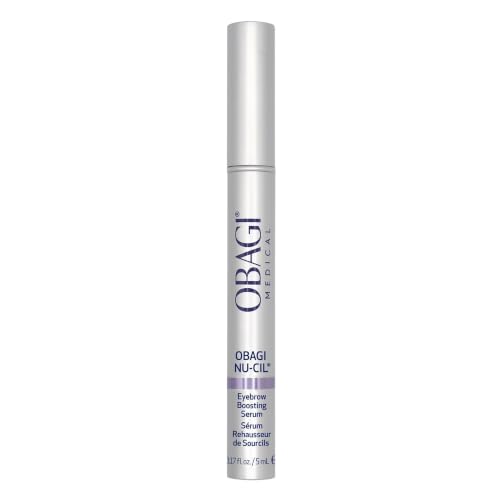
Obagi Nu-Cil Eyebrow Boosting Serum
A targeted nightly serum for sparse or over-tweezed brows, with premium medical-skincare positioning.
The formula is where the decision gets more serious. Alongside conditioning and hydrating ingredients, Nu-Cil includes dehydrolatanoprost.
Obagi warns that products containing prostaglandin analogs may cause eye-area reactions and iris discoloration. That is not a footnote we would skip.
Does that tell us how likely a problem is? No. And we should not borrow risk percentages from prescription glaucoma drops or other products.
But the warning changes the buying decision. Persuasive before-and-after photos are not a reason to ignore the label.
Bottom line: Strong results case, real caveat. This makes the most sense when visible brow density matters enough to justify premium, ongoing use and an informed eye-area trade-off.
- ✅ The brand study gives the eight-to-twelve-week window more substance than a vague promise.
- ✅ Once-nightly use is simpler than a twice-daily routine and needs only a thin pass.
- ✅ Current review patterns repeatedly describe darker, fuller-looking brows and better fill in sparse areas.
- ✅ The spoolie-style applicator is built to reach brow hairs and the skin along patchy areas.
- ❌ The premium positioning makes little sense if we only want a casual experiment instead of ongoing use.
- ❌ A simpler formula may feel more comfortable when eye-area sensitivity has already been a concern.
- ❌ The prostaglandin-analog ingredient profile may rule it out if we prefer to avoid that cosmetic category.
- ❌ The maintained appearance is not permanent; stopping use can let brows move back toward their normal cycle.
🧪 Lash Lab Notes — Dr. Sazia (Medicine Specialist & Beauty Enthusiast)
I would keep the application narrow and follow the labeled once-nightly, brow-only routine. I take the ingredient class seriously, but I would not turn ophthalmic or lash-serum research into a made-up risk rate for this exact eyebrow product.
- 💡 Editor’s Note: We like the defined eight-to-twelve-week expectation. It feels more useful than a promise of overnight change. But the formula, maintenance, and premium tier all have to feel comfortable for the routine to make sense.
Still unsure about the commitment? See what current buyers say about Obagi Nu-Cil.
This fits sparse or over-tweezed brows best when nightly consistency and premium upkeep feel realistic.
Care tip: Start with clean, completely dry brows at night. Keep the serum on the intended brow area, then wait 90 seconds before adding other skincare.
What if the ingredient profile or long-term commitment feels wrong for us? We do not have to force this formula into the routine. A broader serum comparison shows how the trade-offs change beyond one brand.
Next, we can look at the ingredient story, safety, timing, and value. Those pieces make the final choice much clearer.
What the Ingredient List Actually Means
The ingredient list looks busy. So what matters most?
Obagi groups several ingredients under its NouriPlex technology. That includes biotin, panthenol, sodium hyaluronate, and a proprietary lipid compound.
These ingredients help explain why brows may look smoother, better conditioned, or more substantial. That can happen even before sparse areas look dramatically different.
Panthenol is a conditioning humectant. Sodium hyaluronate helps attract and hold water.
In a brow serum, those properties can support a healthier-looking surface. They can also help individual hairs look better conditioned. They are not proof that an inactive follicle has restarted.
And biotin? It often gets heavy marketing in hair products. Its presence here should not become the explanation for every reported result.
The more distinctive ingredient is dehydrolatanoprost. That is why Nu-Cil needs a different conversation from a basic peptide-and-humectant conditioner.
This also changes how we talk about results. Obagi calls Nu-Cil a cosmetic product and says it is not intended to cause eyebrow growth or prevent, cure, or reduce eyebrow loss.
So appearance claim, not treatment is the accurate frame.
In practical terms, the goal is fuller-, thicker-, darker-, and denser-looking brows with continued use. But a cosmetic review cannot tell us whether a serum can solve sudden hair loss, a medical condition, or a completely bare area that has not produced hair for years.
Side Effects and Who Should Be Cautious
This is the section we would not skim. What should we actually watch for?
Obagi says to avoid getting the serum in the eyes. It also says to stop if irritation, inflammation, or swelling develops around the eye area.
Its current warnings mention reported redness, itching, dry or watering eyes, sensitivity, styes, eyelid or eye inflammation, skin darkening, hair loss, and hair enhancement outside the intended area.
One warning stands out: iris discoloration. Obagi explicitly notes that products containing prostaglandin analogs may cause it.
That is unusually specific wording for a cosmetic brow product. It is one reason we would read the ingredient list before buying.
What does independent research add? Research on prostaglandin-analogue cosmetic lash products has raised concern about periocular volume changes.
A small photo-based study indexed by PubMed/NIH found changes compatible with prostaglandin-associated periorbitopathy among users of prostaglandin-analogue lash lengtheners.
That study does not tell us how often those effects occur with Obagi Nu-Cil on eyebrows. It does not establish that they happen at the same rate either.
The exposure site, formulation, dose, and usage pattern are different. So the responsible takeaway is prostaglandin-analog caution, not a borrowed risk percentage.
Nu-Cil is also labeled for eyebrows only. Obagi sells a separate Nu-Cil eyelash serum with a different application design. Using the brow formula on the lash line is not a smart shortcut.
And when should a clinician enter the picture? If we already use an eye medication, have a history of significant eye-area reactions, or develop persistent symptoms after starting the serum, qualified medical guidance makes sense.
A cosmetic review can explain the label and evidence. It should not decide whether an eye-area active is medically appropriate for us.
How Long Results Take and What Happens If You Stop
How long should we give this before judging it? The brand’s clearest window is eight to twelve weeks.
Obagi says participants reported better brow density and volume as early as eight weeks. Results were more pronounced by twelve weeks.
So a few nights tells us almost nothing.
Real-world timing is messier. Current Obagi and LovelySkin reviews include people who noticed darkening or new-looking fill after several weeks.
First-hand editorial accounts range from around two months to several months before the change felt obvious. That timing is observational, not a guarantee.
Why can the timing vary so much? Baseline brows, application consistency, and what each person calls a meaningful change all matter.
A useful expectation is to give Nu-Cil the full brand window before calling it a failure. Even then, some users may take longer, and some may see very little.
An early change can also be visual rather than dramatic new density. Existing hairs may look darker, making the brow appear more defined and filled in.
The bigger long-term point is ongoing maintenance. Obagi says the product is designed for continued use and that brows return toward their normal eyebrow cycle after stopping.
So this is not a one-tube route to a permanent result.
The brand also says one tube lasts about three months when used as directed. That keeps the routine simple, but it also makes Nu-Cil a recurring premium purchase.
Is Obagi Nu-Cil Worth It?
So, is the premium routine worth it? Three things need to line up.
Our brows should be sparse or over-tweezed. We should feel comfortable with the ingredient profile. And a premium recurring routine should not feel frustrating every time the tube needs replacing.
The strongest case is not one glowing review. It is the combination of a defined brand study window, once-nightly use, a targeted applicator, and a broad pattern of users describing darker or fuller-looking brows after consistent use.
The case against it is just as clear. The price tier is high, results require maintenance, and the dehydrolatanoprost/prostaglandin-analog issue gives cautious buyers a legitimate reason to prefer another type of formula.
Who is the better fit? Someone who has already decided that visible brow density is worth a sustained routine.
And the weaker fit? Anyone wanting a low-cost trial, permanent regrowth after one tube, or a routine that avoids prostaglandin-analog cosmetics near the eyes.
That is why “worth it” cannot be separated from safety comfort. Before-and-after evidence can look persuasive, yet the product can still be wrong for us if the ingredient profile makes the routine stressful.
Frequently Asked Questions
Still have the smaller practical questions? These answers stay inside Obagi’s current labeled directions and claims. We are not stretching the serum into uses it was not designed for.
❓ Can you use Obagi Nu-Cil Eyebrow Boosting Serum on eyelashes?
No. Obagi says the eyebrow serum is for eyebrows only. The brand recommends its separate Nu-Cil eyelash serum for the upper lash line.
The brow formula should stay on brows. But if our real goal is lash length or density, there is a separate buying path. We can compare formulas designed for the lash line instead.
📌 Compare the best eyelash serums
❓ How often should you apply Obagi Nu-Cil?
Once nightly on clean, dry brows. Using it more often goes beyond the brand’s instructions, and there is no evidence here that extra applications speed results.
❓ How long should Obagi Nu-Cil dry before skincare?
Give it 90 seconds after application. Then we can add other skincare around the area. That pause helps the serum dry and reduces unnecessary migration.
❓ Is Obagi Nu-Cil fragrance-free?
Obagi says the formula is made without fragrance. Our active record also notes conflicting Amazon listing metadata that labels an aloe scent.
So the brand’s current fragrance-free statement is the safer reader-facing description. Packaging remains the final ingredient check.
❓ Do you need a prescription for Obagi Nu-Cil?
No prescription is required according to Obagi. The company positions Nu-Cil as a cosmetic product that improves the appearance of brows, not a drug for treating eyebrow-loss disorders.
❓ What happens if you stop using Obagi Nu-Cil?
Obagi says the eyebrows return toward their normal eyebrow cycle after discontinuation. So we should not treat the maintained appearance as permanent.
Final Thoughts
So where does that leave us? Obagi Nu-Cil makes the most sense when we want a serious cosmetic brow routine and feel comfortable with both premium upkeep and prostaglandin-analog caution.
The evidence and current review pattern give it a credible case for fuller-, darker-, denser-looking brows. But the commitment is part of the product, not an inconvenience we can ignore.
If we want a cheap experiment, a permanent one-tube fix, or a prostaglandin-free formula by principle, this is an easy skip. If the warnings feel acceptable and we can judge results over eight to twelve weeks, the case is much stronger.
Last update on 2026-10-09 / Affiliate links / Images from Amazon Product Advertising API