
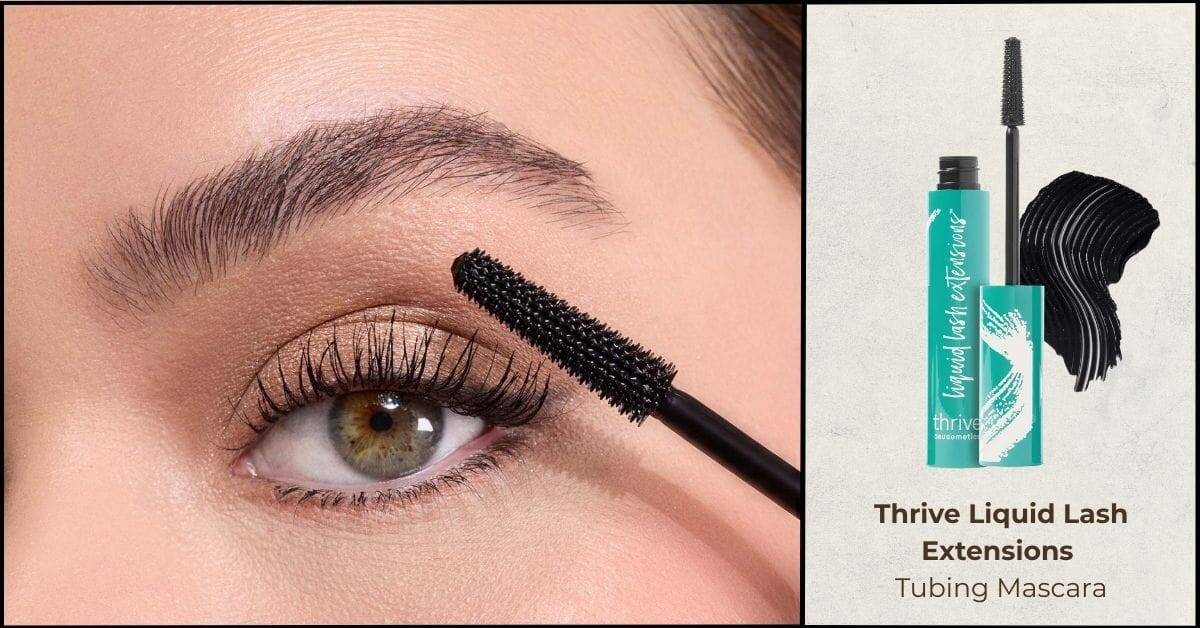
⚡ TL;DR: Thrive Liquid Lash Extensions Mascara Reviews
Want obvious length without a stubborn removal routine? Thrive Causemetics Liquid Lash Extensions Mascara is strongest at length, clean definition, lower everyday transfer, and warm-water removal. It is less convincing for plush volume, thick dry-down layering, or truly waterproof wear.
So what do Thrive Liquid Lash Extensions mascara reviews actually agree on? The pattern is more specific than the hype. Length and definition show up most consistently. Clumping, flaking, curl retention, and value depend more on our lash type and how we apply it.
✨ Inside This Mascara Guide
🌸 Psst…
Some links in this post are affiliate links. If you shop through them, we may earn a small commission at no extra cost to you — like a little coffee while we keep testing beauty favorites. ☕💄
What the Formula Consistently Does Well
What stands out first? Length and clean definition. Independent beauty testing and recurring user feedback both describe lashes looking longer and more separated.
That makes the “lash-extension” comparison useful as a visual description. It does not mean dense, false-lash volume. That difference matters.
And the main gap? We can get more visible lashes without getting a plush, thick fringe. Glamour’s tester liked the length and separation but wanted more volume.
Transfer resistance is another recurring plus. The formula is often praised for reducing the raccoon-eye look in ordinary wear. Still, some users report flakes or smudging.
So the brand’s “no clumping, flaking, or smudging” wording is a claim, not a universal result. The formula earns its reputation more through length, separation, and easier cleanup. Maximum volume and flawless wear are not the promises we should assume.
How the Tubing Formula Changes Wear and Removal
What makes tubing mascara different? Instead of only painting lashes with a traditional pigmented coating, it forms polymer-like tubes around individual lashes.
Once those tubes are set, they can resist routine transfer well. Warm water softens them so they can slide away during deliberate removal.
Here is the key label detail: this mascara is water-resistant, not waterproof. Everyday humidity, oily lids, and incidental moisture are not the same as swimming or prolonged soaking.
So “tubing” does not mean true waterproof performance. That is an easy expectation to mix up.
Removal can look odd the first time, too. Warm water may loosen small tube-shaped pieces from our lashes. Those pieces during deliberate removal are not automatically the same as flakes during wear.
Want the broader explanation without turning this review into category theory? The dedicated guide covers how the tubing mechanism works in more detail.
Now the practical question: is Thrive’s brush-and-formula combo easy enough to control for the price?
Our Review of the Thrive Tubing Formula
Here is where the evidence and trade-offs meet. We can judge the formula on what it repeatedly does well, where technique matters, and what the price buys us.
Thrive Causemetics Liquid Lash Extensions Tubing Mascara
The gel tubing formula is built around extension-like length with low-effort removal. It uses a straight wand and a wet working window, so controlled application matters.
The reviewed Brynn (Rich Black) full-size tube is 0.38 oz / 10.7 g. It is positioned to lengthen, define, add some fullness, and support curl. It also stays water-resistant and removes with warm water.
What happens in real use? Many users and independent testers report strong length and separation, often with less under-eye transfer than conventional mascara.
But there is a trade-off. Too much product can make lashes look heavier and more stuck together. Another coat after dry-down can do the same.
Bottom line: finish coats while still wet for the cleanest result. Length and definition are the easy part to like. Technique is part of the formula’s performance, not an optional extra.

- ✅ Repeatedly delivers noticeable length and clear lash definition
- ✅ Releases with warm water without demanding heavy rubbing
- ✅ Often keeps everyday transfer and under-eye smudging lower
- ✅ Comes in black, brown-black, blue, grey, berry-brown, navy, green, and purple options currently offered by the brand
- ❌ Big, dense volume from one or two heavy coats
- ❌ Adding fresh coats after the first layers have fully dried
- ❌ Anyone who needs genuinely waterproof wear
- ❌ Fine or straight lashes that excess product can weigh down easily
🧪 Lash Lab Notes — Engr. Nusrat (Engineer & Beauty Enthusiast)
I find the straight wand and wetter formula easier to control when I remove excess first. I also finish one eye before that first coat sets. That keeps my focus on separation instead of fixing clumps after dry-down.
- 💡 Editor’s Note: The evidence backs the mascara’s length-and-definition reputation far more strongly than an “everything-proof, never-clumps” story. If we like a lighter, separated lash look, the method makes sense. If we prefer repeatedly building thick coats, the short wet window is a real drawback.
Wondering what current buyers add to that picture? See what current buyers say about Thrive Causemetics Liquid Lash Extensions Mascara before deciding.
Reader Recommendation: Best when we want noticeable length, crisp separation, and easy removal.
Care Tip: Let warm water soften the tubes, then guide them downward gently instead of pulling or rubbing hard.
So what matters most before we judge it? Timing. Getting the sequence right gives the formula its best chance to stay separated.
How to Apply It Without Clumps
Clumps are usually easier to prevent than fix. The simplest approach is one short wet-on-wet sequence, not a return to fully dried lashes.
Product load matters. Timing matters more. Fancy technique does not.
Step 1:
If we use a curler, curl first. Scrape off obvious excess, then use long root-to-tip strokes on one eye. A lighter first pass separates more easily, especially on fine or straight lashes.
Step 2:
Need another coat? Add it while the first is still wet. Once the tubing film sets, stop working the lashes. Independent testing and user feedback most consistently connect late recoating with clumping or a spidery finish.
Removal follows the same logic. Hold warm water against the lashes long enough to soften the tubes, then slide them downward gently. We are working with the formula instead of fighting it.
Want the full routine? The technique guide goes deeper without repeating this whole review.
Once the method fits our routine, the buying question gets simpler. Do these strengths match what we actually want from mascara?
Who It Suits — and Who Should Skip It
Who is this formula really for? It makes the most sense when we prioritize visible length, clean separation, lower everyday transfer, and easy warm-water removal.
It may also appeal when oily lids often make conventional mascara migrate under the eyes. Still, no mascara can promise identical wear for everyone.
It is a strong fit if you:
- Want a defined, length-first lash look instead of maximum dense volume.
- Prefer warm-water release rather than removal that needs aggressive rubbing.
- Often notice traditional mascara transferring under the eyes.
- Feel comfortable finishing coats during a fairly short wet working window.
You may want to skip it if you:
- Need truly waterproof mascara for swimming or prolonged water exposure.
- Prefer building thick coats well after the first layer has dried.
- Have fine, straight lashes and often load too much mascara at the roots.
- Measure value mainly by getting the most dramatic volume for the lowest price.
What if the second list sounds more familiar? Forcing this formula into a different job probably will not help. A broader roundup makes it easier to compare tubing options with different trade-offs.
Still a fit? Then the last value question is straightforward: do the current shades and $26 price give us enough reason to stay with this formula?
Current Shades, Price, and Value
What does the current package cost? Thrive lists the full-size Liquid Lash Extensions Tubing Mascara at $26 for 0.38 oz / 10.7 g. Price can change, so that number is a current snapshot, not a permanent figure.
The brand now offers eight current shades. That is broader than the smaller range still shown in some older reviews and retail records.
The current choices are Brynn (Rich Black), Crystal (Brown Black), Whitney (Charcoal Grey, limited edition), Nola (blue), Elena (Berry Brown), Oceanne (Deep Navy), Ivy (Deep Green), and Iris (Deep Purple).
Does the wider range solve the value question by itself? No. It gives us softer and more colorful alternatives to black, but the price premium remains.
At $26, the case is stronger when easy removal and a length-first finish solve a real problem. If conventional mascaras transfer on us and stubborn removal keeps getting annoying, this formula addresses both.
If neither problem matters much, length alone makes the price harder to justify. A few wear and compatibility questions can help finish the decision.
Common Questions About Wear and Removal
These are the practical questions that keep coming up around Thrive’s tubing formula. They cover waterproof expectations, removal, layering, and lash services.
❓ Is it waterproof?
No. Thrive calls it water-resistant, not waterproof. That distinction can help with ordinary transfer and incidental moisture, but it does not turn the mascara into a swimming-proof formula.
❓ How do you remove Thrive Liquid Lash Extensions Mascara?
Start with warm water so the tubing film softens. Then slide the loosened tubes downward gently with our fingers, a washcloth, cotton pad, or gentle cleanser. We should avoid pulling hard or rubbing the eye area aggressively.
❓ Can you use Thrive mascara with a lash lift?
Thrive’s guidance says the tubing mascara can be used with lash lifts. We should still keep application light enough to avoid weighing down lashes that already tend to lose curl under wetter formulas.
❓ Can you use it over lash extensions?
Thrive advises against using it over lash extensions because the formula contains castor oil, which may affect extension adhesive. This is a product-compatibility caution, not a broader medical claim.
What if we wear extensions anyway? This product-specific answer is only one part of the choice. The dedicated guide explains the broader compatibility question.
📌 See mascara guidance for lash extensions
❓ Can you layer it with Thrive’s Liquid Lash Volumizer Mascara?
Yes. Thrive says the Volumizer can go on first, with Liquid Lash Extensions applied afterward. We should keep the tubing-mascara coat inside its wet working window instead of returning later for repeated dry recoats.
❓ What do thrive liquid lash extensions mascara reviews agree on most?
The strongest recurring agreement is visible length, definition, and easy removal. Feedback gets more mixed around volume, clumping, flaking, curl retention, and whether the $26 price feels worthwhile.
So what is the deciding rule? We need to know whether those specific strengths solve the mascara problems we care about most.
Final Thoughts: Is Thrive Liquid Lash Extensions Mascara Worth It?
What should we take from thrive liquid lash extensions mascara reviews? Separate the repeatable strengths from the absolute claims.
The formula makes the clearest case when we want extension-like length, clean definition, lower everyday transfer, and warm-water removal more than maximum volume or true waterproof wear.
Does it need to be clump-free, flake-free, and perfect on every lash type? No. It needs to deliver the particular benefits we are paying for.
If those are our priorities, and we can finish coats while the formula stays wet, the $26 price has a clearer case. Otherwise, comparing a different tubing formula makes more sense.
Last update on 2026-10-24 / Affiliate links / Images from Amazon Product Advertising API