
⚡ TL;DR: obagi eyelash serum reviews
Obagi Nu-Cil is a premium lash serum with a real commitment attached. We need nightly use for months, plus comfort with the formula’s dehydrolatanoprost trade-off.
When might the mirror start showing a difference? Obagi reports appearance improvements beginning around 8 weeks. Its headline efficacy figures, though, come from manufacturer data on file.
Continued use matters too. And if irritation or eye-area changes show up, that is a reason to stop rather than push through.
So this is not really a “does anyone like it?” review. It is a fit check. How much do we value fuller-looking lashes, and how much are we willing to spend and tolerate for that result?
Obagi built Nu-Cil around one simple idea: make lashes look denser, thicker, and more prominent with one nightly step. In obagi eyelash serum reviews, the useful details go beyond dramatic before-and-after claims.
We need the formula, the realistic timeline, the repeat cost, and the safety trade-offs. Those are what decide whether this serum makes sense for us.
✨ Inside This Lash Guide
What’s Actually in Obagi Nu-Cil?
At first glance, Nu-Cil can look like a prestige lash conditioner. The formula is more complicated than that.
Obagi highlights a NouriPlex complex built around biotin, panthenol, sodium hyaluronate, and a proprietary lipid compound. The full ingredient list also includes dehydrolatanoprost.
Why does that one ingredient matter so much? Because it changes the whole risk-benefit conversation around the product.
The conditioning part is easy to follow. Panthenol and sodium hyaluronate fit the familiar idea of supporting softer, better-conditioned lashes.
But Nu-Cil is not just biotin and hyaluronic acid in a fancy tube. Dehydrolatanoprost is the more consequential part of the formula. That is why we need more caution here than we would with a basic lash conditioner.
What about the two packages we may see online? Obagi currently presents Nu-Cil as one materially distinct eyelash-serum formula.
Older purple packaging and newer silver packaging may both appear. The brand presents that as a packaging update, not a different serum. So we have no useful reason to treat them as separate formulas in this review.
What Results Can You Realistically Expect?
How long should we give Nu-Cil before judging it? Obagi says changes in lash appearance can show up as early as 8 to 16 weeks.
Its most detailed numbers come from a 2021, 16-week blinded study that the company describes as data on file. In that manufacturer study, Obagi reports 89% improvement in the appearance of lash density, 89% in the appearance of thickness, and 93% in overall lash appearance.
Those numbers sound encouraging. But what kind of evidence are they?
We did not locate a peer-reviewed publication of Obagi’s own Nu-Cil study. So those percentages should be read as manufacturer evidence, not independent replication.
There is another important limit. Obagi says Nu-Cil is not intended to cause eyelash growth or treat lash loss. Its claim is about improving how lashes look.
What do current user reviews add? They point in the same general direction, but they do not make the outcome universal.
Many users describe lashes looking longer or fuller after several weeks. A smaller but recurring group reports irritation, redness, darkening concerns, or little visible benefit.
That tells us what experiences recur. It does not turn anecdotes into an efficacy rate.
Stopping changes the picture too. Obagi says lashes eventually return toward their normal lash cycle when use ends. So this is not a one-and-done treatment.
If we like the result, maintenance becomes part of the deal.
Nu-Cil-specific evidence only takes us so far. Want the wider mechanics behind why lash-serum formulas make different claims? The broader category needs its own explanation.
Our Take on the Formula and Value
This review really comes down to one product. So the useful question is simple: does Nu-Cil’s premium routine and evidence profile fit our tolerance for cost and risk?
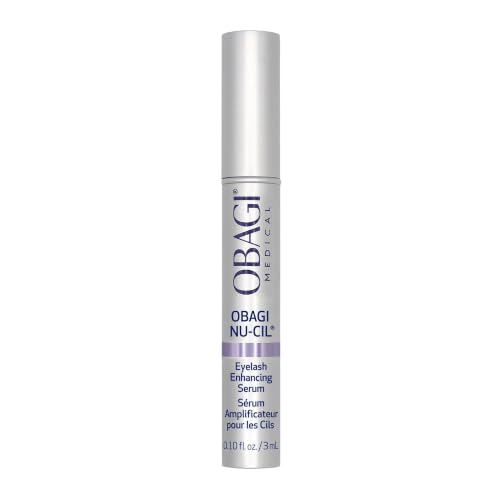
Obagi Nu-Cil Eyelash Enhancing Serum
Primary Review
A once-nightly serum with a premium repeat cost asks for patience. We are judging it over months, not days.
What makes the routine appealing? It is simple, and Obagi gives us a concrete 8-to-16-week expectation.
There is also a substantial trail of positive user feedback around fuller-looking lashes. And the product identity is clear in the PKB: a verified 1-count clear serum listing. There is no ambiguity about which Nu-Cil this review covers.
So what is the catch? A single tube is described by Obagi as lasting roughly 2–3 months.
The brand points to two tubes for the full 16-week window tied to its more pronounced results. That means a fair trial can turn into a repeat purchase before we know whether the result feels worth maintaining.
Bottom line: best for committed premium users who want a simple nightly routine and feel comfortable weighing the dehydrolatanoprost trade-off. It is a poor fit when avoiding prostaglandin-analogue exposure is a priority or when we need a medically proven treatment for eyelash loss.
- ✅ Easy once-nightly routine
- ✅ Clear current identity with one distinct formula
- ✅ Manufacturer data sets an 8-to-16-week trial window
- ✅ Many current reviewers describe more prominent-looking lashes over time
- ❌ Anyone wanting a low-cost, short trial before committing
- ❌ Anyone uneasy about prostaglandin-analogue exposure around the eye area
- ❌ Anyone who develops persistent redness, swelling, burning, or other eye-area irritation
- ❌ Anyone expecting the result to stay permanent after stopping
🧪 Lash Lab Notes — Dr. Sazia (Medicine Specialist & Beauty Enthusiast)
I would not treat persistent redness, swelling, irritation, or noticeable eye-area changes as a normal adjustment period. If they appear, I would stop using the serum and seek appropriate medical advice instead of pushing through for a cosmetic result.
- 💡 Editor’s Note: We would give this serum time, not judge it by a dramatic week-one promise. The manufacturer’s own timeline calls for patience. The formula also asks for a more deliberate safety decision than a basic conditioner, so the repeat-purchase question matters just as much as the first bottle.
Want to see what current buyers are saying? Read reviews for Obagi Nu-Cil.
Best for adults who can maintain a nightly lash-enhancing routine while monitoring eye-area tolerance.
Care tip: Use only a thin layer on clean, dry upper lash lines as directed. More product is not a shortcut to faster results.
Once the product fit is clear, one question matters most. Are we comfortable with its active-ingredient trade-off near the eyes?
The Prostaglandin-Analogue Trade-Off
Dehydrolatanoprost is why Nu-Cil deserves more caution than a plain conditioning serum. But what does that concern actually mean?
Independent literature on prostaglandin-analogue lash lengtheners describes class-associated periocular changes, including eyelid fat or volume loss. The broader prostaglandin literature documents other eye-area changes as well.
A review indexed by PubMed/NIH helps put that class-level concern in context. It does not tell us Nu-Cil’s exact incidence.
That difference is important. Class-level risk, not certainty is the accurate way to read the evidence.
Available independent evidence does not show that every Nu-Cil user will experience orbital hollowing, pigmentation changes, or another adverse effect. We also did not find an independent Nu-Cil trial establishing how often those outcomes occur with this cosmetic serum specifically.
What does Obagi itself warn about? Its safety language lists possible irritation, redness, dry or watery eyes, styes or inflammation, and darkening of skin around the application area.
It also warns that products containing prostaglandin analogues may be associated with iris discoloration. Those are reasons for us to watch tolerance closely, not predictions about what will happen.
And if the presence of a prostaglandin analogue turns our answer from “maybe” to “no”? We do not need to talk ourselves back into the product.
There are dedicated roundups built around avoiding that ingredient class entirely.
How to Use Nu-Cil for a Fair Trial
Nu-Cil’s routine is short. The hard part is consistency, because the brand’s own timeline is measured in weeks and months.
So what makes a fair trial? Following the directions closely enough to judge the serum without increasing exposure in an attempt to speed things up.
Step 1:
Begin with a clean, dry eye area. Remove eye makeup first. If we wear contacts, we take them out at bedtime before applying the serum.
Step 2:
Apply a thin layer to the upper lash line only. Obagi specifically says not to apply Nu-Cil to the lower lid. More coverage is not better coverage here.
Step 3:
Let it dry for about 90 seconds before layering other eye-area products. Use it once nightly rather than adding extra applications.
Step 4:
Judge the result on the proper timeline. Obagi says one tube lasts about 2–3 months and recommends two tubes for the full 16-week pronounced-results window.
That means a fair trial may run beyond one bottle. At the current $125 list price observed during research, the commitment is meaningful even before maintenance enters the picture.
Those are the Nu-Cil-specific directions. Need the broader technique details too? The dedicated application guide goes deeper, especially on keeping product off the eye itself and avoiding over-application.
Questions Before You Try Obagi Nu-Cil
Nu-Cil sits in an awkward middle ground. It is a cosmetic serum, but it also contains a prostaglandin-related ingredient.
So which distinctions matter most? These are the questions that come up repeatedly.
❓ Is Obagi Nu-Cil the same as Latisse?
No. Nu-Cil and Latisse are different products, and their evidence bases are not interchangeable.
Why not treat them as the same thing? Prostaglandin-related chemistry being part of both discussions does not make the products equivalent.
❓ Is Obagi Nu-Cil prostaglandin-free?
No. The full ingredient list includes dehydrolatanoprost.
So calling Nu-Cil prostaglandin-free would be misleading.
❓ What happens if I stop using Obagi Nu-Cil?
Obagi says lashes eventually return toward their normal lash cycle after use stops. Any appearance benefit we like should therefore be treated as a maintenance result, not a permanent change.
❓ Can Obagi Nu-Cil treat eyelash loss?
No claim in the material we reviewed supports using Nu-Cil as a medical treatment for eyelash loss. Obagi explicitly says the serum is not intended to prevent or treat lash loss.
What if shedding seems unexplained or medically significant? That belongs with a clinician rather than a cosmetic-product experiment.
Final Thoughts: Is Obagi Nu-Cil Worth It?
Who does Nu-Cil make the strongest case for? Someone who wants a polished, one-step nightly routine and is comfortable paying a premium for a genuine multi-month trial.
The evidence is not strong enough to make this a guaranteed-growth story. And the dehydrolatanoprost question is too important to hide under positive reviews.
So where does that leave us? Nu-Cil can be worth the trade-offs if we accept continued use, premium repeat spending, and prostaglandin-analogue exposure for the chance of more prominent-looking lashes.
If any one of those is a deal-breaker, skipping it makes more sense than trying to rationalize the product into a fit.
Still like Nu-Cil’s goal but want to compare formula types, prices, and risk profiles? This single-brand review has reached its limit.
A broader roundup lets us compare those choices side by side without stretching this page beyond Obagi.
Last update on 2026-09-21 / Affiliate links / Images from Amazon Product Advertising API