
⚡ Quick Answer
For hooded oily eyes, the most reliable fix is a mascara that sets fast, resists oil, and stays put when lashes keep brushing the lid.
- 🏆 Winner: Tarte Tartelette XL Tubing Mascara
- 🥈 Runner-Up: Milani Highly Rated Tubing Mascara
- 🥉 2nd Runner-Up: CLIO Kill Lash Superproof Mascara
Most of the time, tubing mascara is the safest everyday choice here because it holds its film structure better as sebum builds up. Waterproof works better as a backup when oil, heat, or humidity pushes the breakdown problem further.
The best mascara for hooded oily eyes is not really about big volume. It is about stability.
Hooded lids create more lash-to-skin contact, and oily lids slowly break the formula down. What makes this different from regular hooded eyes is oil chemistry — sebum doesn’t just soften mascara, it actively breaks down the film structure over time.
That is what leads to stamping, smudging, and curl drop.
So the goal is simple: choose a formula that resists oil, sets quickly, and stays stable once lashes keep touching the hood. In this guide, we’ll break down why mascara fails, what actually helps, and which picks are most likely to stay clean and stable as oil builds up.
The key difference in this article is simple: the mascara usually does not fail all at once — oil weakens it first, then lid contact spreads it.
💡 Who This Is For (and Who It’s Not): This page is for hooded eyes + oily lids together — where oil and lid contact cause mascara to transfer.
If your mascara looks fine at first, then starts softening, smudging, or breaking down by midday as oil builds up, you’re exactly who this guide is for.
This is not for watery eyes, irritation, or general smudge-proof shopping. Those need different formulas and a different selection logic.
This page also exists separately for a reason: hooded-eyes pages focus more on lash-to-lid contact, while oily-lids pages focus more on oil breakdown. Here, we need both problems solved at the same time.
👀 Before We Dive In
If you’re still comparing mascara options more broadly, it helps to start with the general guide first.
If lid shape and lash transfer are your main concern, you can also see:
That page is more about structural lift and lid clearance. This one is specifically about the oil-driven breakdown before transfer happens.
✨ Inside This Mascara Guide
🌸 Psst…
Some links in this post are affiliate links. If you shop through them, we may earn a small commission at no extra cost to you — like a little coffee while we keep testing beauty favorites. ☕💄
What to Look for in the Best Mascara for Hooded Oily Eyes (Fast Checklist)
When we’re choosing mascara for hooded oily eyes, the goal is not drama. It is stability.
The formula needs to set fast, resist oil, and stay stable enough that lashes do not fall forward once sebum starts softening the film.
Key things to look for
- Quick-drying formula: Reduces early stamping before the mascara fully sets
- High film-integrity formulas (polymer-based or tubing): Stay stable even when exposed to skin oils instead of softening
- Sebum-resistant film behavior: Resists breakdown from oil (not just water or humidity)
- Slim or precision wand: Prevents overloading lashes in a tight hooded space
- Reliable curl hold under oil load: Keeps lashes from dropping forward once sebum starts softening the formula
- Fully set, non-tacky finish: Helps prevent oil-softened mascara from turning into slow transfer during blinking
If a mascara checks most of these boxes, it has a much better chance of staying clean through oil, friction, and all-day blinking.
⚡ Quick Comparison Table (At-a-Glance Picks)
If you just want the quick version, these picks are chosen for the main problem on this page: upper-lid transfer caused by sebum weakening the mascara film before lid contact spreads it.
| Lash Need | Best Pick | Formula Type | Why It Works |
|---|---|---|---|
| Best Overall Everyday Pick | Tarte Tartelette XL Tubing Mascara | Tubing | Maintains film stability better when oil builds up and lashes keep touching the lid |
| Budget Tubing Pick | Milani Highly Rated Tubing Mascara | Tubing | Lightweight structure that stays more stable as sebum builds up |
| Extreme Hold (Oil + Humidity) | CLIO Kill Lash Superproof Mascara | Waterproof | Strong hold helps lashes stay lifted even when oil and humidity increase breakdown risk |
| Polished Everyday Wear | Estée Lauder Double Wear Zero-Smudge Mascara | Smudge-Resistant Film | Sets into a stable film that stays cleaner as sebum gradually weakens softer formulas |
| Easier Removal + Oil-Stable Wear | Thrive Causemetics Liquid Lash Extensions | Tubing | Keeps its film structure more stable on oily lids and still removes gently |
Why Mascara Fails on Hooded Oily Eyes (It’s Not Just “Bad Mascara”)
If mascara transfers to the upper lid, it’s usually not because the product is bad — it’s because hooded oily eyes combine two failure conditions at the same time.
- First, hooded lids create constant lash-to-skin contact.
- Second, oily lids slowly break down the mascara film.
When friction and oil work together, even strong formulas can start breaking down under oil and repeated contact.
There’s also a third factor people don’t think about: heat inside the hooded fold. That small enclosed space stays slightly warm and humid, which makes wax-heavy formulas soften faster during blinking.
So the issue isn’t just the mascara — it’s the environment it has to survive in.
That’s why this problem behaves differently from standard hooded eyes — here, the formula is being broken down before transfer even happens.
That timing difference matters. On this page, we are not just trying to stop contact — we are trying to stop oil-softened contact.
The “Transfer Event” Problem (Hooded Lid = Constant Contact)
With hooded eyes, lashes often touch the skin fold above the lash line.
Every blink creates a small moment of contact. Over time, these stack into repeated “transfer events,” where pigment moves from lash to skin.
If the mascara hasn’t fully set — or stays slightly soft — that contact gradually leaves marks on the lid.
That’s why we see:
- Stamping near the brow bone
- Oil-driven transfer in the crease
- Faint shadow marks by midday
Simple truth: if lashes keep touching skin, pigment will transfer — and once oil starts softening the film, that transfer gets even easier.
The Oil-Solvent Problem (Why Even Waterproof Can Still Smudge)
Oil adds a second layer of difficulty.
Sebum acts like a cosmetic solvent. Many mascaras — especially wax-heavy ones — weaken when exposed to it.
This is where waterproof mascara gets confusing. It resists water, sweat, and humidity — but not necessarily oil.
On oily lids, sebum can still break down the film over time, especially when friction spreads it across the lashes.
The result:
- Smudging in the crease
- Transfer onto the upper lid
- Curl dropping earlier than expected
For hooded oily eyes, mascara has to handle both oil and friction — not just one.
That is why this page should always sound more like breakdown control than just lift advice.
What Actually Works (Oil + Friction Reality)
Once we understand the real problem here, mascara choice becomes much easier.
For hooded oily eyes, the goal is not just staying power. The goal is to keep the mascara film stable after oil starts building up and lashes keep touching the lid.
Film Stability Under Oil
On oily lids, mascara does not just wear off — it starts to break down.
Softer wax-heavy formulas tend to weaken faster, while stronger film-forming formulas stay intact longer when sebum builds up.
That matters because once the film softens, repeated lid contact spreads it more easily across the hood.
Curl Retention Under Oil Load
Oil does not just affect pigment transfer. It also weakens the hold.
As the formula softens under sebum, lashes can start losing lift and falling forward.
Once that happens, lash-to-lid contact increases — which makes upper-lid transfer even more likely.
Fast-Set vs Slow-Set Behavior
Setting speed matters more here than most people expect.
If a mascara stays tacky too long, oil and blinking start interfering before the film fully sets.
Faster-setting formulas reduce early breakdown and help prevent stamping from the beginning.
Is Waterproof Mascara Always Better for Oily Lids?
Not always.
Waterproof mascaras resist water, sweat, and humidity — but not necessarily oil. Eyelid sebum can still weaken certain formulas over time, especially with repeated lash-to-lid contact.
That’s why tubing mascaras often perform better for everyday wear. They form flexible polymer sleeves that don’t dissolve easily in oil, making them more stable in high-contact situations.
There is a trade-off. Tubing mascaras usually win here because of oil stability, not because they give the most dramatic volume.
“Oil-free” labels don’t guarantee performance either — they just mean the formula doesn’t contain added oils, not that it can resist your skin’s oil.
👉 Quick verdict:
- For extreme oil, heat, or humidity, waterproof options like CLIO Kill Lash Superproof tend to hold up better.
- For hooded oily eyes, tubing mascaras like Tarte Tartelette XL and Milani Highly Rated are the safest everyday choice.
What “Oil-Resistance” Looks Like in Real Life
When a mascara actually works here, it usually comes down to two things working together.
Film-forming polymers create a flexible coating that stays stable even when oil touches it.
Oil-absorbing ingredients help reduce how much sebum reaches that film.
Together, they help the mascara stay set longer — even with repeated lash contact.
In simple terms, effective formulas usually:
- Block oil from breaking down the film
- Absorb oil before it spreads
- Or isolate the lash with a flexible polymer coating
💡 Field Note — Engr. Nusrat (An Engineer and A Beauty Enthusiast):
“Polymer-based tubing mascaras tend to resist oil better because the film doesn’t dissolve in skin lipids. Instead of melting, it stays intact and moves with the lash during blinking.”
That is also what separates this page from hooded watery eyes. With watery eyes, mascara usually fails because moisture dilutes and spreads it. With oily lids, mascara fails because sebum weakens the film structure first, then friction spreads it.
If only one side of the problem fits you better, these pages are more specific:
If your main issue is sweat, tears, or humidity more than oil, start here:
If oil breakdown is the problem but hooded-eye transfer is not, this page is more specific:
If your biggest issue is lash-to-lid contact from eye shape, this guide fits better:
Those pages solve one side of the problem. This page is specifically for when oil breakdown and lash-to-lid contact happen at the same time.
Why Wand Shape Matters More on Hooded Eyes
Brush shape matters more than most people expect here.
Hooded eyes have less vertical space between the lashes and the lid fold. Bigger brushes tend to deposit too much product too quickly, which increases the chance of lashes touching the lid before the formula sets.
Slim-brush formulas like Milani Highly Rated help control application better in tight hooded spaces
- They deposit less product per stroke
- They allow more controlled placement near the roots
- They help avoid overloaded, oil-prone buildup that softens and transfers more easily
And that last part matters a lot. Heavy clumps act like weight points — once they hit the lid, transfer becomes much easier.
Curl Hold Without Extra Weight
Curl stability is critical.
If lashes lose their lift after oil starts softening the formula, they fall forward — and once they start touching the lid, transfer usually follows.
If curl drop is the main issue, stronger hold formulas like CLIO Kill Lash Superproof usually perform better here.
One of the biggest causes is weight. Thick, wet layers can pull lashes down before they fully set.
Formulas that hold curl better usually:
- Feel lightweight on the lashes
- Build in thin layers
- Set relatively quickly
When the curl stays lifted, lashes stay away from the hood — and transfer drops significantly.
If your main issue is curl drop rather than oil breakdown, these pages focus specifically on curl retention formulas:
Best Formula Profile for Hooded Oily Eyes (Quick Check)
Before picking a product, this is what actually works in this environment:
- Fast-setting formula — reduces early upper-lid stamping
- Lightweight texture under oil — helps lashes stay up instead of dropping forward as sebum builds
- Slim or precision wand — avoids overloading lashes
- Oil-resistant film (tubing or strong polymers) — resists sebum breakdown
- Good curl support under oil load — helps lashes stay from falling forward once sebum softens weaker formulas
If a mascara checks most of these boxes, it’s far more likely to stay clean and lifted all day.
Our 5 Top Picks: Best Mascara for Hooded Oily Eyes (Real Use-Cases)
Not all mascaras fail for the same reason — especially with hooded oily eyes.
Some fail because lashes keep touching the lid. Others fail because oil breaks down the formula. Most of the time, it’s both happening together.
That’s why these picks aren’t just “best overall.”
Each one is chosen based on how it performs in real situations — especially upper-lid transfer caused by oil + lid contact.
We’ve focused on formulas that stay cleaner, resist oil breakdown, and hold up through repeated blinking.
Tarte Tartelette XL Tubing Mascara
Peptide-powered tubing mascara that gives extension-like length without smudging
Okay, so if upper-lid stamping is your biggest issue, this is usually where we start.
If your mascara starts breaking down by midday, this is exactly the kind of formula that makes more sense.
Once Tartelette XL sets, those tubes stay intact even when lashes keep brushing the hood. That’s what keeps the upper lid noticeably cleaner throughout the day.
What it does differently on oily lids: Forms a film that doesn’t break down when oil builds up.

- ✅ Tubing formula helps reduce upper-lid transfer on hooded oily eyes
- ✅ Lightweight tubing wear helps lashes stay cleaner as oil builds up throughout the day
- ✅ Removes easily with warm water — less rubbing needed
- ❌ Not the best for very thick, dramatic volume
- ❌ Starts slightly wet, so layering needs a bit of control
- ❌ Minor flaking possible after very long wear

💡 Field Notes — Dr. Rabeya (Heat/Humidity Test):
“On hooded oily lids, this stayed surprisingly clean even after a long day.”
⭐ Editor’s Note: This is the safest everyday pick because it directly handles oil + lash-to-lid contact — the two biggest causes of transfer.
See what other users on Amazon are saying here
Care Tip: Removes best with warm water and gentle pressure — no rubbing needed.
Tubing mascaras behave differently from traditional formulas.
They tend to hold their film structure better when oil and lid contact are both involved.
If you want to see exactly how this one wears, removes, and compares in real use:
If you want a similar tubing effect but more budget-friendly, the next pick is an easy entry point.
Milani Highly Rated Lash Extensions Tubing Mascara
Budget-friendly tubing mascara built for long, separated lashes
If we want something more affordable that still handles oil + lid contact well, this is one of the easiest starting points.
What it does differently on oily lids: it keeps its structure better as sebum builds up, which helps reduce the breakdown that usually leads to stamping.
If your mascara starts weakening as oil builds up, this is the kind of formula that usually holds together better.
The finish leans more toward length and separation, which helps keep the formula lighter and more stable as sebum builds up — and that’s a big win here.

- ✅ Tubing formula helps reduce upper-lid transfer
- ✅ Slim brush gives better control in hooded spaces
- ✅ Budget-friendly compared to most tubing mascaras
- ❌ Not ideal for very dramatic volume
- ❌ Tubes may flake slightly during removal
- ❌ Can clump if layered too quickly
💡 Field Notes — Engr. Nusrat (Formulation Test):
“Tubing polymers don’t dissolve in eyelid oils, which is why smudging is reduced.”
- ⭐ Editor’s Note: If your mascara stamps by noon, this directly targets that oil + friction problem.
To see how it performs for other users, you can check the Amazon reviews here
💡 Care Tip: Let each coat set briefly before layering to avoid clumping.
Tubing mascaras are often the safest choice for hooded oily eyes.
They usually maintain film stability better once sebum starts building up.
If you want a closer look at how this one applies, wears, and removes:
But when oil, heat, and humidity get extreme, even tubing can struggle — and that’s where the next pick comes in.
CLIO Kill Lash Superproof Mascara
Extreme-hold waterproof mascara built for sweat, humidity, and stubborn lashes
Okay, so this is where we go when nothing else survives.
If your lids are very oily or you’re dealing with heat + humidity, tubing sometimes isn’t enough. That’s where a strong, waterproof hold like this comes in.
If oil and humidity keep weakening your curl until lashes start touching your lid, this is the kind of stronger hold that helps keep that from happening.
CLIO sets fast and locks the curl in place, which helps prevent oil-softened lashes from falling forward into easier transfer.
What it does differently on oily lids: Holds curl even when the oil weakens the lash lift.
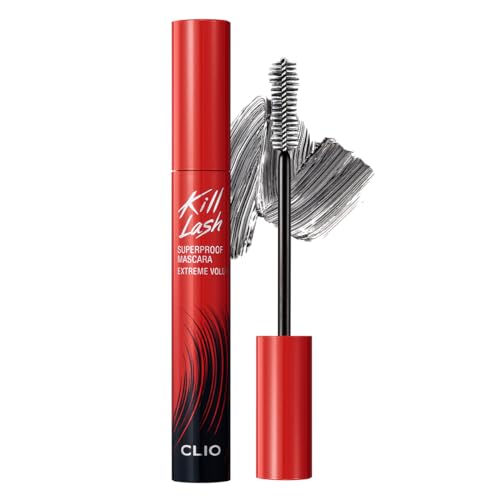
- ✅ Extremely strong hold against oil, sweat, and humidity
- ✅ Excellent curl retention even when oil and humidity start weakening softer formulas
- ✅ Slim brush allows precise application
- ❌ Needs oil-based remover
- ❌ Can clump if layered too heavily
- ❌ May feel too intense for minimal looks
💡 Field Notes — Trona (Humidity Test):
“The curl didn’t drop at all — it stayed lifted all day.”
⭐ Editor’s Note: This is your “extreme mode” option when regular formulas still transfer.
To get a broader picture, you can check what other buyers say on Amazon.
💡 Care Tip: Use a gentle oil-based remover and avoid rubbing.
Superproof mascaras are built for high-stress conditions.
They’re ideal when tubing formulas aren’t strong enough.
If you want long wear without dealing with harsh removal, the next pick feels more balanced.
Estée Lauder Double Wear Zero-Smudge Mascara
Luxury smudge-resistant mascara designed for long, clean wear
If we want something that stays clean but feels easier to live with daily, this sits right in the middle.
It sets into a more stable film instead of staying soft, which matters when sebum gradually weakens mascara throughout the day.
If you want cleaner wear as sebum builds up without jumping to harsh waterproof removal, this is that balance.
The finish is more length and separation than volume, which helps it stay cleaner once sebum starts weakening softer formulas.

- ✅ Long-wear formula that stays cleaner across oily lids
- ✅ Lighter finish stays cleaner as oil builds through the day
- ✅ Easier removal than heavy waterproof mascaras
- ❌ Not for bold, fluffy volume
- ❌ Slim brush may not suit everyone
- ❌ Minor flaking possible late in the day
💡 Field Notes — Dr. Sazia:
“This sets into a stable film, which helps reduce crease smudging.”
- ⭐ Editor’s Note: This is the polished, everyday luxury option when you want more film stability without jumping to an extreme waterproof formula.
For updated reviews and feedback, you can see the Amazon listing here.
When mascara smudges after hours, it’s usually oil + friction breaking down the film. This type of formula helps keep the film stable longer.
Now, if removal and comfort matter more than anything else, the next pick focuses on that.
Thrive Causemetics Liquid Lash Extensions Tubing Mascara
Lengthening tubing mascara designed for smudge resistance and easy removal
If irritation or difficult removal has ever been your issue, this one feels very different.
What it does differently on oily lids: its film stays more stable when oil builds up, so the formula is less likely to break down across the hood.
If you want better oil resistance without dealing with aggressive removal, this is the comfort-first option.

- ✅ Tubing formula stays more stable as sebum builds, which helps reduce oil-driven smudging
- ✅ Easy removal with warm water
- ✅ Cleaner tubing wear with less oil-driven smudging for many readers
- ❌ More expensive than drugstore options
- ❌ Can clump if layered after drying
- ❌ Focuses more on length than volume
💡 Field Notes — Dr. Rabeya:
“Tubing mascaras stay stable on oily lids and require less rubbing to remove.”
- ⭐ Editor’s Note: This is the gentlest option here — especially if your eyes are sensitive.
If you’re curious what other users think, you can browse the Amazon reviews here.
💡 Care Tip: Remove with warm water and gentle pressure.
If you want easier removal without giving up oil resistance, this type of formula is usually a safer option.
If you want to see how this one performs in day-to-day wear and removal:
Once smudging and removal are under control, choosing the right brush and formula becomes much easier.
How to Make Mascara Last All Day on Hooded Oily Eyes
The right mascara helps — but technique is what makes it last.
For hooded oily lids, small adjustments go a long way. No complicated routine needed — just a few smart tweaks.
Prep Techniques (Oil Control Without Over-Drying)
The goal is simple: control oil without drying the skin.
Start with a clean base. If you’ve applied eye cream or skincare, let it fully absorb so it doesn’t mix with mascara.
Then lightly blot the lids with a tissue or oil sheet. A small amount of powder can help too — it creates a light barrier that slows oil movement during the day.
On this page, that matters because slower oil movement means slower film breakdown.
Some people also use a primer on the lids (or even lightly at the lash base). Not for drama — just to create a more stable surface.
The key is balance. Too much oil causes breakdown, but over-drying can make the application worse.
Application Strategy (Thin Coats + Let It Set)
For hooded eyes, thinner layers are always safer.
Place the wand close to the lash root and wiggle upward. This gives lift without overloading the tips, where oil-softened transfer usually starts.
Apply a light first coat, then pause. After about 20–30 seconds, add a second coat if needed.
A simple trick: the blink test.
Look slightly downward and blink gently — if lashes leave marks, the formula isn’t set, or the layer is too heavy.
Letting mascara settle before fully opening your eyes makes a bigger difference than most people expect.
Lower Lash Strategy (Optional, Not Essential)
Lower lashes aren’t the main issue here — upper-lid transfer is.
But if under-eye smudging happens, it’s usually because this area sits closer to oil and tear flow.
You have a few options:
- Skip lower-lash mascara on long days
- Use a tubing formula for better resistance
- Apply only to outer lower lashes (avoid inner corner)
Think of this as optional refinement — not a priority fix.
Common Mistakes That Cause Smudging (Even With Good Mascara)
Sometimes the mascara is fine — it’s just small habits causing the problem.
Hooded oily eyes are less forgiving, so even minor mistakes can turn into midday breakdown and transfer.
- Applying mascara over unset concealer: If concealer or eye cream is still creamy, blinking pushes oils upward toward the lashes.
💡 Quick fix: Let concealer fully set or lightly tap powder across the lid area.
- Layering coats too quickly: Applying a second coat while the first is still wet increases transfer risk.
💡 Quick fix: Wait about 20–30 seconds between coats.
- Skipping oil control on the lids: Oil gradually breaks down mascara throughout the day.
💡 Quick fix: Lightly blot or apply a small amount of powder before mascara.
If oil alone is your main issue (without hooded-eye transfer), this page focuses specifically on that:
- Skipping curl preparation: If lashes start straight, they sit closer to the hood — increasing contact.
💡 Quick fix: Curl lashes first so they lift away from the skin fold. At the end of the day, most smudging here comes down to two things working together:
- oil weakening the film + lashes touching the lid: Reduce either one, and wear time improves. Reduce both, and the difference is much bigger.
FAQs About Hooded Oily Eyes and Mascara
❓ Why does mascara transfer to my upper lid?
Because lashes touch the skin fold, and on oily lids, sebum can soften the formula first, which makes that transfer easier.
❓ Why does my curl drop after 2 hours?
Usually, weight + oil. Heavy layers pull lashes down, and oil weakens the hold.
❓ Can oily eyelids cause clumping?
Yes — indirectly. Oil can soften partially set mascara, causing lashes to stick together.
❓ Should I powder my lashes?
Better to powder the lids, not the lashes. Powder on lashes can cause clumping.
❓ Why does mascara break down on oily lids even if it is waterproof?
Because waterproof formulas resist water, not necessarily oil. Sebum can still weaken the mascara film over time, especially when lashes keep touching the lid during blinking.
❓ How do I remove stubborn waterproof mascara safely?
Use an oil-based remover, let it sit for a few seconds, then wipe gently.
📌 If waterproof formulas are hard to remove or cause lash damage, this guide breaks it down step by step: How to remove waterproof mascara safely.
Final Takeaways (What Matters Most)
For hooded oily eyes, it always comes back to two things: oil + contact.
- Choose formulas that stay stable when oil and lid contact start working together
- Apply thin layers and let them fully set
- Keep lashes lifted after oil starts building, so they do not fall forward into easier transfer
Get these right — and oil-driven smudging drops much faster.
🎁 Before You Go…
If smudging has been frustrating, these guides can help depending on what’s actually causing it:
- 📌 Best mascara for hooded eyes — if lash-to-lid contact from your eye shape is the main issue
- 📌 Best mascara for oily lids — if oil breakdown is the main problem
- 📌 How to remove waterproof mascara safely — if removal is causing lash damage or irritation
- 📌 Best mascara for asian lashes — if your lashes don’t hold a curl easily
Last update on 2026-03-26 / Affiliate links / Images from Amazon Product Advertising API