
⚡ TL;DR: best mascara remover
There is no single remover format that fits every routine. What matters is how we actually take mascara off. Dedicated eye liquids give us precise control. Micellar waters keep things no-rinse. Balms and oils fit better when mascara comes off with a full face of makeup.
Top Picks
- 🏆 Best Overall — Clinique Take The Day Off — precise eye-only control
- 🥈 1st Runner-up — Bioderma Sensibio H2O — simple no-rinse routine
- 🥉 2nd Runner-up — Clinique Take The Day Off Balm — full-face first cleanse
A remover can clear mascara well and still feel wrong. Maybe it needs more rubbing, more cleanup, or more sink time than we want. So our best mascara remover picks span four different routines: dedicated eye liquids, micellar waters, cleansing balms, and cleansing oils. The better question is simple: which removal routine fits us?
✨ Inside This Lash Guide
🌸 Psst…
Some links in this post are affiliate links. If you shop through them, we may earn a small commission at no extra cost to you — like a little coffee while we keep testing beauty favorites. ☕💄
Quick Comparison: Best Mascara Remover
Eight picks, eight slightly different jobs. So where do we start? First, match the format to the cleanup routine. Then use the detailed trade-offs below to narrow it further.
| Product | Format | Eye-only or full-face | Rinse expectation | Best fit |
|---|---|---|---|---|
| Clinique Take The Day Off | Dedicated liquid | Eye/lip focused | Follow product directions | Precise eye-only removal |
| CeraVe Comforting Remover | Bi-phase liquid | Eye focused | Follow product directions | Sensitive-eye positioning |
| Neutrogena Oil-Free Remover | Dual-phase liquid | Eye focused | Rinse directed | Familiar drugstore routine |
| Bioderma Sensibio H2O | Micellar water | Face and eyes | No-rinse format | Simple pad-based routine |
| Garnier SkinActive Micellar | Micellar water | Face and eyes | No-rinse format | Budget no-rinse option |
| Clinique Take The Day Off Balm | Cleansing balm | Full face and eyes | Rinse off | Full-face first cleanse |
| e.l.f. Holy Hydration! Balm | Cleansing balm | Full face and eyes | Emulsify and rinse | Lower-cost balm routine |
| Shiseido Perfect Cleansing Oil | Cleansing oil | Full-face cleanser | Rinse off | Liquid oil first cleanse |
Which Mascara Remover Format Fits Your Routine?
So which format makes sense for us? Start with the routine, not the award label. A dedicated eye remover gives eye-only precision around lashes and lids. It also avoids turning every mascara-removal night into a full-face cleanse.
Bi-phase liquids add one small habit. If the formula separates in the bottle, we shake it. That helps put the intended mixture on the pad.
Micellar water shifts the trade-off toward no-rinse convenience. We saturate a pad and use it across the face and eye makeup. No balm to scoop. No oil to emulsify.
But does the pad technique matter? Yes. Saturation and contact time matter because a barely damp pad can mean more passes. That works against minimizing friction around the eye area.
Balms and cleansing oils suit a different routine. They make more sense when mascara is one part of a full face. Both provide sustained slip during massage, then meet water and rinse away. Emulsification is the milky change that helps an oil-rich cleanser wash off.
And the format difference? A balm starts solid or semi-solid. An oil starts as liquid, so there is nothing to scoop.
One label needs a closer look: “oil-free.” Neutrogena’s remover is sold as oil-free and still uses a shake-to-activate dual-phase format. So “oil-free” does not mean single-phase. It also does not automatically mean residue-free.
What about tougher formulas? This roundup is not a contest over the most aggressive waterproof remover. General mascara removal is the focus here. Waterproof formulas create a different shopping problem with their own shortlist and criteria.
Broader eye makeup can change the question, too. Eyeliner, shadow, and long-wear products may need a wider remover comparison. That is different from choosing mascara alone.
Waterproof mascara creates its own shopping problem beyond these general removal routines. The waterproof-remover guide keeps that purchase decision focused with a dedicated shortlist.
A full eye look can also change what we need from a remover. The eye-makeup-remover guide compares options for eyeliner, shadow, and other eye makeup.
Best Mascara Removers
Why do these eight products get separate slots? Because they support meaningfully different routines, not eight versions of the same one. We compare precision, cleanup, friction, eye-area positioning, and eye-only versus full-face use.
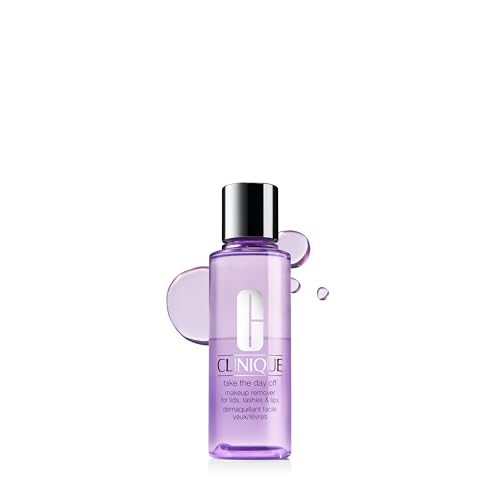
Clinique Take The Day Off Makeup Remover
Best Overall — focused eye-only removal
Want mascara removal to stay a small, targeted step? This dedicated liquid keeps the job focused. Its clearest strength is precise eye-only removal for lids, lashes, and lips. We do not need a full-face balm just to clear mascara.
Clinique describes the 4.2-fluid-ounce liquid as ophthalmologist-tested and non-stinging. Supplied review material generally favors effectiveness and gentleness. Value and packaging feedback are more mixed.
That makes the fit pretty clear. It works best when we prefer targeted removal and do not mind a separate eye-area bottle.
Bottom line: A focused nightly-removal pick. We get a dedicated eye-and-lip step, but not one cleanser for the whole face.
- ✅ Dedicated liquid made for lids, lashes, and lips
- ✅ Ophthalmologist-tested product positioning
- ✅ Supplied feedback generally favors gentle, effective eye-makeup removal
- ❌ Less convenient when we want one product for a full face of makeup
- ❌ Value can feel less compelling when a low-cost routine matters most
- ❌ Supplied review material shows mixed packaging experiences

🧪 Lash Lab Notes — Dr. Rabeya (Dentist & Beauty Enthusiast)
I see the dedicated bottle as useful when lashes and lids need their own step. Keeping that job separate also lets us focus on contact time instead of repeated wiping.
- 💡 Editor’s Note: We like this format when precision matters more than consolidation. Yes, it adds another bottle. But that separate bottle keeps the removal step tightly focused.
Want to compare buyer feedback before deciding? See the latest Amazon reviews for Clinique Take The Day Off.
A strong fit when we want a dedicated remover for lashes and lids.
Prefer everything off in one pass? A full-face cleanser is the next stop.
CeraVe Comforting Eye Makeup Remover
Best for Sensitive-Eye Positioning
Looking for verified sensitive-eye positioning? This is the pick built around that filter. The verified record is fragrance-free, alcohol-free, and positioned for sensitive skin. Its manufacturer also highlights ceramides and hyaluronic acid in the liquid formula.
But does that guarantee comfort? No. The same evidence base shows mixed feedback on eye comfort. Many users describe gentle waterproof makeup removal. Some report burning or dislike the thin consistency.
That distinction matters. Ophthalmologist-tested or sensitive-skin positioning is useful screening information. It is not a promise that every pair of eyes will love the formula.
Bottom line: A useful sensitivity-focused screening option. The positioning is reassuring, while individual eye comfort still decides the fit.

- ✅ Fragrance-free and alcohol-free product positioning
- ✅ Intended for sensitive skin
- ✅ Liquid eye-remover format keeps removal targeted
- ❌ Some supplied customer feedback mentions burning or eye irritation
- ❌ Thin consistency may not suit us if we prefer a richer remover texture
🧪 Lash Lab Notes — Dr. Sazia (Medicine Specialist & Beauty Enthusiast)
I treat sensitive-eye labeling as a filter, not a comfort guarantee. What matters in practice is whether mascara clears with little repeated rubbing, not just one reassuring phrase on the package.
- 💡 Editor’s Note: We would start here when eye-area positioning is a top filter. Then we judge the routine by friction. If a formula stings or keeps us wiping, the on-paper credentials do not fix that mismatch.
Want to see how buyers describe the comfort trade-off? Read Amazon feedback for CeraVe Comforting Remover.
A good match when fragrance-free, sensitive-skin positioning is a priority.
Want something more familiar and drugstore-style? The next liquid shifts the emphasis there.
Neutrogena Oil-Free Eye Makeup Remover
Best Familiar Drugstore Liquid
Familiar bottle, simple job. This 5.5-fluid-ounce liquid is the classic dedicated-eye option in the lineup. The interesting part is that it is oil-free yet dual-phase.
The listing tells us to shake the formula. That is a useful reminder: “oil-free” does not reveal how many phases a remover has. It also does not tell us exactly how the finish will feel.
Neutrogena positions it for sensitive eyes and contact-lens wearers. Supplied customer feedback strongly favors effectiveness, waterproof mascara removal, gentleness, and value. Residue perception is more divided. So we would not read “oil-free” as a promise of a perfectly weightless finish for every user.
There is also verified first-hand editorial evidence in the Research. It describes this as a long-used drugstore option for stubborn eye makeup without aggressive scrubbing. That supports its role as a practical, dedicated liquid, rather than a waterproof-only specialist.
Bottom line: A familiar liquid routine with a straightforward eye-remover format. Supplied feedback is strong, though residue feel can vary.

- ✅ Dedicated 5.5-fluid-ounce eye-remover format
- ✅ Supplied feedback is strong on effectiveness and value
- ✅ Positioned for sensitive eyes and contact-lens wearers
- ❌ Residue or oiliness perceptions stay mixed despite the oil-free label
- ❌ Needs shaking before use, so this is not a one-phase pour-and-go liquid
🧪 Lash Lab Notes — Fauzia (University Student & Beauty Enthusiast)
I like the logic of a separate bottle when the nightly step needs to stay simple. The key label is “oil-free”: it still does not mean single-phase, so shaking matters.
- 💡 Editor’s Note: Familiarity is the big draw here. So is low routine complexity. We would choose it when we want a classic eye-remover bottle instead of massaging balm or oil over the full face.
Curious how the longtime favorite lands with current shoppers? Check Amazon reviews for Neutrogena Oil-Free Remover.
A practical fit for a familiar drugstore-style dedicated eye liquid.
Want to skip rinsing and use one pad-based product across the face? Micellar water is the cleaner pivot.
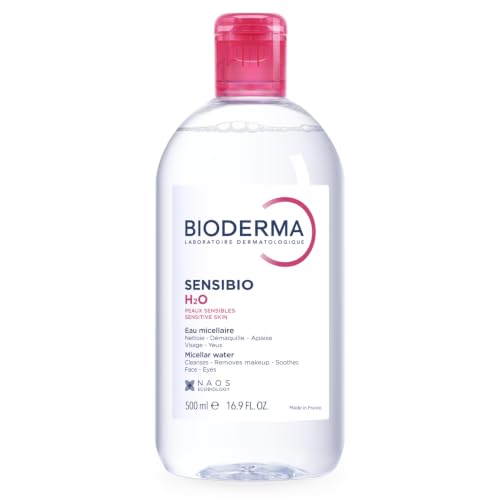
Bioderma Sensibio H2O Micellar Water
Best No-Rinse Micellar
Prefer a pad instead of a rinse-off cleanser? This 500 mL / 16.7 fl oz micellar water makes that case clearly. It centers a saturated-pad workflow for face-and-eye makeup. It is fragrance-free and positioned for sensitive skin.
That means no massage-and-rinse sequence from a balm or cleansing oil. Supplied customer feedback generally describes effective eye-makeup removal, easy use, and a clean, hydrated skin feel.
Eye comfort is not universal, though. Some users report no stinging. Others find it painful. So we can value the simple routine without turning “sensitive skin” into a guarantee.
Bottom line: A no-rinse simplicity pick. It suits a soaked-pad routine when we want one micellar water for face and eye makeup.
- ✅ No-rinse micellar format
- ✅ Face-and-eye use keeps the routine streamlined
- ✅ Fragrance-free positioning for sensitive skin
- ✅ Supplied feedback commonly favors easy use and makeup removal
- ❌ Eye-stinging feedback is mixed, so individual tolerance still matters
- ❌ Pad removal needs enough saturation and contact time to avoid extra passes
🧪 Lash Lab Notes — Mahmuda (Homemaker & Beauty Enthusiast)
I see the appeal when fewer sink-side steps matter. The practical detail is pad saturation; enough product helps keep “simple” from turning into several dry, repetitive passes.
- 💡 Editor’s Note: We chose this format for convenience, not an imagined strength ranking. It removes the emulsify-and-rinse step. The trade-off is that pads and wiping techniques matter more.
See how real users rate the no-rinse experience in Amazon reviews for Bioderma Sensibio H2O.
A strong fit when we want face-and-eye removal without a rinse-off first cleanser.
Want the same no-rinse idea with a stronger budget angle? Garnier is next.
Garnier SkinActive Micellar Cleansing Water
Best Budget Micellar
This is the standard all-skin-types 13.5-fluid-ounce micellar water. It is not Garnier’s waterproof-specific sibling. Why does that matter? This slot is about a budget no-rinse option for general mascara removal, not a waterproof-performance ranking.
The liquid works across face and eye makeup. Supplied feedback commonly describes effective removal, a refreshing feel, gentleness, and good value.
Skin response varies. Some users say it suits sensitive skin. Others report breakouts. That mixed feedback keeps our recommendation tied to routine and value, not universal skin compatibility.
Bottom line: Budget-friendly no-rinse convenience. It keeps the micellar routine accessible when the formula agrees with our skin.

- ✅ Standard 13.5-fluid-ounce micellar format
- ✅ One bottle works across face-and-eye makeup
- ✅ Supplied reviews commonly mention good value
- ❌ Some supplied customer feedback reports breakouts
- ❌ This is not the waterproof-specific Garnier variant for that separate shopping need
🧪 Lash Lab Notes — Zayba (A-Level Student & Beauty Enthusiast)
I see the value in getting face and eye makeup into one easy micellar step. The simple routine matters here just as much as the lower-price positioning.
- 💡 Editor’s Note: We would choose this over balm when no-rinse convenience leads the decision. It is not trying to copy the oil-cleanser slip. It solves a different problem with a bottle-and-pad routine.
Want a broader view of buyer value and skin feedback? See Amazon reviews for Garnier SkinActive Micellar.
A useful fit for budget-minded shoppers who prefer a standard face-and-eye micellar routine.
Ready to trade pad-and-go convenience for more slip? The next two picks move into full-face balms.
Clinique Take The Day Off Cleansing Balm
Best Full-Face Balm
What if mascara is the only part of the makeup coming off? That is where this balm makes sense. The solid balm becomes an oil-like cleanser as we work it over the skin. So it acts as a full-face first cleanse, not a separate eye-only step.
Clinique describes the 6.7-ounce formula as fragrance-free and ophthalmologist-tested. It is also designed to rinse off completely. Supplied feedback commonly praises makeup removal and low irritation.
The trade-offs are more mixed. Opinions on value and consistency vary. Some users also report temporary blurry vision. The routine fit is straightforward: choose it when massage and rinsing already make sense, not when we want one quick pad swipe.
Bottom line: A one-step full-face removal format. It combines mascara and face-makeup removal in a richer routine than micellar water.

- ✅ Balm-to-oil format works across face and eye makeup
- ✅ Fragrance-free product positioning
- ✅ Supplied feedback frequently praises strong makeup removal
- ❌ Some users report temporary blurry vision around the eye area
- ❌ Value and texture feedback remain mixed
- ❌ Massage and rinsing add more sink-side steps than micellar water
🧪 Lash Lab Notes — Mahmuda (Homemaker & Beauty Enthusiast)
I think balm makes the most sense when mascara is only one piece of the makeup coming off. If massage and rinsing are already part of the plan, one full-face workflow can feel more coherent than starting with a separate eye bottle.
- 💡 Editor’s Note: Consolidation is the real selling point here, not “stronger” removal. We would pick it when a full-face first cleanse already fits the evening. Otherwise, the massage and rinse steps can feel like extra work.
See what buyers say about texture, value, and removal in Amazon reviews for Clinique Take The Day Off Balm.
A good fit for full-face makeup wearers who prefer a one rinse-off first cleanser.
Want the same basic balm workflow at a lower-cost position? The e.l.f. option is up next.
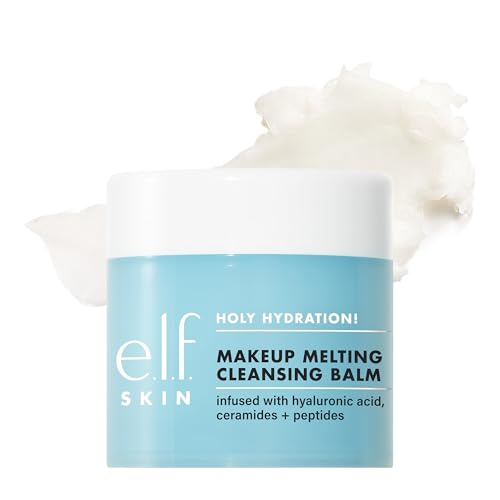
e.l.f. Holy Hydration! Cleansing Balm
Best Lower-Cost Balm
“Budget” does not have to mean micellar water. This 2-ounce balm earns a separate slot because price and routine can move together. It gives us the lower-cost balm route with a solid-to-oil, full-face cleanser.
The supplied record describes an unscented balm with hyaluronic acid. It melts makeup and supports a double-cleanse routine. Customer feedback generally favors makeup removal, a soft, moisturized skin feel, and value.
But eye comfort is still individual. Some users report eye stinging. So the affordable positioning is useful without becoming a sensitive-eye comfort promise.
Bottom line: A lower-cost balm workflow for full-face melt-and-rinse removal. Value is the draw, while eye comfort remains individual.
- ✅ Solid-to-oil cleansing balm format
- ✅ Supplied feedback commonly favors value and makeup removal
- ✅ Verified record positions the product as vegan and cruelty-free
- ❌ Some users report eye stinging
- ❌ Requires a rinse-off balm routine instead of a no-rinse pad step
🧪 Lash Lab Notes — Fauzia (University Student & Beauty Enthusiast)
I do not think the value comes from price alone. This gives us a full-face balm workflow when a premium balm feels harder to justify, rather than pushing us toward micellar water by default.
- 💡 Editor’s Note: We would compare this with Garnier by routine, not price alone. Choose e.l.f. for massage, slip, and rinsing. Choose micellar water when pad-and-go convenience matters more.
See whether current buyers agree on value and eye comfort in Amazon reviews for e.l.f. Holy Hydration! Balm.
A useful fit when we want a value-focused rinse-off balm instead of micellar water.
Prefer balm-like slip without scooping from a jar? A cleansing oil is the final format to consider.
Shiseido Essentials Perfect Cleansing Oil
Best Cleansing Oil
Want oil slip without the scoop-and-melt step? This resolved fallback keeps the original slot purpose intact. It is a liquid oil cleanser for that exact routine. The 300 mL formula is positioned to remove makeup and impurities, then emulsify and rinse as part of full-face cleansing.
Supplied customer material generally describes effective makeup and sunscreen removal. It also mentions a hydrated skin feel.
The trade-offs matter here. Some users find the texture heavier than expected. Others say it does not emulsify as expected. The record also notes a review discussion about regional formula differences.
So we keep this recommendation tied to the exact verified 300 mL product. We do not generalize it across every Shiseido cleansing oil version.
Bottom line: A liquid oil first-cleanse option. It gives full-face makeup removal with oil slip, without scooping balm first.

- ✅ Liquid oil format removes the balm-scooping step
- ✅ Exact verified 300 mL listing
- ✅ Supplied feedback generally favors makeup and sunscreen removal
- ❌ Some users find the formula heavier than expected
- ❌ Emulsification and rinse feel get mixed feedback
- ❌ Regional formula discussion makes this exact verified listing important
🧪 Lash Lab Notes — Engr. Nusrat (Engineer & Beauty Enthusiast)
I see one clear practical difference from balm: there is nothing to scoop or soften first. The real choice is whether we prefer that pour-and-massage flow while still adding water and rinsing afterward.
- 💡 Editor’s Note: We like this for an oil-based first cleanse without the jar. But is every cleansing oil lighter? No. Rinse feel is personal, so the liquid format should drive the choice instead of that assumption.
For more details on the exact 300 mL listing, browse Amazon reviews for Shiseido Perfect Cleansing Oil.
A strong fit for full-face makeup wearers who prefer liquid oil over cleansing balm.
Once the format is chosen, what comes next? Using it with as little unnecessary friction as possible.
Removal Comfort, Rinsing, and Contact Lenses
Does good removal simply mean the pigment disappears? Not quite. Repeated passes are a practical warning sign. With pad-based liquids and micellar waters, enough saturation and contact time matter. Then we keep wiping gently.
Balms and oils handle removal differently. They are designed for massage, followed by water, so they can emulsify and rinse. The goal is to minimize rubbing, not turn this roundup into a full removal tutorial.
Need the actual step-by-step technique? This section stays focused on minimal rubbing. The dedicated mascara-removal guide covers lashes, technique, and unnecessary tugging in more detail.
What about rinsing twice? That depends on the product and routine. A no-rinse micellar water works differently from a balm or oil. A rinse-off first cleanser may be followed by another cleanser when product directions or our routine call for it. There is no useful universal rule that every balm needs the same second step.
Contact-lens wearers have a separate safety point. The American Optometric Association advises removing contact lenses before makeup removal. That eye-care guidance is different from a manufacturer’s claim about contact-lens suitability. One does not replace the other.
Removing contacts before makeup removal covers only one part of the routine. The contact-lens eye-makeup guide looks at the broader makeup choices beyond this step.
And lash extensions? Sensitive-eye positioning does not establish lash-extension compatibility. Adhesives and aftercare can differ. Anyone wearing extensions should follow the guidance from their lash professional or adhesive system rather than assume every balm, oil, micellar water, or eye remover is compatible.
Frequently Asked Questions About Mascara Removers
Still sorting out the formats? These answers keep the cleanup differences clear. The aim is not to create a new ranking for every question, but to match format with routine.
❓ What’s the best type of eye makeup remover for mascara?
For precise eye-only removal, a dedicated liquid is the clearest fit. Want no-rinse face-and-eye convenience? Micellar water fits that job. Balms and cleansing oils make more sense when mascara comes off during a full-face first cleanse.
❓ Are makeup wipes recommended for eye makeup removal?
Wipes are not automatically good or bad for every person. The important issue around the eye area is friction. For mascara, we want the remover to contact the product instead of depending on repeated rubbing, just because a wipe feels convenient.
❓ Is cleansing balm better than micellar water for mascara?
Neither format is universally better. Balm gives us sustained slip plus a massage-emulsify-rinse routine. Micellar water gives us pad-based, no-rinse convenience. The better fit is the workflow we can use gently and consistently.
❓ Do I still need a second cleanser after a cleansing balm?
Not in every routine. We follow the balm’s directions and our own cleansing needs. Some people use balm as the first half of a double cleanse. The key purchase distinction here is simpler: balm itself is a rinse-off format.
❓ Can I use a mascara remover every day?
Daily use is mainly about routine fit. A remover is more practical for regular use when it clears our usual mascara with minimal repeated rubbing and without an uncomfortable cleanup burden. A fussy format is easier to avoid.
❓ Are mascara removers safe for sensitive eyes and contact lens wearers?
Sensitive-eye, ophthalmologist-tested, fragrance-free, and contact-lens-suitability statements are useful positioning signals. They are not guarantees of zero irritation. Contact-lens wearers should also follow eye-care guidance to remove lenses before makeup removal. Anyone who develops irritation should stop using the product and follow appropriate professional guidance.
Sensitivity can shape more than the remover itself. The sensitive-eyes eye makeup guide looks at the broader routine beyond mascara removal.
Final Thoughts
Choose by routine: that is the thread tying this list together. The best remover takes off our usual mascara with minimal repeated rubbing and fits the cleanup steps we will really use. A capable formula only becomes a good pick when its routine works for us, too.
Last update on 2026-10-31 / Affiliate links / Images from Amazon Product Advertising API