
⚡ Quick Answer
The best natural-looking colored mascara isn’t neon. It’s not costume-y. And it definitely doesn’t scream “festival at 9 AM.”
It’s a neutral-plus shade — espresso, black-brown, deep burgundy, midnight navy, or charcoal — that looks polished in real life.
- Subtle indoors.
- A soft tint in daylight.
- Still completely office-friendly.
That’s the rule.
If it reads almost black in normal lighting but reveals depth when natural light hits? That’s natural-looking colored mascara.
We’re not trying to shock Anyone. We want a softer contrast. A cleaner lash line. That tiny “something looks better” effect… without Anyone clocking exactly why.
If you just want to choose fast, stick to the deeper, muted families below and keep the application light. You’ll stay in the refined lane.
Before We Dive In – We’re focusing only on shades that stay wearable and refined on most people:
- Espresso
- Black-brown
- Midnight navy
- Deep plum
- Charcoal
- Not bright blue.
- Not neon purple.
- Not loud.
This guide stays strictly inside the natural enhancement lane — meaning shades that soften contrast instead of creating it.
If you’re looking for bold, editorial, high-pigment color, that belongs in a different category.
For the complete spectrum — from subtle browns to vivid statement shades — start here:
We’re staying controlled here. Polished. Intentional. Everyday.
What “Natural Looking” Colored Mascara Actually Means
When we say natural-looking, we don’t mean invisible. We mean controlled.
- Visible in daylight, subtle indoors: In direct light, you’ll catch a soft tint. In normal office lighting, it reads almost like black — just a little softer.
- Lower contrast than jet black: Black can feel sharp, especially against fair skin, lighter hair, or softer features. Neutral-plus shades dial that contrasts down.
- Polished, not theatrical: No neon flash. No “are you wearing purple mascara?” moment. Just refined the definition.
The goal isn’t drama. It’s an enhancement.
The kind where someone says, “You look fresh today,” not “Wow, bold lashes.”
That’s the difference.
The 4 Shade Families That Always Look Subtle
These are the shade families that consistently read wearable in real life. Not costume-y. Not loud. Just elevated.
We’re keeping this high-level on purpose — deeper eye-color breakdowns live in their own guides, so this page stays focused on natural-looking colored mascara specifically.
Brown / Black-Brown / Espresso
This is the safest entry point.
- The most office-proof option
- Softens contrast compared to jet black
- Especially flattering on mature lashes or lighter brows
Why it stays natural-looking: it lowers lash-line contrast without adding obvious color. Indoors, it simply looks softer than black.
Black-brown is usually the sweet spot. It gives a definition without the sharp outline that Black sometimes creates.
Deep Burgundy / Plum
This is where things get interesting — but still refined.
- Adds depth without looking obviously red
- Feels warmer than brown, but still controlled
Why it stays natural-looking: deeper plums read like shadow at the lash base, not “purple mascara,” especially in indoor light.
Small note: very warm burgundies can emphasize eye redness. Cooler plum-leaning tones tend to look healthier and more balanced.
Navy / Midnight Blue
Deep navy is one of the most underrated subtle shades.
- Can make the whites of the eyes appear brighter
- Reads almost black indoors, but shows soft depth in daylight
Why it stays natural-looking: Midnight navy behaves like black in low light. The color reveals itself only when light hits — not before.
That’s what keeps it professional.
Soft Charcoal / Cool-Toned Neutrals
Quietly powerful. And often overlooked.
- Great for cool undertones and silver or grey hair
- Gives definition without warmth
Why it stays natural-looking: charcoal maintains depth but removes warmth. On cool skin, it can look more harmonious than brown because it doesn’t introduce a reddish cast.
If your undertones lean cool, charcoal can be the most seamless option of all.
Quick Shade Match Guide (Eye Color + Undertone)
| Your Eyes | Most Natural Shade Family | Best Undertone Direction | The Effect |
|---|---|---|---|
| Blue | Deep chocolate / soft burgundy | Warm-leaning brown or balanced burgundy | Brightens and softens |
| Green | Plum / black-cherry | Cooler plum over warm burgundy | Makes green look richer |
| Hazel | Deep forest tones / golden-browns | Neutral-warm | Pulls out gold and green flecks |
| Brown | Midnight navy / deep violet | Cool-neutral | Adds depth, makes eyes look clearer |
Not a strict rule. Just a cheat code.
If you want a deeper breakdown by specific eye color, you can explore those inside the main color guide. Here, we’re staying focused on subtle everyday enhancement — not bold color theory.
Best Natural Looking Colored Mascaras (Editor Picks)
Now we get practical.
Every pick below earns its spot because the shade reads refined in real life — not loud, not gimmicky, not costume-y.
- We’re not chasing vibrant.
- We’re choosing believable.
Each one follows the same rule: Looks close to black indoors. Reveals depth in daylight. Keeps contrast soft.
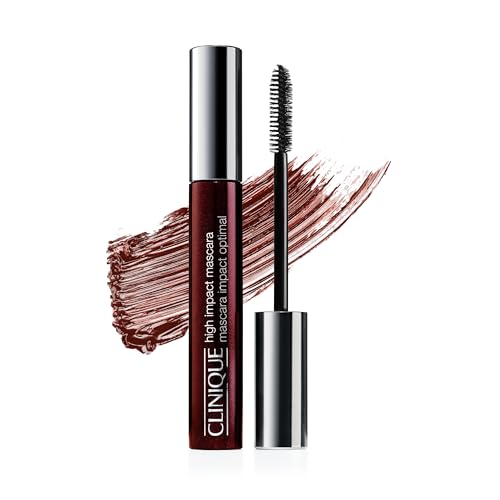
Clinique High Impact Mascara — Black Honey
Why it’s such a safe starting point: If we’re talking strictly about a natural-looking colored mascara, Black Honey makes immediate sense.
It’s softer than jet black. Warmer than brown. And in real life? It doesn’t look like “colored mascara.” It just looks like your lashes — just richer.
In the tube, it reads almost brown. On the lashes, it gives that warm raisin depth that adds dimension without obvious pigment. Indoors, it feels polished. In daylight, the tone shows up gently — never theatrical.
Why it stays natural-looking: The pigment is muted and balanced. It deepens the lash line without creating that sharp, high-contrast outline black mascara can cause. That softer contrast is what keeps everything refined.
- ✅ Soft Black Honey shade enhances without overpowering
- ✅ Lengthens and volumizes while maintaining separation
- ✅ Frequently comfortable for sensitive eyes
- ❌ Very watery eyes (can smudge or run)
- ❌ Anyone expecting waterproof-level hold
- ❌ Those wanting bold, obvious color payoff

💡 Lash Lab Notes — Dr. Rabeya (Heat/Humidity/Shift Test):
“Black Honey looks soft but still defines my lashes. Even in humidity, it stayed put for me — and most importantly, my sensitive eyes didn’t react.”
- ⭐ Editor’s Note: This shade looks understated at first. Then you see it in natural light, and it clicks. If we’re easing into subtle color without harsh contrast, this is where we’d begin.
If you want to compare this Undertone against the full color spectrum, you can explore the broader guide here:
Sometimes the right tone is all it takes to shift from harsh to harmonious.
Maybelline Lash Sensational Sky High — Burgundy Haze
Why does it keep its warmth without going bold?
Burgundy Haze works because it never feels loud.
If black feels harsh, but brown disappears on you, this lands in that middle ground. Indoors, it reads deep and defined. In natural light, the burgundy warmth shows up gently — enough to add dimension without obvious purple.
It reveals itself gradually. That’s what keeps it natural.
Why it stays natural-looking: The formula leans toward length and separation rather than heavy bulk. When lashes stay lifted and feathery — not thick or clumped — the color reads refined instead of dramatic.

- ✅ Burgundy tone adds warmth without overpowering
- ✅ Lightweight length with clean separation
- ✅ Many users report minimal flaking or smudging
- ❌ Those who dislike building coats for a stronger impact
- ❌ Very sensitive eyes (some irritation reports)
- ❌ Anyone expecting effortless removal
💡 Lash Lab Notes — Sneha (Heat/Humidity/Shift Test):
“I love how Burgundy Haze looks soft but still defined in daylight. It stayed put through a long, humid day, but I definitely needed proper remover at night.”
- ⭐ Editor’s Note: It feels subtle at first. Then sunlight hits, and everything looks a little brighter. Not dramatic — deliberate. Exactly what we want here.
L’Oréal Paris Voluminous Original Mascara — Cobalt Blue
An edge pick (only if you keep it controlled)
Cobalt sits right at the edge of what still counts as natural.
It’s more noticeable than burgundy or brown — that’s true. But when applied lightly, it can stay wearable. Indoors, it reads deeper and closer to Black. In daylight, you catch the blue.
One clean coat keeps it refined. Layering turns the statement.
Why it stays natural-looking (when used correctly): Restraint. A single light coat — especially focused toward the tips or outer third — keeps contrast controlled. Indoors, it behaves almost like black. In direct light, it gives a subtle brightness shift.
Applied heavily, it stops being natural. Used lightly, it stays polished.

- ✅ Rich blue that adds dimension when applied lightly
- ✅ Builds volume without crunchy stiffness
- ✅ Soft finish despite stronger pigment
- ❌ Ultra-minimal “barely-there” makeup lovers
- ❌ Anyone wanting invisible color
- ❌ Those who dislike visible pigment in daylight
💡 Lash Lab Notes — Dr. Tropa (Heat/Humidity/Shift Test):
“The blue is noticeable but not overwhelming. It held up well through a long day, and my lashes still felt soft — not stiff or flaky.”
- ⭐ Editor’s Note: Used sparingly, cobalt feels fresh. Built up heavily, it stops being subtle. For a natural result, restraint is everything.
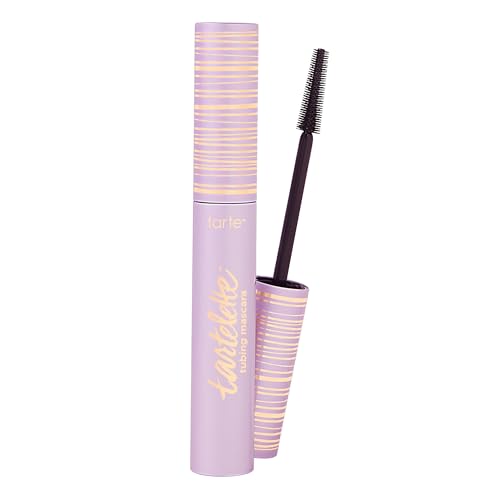
Tarte Tartelette Tubing Mascara — Brown
Why brown + tubing feels effortless
Brown in a tubing formula is almost a cheat code for natural-looking lashes. Instead of thick, heavy volume, you get length, lift, and clean separation.
The brown tone softens the lash line immediately — no harsh contrast, no inky outline. Subtle. On purpose.
Why it stays natural-looking: Tubing technology wraps each lash individually, which keeps definition crisp and reduces smudging — and smudging is what instantly ruins a soft look.
Pair that clean structure with a softer brown shade and, indoors, it reads polished rather than “made up.” In daylight, you get quite depth — not drama.
- ✅ Soft brown tone with beautiful length and definition
- ✅ Smudge-resistant wear that supports a clean finish
- ✅ Often removes easily with warm water
- ❌ Those highly sensitive to even minor flaking
- ❌ Anyone who dislikes slightly wet formulas at first
- ❌ People expecting full waterproof hold
💡 Lash Lab Notes — Dr. Rabeya (Heat/Humidity/Shift Test):
“The brown shade looks natural but still defined. It held up well through a long day, but I did notice a few tiny flakes by evening.”
- ⭐ Editor’s Note: Brown plus tubing feels balanced. Softer than black, structured enough to stay clean. For everyday professional wear, that combination just works.
Yves Saint Laurent Volume Effet Faux Cils — Rich Brown
Why luxe brown can still look natural
Rich Brown works because it softens without sacrificing presence. Black can create a sharp frame around the eyes. This brown keeps definition strong — but removes that harsh edge.
It’s not a timid brown. It’s a refined one.
Why it stays natural-looking: The richness of the pigment gives depth without flattening the lash line. Indoors, it reads close to black but gentler. In natural light, it reveals warmth without shouting “color.”
That lower contrast is what keeps it sophisticated rather than bold.

- ✅ Sophisticated brown that defines without harshness
- ✅ Thickens and lengthens beautifully
- ✅ Strong staying power for many users
- ❌ Budget-conscious shoppers
- ❌ Those who dislike wiping excess product from the wand
- ❌ Anyone expecting effortless soap-and-water removal
💡 Lash Lab Notes — Dr. Tropa (Heat/Humidity/Shift Test):
“Rich Brown looks refined and full, not flat. It held up through a long, warm day without smudging, but I did need a proper remover at night.”
- ⭐ Editor’s Note: Once you see how polished a rich brown can look, jet black can start to feel just a little too sharp.
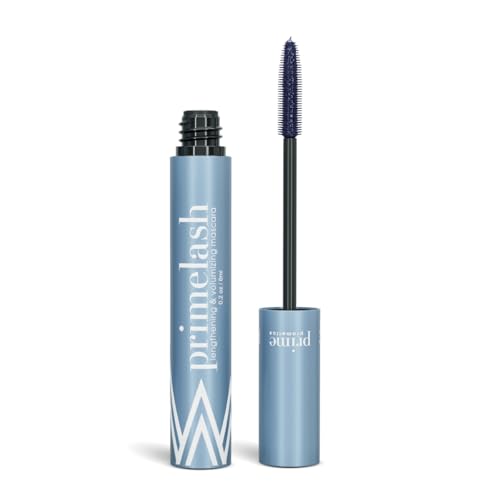
Prime Prometics PrimeLash Mascara — Blue
A muted blue that stays wearable
This blue works because it doesn’t behave like typical bright blue mascara. It’s muted. Indoors, it reads clean and defined — almost black.
In daylight, you get a gentle brightness shift. Less statement. More subtle lift.
Why it stays natural-looking: The pigment is toned down enough to brighten the eye area without drawing attention to itself. Applied lightly, it follows the same rule as midnight navy — indoor subtle, daylight dimension.
Heavier layering pushes it out of the “natural” lane, so restraint matters here.
- ✅ Subtle blue that reads refined when applied lightly
- ✅ Clean separation with length in two coats
- ✅ Frequently praised as comfortable for sensitive eyes
- ❌ Anyone expecting instant, effortless removal
- ❌ Those highly sensitive to sticky or glue-like formulas
- ❌ Users concerned about long-term lash brittleness
💡 Lash Lab Notes — Dr. Rabeya (Heat/Humidity/Shift Test):
“The blue is subtle — more ‘brightened eyes’ than bold color.”
- ⭐ Editor’s Note: It’s wearable and flattering — just don’t expect it to melt off instantly at night.
If you’d like to compare all these undertones side-by-side — from subtle browns to deeper blues — here’s the complete spectrum guide:
A subtle wash of color can wake up the whole face — without ever looking overdone.
Dark Lashes Problem — “Why Does This Just Look Black?”
If you have naturally dark lashes, you’ve probably had this moment:
- You buy a colored mascara.
- You apply it.
- And… it just looks black.
You’re not imagining it.
The Invisible Tint Phenomenon
On deep brown or jet-black lashes, many colored mascaras act more like a tint than a visible pigment.
- Indoors? It reads almost black.
- In sunlight? You catch a soft shift.
That’s actually why many of these shades still qualify as natural-looking. They behave like black in low light and reveal dimension only when light hits.
But if you’re expecting obvious burgundy or navy instantly, it can feel underwhelming.
Pigment Density Matters
Not all colored mascaras are equally saturated.
Some formulas prioritize bulk and thickness over pigment clarity. Others focus on cleaner pigment payoff, meaning the shade shows up more clearly even on darker lashes.
If the color seems invisible, it’s usually not the shade — it’s the pigment density.
That’s why deeper tones like plum, midnight navy, and charcoal tend to register more reliably on very dark lashes than lighter blues.
If visible payoff matters to you, choose deeper muted tones and avoid overly volumizing, heavy builds. Too much bulk can swallow the color.
The Outer-Third Method
If full-lash application still reads black, try this: Apply your colored mascara only to the outer third of your lashes.
That small shift changes how light hits the eye. Suddenly, the tone becomes more visible — without overwhelming the whole look.
- No heavy layering.
- No dramatic contrast.
Just a quiet dimension. That’s still within the natural lane.
How to Apply Colored Mascara So It Stays Subtle
Even a subtle shade can turn bold if we overload it.
Here’s the controlled method that keeps everything refined:
1️⃣ Curl Clean Lashes
Start with clean, dry lashes. Curling first opens the eye and reduces the need for extra coats — and extra coats are usually where “too bold” begins.
2️⃣ Apply One Thin Coat
One controlled coat is often enough.
Remember the rule: indoor subtle, daylight dimension. If it already reads soft in normal lighting, stop there.
3️⃣ Focus on the Tips or Outer Third
Instead of loading pigment at the base, concentrate it toward the tips or outer third.
This keeps the lash line looking close to Black while letting the color reveal itself when light hits.
4️⃣ Separate Before It Fully Dries
Use a clean spoolie and gently comb through. Separation is everything.
Clumps make color look heavier.
Clean lashes make it look intentional.
If you want a deeper breakdown of technique and placement, you can review the full application guide here:
Subtle color isn’t about less effort. It’s about smarter placement.
Natural Colored Mascara vs Black Mascara
So, how does the best natural-looking colored mascara compare to classic Black?
It’s not about better or worse. It’s about contrast.
- Black maximizes contrast.
- Natural colored mascara moderates it.
Office Settings
Black is defined instantly. It frames the eyes with strong contrast. Natural colored mascara softens that frame.
In professional lighting, brown, navy, plum, or charcoal usually read polished — not playful. They enhance without creating a bold outline. Indoors, they behave close to black. In daylight, they reveal subtle depth.
That difference is small — but noticeable in real life.
Changing Skin & Softer Features
As features soften, extreme contrast can feel harsher.
Softer shades reduce the stark line between lash and skin. Brown, charcoal, and muted plum often look more harmonious — especially when the overall makeup is minimal.
Less contrast often equals more refinement.
That’s why many people naturally shift toward softer lash tones over time.
Day Events
Brunch. Meetings. Day weddings. School runs.
Natural colored mascara performs beautifully in daylight. Instead of flat Black, you get a quiet dimension. The tone catches light subtly, making eyes look brighter and more awake — without announcing itself.
It’s an enhancement, not emphasis.
High-Contrast Black
Jet black creates maximum contrast. That can be stunning. But it can also read severe on fair skin, lighter hair, or minimal-makeup days.
Natural colored mascara lowers that contrast just enough to keep the effect soft and intentional.
If you’re specifically debating between soft black and brown, this comparison breaks it down clearly:
Quick Safety Notes (Near the Eyes = High Trust)
Anything applied near the eyes deserves extra care. These are the non-negotiables.
Replace Every 3 Months
Mascara has one of the shortest shelf lives in makeup. Replacing it regularly reduces the risk of bacterial contamination and eye infections.
Three months is the common rule of thumb.
If you want the full breakdown of shelf life and hygiene timelines:
Don’t Pump the Wand
Pumping forces air — and bacteria — into the tube. That speeds up drying and contamination.
Instead, twist gently while pulling the wand out.
Don’t Share
Even if it’s your best friend. Even if it’s “just once.” Sharing mascara transfers bacteria directly to the eye area.
Stop If Irritation Happens
Redness. Itching. Burning. Unusual tearing.
Stop immediately and discontinue use if symptoms persist.
🧪 Dr. Rabeya — Hygiene Reminder:
“Even the most beautiful shade isn’t worth eye irritation. Replace mascara regularly, avoid pumping, and if something feels off — stop.”
Frequently Asked Questions
❓What makes colored mascara natural?
A colored mascara looks natural when the shade is muted — not neon — and when it enhances instead of dominates.
Deep browns, plums, navy, and charcoal work because they soften contrast while still defining the lashes.
Application matters too.
One thin coat reads refined. Three thick coats read bold.
Why does it look black on me?
If your lashes are naturally dark, you’re likely seeing the invisible tint effect. Many colored mascaras reveal their tone only in direct light. Indoors, they blend into the lash base and read black.
Pigment density — and placement, like focusing on the outer third — can make a noticeable difference.
Is brown better than black?
Often, yes — when a softer contrast is the goal.
Black creates a strong definition. Brown or charcoal lowers that contrast slightly, which can feel more harmonious on minimal-makeup days.
It’s less about age. More about balance.
Can burgundy make eyes look red?
It can — if the Undertone leans too warm.
If you’re redness-prone, cooler plum shades usually look healthier than brick-toned burgundy. The goal is enhancement, not exaggeration.
Is tubing better for a natural finish?
For many people, yes.
Tubing formulas wrap each lash individually, which keeps separation clean and reduces smudging.
Since flakes and smears instantly disrupt a subtle look, cleaner-wear formulas help colored mascara stay polished throughout the day.
Can colored mascara stain lashes?
Most modern formulas don’t permanently stain lashes. However, deeper pigments (especially burgundy or blue) may leave temporary tinting during removal if not fully cleansed.
Proper removal technique matters.
Final Thoughts
Subtle color isn’t a trend anymore — it’s modern grooming.
The best natural-looking colored mascara doesn’t shout. It softens. It brightens. It refines.
Lower contrast often feels more sophisticated than harsh Black.
Sometimes all it takes is a small shift — from jet black to espresso, from flat Black to navy — to make your whole face look more awake, more balanced, more intentional.
🎁 Before You Move On…
If you’re refining your everyday lash routine, understanding formula types and proper care makes a real difference long-term.
You can explore the foundational guides here:
Last update on 2026-04-01 / Affiliate links / Images from Amazon Product Advertising API