⚡ TL;DR: best primer for combination skin
Choose a primer that balances an oilier forehead and nose with comparatively drier cheeks, rather than expecting the same finish to flatter every facial zone. A versatile smoothing putty suits modest differences; more contrasting zones may benefit from targeted matte and hydrating formulas.
Top Picks
- 🏆 Best Overall — e.l.f. Poreless Putty — versatile blur for mixed zones
- 🥈 1st Runner-up — Glow Recipe Strawberry BHA — soft-matte T-zone texture focus
- 🥉 2nd Runner-up — NYX Plump Right Back — lightweight moisture and grip
Your nose looks glossy by lunchtime, yet foundation clings to your cheeks. The best primer for combination skin is the one that respects both needs rather than picking a side. Below are six distinctly useful ways to prime mixed skin, with enough context to choose one product—or place two strategically.
✨ Inside This Face Primer Guide
🌸 Psst…
Some links in this post are affiliate links. If you shop through them, we may earn a small commission at no extra cost to you — like a little coffee while we keep testing beauty favorites. ☕💄
Quick Comparison: Best Primer for Combination Skin
All six primers? We do not need them. What matters is matching the finish to the area that needs it.
| Primer | Best placement | Finish | Main tradeoff |
|---|---|---|---|
| e.l.f. Poreless Putty | Mixed zones | Velvety blur | Less specialized oil control |
| Glow Recipe Strawberry BHA | T-zone texture | Soft matte | BHA may bother reactive skin |
| NYX Plump Right Back | Drier cheeks | Fresh glow | Not for strong matte needs |
| e.l.f. Matte Putty | Oily forehead and nose | Matte | May flatten dry cheeks |
| e.l.f. Luminous Putty | Dull, drier cheeks | Luminous | Adds shine to oily areas |
| Milk Makeup Pore Eclipse | Localized shiny spots | Soft matte | Best for smaller areas |
How to Choose Primer for Mixed Skin Zones
Combination skin is not simply “half oily, half dry” in a fixed ratio. The American Academy of Dermatology explains that dry and oily patches can coexist, commonly around the T-zone. That makes placement more valuable than hunting for one formula marketed to everyone.
If your cheeks and T-zone differ only a little, begin with a versatile smoothing primer and adjust how much you apply. If your forehead gets shiny while the cheeks feel tight, use matte texture on the center of the face and a lighter hydrating finish on the cheeks.
Our T-zone and cheeks do not need matching finishes. An all-skin-type claim cannot replace noticing when a formula feels too dry or looks too glossy.
Some readers will find that one product already answers their needs. If you want a wider category overview instead of a mixed-skin-specific shortlist, that is a different decision.
The general primer guide compares formulas beyond the oily-T-zone/dry-cheek problem. It helps when your main goal is overall makeup smoothness rather than zone balance.
Best Primer for Combination Skin
Each pick here has a different job. We used product details and manufacturer information to judge those roles. These are not claims from a side-by-side wear test.
e.l.f. Poreless Putty Primer
Best Overall
A balanced blur that does not demand a matte finish on every zone.
If your nose looks shiny while your cheeks feel normal or dry, a one-primer routine needs some flexibility. This velvety putty is specifically described by e.l.f. as suitable for combination skin, so it makes a sensible place to start.
Its blurred, smooth-looking finish is the useful middle ground: less glow than a luminous primer, but without a promise to remove every hint of shine. Start with a very thin layer near the nose, then use even less on areas that already feel comfortable.
Bottom line: Choose it when you want one manageable primer across several facial zones, rather than a specialist finish.

- ✅ Brand explicitly includes combination skin among suitable skin types.
- ✅ Velvety smoothing helps soften the look of visible texture.
- ❌ Not the strongest dedicated shine-control option for a very oily T-zone.

🧪 Lash Lab Notes — Zayba (A-Level Student & Beauty Enthusiast)
The same texture need not be applied at the same thickness everywhere. A thin approach makes sense when your cheeks are less oily than your nose.
- 💡 Editor’s Note: We like the ease of beginning with one flexible formula before buying a second specialized primer. Pay attention to where extra product actually improves the base rather than coating every part of your face identically.
Before choosing an all-over primer, compare buyer perspectives on e.l.f. Poreless Putty.
A practical starting point for mild to moderate mixed-zone skin.
The next option solves a different placement problem.
Glow Recipe Strawberry BHA Serum Primer
Best T-Zone Refinement
A soft-focus primer-serum for shine and visible texture through the center of the face.
An oily forehead with noticeable texture can call for a different kind of primer than dry cheeks. Glow Recipe positions its Strawberry BHA formula as a silicone-free blur with a soft matte look, using starch-based mattifying ingredients.
The brand also discusses reduced oily appearance in the T-zone, making that area the natural placement target. Think of this as a refined zone option, not a rich cream to spread wherever your skin feels tight.
Bottom line: Best considered for oilier, textured areas where a soft matte look matters more than extra cheek glow.

- ✅ Oil-control and soft-focus claims match T-zone needs.
- ✅ Serum-primer format differs from heavier putty products.
- ❌ Contains BHA; sensitive skin may prefer a gentler approach.
🧪 Lash Lab Notes — Dr. Sazia (Medicine Specialist & Beauty Enthusiast)
The useful question is where the soft-matte effect belongs. Keep the application focused where shine is noticeable and assess how your skin tolerates exfoliating formulas.
- 💡 Editor’s Note: This is the more targeted choice when texture and midday sheen go together. We would not make it a default dry-cheek primer, especially if your skin reacts to active ingredients.
For reactions to this texture-focused option, browse buyer feedback on Glow Recipe Strawberry BHA.
For a noticeably oily T-zone when texture blur is the priority.
The next option solves a different placement problem.
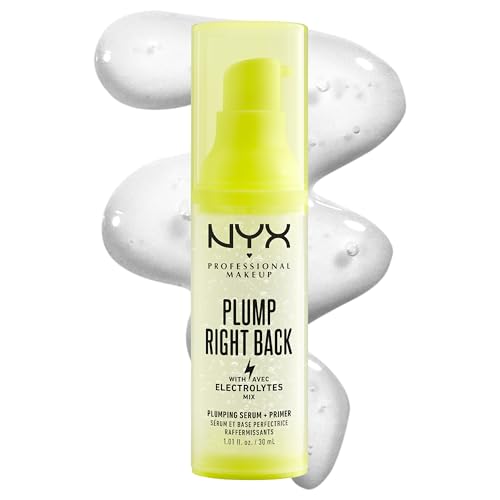
NYX Plump Right Back Primer + Serum
Best Hydrating Grip
A lightweight serum feel for the areas that need moisture under makeup.
When foundation catches on a dry cheek, a heavily mattifying product can make the problem feel worse. This NYX serum primer pairs a light, fast-absorbing texture with hydrating ingredients including hyaluronic acid.
NYX describes the resulting finish as fresh and glowy without looking oily. That makes it worth considering for cheeks or a lightly hydrated full-face base when your T-zone is not excessively shiny.
Bottom line: A flexible hydrating-grip choice for drier zones, provided you prefer a naturally radiant finish.
- ✅ Lightweight serum texture and hydrating ingredients.
- ✅ Made to help makeup adhere while leaving a glowy look.
- ❌ Not a heavy-duty matte solution for very shiny areas.
🧪 Lash Lab Notes — Mahmuda (Homemaker & Beauty Enthusiast)
A serum-like primer can be easier to place sparingly on cheeks than a dense putty. Let skincare settle before adding the next layer so you can see whether the base remains smooth.
- 💡 Editor’s Note: We favor this when your dry areas are the bigger obstacle to even foundation. If shine is the main concern at the nose, pair selective hydration with a separate matte step rather than expecting one serum to do both jobs.
If a serum-style primer sounds appealing, see buyer impressions for NYX Plump Right Back.
For dry-feeling cheeks that still need a makeup-ready, lightweight base.
The next option solves a different placement problem.
e.l.f. Matte Putty Primer
Best Budget Oil Control
An affordable matte putty that is easier to justify on the T-zone alone.
Sometimes one change is enough: less shine on the forehead and nose. This e.l.f. putty uses kaolin and white charcoal. The brand markets it for absorbing excess oil and giving a matte finish.
Its use case is more specific than the original Poreless Putty. Applying it just where oil breaks through can keep the rest of your makeup from looking unnecessarily flat.
Bottom line: Use it on your oilier zones when budget and clear matte positioning matter most.

- ✅ Budget-friendly matte option from a known brand.
- ✅ Oil-absorbing ingredient story supports T-zone use.
- ❌ All-over use may make already dry cheek patches look flatter.
🧪 Lash Lab Notes — Fauzia (University Student & Beauty Enthusiast)
Save the strongest matte application for the center of the face. If cheeks are comfortable with a light layer of another primer, there is no reason to force the same matte finish across them.
- 💡 Editor’s Note: This is the simple, economical spot-control approach rather than a whole-face miracle. We would start with less than you think you need and build only where shine remains noticeable.
To check other shoppers’ experiences with a focused matte formula, view e.l.f. Matte Putty.
For a budget-friendly finish concentrated on the oilier T-zone.
If your center-face shine overwhelms a gentle putty, a focused matte comparison can help narrow the next option. The dedicated guide weighs stronger shine-control choices without shifting this article into an oily-only roundup.
The next option solves a different placement problem.
e.l.f. Luminous Putty Primer
Best Dry-Cheek Glow
A luminous putty for cheeks that look dull beside an oily T-zone.
An all-over glow is not always the goal when your nose already shines. A smaller amount of Luminous Putty on the upper cheeks can bring back a fresh-looking finish without adding sheen where you are trying to reduce it.
e.l.f. highlights hyaluronic acid and positions the putty for radiance. Its own trio guidance suggests Luminous on cheekbones and Matte across the T-zone, which is the right way to think about this product’s place.
Bottom line: Best used selectively on drier, dull-looking cheeks rather than as a full-face oil-control step.

- ✅ Adds a luminous alternative to matte zone products.
- ✅ Brand gives explicit cheekbone placement advice.
- ❌ Can look too shiny where natural T-zone oil is already evident.
🧪 Lash Lab Notes — Mahmuda (Homemaker & Beauty Enthusiast)
Luminous finish is a placement decision, not a skin-type label. Keep it away from the areas where extra shine would undo the balance you are trying to create.
- 💡 Editor’s Note: We see this as a companion for distinct dry patches, not the automatic best all-over pick. If hydration is your main buying concern, compare dedicated hydrating formulas before assuming extra glow is the answer.
To compare opinions about this radiant putty, see feedback for e.l.f. Luminous Putty.
For dry-looking cheeks when an intentional glow suits your makeup.
Cheeks that feel uncomfortable beneath makeup may need more than a luminous finish. A dedicated hydrating-primer guide can help you compare moisture-first formulas rather than simply adding glow.
The next option solves a different placement problem.
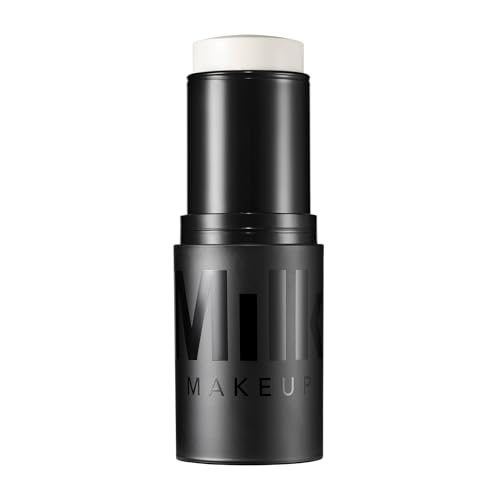
Milk Makeup Pore Eclipse Matte Blur Stick
Best Precision Stick
A stick-format matte blur when you want to target just a few shiny areas.
A primer stick can make spot placement less messy when the problem is limited to your nose or forehead. Milk Makeup positions Pore Eclipse as a non-comedogenic soft-matte blur designed to manage visible shine.
The brand advises blending the stick on bare skin before makeup. For touch-ups after makeup, it recommends using fingers to pick up product and press it on rather than dragging the stick through foundation.
Bottom line: A focused option for small shiny areas and people who like a portable format.
- ✅ Spot-friendly stick shape with a soft-matte aim.
- ✅ Manufacturer provides a specific over-makeup touch-up method.
- ❌ Not the most convenient format for coating large areas evenly.
🧪 Lash Lab Notes — Engr. Nusrat (Engineer & Beauty Enthusiast)
The stick form matters as much as the finish here. For touch-ups, pressing with a finger is more consistent with the maker’s instructions than swiping across finished makeup.
- 💡 Editor’s Note: This is a tool-like formula for precision instead of an all-over base shortcut. It earns its place when shine appears in a few repeat areas, and you want to avoid disrupting the rest of your look.
For day-to-day impressions of the precision format, explore Milk Makeup Pore Eclipse.
For targeted matte blur on the nose, forehead, or small touch-up areas.
Choosing the texture is a start. Where we put it matters just as much.
How to Apply Primer Without Overdoing Either Zone
Step 1:
Prepare and observe your skin. Cleanse and moisturize according to your usual routine, then let skincare settle. Identify the areas that look shiny versus those that already look dry; primer does not take the place of prescribed skincare or sunscreen.
Step 2:
Start small in the T-zone. Place a thin layer of your chosen matte or blurring formula across the nose and any parts of the forehead or chin where shine is most apparent. Do not keep piling it on merely because a product promises a very matte finish.
Step 3:
Treat cheeks according to their own needs. Apply a lighter hydrating or luminous formula only where you want it. e.l.f. even describes using Matte Putty on the T-zone and Luminous Putty near the cheekbones in its primer-trio instructions.
Step 4:
Add foundation and check the result. Let each layer settle before applying a thin base, then look for rolling, dryness, or extra shine in each area. If a product pills, start by reducing how much you layer and allow more settling time rather than assuming every primer-foundation pairing has a fixed chemical rule.
If reducing layers does not solve the rolling, foundation pilling deserves a closer look than primer placement alone. The dedicated troubleshooting guide explores the broader layering problem and the next checks to try.
Primer changes the feel and finish of the skin underneath, but the next foundation also affects the balance. Finding a base designed for mixed skin can make the pairing more consistent.
After you settle on primer placement, the next decision is what kind of foundation will sit over it. The combination-skin foundation guide helps match that finish across the same oily and dry zones.
Frequently Asked Questions About Primer for Combination Skin
A few small technique choices can matter more than changing brands. These are the common practical questions worth resolving before you apply another layer.
❓ Is a poreless putty primer good for combination skin?
It can be. e.l.f. explicitly includes combination skin among the suitable skin types for its original Poreless Putty, but your own dry and oily zones may still call for different amounts.
❓ Can I use a matte primer and hydrating primer together?
Yes, by applying different products to different areas rather than blending every formula across the whole face. The e.l.f. Putty Trio guidance uses Matte on the T-zone and Luminous on the cheekbones as an example.
❓ Does primer replace moisturizer or sunscreen?
No. Primer is a makeup-preparation product; continue using suitable skin care and sunscreen as directed, and allow layers to settle before foundation.
❓ Why does my makeup sometimes pill over primer?
A heavy stack of skincare, primer, and foundation can roll instead of laying smoothly. Try using less, giving each layer more time, and checking the pairing on a small section before changing your whole routine.
Final Thoughts: Match Primer to Your Facial Zones
If a shiny nose and drier cheeks keep pulling your makeup in opposite directions, start with one versatile smoothing primer and watch which area still needs help. Add matte control to the T-zone or lighter hydration to the cheeks only when that difference is clear. The best result is a balanced base, not the most product on your face.
Last update on 2026-10-29 / Affiliate links / Images from Amazon Product Advertising API