
⚡ TL;DR: silicone-free primer for water-based foundation
Start with the full ingredient list, not the front label. Then think about the finish your foundation needs.
A silicone-free claim helps us narrow the field. But only a thin-layer test of the real pairing reveals pilling or separation.
Top Picks
- 🏆 Best Overall — Glow Recipe Strawberry Blur Drops — clear claim and satin blur
- 🥈 1st Runner-up — wet n wild Impossible Primer Stick — budget-friendly soft matte prep
- 🥉 2nd Runner-up — Glow Recipe Watermelon Dew Drops — hydrated glow without silicones
Foundation rolling into little flakes? We immediately suspect our primer. A silicone-free primer for water-based foundation helps narrow the search, but a bottle label only tells part of the story. Finish matters. So do the products underneath and the amount we apply.
✨ Inside This Face Primer Guide
🌸 Psst…
Some links in this post are affiliate links. If you shop through them, we may earn a small commission at no extra cost to you — like a little coffee while we keep testing beauty favorites. ☕💄
Quick Comparison: Best Silicone-Free Primer for Water-Based Foundation
Five options, five different jobs.
We are comparing finish and feel, not five interchangeable textures.
| Primer | Best for | Finish | Main consideration |
|---|---|---|---|
| Glow Recipe Strawberry Blur Drops | Overall silicone-free blur | Soft satin matte | Includes salicylic acid |
| NYX Plump Right Back Primer | Hydrating grip | Radiant grip | Verify current box for silicone-free status |
| Milk Pore Eclipse Matte Blur Stick | Targeted oily zones | Powdery matte | Waxy stick needs a pair test |
| wet n wild Impossible Primer Stick | Budget matte prep | Soft matte | Apply sparingly |
| Glow Recipe Watermelon Dew Drops | Dewy-looking base | Dewy glow | Not for strong oil control |
How Silicone-Free Primers Work With Water-Based Foundation
Water with water sounds simple. Is it really that easy? Not quite. A finished primer or foundation may mix water, emulsifiers, silicones, powders, and film-forming polymers.
Water, in first place, tells us very little.
One ICONIC London primer, for instance, lists dimethicone right after water.
That makes it wrong for this silicone-free list.
We need the complete current ingredient list and any direct brand claim.
Even two silicone-free primers can feel worlds apart.
A watery serum may feel light and a little tacky.
A stick can use starches and waxes to soften the look of pores.
Neither is guaranteed to suit every foundation.
How we apply it matters, too.
Five Silicone-Free Primer Options for Different Finishes
Which finish do we actually need?
That comes before ranking products.
We compare what these formulas are designed to do, not an untested claim of perfect compatibility.
Choose the feel, then try it with the foundation already in your routine.
Glow Recipe Strawberry BHA Blur Drops
Best Overall
Want a blurred look without silicone slip? This is a soft-focus starting point.
If shine settles into the center of your face, a thick smoothing balm may feel like too much.
This strawberry primer uses rice and tapioca starches for a satin, visibly softer-looking finish.
Glow Recipe explicitly calls its Blur Drops silicone-free and directs users to let them absorb as their final skin-prep step.
That makes this a stronger ingredient-confirmed starting point than a bottle marketed only as water-based.
Bottom line: Our most straightforward starting point for a silicone-free matte-satin finish, though it includes salicylic acid.

- ✅ Brand directly confirms a silicone-free formula
- ✅ Starches help give a soft-focus matte look
- ✅ Made to go beneath makeup as a primer
- ❌ Not for anyone seeking a very dewy finish
- ❌ Review the salicylic acid and fragrance if those ingredients bother your skin
🧪 Lash Lab Notes — Engr. Nusrat (Engineer & Beauty Enthusiast)
I like the idea of starches doing the blurring here, rather than silicone slip. I would start with a pea-size amount and avoid piling on a thick layer.
- 💡 Editor’s Note: A clear silicone-free claim is easier to shop than a vague description. That matters when silicone is the reason for choosing a product. Still, the best test is how this primer looks under the foundation we already wear.
For a closer look at customer impressions of the matte effect, see Glow Recipe Strawberry Blur Drops.
Choose it when shine control and silicone-free clarity matter more than added glow.
A grip-focused serum gives a different kind of foundation base.
NYX Plump Right Back Primer + Serum
Best Gripping Serum
For a dry-feeling base, think light serum texture with a bit of grip.
Not everyone wants to powder down before foundation.
This NYX formula feels more like moisture-focused prep on paper, built around water, glycerin, and other lightweight ingredients.
The published ingredient list contains no familiar silicone INCI names, and the brand describes a quick-absorbing makeup grip.
We would still check the current packaging rather than promise that every later version is silicone-free.
Bottom line: A sensible hydrating-grip candidate, with a current-ingredient-list caveat rather than an express silicone-free brand promise.

- ✅ Water and glycerin feature near the top of the current list
- ✅ Light serum texture is designed to help makeup grip
- ✅ More radiance than we expect from a matte stick
- ❌ Verify silicone-free status on the newest packaging
- ❌ A tacky layer may disappoint those wanting an immediate powdery feel

🧪 Lash Lab Notes — Mahmuda (Homemaker & Beauty Enthusiast)
I look for just enough grip to support makeup, not a heavy pore-filling coat. I would use one thin layer and pat foundation on without lots of rubbing.
- 💡 Editor’s Note: Here, texture is the appeal, not a proven match for every foundation. The published ingredient list looks promising. But the latest box remains the final check, and we should make that distinction before buying.
If you want to compare shopper notes on its tacky finish, explore NYX Plump Right Back Primer.
Try it for hydration and grip when a matte finish feels too dry.
When oil control is the real priority, a targeted blur stick can be more focused.
Milk Makeup Pore Eclipse Matte Blur Stick
Best for Oily T-Zone
Does just the T-zone turn shiny? This matte stick lets us target it.
Here is the twist: silicone-free does not always mean a watery gel.
Milk builds this stick around powders, starches, and wax-like components for a concentrated matte effect.
The maker confirms the formula is silicone-free, and its on-the-go stick format encourages precise placement.
Sweep a little onto the forehead or around the nose and blend it thinly before layering foundation.
Bottom line: Best as a localized matte helper, not a guarantee that a waxy layer will suit every fluid foundation.

- ✅ Maker specifically describes it as silicone-free
- ✅ Powders and starches are meant to blur the look of pores
- ✅ Easy to place right where shine appears
- ❌ The concentrated stick can feel less fluid than serum
- ❌ For all-over radiance, drops may be a better option
🧪 Lash Lab Notes — Fauzia (University Student & Beauty Enthusiast)
I like how a stick lets us aim at shiny patches. I would blend it with my fingers before foundation, keeping that layer thin.
- 💡 Editor’s Note: We would not swipe this everywhere by default. Why mattify comfortable cheeks? If shine is confined to the T-zone, that is where we would start with a light layer.
See what buyers mention about the stick texture by opening Milk Pore Eclipse Matte Blur Stick.
Consider it for oily zones rather than an all-over glossy base.
For a lower-priced entry point, look at the clear Wet n Wild primer.
wet n wild Impossible Primer Stick
Best Budget
A clear silicone-free blur stick, without the prestige price tier.
A drugstore formula can be silicone-free without feeling like a conventional slick primer.
This clear stick is positioned as a matte, pore-blurring step for the areas that need it.
The ingredient list begins with glycerin and water, while the brand explicitly states the silicone-free claim.
Those are useful buying signals, although they cannot predict exactly how a particular foundation will wear above the product.
Bottom line: A practical budget-category starting point for soft matte prep, with the same pair-testing requirement as costlier formulas.

- ✅ Manufacturer clearly labels it silicone-free
- ✅ Designed for a matte, soft-focus effect
- ✅ Clear variant is plainly specified
- ❌ Not suited to a clearly luminous finish goal
- ❌ Recheck the latest packaging and listing before buying again
🧪 Lash Lab Notes — Zayba (A-Level Student & Beauty Enthusiast)
For a first primer routine, I would keep it simple. I would use just a little on the areas that need blur, then apply foundation gently to see how it layers.
- 💡 Editor’s Note: A higher price is not needed just to see silicone-free on a label. This product makes that claim already. What matters more is finish: for a dry-looking base, a hydrating serum may suit us better.
To examine recent buyer feedback on the blurring finish, visit the Wet n Wild Impossible Primer Stick.
Start here if budget and a clear silicone-free label lead your decision.
That matte approach contrasts with a makeup serum meant to enhance glow.
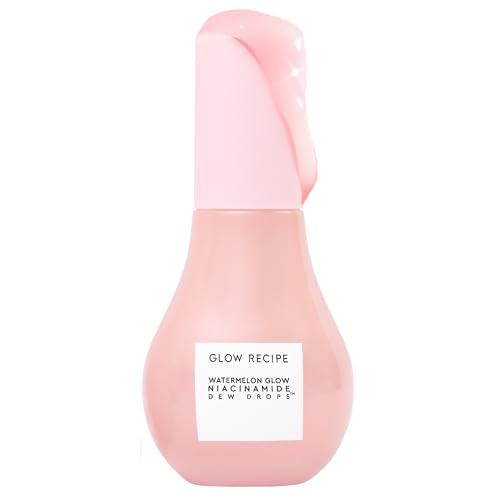
Glow Recipe Watermelon Niacinamide Dew Drops
Best Dewy Finish
After a fresh, glowy look? This water-rich option skips the powdery effect.
When a water-based foundation already has a natural glow, you may not need full-face mattifying prep.
Glow Recipe suggests using one or two pumps of its Watermelon Dew Drops before makeup for a hydrated sheen.
This product is explicitly free of silicones and doubles as a makeup-prep serum.
Its role is different from the Strawberry Blur Drops: radiance and hydration come first, not powdery oil absorption.
Bottom line: The most glow-focused choice here, but skip extra layers if your foundation already looks too shiny.
- ✅ Maker confirms a silicone-free formula
- ✅ Doubles as a glow serum and makeup primer
- ✅ For those who prefer radiant-looking foundation prep
- ❌ Not ideal when strong oil control is the goal
- ❌ More glow may be unnecessary under luminous foundation
🧪 Lash Lab Notes — Dr. Rabeya (Dentist & Beauty Enthusiast)
I think about the finish before adding another serum layer. I would start with one pump, check the glow, and only then decide whether more is needed.
- 💡 Editor’s Note: We would keep the glow routine simple. Foundation may already give us enough radiance, making this extra layer optional. Let the finished look decide, not the number of bottles on the shelf.
For more opinions on how the glow reads beneath makeup, check Glow Recipe Watermelon Dew Drops.
Pick it for a fresh dewy look, not to control an oily T-zone.
With those different textures in mind, ingredient-reading becomes the next useful skill.
How to Tell Whether a Primer Is Really Silicone-Free
Read the most recent ingredients on the physical box or official brand page.
Look for an explicit silicone-free claim, then review the full list for recognizable names such as dimethicone, cyclopentasiloxane, and dimethiconol.
Those are examples, not an exhaustive dictionary of every silicone.
A product can list aqua or water first yet also contain silicone.
Likewise, a silicone-free product may rely on powders or waxes rather than behaving like a watery serum.
If you are buying specifically to avoid silicones, do not treat a water-based marketing line as equivalent to a full silicone-free ingredient statement.
For NYX Plump Right Back, the currently published INCI does not list standard silicone ingredients, but the brand page does not make an explicit silicone-free promise in the material reviewed.
Checking the current retail packaging is the right final step.
Test the Exact Primer–Foundation Pair
There is no substitute for seeing how the entire routine behaves on your own face.
Keep your usual sunscreen and skincare in place rather than omitting essential protection to make a primer seem smoother.
Step 1:
Settle the skincare. Let moisturizer and sunscreen reach a comfortable, settled finish before putting anything else on top. Avoid a thick extra layer just to make the skin feel coated.
Step 2:
Try one thin primer layer. Place a small amount on one side of the face or the area where you need it. Leave the other side unprimed as a simple comparison.
Step 3:
Pat on foundation. Apply your regular water-based foundation with minimal rubbing. Watch for rolling, uneven patches or a feel you dislike before declaring the pairing successful.
Step 4:
Simplify if it pills. Repeat with less product or allow longer drying time. If it still balls up, review the skincare, SPF, and makeup layers rather than assuming silicone mismatch is the only possible cause.
The makeup order matters when sunscreen and moisturizer sit beneath a primer.
If you are uncertain where the SPF layer belongs in your routine, the dedicated order guide explains that sequence.
A primer that remains smooth alone but pills after foundation may not be right for that specific stack.
The broader troubleshooting question is how to isolate which layer causes the clumps.
Once you have tried smaller amounts and sensible dry-down time, persistent rolling deserves a fuller diagnosis.
Our separate primer-pilling guide walks through the other layers and application habits that can trigger it.
Which Finish Suits Your Skin and Foundation?
For the shinier center of the face, begin with a thin matte formula such as Strawberry Blur Drops or Pore Eclipse rather than coating every area.
For a base that looks tight or dull, a light gripping serum may be more comfortable to try.
If you already wear a dewy foundation, more luminous prep may be redundant.
Choose Watermelon Dew Drops for visible radiance only when that is the look you want, and remember that the best primer is sometimes no primer at all.
Questions About Silicone-Free Primer and Foundation
These are the practical questions that determine whether a formula belongs in your makeup routine, even after the ingredient label looks right.
❓ Can a water-first primer still contain silicone?
Yes. Water can top the list while dimethicone appears further down. We need to read all the ingredients.
❓ Does silicone-free primer stop foundation from pilling?
No guarantee. Too much product, skincare, sunscreen, drying time, and rubbing may still change the result.
❓ Which type feels better under a hydrating foundation?
A thin serum is often worth testing first for a supple finish.
We can try it on one side, then compare.
There is no reason to assume it beats a stick.
❓ Is the NYX primer guaranteed silicone-free?
The current maker list does not show familiar silicone names.
But we did not find an explicit silicone-free promise.
The newest packaging matters.
❓ Can I skip primer entirely?
Of course. If foundation already glides on smoothly over our regular skincare and SPF, another primer may not help.
Final Thoughts on Your Primer Match
A silicone-free label makes shopping easier.
But water, in the first place, proves little.
We should decide what the foundation needs: matte blur, gentle grip, or glow.
Then test the real pairing using less product and a little patience.
Your next purchase may be a different kind of face primer rather than another silicone-free one.
Our wider face-primer guide compares other finish and texture goals once you have decided that the silicone restriction is not the whole story.
Last update on 2026-10-29 / Affiliate links / Images from Amazon Product Advertising API