
⚡ TL;DR: cc cream for oily skin
Shine shows up fast? Begin with the finish a CC cream actually promises, not the SPF number on its tube. A natural-matte option with a specific shine-control claim gives us a clearer place to start. Want a different feel? An oil-free matte listing, a fuller semi-matte finish, or non-comedogenic positioning may matter more.
Top Picks
- 🏆 Best Overall — IT Cosmetics CC+ Natural Matte — Dedicated shine-control claim
- 🥈 1st Runner-up — Neutrogena Clear Coverage Flawless Matte — Oil-free matte coverage
- 🥉 2nd Runner-up — e.l.f. Camo CC Cream — Fuller semi-matte coverage
A shiny T-zone can turn a beautiful morning base into a midday guessing game. We looked at each cc cream for oily skin through a practical lens: finish, claim strength, coverage, and what the label actually tells us. That means we won’t mistake a manufacturer’s wear-time promise for our own testing, or confuse the word matte with proof that a formula cannot clog pores.
✨ Inside This CC Cream Guide
🌸 Psst…
Some links in this post are affiliate links. If you shop through them, we may earn a small commission at no extra cost to you — like a little coffee while we keep testing beauty favorites. ☕💄
Quick Comparison: Best CC Cream for Oily Skin
Four picks, four slightly different jobs. This chart compares each product’s stated positioning, not the results of a controlled side-by-side wear test.
| CC cream | Finish | Best for | Main trade-off |
|---|---|---|---|
| IT Cosmetics CC+ Natural Matte | Natural matte | Shine-control priority | Sixteen-hour claim is manufacturer-stated |
| Neutrogena Clear Coverage Flawless Matte | Matte | Oil-free full coverage | Matte does not guarantee breakout prevention |
| e.l.f. Camo CC Cream | Semi-matte | Fuller coverage with softer finish | Not a dedicated long-wear oil-control claim |
| Dermablend Continuous Correction CC | Natural finish | Non-comedogenic labeling | Less specific matte positioning |
What Matters Most for Oily Skin
Matte tells us how makeup looks when it settles. Oil control is about keeping that look as sebum appears through the day. They overlap, but they are not identical promises.
Coverage is a separate choice. We may want an even-looking complexion without thick-looking makeup. Or we may prefer fuller coverage when discoloration bothers us more. More coverage does not automatically mean better shine control.
Comfort matters, too. An oily forehead and dry cheeks may prefer different finishes. We might choose a softer base, then manage shine only where it appears. Dewy makeup can be comfortable, but it is not our first pick when less gloss is the main goal.
Best CC Creams for Oily Skin
Think of these as four ways to approach the same shopping problem. The ranking reflects verified descriptions and product positioning. It is not a claim that our editors performed first-hand wear tests.
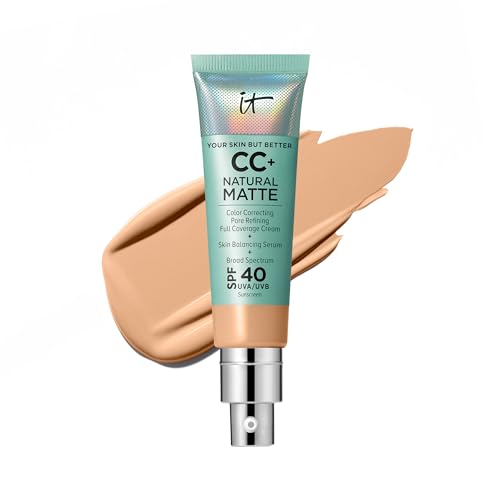
IT Cosmetics CC+ Natural Matte with SPF 40
Best Overall — Dedicated oil control
This formula gives oily-skin shoppers a specific shine-control target rather than just a flattering finish description.
An oily T-zone? This is where we would start. IT Cosmetics promotes CC+ Natural Matte for oily or combination skin and describes natural-matte, full-coverage wear. The brand’s 16-hour shine-control claim is more specific than a finish description alone.
We also get complexion coverage alongside SPF 40. That is useful product positioning, but SPF does not predict how matte our skin will look. We would choose this for its tone-evening purpose and stated oil-control goal.
Bottom line: Most direct fit for an oil-control goal. That advertised duration is a brand claim, not a personal wear guarantee.
- ✅ Natural-matte positioning speaks to shoppers managing shine.
- ✅ The maker gives a specific duration for its shine-control claim.
- ✅ Full-coverage positioning addresses the look of uneven tone.
- ❌ Not the obvious pick when a gentle semi-matte look matters more.
- ❌ A claimed duration is not the same as independently tested wear.
🧪 Lash Lab Notes — Fauzia (University Student & Beauty Enthusiast)
A stated wear claim gives me a place to start when a shiny T-zone is the biggest annoyance. I would compare that promise with my actual midday shine, not assume every complexion gets identical results.
- 💡 Editor’s Note: The concrete shine-control claim gives us something useful to compare. We can start with a thin layer and see whether the natural-matte result stays comfortable. This record features shade 12N Medium, so undertone matching still comes before the ranking.
To see what current buyers say, check reviews for IT Cosmetics CC+ Natural Matte.
A strong starting point when complexion evening and shine are both on our minds.
That stronger oil-control claim deserves a closer look if IT Cosmetics is becoming your frontrunner. The dedicated brand review offers more detail without turning this oily-skin roundup into a single-product analysis.
That is the finish-first option. Next, what changes when oil-free labeling matters just as much?
Neutrogena Clear Coverage Flawless Matte CC Cream, Shell, 1 oz
1st Runner-up — Oil-free matte option
This one combines matte coverage with clear oil-free and fragrance-free listing claims.
Want coverage without a formula that feels especially rich? Neutrogena offers another route. Its verified Clear Coverage Flawless Matte listing specifies full coverage and describes the product as oil-free and fragrance-free. Niacinamide is also listed, but that alone is not an acne-treatment claim.
Shell 1.0 is a particular shade, only one possible match. The matte finish gives us a useful contrast with natural-finish creams. Comfort and tolerance will still vary from person to person.
Bottom line: A good pick for label-conscious matte coverage. Oil-free is useful information, not a promise that breakouts cannot happen.

- ✅ The verified product listing explicitly calls the formula oil-free.
- ✅ Its matte finish suits shoppers concerned about shine.
- ✅ The listed full coverage aims to even visible tone.
- ❌ Oil-free does not replace checking pore-related label claims.
- ❌ Shell 1.0 cannot suit every depth or undertone.
🧪 Lash Lab Notes — Dr. Sazia (Medicine Specialist & Beauty Enthusiast)
To me, oil-free and matte describe different things. For acne-prone skin, I would still check the exact non-comedogenic wording and make gentle removal part of the evening routine.
- 💡 Editor’s Note: I would check shade before chasing an ingredient headline. If Shell does not match, the rest of the formula cannot make that color right. For acne-prone skin, I would also read the exact pore-related label instead of treating matte as the answer.
Curious about current buyers’ shade feedback? Read reviews for Neutrogena Clear Coverage Flawless Matte.
Worth considering when we want full coverage and an oil-free label.
But if a firmly matte look feels severe, a softer finish may be a better beginning.
e.l.f. Camo CC Cream SPF 30
2nd Runner-up — Fuller semi-matte coverage
A semi-matte complexion effect gives this option a softer finish than a dedicated shine-control pitch.
Here is the appeal: e.l.f. Camo CC Cream leans into fuller coverage. It does not make the same specific, measured oil-control claim as the IT Cosmetics pick. That distinction matters if a shine-free afternoon is our first priority.
The verified record lists full coverage and SPF 30 for Medium 330 W. That warm shade is one reference point, not a prediction of wear or a match for every undertone.
Bottom line: Pick this for the balance between coverage and a softer finish. If sustained mattifying is essential, be ready to manage the T-zone separately.

- ✅ The brand describes a semi-matte, rather than completely flat, finish.
- ✅ Its verified record documents full-coverage positioning.
- ✅ SPF 30 appears among the listed product features.
- ❌ Less specific for lasting shine control than a dedicated claim.
- ❌ Medium 330 W is a warm shade, not a universal match.
🧪 Lash Lab Notes — Zayba (A-Level Student & Beauty Enthusiast)
I see semi-matte as a helpful middle ground for anyone who dislikes a heavy matte look. On a very shiny T-zone, a little targeted powder may still be the practical answer.
- 💡 Editor’s Note: I would compare cheeks and forehead individually, since combination skin does not act like one uniform surface. The original Camo formula is semi-matte, while Hydrating Camo has a different dewy finish. Sharing a brand name does not make those formulas interchangeable.
See current buyers’ coverage comments for e.l.f. Camo CC Cream.
A useful middle path for fuller-looking coverage and a semi-matte result.
Prefer a more natural finish? The last option takes us in a different direction.
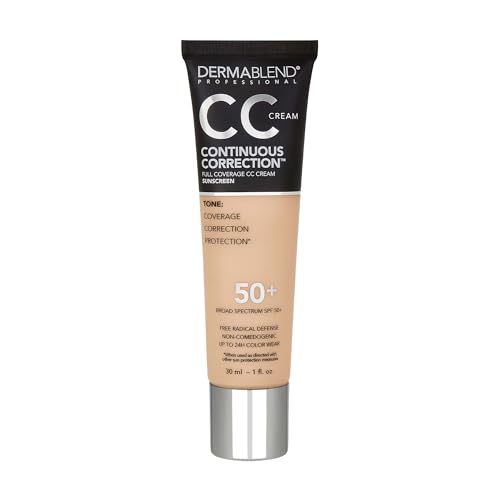
Dermablend Continuous Correction CC Cream SPF 50+
Natural-finish alternative — Pore-conscious labeling
This is the different-direction pick for those prioritizing non-comedogenic positioning over an emphatically matte result.
Dermablend positions Continuous Correction CC as breathable and non-comedogenic, with a natural finish. If pore-related labeling comes first for us, that difference matters more than a strong matte promise.
We would not call it our strongest shine-control option. And this CC cream is not Dermablend’s separate matte Flawless Creator foundation. SPF 50+ does not change that difference in finish positioning.
Bottom line: A better fit for natural-finish preferences. Choose its labeling route if the flattest possible matte look is not our goal.
- ✅ The brand identifies this formula as non-comedogenic.
- ✅ A natural finish may suit those who dislike a flat matte look.
- ✅ SPF 50+ is included in its verified product identity.
- ❌ It lacks the most specific prolonged shine-control positioning.
- ❌ Powder may still help if the T-zone grows shiny.

🧪 Lash Lab Notes — Dr. Rabeya (Dentist & Beauty Enthusiast)
Natural finish is a different goal from maximum mattifying. I would look at T-zone shine and skin comfort together, while keeping the SPF number separate from judging oil control.
- 💡 Editor’s Note: I would ask whether natural-looking coverage matters more here than a powdery finish. The verified shade is 30N Light, so shade compatibility needs its own check. A non-comedogenic label matters, but it is no guarantee of how anyone’s individual skin will respond.
Explore current buyers’ finish feedback for Dermablend Continuous Correction CC.
Our alternative when natural-looking coverage and non-comedogenic brand positioning matter most.
That covers the four choices. Now, which label should guide our decision?
How to Choose a CC Cream When Your Skin Gets Oily
Start with the question that matters most. Do we want a matte look, less shine later, or pore-related label wording? The right CC cream depends on that priority. One tube does not have to solve all three.
For acne-prone skin, the American Academy of Dermatology advises looking for labels such as oil-free, non-comedogenic or won’t clog pores, and removing makeup before sleep. Those are better clues than treating the word matte as proof a product prevents breakouts.
Shade and undertone still shape the finished look. We can check a match along the jawline. One verified listing shade is not the whole range. And an oily forehead with dehydrated cheeks may need a different finish balance than uniformly oily skin.
Our focus here stays on oily skin, rather than every possible complexion goal.
An all-skin-type CC cream comparison is useful when a single finish priority no longer decides the purchase. The broader parent guide helps compare more formulas without confusing their finish promises.
How to Apply CC Cream Without Adding Extra Shine
A good base starts before the CC cream. We want to avoid thick buildup while keeping sunscreen and complexion coverage in their separate roles.
Step 1: Apply a dedicated sunscreen. Use a broad-spectrum sunscreen as directed before your complexion product, rather than counting on a thin cosmetic layer to provide adequate protection. The American Academy of Dermatology explains appropriate sunscreen coverage and the need for reapplication outdoors.
Step 2: Begin with a thin CC cream layer. Blend a little where we most want an even-looking complexion. Add more only where needed; piling on makeup makes the finish harder to judge.
Step 3: Handle shine where it appears. If the forehead, nose, or chin looks glossy, try a light powder touch-up there. Another full layer across the face may be unnecessary. At day’s end, remove makeup gently.
A makeup label’s SPF number does not explain how to apply enough dedicated sunscreen. The sunscreen layering guide takes that practical question further than this oil-control routine.
Common Questions About CC Cream for Oily Skin
Finish, breakouts, and SPF can blur into one big decision. Shall we separate them? These short answers keep each concern in view.
❓ Can oily or acne-prone skin wear CC cream?
Yes. The American Academy of Dermatology says acne-prone skin can wear makeup when the products are suitable and removed properly. We should check the recommended label terms rather than assume every CC cream behaves the same way.
❓ Is a matte CC cream always better for oily skin?
Not necessarily. Matte describes a look, not a guaranteed number of shine-free hours. If oily skin also feels dry in places, semi-matte or natural may feel more comfortable.
❓ Does the SPF in CC cream replace sunscreen?
Not on its own. Protection depends on using enough sunscreen and reapplying as directed. A thin layer of makeup should not be assumed to provide adequate sun protection.
❓ What if I want stronger coverage than these CC creams?
Several choices here offer full-coverage positioning. Still, foundation is a separate category with different formulas and finishes worth comparing.
Foundation becomes the more useful comparison if color correction alone does not answer the coverage need. The wider foundation ranking gives that next choice its own space.
❓ What should I do when my T-zone looks shiny later?
We can try a little powder just where the T-zone gets glossy. It also helps to reassess how much base we used. Long-wear claims do not promise identical results for every person or climate.
Final Thoughts: Choose the Finish Your Skin Needs
The best CC cream for oily skin is the one whose finish and label match the actual frustration in the mirror. Start with IT Cosmetics CC+ Natural Matte when brand-stated shine control is the first priority; consider Neutrogena Clear Coverage Flawless Matte for oil-free full coverage, e.l.f. Camo CC Cream for a softer semi-matte look, or Dermablend Continuous Correction CC for its natural-finish and pore-conscious positioning. Neither removes the need to choose a suitable shade, wear sunscreen correctly, or assess real-world shine on your own skin.
Last update on 2026-10-30 / Affiliate links / Images from Amazon Product Advertising API