
⚡ TL;DR: foundation stick
Stick makeup makes it easier to put coverage where it counts. Blend the edges first. Then decide whether to add more. The amount of pigment, the finish, and the area being covered matter more than the bullet-shaped packaging.
Top Picks
- 🏆 Best Overall — Hourglass Vanish — Concentrated coverage, targeted placement
- 🥈 1st Runner-up — ILIA Skin Rewind — Buildable medium natural matte
- 🥉 2nd Runner-up — MERIT The Minimalist — Precise, natural-looking spot coverage
A patch of redness rarely means the whole face needs covering. That is where a foundation stick can help. Still, a dense, full-coverage formula needs a different touch from a softer complexion stick. We looked at what four manufacturers document, not at results from our own wear tests.
✨ Inside This Foundation Guide
🌸 Psst… A Little Beauty Note!
Some links in this post are affiliate links. If you spot something you love and shop through our links, we may earn a small commission—at no extra cost to you. Our picks are based on thoughtful research and, where mentioned, hands-on experience. Thanks for supporting Dappered Chic! 💕 Read our Affiliate Disclosure
Quick Comparison: Best Foundation Stick
First, picture the finish and amount of coverage you want. Ignore miracle promises. The table uses each brand’s description, not side-by-side swatches from us.
| Product | Brand-described coverage | Finish | Best use |
|---|---|---|---|
| Hourglass Vanish | Full | Satin-style finish | Concentrated coverage |
| ILIA Skin Rewind | Medium | Natural matte | Adjustable everyday base |
| MERIT The Minimalist | Lightweight, buildable | Natural-looking | Spot coverage |
| Dior Forever Skin Perfect | Buildable | Blurred, cream-to-powder | Soft-focus full-face base |
Which Foundation Stick Fits Your Coverage Goal?
Only covering a dark spot? Use the smallest swipe that reaches it. Let the skin around it show. A pigment-rich option like Hourglass can do that job without a thick stripe, provided we apply it lightly.
Medium coverage gives us room to build slowly. ILIA describes a medium, natural-matte result. MERIT highlights spot use and a natural-looking effect. Those are brand descriptions, not measured promises for every face.
Looking for an all-over blur? Dior describes a cream-to-powder feel. Work in short sections to keep blending easy. If the real goal is very sheer coverage everywhere, a moisturizing liquid may be a better match.
Four Foundation Sticks for More Controlled Coverage
Each pick answers a different need: more opacity, controlled medium coverage, quick spot correction, or a blurred finish. We did not rank them by unverified wear time, transfer, or personal shade matching.
Hourglass Vanish Seamless Finish Foundation Stick
A concentrated formula for precise, small-area coverage.
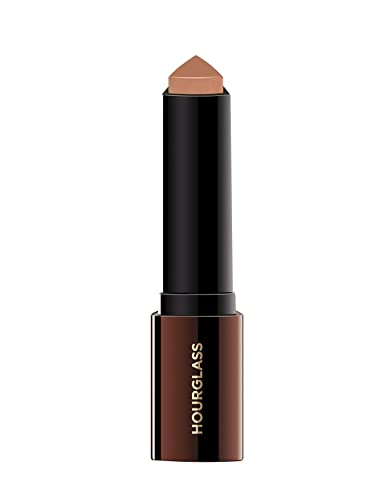
Hourglass positions Vanish as a full-coverage foundation that can also serve targeted concealing needs. That versatility is useful when an area needs more opacity than the rest of your face: draw a small amount, then spread it out with a clean brush rather than swiping a wide band across the cheek.
The manufacturer describes a waterproof formula and extended wear, but those are brand claims. We cannot turn them into a promise that it will stay unchanged for the same number of hours on every skin type, climate, or routine.
Bottom line: Our full-coverage pick for someone who wants precision, not a heavy layer everywhere.
- ✅ Full-coverage positioning supports targeted opacity.
- ✅ Stick shape allows careful placement on individual areas.
- ✅ Can double as localized concealing makeup, according to the brand.
- ❌ Less suited to a barely-there base when used in broad, unblended strokes.
- ❌ A poor match for anyone expecting independent proof of the brand’s extended-wear claim.
🧪 Lash Lab Notes — Engr. Nusrat (Engineer & Beauty Enthusiast)
That slim stick lets us place dense pigment on one small area. I would soften the edge before adding another stroke. A wider second swipe can make that transition harder to blend.
- 💡 Editor’s Note: We would start with a tiny amount on the area that needs correcting and leave untouched skin alone. The shade named in the PKB is Light Beige (9.5), a medium-cool variant, not a universal complexion match. Confirm the shade before buying.
For perspectives from current buyers, browse reviews of Hourglass Vanish.
Choose it for small areas that need stronger opacity.
If you prefer softer opacity, the next pick offers a different starting point.
ILIA Skin Rewind Complexion Stick
Start at medium coverage, then build only where it helps.
The medium-coverage formula is described as natural matte, offering a middle ground between a sheer spot correction and dense opacity. That makes it a useful middle lane: cover a small patch now and add a second light layer only when the first has settled into the surrounding skin.
The brand advertises a broad shade selection, but shade totals and availability can change. More importantly, the correct undertone matters more than the number of colors in the catalog. Its skincare-related promotional language should not be treated as evidence that a cosmetic foundation treats a skin condition.
Bottom line: A sensible choice for controlled medium coverage and a less shiny-looking finish.

- ✅ Manufacturer-described medium opacity.
- ✅ Natural-matte finish for a more controlled look.
- ✅ Suitable for targeted application or a larger base area.
- ❌ Not an instant substitute for a full-coverage formula when one thin layer must conceal everything.
- ❌ Natural matte may not fit someone shopping specifically for a very dewy finish.
🧪 Lash Lab Notes — Mahmuda (Homemaker & Beauty Enthusiast)
Medium coverage leaves room to assess that first layer. I would add a little more only where needed. Re-coating the full face defeats the point of controlled placement.
- 💡 Editor’s Note: We like the clear medium-coverage positioning here because it gives the reader a predictable starting point. The recorded Balsa 2C shade is one specific variant, not a neutral sample shade for everybody. Test your match against your jaw and neck before committing.
You can check buyer feedback for ILIA Skin Rewind while comparing its claimed finish.
Good for people who want a buildable natural-matte complexion base.
For an even more spot-focused routine, consider a stick designed around small corrections.
MERIT The Minimalist Perfecting Complexion Stick
Small spot corrections without a full-face mask.
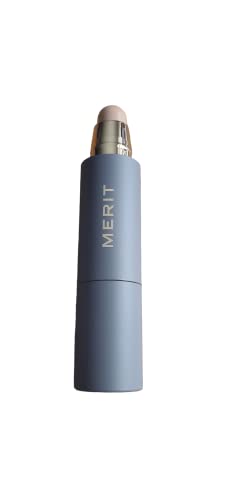
MERIT presents The Minimalist as a flexible product for concealing specific areas or creating a larger, natural-looking base. That is a useful distinction if you do not want full coverage over every freckle and variation in skin tone.
The brand recommends blending with fingers or a brush, which makes it practical for quick placement. Its oil-free and non-comedogenic positioning can be relevant to acne-prone shoppers, though no label guarantees zero irritation or breakouts for every user.
Bottom line: Pick this for localized correction when a light-looking complexion is the priority.
- ✅ Brand instructions specifically address targeted spot application.
- ✅ Buildable placement can leave adjacent skin uncovered.
- ✅ Fingers or a brush can blend the boundary.
- ❌ Not the clearest first choice if your goal is dense, all-over opacity in a single pass.
- ❌ Skin-comfort marketing is not a personal allergy or acne-safety guarantee.
🧪 Lash Lab Notes — Zayba (A-Level Student & Beauty Enthusiast)
A dot at the center gives us a clear starting point. I would tap toward the edge, not smear across the cheek. That keeps the rest of a sheer base looking lighter.
- 💡 Editor’s Note: We would use this where a small correction changes the overall look and skip the areas that already feel even. The listed Dune variant is not proof of a match for your undertone. Keep your brush or hands clean if you are touching up during the day.
To hear from people who bought it, see the latest reviews for MERIT The Minimalist.
Best for selective spot correction with a natural-looking goal.
If you want a more deliberately blurred finish instead, look at the last option.
Dior Forever Skin Perfect Multi-Use Foundation Stick
Cream-to-powder texture with a soft-focus goal.
Dior describes this stick as buildable and naturally blurred, with a cream-to-powder texture. Its finish is the differentiator: compared with the explicitly natural-matte ILIA description, Dior emphasizes a smoothing, blurred effect.
The brand also makes heat, humidity, and wear-duration claims. Those depend on Dior’s own testing and should not be confused with a controlled comparison across the four products here. If you use it over a large part of the face, blend one section before moving to the next.
Bottom line: A strong match for shoppers seeking buildable coverage with a brand-described soft-focus finish.

- ✅ Distinct cream-to-powder finish positioning.
- ✅ Buildable pigment offers flexible placement.
- ✅ Works for targeted use or broader application, according to Dior.
- ❌ Not an evidence-backed guarantee of all-day perfection in heat or humidity.
- ❌ May be the wrong texture preference for shoppers seeking a dewy finish.

🧪 Lash Lab Notes — Engr. Nusrat (Engineer & Beauty Enthusiast)
A cream-to-powder formula calls for working one small area at a time. I would blend each edge before starting the next zone. The outline of the product matters as much as its center.
- 💡 Editor’s Note: We would choose this because the described finish matches a specific cosmetic goal, not because of an unverified wear-time contest. The canonical product here is the 3N Neutral variant. Dior also sells other shades; do not assume every shade has the same Amazon listing or link.
Want to compare recent buyer impressions? Open reviews for Dior Forever Skin Perfect.
Suited to buyers who value a blurred, cream-to-powder finish.
Once you have the finish in mind, technique determines whether that coverage looks precise.
How to Apply Foundation Stick Without Harsh Edges
Start at the center of the area that needs coverage. Then work outward. Clean fingers, a sponge, or a brush can help; avoid pulling at inflamed skin.
Step 1 — Place the Stick Sparingly
Touch the stick lightly to the center of a redness patch or another area where you actually need coverage. Keep the first mark small; you can extend it, but a wide stripe is harder to make disappear.
Step 2 — Tap and Buff the Perimeter
Use a clean blending tool or fingertips to soften the outside edge while leaving the center more pigmented. Look straight into a mirror and check the transition toward untreated skin in ordinary light.
Step 3 — Add Coverage Only Where Needed
Wait until you can judge the first pass, then place a second small amount only where the area remains visible. Layering selectively is usually a more efficient path to a natural-looking finish than covering the entire face again.
For acne-prone skin, the American Academy of Dermatology advises choosing makeup labeled oil-free or non-comedogenic, removing it before sleep, and regularly cleaning makeup brushes. Those habits may help reduce avoidable irritation, but they do not make any foundation medically therapeutic.
How to Choose a Shade and Finish
Match the shade to your complexion before worrying about whether a stick promises medium or full coverage. Undertone labels such as neutral, cool, and warm help narrow a search, but they cannot replace checking the actual color along the jaw and in daylight.
A lighter or deeper stick can deliberately brighten or sculpt a small area, yet that is a separate shade choice from your everyday foundation match. Don’t confuse a complexion product used to contour with a specialized contour formula.
If your stick seems visibly different from your neck, the problem may be shade or undertone rather than inadequate blending. A full shade-matching guide helps resolve that specific mismatch without buying yet another formula.
For finishes, start with your actual preference: Hourglass for dense satin-style coverage, ILIA for natural matte, MERIT for a skin-like effect, or Dior for blurred cream-to-powder. These are differentiated manufacturer descriptions, not rankings from comparative wear tests.
Foundation Stick Questions, Answered
Does a stick have to mean a heavy finish? And do we need a brush? Those questions tell us more than the packaging does.
❓ Is stick foundation always full coverage?
No. Hourglass describes a full-coverage formula, while ILIA specifies medium coverage and MERIT emphasizes natural-looking, buildable use. Applying fewer layers can also change how much pigment ends up on your skin.
Full coverage is an opacity goal rather than a format by itself. The dedicated roundup helps compare that goal across different base textures once the stick-versus-liquid distinction is clear.
📌 Compare full-coverage foundations across different formats
❓ Can I use a foundation stick for only one spot?
Yes, when the manufacturer supports targeted use, and you have a close shade match. Keep the pigment toward the center of the mark and soften its perimeter into the surrounding complexion.
❓ Do I need a foundation brush?
Not necessarily. Several of these manufacturers suggest either fingers or a brush, depending on the placement and finish you want. Clean tools matter, especially when skin is prone to irritation or breakouts.
❓ Is foundation stick good for acne-prone skin?
The packaging format alone cannot tell you whether a product will suit acne-prone skin. Look at the actual formula and non-comedogenic or oil-free positioning, patch-test if appropriate, and follow gentle makeup-removal and hygiene practices.
Non-comedogenic labeling is a formula-selection question, not proof that a stick automatically suits your skin. The dedicated guide compares products marketed with that concern in mind rather than deciding based on bullet packaging.
📌 Explore foundations labeled non-comedogenic for acne-prone skin
❓ Can a foundation stick replace a contour stick?
A different shade of foundation can add some localized shape when the brand supports that usage. But its undertone, pigmentation, and finish were built as a complexion base, so it is not interchangeable with every dedicated contour product.
Final Thoughts: Choose Placement Before Pigment
The right pick covers the part we meant to cover, not everything by default. Start lightly for small corrections. Choose more opacity or blur only when that matches the actual goal.
If you’re still deciding between a stick and another foundation format, zoom out to compare formulas before committing to one bullet-style base. That broader buying guide is the next useful step after you’ve weighed precise placement here.
Last update on 2026-11-19 / Affiliate links / Images from Amazon Product Advertising API