
⚡ TL;DR: best foundation for combination skin
The best foundation for combination skin balances a shiny T-zone with drier cheeks: choose a flexible natural finish for everyday wear or a more matte formula when oil is the bigger issue. Apply sparingly, then powder only the areas that actually need setting.
Top Picks
- 🏆 Best Overall — Revlon ColorStay — Designed for mixed oily zones
- 🥈 1st Runner-up — L’Oreal True Match — Balanced everyday natural finish
- 🥉 2nd Runner-up — Maybelline Fit Me Matte + Poreless — Affordable targeted shine control
A nose that shines by lunchtime while your cheeks feel tight can make foundation shopping feel contradictory. The best foundation for combination skin need not give every inch of your face the same finish; the smarter starting point is a formula you can adjust with selective prep and powder.
✨ Inside This Foundation Guide
🌸 Psst… A Little Beauty Note!
Some links in this post are affiliate links. If you spot something you love and shop through our links, we may earn a small commission—at no extra cost to you. Our picks are based on thoughtful research and, where mentioned, hands-on experience. Thanks for supporting Dappered Chic! 💕 Read our Affiliate Disclosure
Quick Comparison: Best Foundation for Combination Skin
Each of these eight foundations handles shine and comfort a little differently. So the real question is how its finish fits your face.
| Foundation | Finish | Coverage | Best For | Main Caution |
|---|---|---|---|---|
| Revlon ColorStay | Matte | Medium-To-Full | Oily T-zone | Dry cheeks need thin application |
| L'Oreal True Match | Natural | Medium | Everyday balance | Oily nose may need powder |
| Maybelline Fit Me Matte + Poreless | Matte | Medium | Budget matte | Very dry cheeks need prep |
| NARS Light Reflecting | Natural | Medium | Skin-like coverage | Less maximal oil control |
| Armani Luminous Silk | Luminous Natural Glow | Medium | Cheek-focused glow | T-zone may need powder |
| Fenty Pro Filt’r Soft Matte | Soft Matte | Medium-To-Full | Softer matte coverage | Full layers may show texture |
| bareMinerals ORIGINAL Loose | Naturally Luminous Powder | Sheer-To-Full | Loose powder preference | Flaky cheeks need care |
| Estée Lauder Double Wear | Matte | Medium-To-Full | Longwear matte | Very dry patches need restraint |
Best Foundations for Combination Skin
The products below are organized by the job each formula can reasonably do on a face that is not uniformly oily or uniformly dry. The finish, coverage, and application caveat come from product documentation and the mixed-zone decision—not invented wear tests.
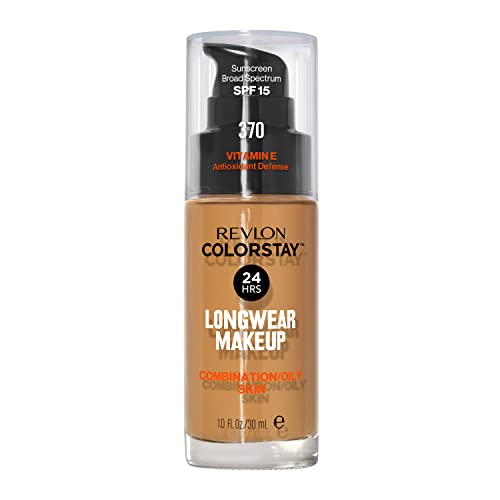
REVLON ColorStay Longwear for Combination/Oily Skin
Buildable matte liquid for the mixed-zone shopper.
Revlon positions this ColorStay formula directly for combination and oily skin. Its buildable, oil-free base and oil-managing mineral powders are a coherent place to start when the nose and forehead get shiny before your cheeks do.
A matte look is not automatically comfortable everywhere. Smooth a thinner layer over the drier cheek and reserve an extra pass for areas that need more coverage.
Bottom line: Revlon ColorStay is a good fit for an oil-prone T-zone, but think twice if the cheeks are noticeably flaky.
- ✅ Oil-free formula designed for combination/oily skin
- ✅ Brand-described oil-managing mineral powders
- ❌ On a flaky cheek, a heavy matte layer may draw attention to texture
- ❌ If your cheeks need a dewy look, choose a natural-finish option instead
🧪 Lash Lab Notes — Dr. Rabeya (Dentist & Beauty Enthusiast)
A thin layer over the cheeks avoids making a combination-skin base heavier than necessary. Add a little more only around the nose if you need extra coverage there.
- 💡 Editor’s Note: Choose this when nose and forehead shine are the main concern, since this ColorStay version is designed specifically for combination-to-oily skin. Keep the first cheek layer light if dryness is visible.
Want more owner feedback on Revlon ColorStay? Read Revlon ColorStay reviews before choosing your shade.
Best for an oily T-zone with tolerably comfortable cheeks.
Care Tip: For a mixed complexion, try a thin overall layer before topping up the shiniest sections.
The next option shifts toward a different finish or coverage priority.
L’Oreal Paris True Match Super-Blendable Foundation
Skin-like everyday coverage with flexible setting.
L’Oréal describes True Match as a light, blendable, oil-free foundation with a skin-like finish. Its hyaluronic-acid formula may be attractive when the cheeks resist powdery bases, but the T-zone still needs to look tidy.
Think of this as the middle ground. If the nose gets very shiny, a little powder might still help; a natural finish is not maximum oil control.
Bottom line: L’Oreal True Match is a good fit for everyday mixed-zone comfort, but think twice if you need strong mattification across the forehead.

- ✅ Natural finish and buildable medium coverage
- ✅ Hyaluronic-acid formula; oil-free listing
- ❌ Very oily zones can still need separate blotting or powder
- ❌ Not a full-matte option for all-day shine priorities

🧪 Lash Lab Notes — Mahmuda (Homemaker & Beauty Enthusiast)
A natural-looking finish can keep the cheek area from reading too powdery. If the forehead gets shiny, set that part selectively instead of adding a thick second layer everywhere.
- 💡 Editor’s Note: The natural finish earns this an everyday spot when your cheeks resist very matte foundations. If you prefer a consistently shine-free look, a small separate setting step is likely more realistic.
Want more owner feedback on L’Oreal True Match? Read L’Oreal True Match reviews before choosing your shade.
Choose it when your cheeks need a natural look, and the T-zone needs selective setting.
Care Tip: A light layer is usually the easiest starting point for a natural-finish foundation.
The next option shifts toward a different finish or coverage priority.
MAYBELLINE Fit Me Matte + Poreless Foundation
A straightforward matte choice without luxury pricing.
Shine control without a prestige price is the point here, especially when your forehead and nose look oily before lunchtime. Maybelline says its Fit Me Matte + Poreless uses micro-powders for normal-to-oily skin, which makes it relevant to that concern.
Because this formula favors a matte appearance, put cheek comfort ahead of building more coverage. If your cheeks routinely flake, a natural-finish option could be more forgiving.
Bottom line: Maybelline Fit Me Matte + Poreless is a good fit for oilier combination skin on a budget, but think twice if dry, tight cheeks are your main concern.

- ✅ Brand-designed shine control for normal-to-oily skin
- ✅ Lightweight, medium-coverage liquid
- ❌ Matte coverage may emphasize already-dry cheek texture
- ❌ Those seeking a luminous finish should look elsewhere
🧪 Lash Lab Notes — Zayba (A-Level Student & Beauty Enthusiast)
Matte makeup gives the nose a different appearance from a freshly moisturized cheek. Put a light moisturizing layer on drier patches first so the foundation does not cling there.
- 💡 Editor’s Note: This is the budget option for someone who wants less visible shine rather than glow. Prepare flaking cheeks gently, since adding extra matte layers is not the same as fixing texture.
Want more owner feedback on Maybelline Fit Me Matte + Poreless? Read Maybelline Fit Me Matte + Poreless reviews before choosing your shade.
Choose it when your T-zone is the persistent problem, and you prefer matte over glow.
Care Tip: Apply a small amount first and blend outward, as the manufacturer’s directions suggest.
The next option shifts toward a different finish or coverage priority.
NARS Light Reflecting Foundation
Natural coverage for a complexion with different zones.
A natural finish can keep the cheeks looking like skin rather than a layer of powder. NARS describes Light Reflecting as medium and buildable with breathable wear, a different way to even out the complexion without making the whole face matte.
That natural finish is the reason to choose it. A shiny T-zone may still need a touch of powder or blotting, especially on warmer days.
Bottom line: NARS Light Reflecting is a good fit for natural-finish makeup, but think twice if you specifically need a powder-dry matte result.

- ✅ Medium buildability without an all-over matte finish
- ✅ Brand lists suitability for most skin types
- ❌ Oilier noses may need an extra targeted setting step
- ❌ Not the strongest option if a totally matte look is essential
🧪 Lash Lab Notes — Fauzia (University Student & Beauty Enthusiast)
Build this natural-finish foundation only on spots where uneven color still shows. Leaving already even areas of the cheeks lightly covered keeps the overall result more skin-like.
- 💡 Editor’s Note: The appeal here is a more skin-like finish without sacrificing the option of medium coverage. Go slowly when layering over dry areas rather than treating buildable as a reason to apply more.
Want more owner feedback on NARS Light Reflecting? Read NARS Light Reflecting reviews before choosing your shade.
Choose it for believable coverage when neither full matte nor high glow appeals.
Care Tip: Layer gradually over darker spots instead of adding product to the entire cheek.
The next option shifts toward a different finish or coverage priority.
GIORGIO ARMANI Luminous Silk Foundation
A prestige natural-glow option with selective shine management.
Armani describes Luminous Silk as lightweight with medium, buildable coverage and a natural glowing finish. That description is appealing if matte foundation tends to leave your cheeks looking flat or textured.
The same glow can read shinier over a naturally oily forehead. Keep any powder confined to that zone rather than dulling the cheek finish you chose the foundation for.
Bottom line: Armani Luminous Silk is a good fit for dry-cheek leaning combination skin, but think twice if your T-zone is very shiny without setting help.

- ✅ Buildable medium coverage
- ✅ Lightweight, natural-glow finish
- ❌ Glow can accentuate an oily T-zone without selective setting
- ❌ Not the best choice for an all-over matte look
🧪 Lash Lab Notes — Mahmuda (Homemaker & Beauty Enthusiast)
The luminous effect is easiest to keep around the cheeks instead of the entire forehead. Add a tiny amount of setting powder only where the nose or central face begins looking shiny.
- 💡 Editor’s Note: A luminous finish can flatter normal-to-dry cheek areas while demanding more attention around the nose. This is a deliberate glow choice, not the solution for someone seeking firm all-day mattification.
Want more owner feedback on Armani Luminous Silk? Read Armani Luminous Silk reviews before choosing your shade.
Choose it if dry-looking cheeks bother you more than occasional forehead shine.
Care Tip: A damp sponge can help spread a thin layer without overloading the cheeks.
The next option shifts toward a different finish or coverage priority.
If the luminous-versus-matte decision still feels uncertain after this review, there is more to weigh within this one formula line. The dedicated Armani Luminous Silk guide goes deeper on that specific foundation choice.
FENTY BEAUTY Pro Filt’r Soft Matte Foundation
More coverage for shine-prone combinations.
For a visibly smoother matte effect without an entirely flat look, this is the coverage-minded choice. Fenty positions Pro Filt’r Soft Matte as an oil-free, longer-wear formula for balanced-to-oily skin. Its buildable medium-to-full coverage makes sense for a wearer who wants discoloration covered without a luminous T-zone.
The trade-off is that fuller coverage can overwhelm a dry cheek if applied too thickly. Build only on the areas that need it and check how the edge looks in daylight.
Bottom line: Fenty Pro Filt’r Soft Matte is a good fit for an oilier T-zone and more visible coverage, but think twice if your cheeks dislike matte bases.

- ✅ Oil-free soft-matte formula
- ✅ Medium-to-full buildable coverage
- ❌ Heavier application can make dry patches look more obvious
- ❌ The natural-glow reader may prefer another finish
🧪 Lash Lab Notes — Engr. Nusrat (Engineer & Beauty Enthusiast)
A thin first layer helps this soft-matte option stay flexible over mixed zones. Build further on the T-zone if needed rather than putting the same amount on cheeks that feel dry.
- 💡 Editor’s Note: This soft-matte base suits the reader who wants more visible coverage and a controlled T-zone. If the cheeks feel tight before makeup, use restraint with layering there.
Want more owner feedback on Fenty Pro Filt’r Soft Matte? Read Fenty Pro Filt’r Soft Matte reviews before choosing your shade.
Choose it when you want visibly more coverage and a controlled T-zone finish.
Care Tip: Let a thin first layer settle before deciding where more coverage is necessary.
The next option shifts toward a different finish or coverage priority.
bareMinerals ORIGINAL Loose Powder Foundation SPF 15
Customizable mineral powder rather than another liquid.
bareMinerals markets its ORIGINAL loose mineral foundation as buildable from sheer to fuller coverage with a naturally luminous finish. For combination skin, the powder format offers a distinct application route compared with the liquids here.
Powder is not automatically drying on everyone, but visibly flaky cheek areas may look more textured with a heavy sweep. Use a small amount first, particularly outside the oily zones.
Bottom line: bareMinerals ORIGINAL Loose is a good fit for powder-format flexibility, but think twice if you have peeling or obviously flaky cheeks.

- ✅ Sheer-to-full buildable finish
- ✅ Lightweight, naturally luminous mineral texture
- ❌ Heavy powder may highlight dry patches
- ❌ Less suited to peeling skin days without prep
🧪 Lash Lab Notes — Dr. Sazia (Medicine Specialist & Beauty Enthusiast)
Loose powder lets you concentrate more coverage around a shiny center without using a liquid base. Use a lighter pass over dry patches, where powder can make texture more noticeable.
- 💡 Editor’s Note: The loose-powder format makes targeted application easy, but it does not make flaky texture disappear. Reserve the lightest pass for drier areas instead of treating the entire face alike.
Want more owner feedback on bareMinerals ORIGINAL Loose? Read bareMinerals ORIGINAL Loose reviews before choosing your shade.
Choose it if you prefer a powder foundation and your cheeks are not visibly flaky.
Care Tip: Start with a small brush load, and add another light pass only if needed.
The next option shifts toward a different finish or coverage priority.
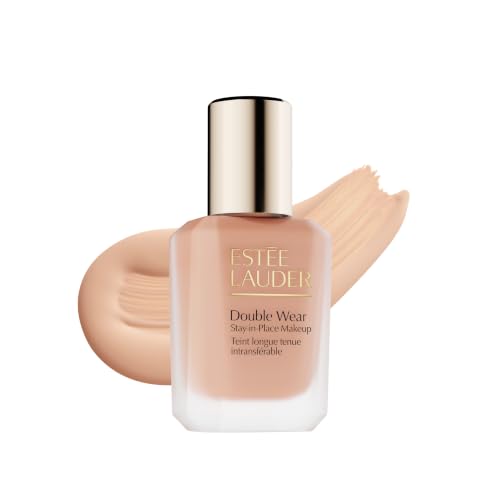
Estée Lauder Double Wear Stay-in-Place Foundation
A longwear-focused matte pick for oilier mixed zones.
Estée Lauder describes the newer Double Wear formula as a breathable matte liquid with medium-to-full buildable coverage. The brand makes extended wear and oil-control claims, which help explain why the formula enters this longwear slot.
Those are manufacturer claims, not results from our own wearing test. A matte longwear finish may be too much for a dry cheek if you spread several layers uniformly.
Bottom line: Estée Lauder Double Wear is a good fit for lasting coverage and shine control, but think twice if your cheeks need the lightest natural finish.
- ✅ Buildable medium-to-full coverage
- ✅ New-formula oil-control positioning
- ❌ Full-face layers may be heavy on drier cheeks
- ❌ Not designed primarily for a dewy complexion
🧪 Lash Lab Notes — Fauzia (University Student & Beauty Enthusiast)
Longwear claims are more useful when you still control how much foundation sits on the skin. Begin with a thin layer and build only where the center of the face needs more coverage.
- 💡 Editor’s Note: A longwear matte option makes sense when the center of the face tends to look shiny early in the day. Prioritize a thin first layer to keep the cheeks from feeling unnecessarily covered.
Want more owner feedback on Estée Lauder Double Wear? Read Estée Lauder Double Wear reviews before choosing your shade.
Choose it when longwear matte performance matters more than a luminous finish.
Care Tip: Shake and apply a pea-sized amount first, consistent with the maker’s directions.
The right finish is only half the decision; the next step is matching it to your particular zones.
How to Match Foundation to Combination Skin
A combination complexion asks two different things of foundation: limit the look of oil where the nose, forehead, or chin gets shiny, and avoid over-emphasizing dryness elsewhere. The American Academy of Dermatology describes how combination skin can be dry in some spots and oily in others, often around that T-shaped central area.
If oil is mainly confined to the nose and forehead, start with a natural or satin-looking liquid like L’Oreal True Match or NARS Light Reflecting and powder only that area. If shine spreads wider across your face, Revlon ColorStay or a soft-matte option may be more practical, provided you protect the comfort of drier cheeks with light application.
If your cheeks are consistently oily too, that is a different foundation question from true combination skin. The oily-skin guide focuses on that more uniformly shiny pattern instead of balancing a dry cheek.
Likewise, if tightness and flaking affect the whole face, a dedicated dry-skin foundation discussion is more directly useful. That guide helps sort options for a drier complexion rather than only the dry parts of mixed skin.
Shade matching deserves as much care as finish. Check both depth and undertone along the jaw in daylight, and remember that marketing claims of lengthy wear are not guarantees of how a formula will feel on your own face.
Applying Foundation Without Drying Out Your Cheeks
A foundation might seem right yet still look patchy when we spread it evenly everywhere. We can keep the routine simple by treating the cheeks and T-zone differently.
Step 1: Prepare by zone. Start with clean skin and a suitable sunscreen, then give dry cheeks the moisture they need. Use a lighter layer where your skin already feels comfortable.
A primer need not be applied in the same quantity everywhere when the nose and cheeks behave differently. If a separate priming step is important to your routine, the combination-skin primer guide compares options for that particular job.
Step 2: Begin with less foundation. Dot a modest quantity in the center and blend outward. Add another thin layer only over areas where discoloration or redness still needs covering.
Step 3: Set the shiny parts, not the entire face. Let the foundation settle before touching the forehead, nose, and chin with a small amount of powder. Skip powder over visibly flaky cheeks unless you have a specific reason to use it.
Step 4: Respond to midday oil gently. Blot the nose before adding more powder rather than stacking thick layers over a shiny base. If the cheeks feel tight, avoid making them more matte simply to match the nose.
If foundation separates despite a lighter base and careful powder placement, that is a troubleshooting question rather than simply a product-ranking problem. The dedicated separation guide walks through likely causes and what to adjust next.
FAQs About Combination-Skin Foundation
The same foundation can behave differently from cheek to nose. Here are the questions worth answering before choosing a finish or adding another layer.
❓ Is matte or dewy foundation better for combination skin?
A natural or soft-matte foundation is often easier to adapt to mixed zones than either extreme. Choose a stronger matte effect when oil dominates, but avoid an all-over powdery finish if your cheeks are flaky.
❓ Can I use powder foundation if my cheeks are dry?
Yes, depending on how dry they are and how lightly the powder is applied. Build slowly over smooth areas and avoid a heavy layer directly over peeling texture.
❓ Why does my foundation separate around my nose?
Visible oil, skin prep, and repeatedly adding product can all affect how foundation looks during the day. Start with a thinner application and blot before adding more powder; there is no single guaranteed fix for every formula.
❓ Is the SPF in foundation enough for daily sun protection?
Do not count on a thin cosmetic layer to replace your regular broad-spectrum sunscreen. Apply the sunscreen that suits your skin first and treat SPF in foundation as a feature, not your whole protection plan.
❓ Should my foundation shade match my cheeks or forehead?
Check your overall face-to-neck match in daylight and pay attention to both shade depth and undertone. Your oilier zones may reflect more light, but shine alone does not mean the skin there requires a different shade.
Final Thoughts on Foundation for Combination Skin
When the nose shines and the cheeks feel dry, balance matters more than one extreme finish. A natural, buildable liquid is a flexible starting point for many mixed complexions, while a matte foundation can make sense when shine dominates. Let the dry areas stay comfortable and set only what needs setting.
You do not need to shop in the wrong category just because your oilier zones behave differently. For a wider starting point across skin types, the parent guide helps orient the choice.
Last update on 2026-11-20 / Affiliate links / Images from Amazon Product Advertising API