
⚡ TL;DR: cheap eyeshadow brushes
The smartest budget move is giving every brush one clear job. We start with a blender and shader, then add crease, precision, or smudging shapes only when those jobs fit our routine.
Different head shapes cannot be ranked fairly on price alone. Real value comes from useful geometry, workable softness or firmness, and a role that earns space in a small kit.
Top Picks
- 🏆 Best Overall — e.l.f. Fluffy Eye Blender Brush — soft bristles, clear blending role
- 🥈 1st Runner-up — e.l.f. Eyeshadow “C” Brush — curved head packs lid color
- 🥉 2nd Runner-up — e.l.f. Blending Brush — versatile control for targeted blending
Cheap eyeshadow brushes make sense when each one solves a real problem. A soft blender smooths edges. A firmer shader puts color where we want it, while smaller heads help when a broad brush spreads pigment too far.
So what are we building? Not the biggest brush cup. We want a compact kit where every tool does something different.
✨ Inside This Eye Shadow Guide
🌸 Psst…
Some links in this post are affiliate links. If you shop through them, we may earn a small commission at no extra cost to you — like a little coffee while we keep testing beauty favorites. ☕💄
Quick Comparison: Cheap Eyeshadow Brushes
Five brushes, five different jobs. That means role comes first, then price.
Prices can move, of course. We only show a current list-price signal where the exact brush has a clearly supported figure.
| Pick | Best For | Head/Role | Current List Price Signal | Why It Earns the Slot |
|---|---|---|---|---|
| e.l.f. Fluffy Eye Blender Brush | Overall blending | Fluffy synthetic blender | About $6 | Soft, easy-to-use blending shape with strong value feedback |
| e.l.f. Eyeshadow "C" Brush | Lid packing | Curved synthetic shader | About $6 | Firm enough to pick up and place shadow while staying soft |
| e.l.f. Crease Brush | Crease work | Compact crease/blending shape | — | Soft bristles and strong blending feedback support a defined crease role |
| e.l.f. Blending Brush | Precision control | Dome-shaped synthetic blender | — | Versatile for eyeshadow and controlled blending; pack count is not relied on |
| e.l.f. Smudge Brush | Lash-line detail | Short, compact smudger | About $3 | Soft but firm enough for controlled eyeliner and shadow smudging |
How to Choose Cheap Eyeshadow Brushes That Are Actually Good
What makes a low price useful? First, the brush needs a job.
For a tiny kit, a fluffy blender and firmer shader cover the biggest difference: one diffuses color, while the other places it. A crease brush earns space when we need definition in a smaller area. Precision blenders and smudgers make sense when broad heads feel harder to control.
That is why buy the job, not the set works so well here. Two inexpensive brushes with different geometry may do more for us than five low-cost fluffy shapes that mostly repeat each other.
We also want bristles that feel soft enough around the eye. But they still need enough control to move or place product. The ferrule and handle matter too, because routine cleaning should not turn a bargain into a short-lived tool.
What if budget stops being the main limit? Then it makes sense to compare these shapes with broader choices at other price points. That wider roundup removes the budget-only filter and looks across the category.
And what about sets? They can work when we genuinely need several different shapes at once. That is a separate buying decision from filling one missing job with one inexpensive brush.
The Best Cheap Eyeshadow Brushes by Job
These are not five near-identical brushes with different labels. Each pick fills a separate job in a small eye-brush kit.
So the trade-offs come from the shape itself. There is no useful winner-takes-all score when one brush blends and another smudges.
e.l.f. Fluffy Eye Blender Brush
Best Overall
Missing an easy way to soften edges? This soft synthetic option is the first budget blending brush we would add.
The black model 85102 is one eye-makeup brush. It has synthetic bristles, a plastic handle, and an aluminum ferrule.
What do buyers say? Feedback repeatedly describes it as soft, easy to use, a good size, and well suited to blending eyeshadow.
But here is the honest part. Durability feedback is mixed. Some buyers report good durability, while others report breakage, so long-term toughness is not something we can guarantee.
That does not cancel the value. It simply means this low-cost blender still deserves sensible cleaning and storage.
Bottom line: Pick it as a soft first blender when smoothing transitions matters more than packing opaque lid color.

- ✅ Soft synthetic bristles work well for blending around the eye area.
- ✅ Its fluffy head adds a distinct job instead of duplicating another tool.
- ✅ Buyer feedback supports easy use and strong value.
- ❌ Dense lid packing, where a firmer shader works more efficiently.
- ❌ Anyone putting proven long-term durability ahead of low upfront cost.

🧪 Lash Lab Notes — Fauzia (University Student & Beauty Enthusiast)
I see the best student-budget value in giving one blender a clear job. I would rather add a new function than pay for several brushes that repeat the same broad motion.
- 💡 Editor’s Note: The role is easy to understand before we buy it. This is the soft-edge, gradual-blending brush. Mixed durability feedback stops us from treating it like a forever tool, but the everyday value still makes sense at a low price.
Still comparing? Buyer comments for the e.l.f. Fluffy Eye Blender Brush give more detail on softness and durability.
This is the better fit when soft blending matters more than dense color placement.
Care tip: Wash it gently, keep the ferrule out of soaking water, reshape the bristles, and let everything dry thoroughly.
That covers broad blending. The next brush does nearly the opposite by placing color more deliberately.
e.l.f. Eyeshadow “C” Brush
Best for Lid Packing
Need more control on the lid? A curved, firmer shader gives us low-cost lid placement without making a fluffy blender do the wrong job.
The black model 84008 is one synthetic brush. It uses a plastic handle and aluminum ferrule.
Its bristles are soft but still firm enough to pick up eyeshadow. Buyer feedback also mentions decent color packing, all-over lid use, blending ability, and bristles that stay in place during use.
So is it only a packer? Not quite. The shape has some versatility. Still, its strongest reason for being here is placement.
When we want shadow on the lid with fewer diffuse edges, the curved shader creates a cleaner division of labor beside a fluffy blender.
Bottom line: Choose it as a budget lid shader when firmer pickup and placement matter more than adding a larger brush set.

- ✅ The curved synthetic head supports more controlled lid application.
- ✅ Buyer feedback supports shadow pickup and decent color packing.
- ✅ Softness and value show up repeatedly in the feedback record.
- ❌ Very soft, blown-out blending across a broad crease area.
- ❌ Readers who already have a dependable shader and only need detail work.
🧪 Lash Lab Notes — Zayba (A-Level Student & Beauty Enthusiast)
I would keep placement and blending as separate jobs in a beginner kit. A dedicated shader gives us a cleaner way to put color where it belongs instead of forcing one fluffy brush to do everything.
- 💡 Editor’s Note: We would pair this with a blender, not judge the two against each other. The firmer curved edge is the useful part. It adds a real function instead of simply adding another handle to the cup.
Want a closer look at pickup and softness? Buyer comments for the e.l.f. Eyeshadow “C” Brush cover both.
This makes sense when controlled lid placement is the missing job.
Care tip: Clean the bristles gently, then let the brush dry completely before the next eye-makeup application.
Once the lid color is down, a smaller crease shape can add depth without spreading shadow across the whole upper lid.
e.l.f. Crease Brush
Best Cheap Crease Brush
A broad blender can feel like too much in a tight area. This compact shape earns its place when defined crease control matters more than airy diffusion.
Model 84029 is a reusable eye-makeup brush with nylon/synthetic-fiber bristles. Buyer feedback emphasizes softness, quality, value, and effective shadow blending.
Why does that matter? A dedicated crease brush keeps the blending action in a more specific zone than a large fluffy head.
We do not need a special proprietary story to make the case. The value is the shape itself. It helps build depth without turning every transition into a wide haze.
Bottom line: Use it for cheap crease definition when a full-size blender feels too broad for the area we are trying to control.

- ✅ Soft-bristle feedback supports comfortable blending around the crease.
- ✅ Dedicated crease geometry adds a distinct job beside the shader.
- ✅ Verified reviews support both value and useful performance.
- ❌ Quickly packing opaque color across a large lid area.
- ❌ Anyone who prefers one bigger blender for every transition step.
🧪 Lash Lab Notes — Engr. Nusrat (Engineer & Beauty Enthusiast)
I read the advantage as geometry, not branding. A dedicated crease head changes where the bristles meet the lid compared with a flatter shader, and that is the useful difference.
- 💡 Editor’s Note: Think of this as a control purchase, not a collection purchase. If a larger blender already places color exactly where we want it, this may be redundant. If it does not, the smaller working area can justify another brush.
Curious about softness and blending feedback? The e.l.f. Crease Brush buyer comments give more detail.
Pick it when crease placement needs more control than a broad blender can give us.
Care tip: Use a mild brush cleanser, avoid long water exposure around the ferrule, reshape the head, and dry it flat.
Need even tighter blending control? The next pick narrows the working area further than a classic crease brush.
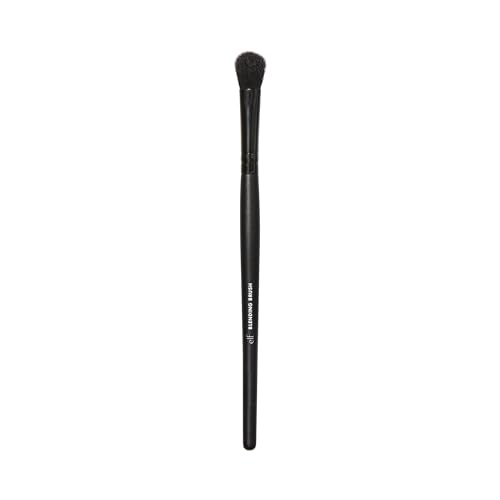
e.l.f. Blending Brush
Best for Small or Hooded Eyes
When a broad head spreads color too far, a dome-shaped synthetic head can support smaller, targeted blending.
Model 84020 has synthetic bristles, plus an aluminum handle and ferrule. Buyer feedback highlights quality, value, and versatility for both concealer and eyeshadow blending.
There is one detail we need to handle carefully. Current listing data conflicts over whether this product is a single brush or a multi-piece count.
So we do not use that inconsistent quantity as part of the value claim. The recommendation rests on the brush’s blending use, not a pack count that could distort the apparent price-per-piece calculation.
Bottom line: Pick it for tighter blending control when we want a smaller working zone and can ignore unreliable pack-count metadata.
- ✅ Buyer feedback supports useful versatility for eyeshadow blending.
- ✅ The dome-shaped synthetic head suits more controlled blending motions.
- ✅ Its recommendation does not depend on an uncertain bundle-size claim.
- ❌ Buyers who need a clearly verified quantity for a multi-brush pack.
- ❌ Dense lash-line smudging, where a shorter and firmer head is more precise.
🧪 Lash Lab Notes — Mahmuda (Homemaker & Beauty Enthusiast)
I care about control when a broader brush pushes color past the area we want. A smaller blending head makes sense when the working space is tight and we want to keep the motion contained.
- 💡 Editor’s Note: We are staying conservative about the catalog inconsistency. The useful case is the brush’s verified blending versatility. Any decision that depends on receiving nine pieces should wait for the live listing details instead of our inference.
Want to see the current feedback and listing details? Check the e.l.f. Blending Brush before deciding.
Treat this as a targeted blender, not a guaranteed multi-piece bargain.
Care tip: Wash and dry the bristles gently, and do not base either care or value on the inconsistent pack-count field.
Does smaller eye space change what feels useful? Sometimes. Brush-head scale can become a fit question, and our hooded-eye roundup compares shapes specifically for tighter working space.
For the closest work along the lashes, a true smudger is the more specialized choice.
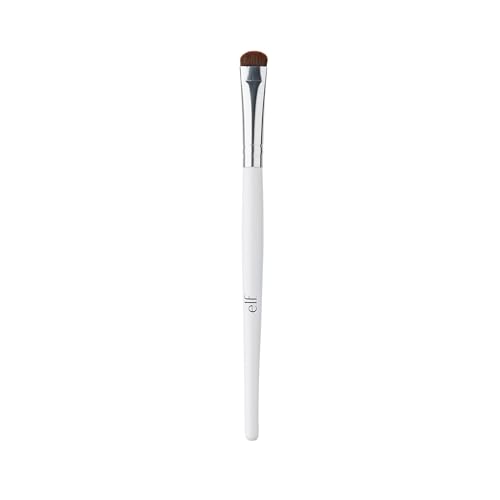
e.l.f. Smudge Brush
Best Cheap Smudger
A larger shader can only get us so close. This short, compact head gives controlled lash-line smudging its own tool.
The white model 1825 uses nylon or polyester bristles. It has a wood handle and aluminum ferrule.
Buyer feedback describes the brush as soft, yet firm enough for effective smudging. Positive comments also mention applying and smudging eyeliner, along with overall value.
There is another catalog wrinkle here. Current listing details contain a piece-count inconsistency, while the product itself is presented as a single Smudge Brush.
We keep the recommendation tied to that single brush. The questionable count does not become a pricing or bundle claim.
Bottom line: Choose it for close lash-line detail when we want to soften liner or shadow without moving color too far.
- ✅ Its compact smudging job is clearly different from broad blending.
- ✅ Feedback supports a useful mix of softness and firmness.
- ✅ Verified feedback specifically mentions both eyeliner application and smudging.
- ❌ Sweeping transition color across a large crease area.
- ❌ Anyone hoping one tool will replace both a shader and fluffy blender.
🧪 Lash Lab Notes — Dr. Rabeya (Dentist & Beauty Enthusiast)
I see the compact head as the useful part of close-to-lash work. The smaller contact area can limit how far pigment moves while helping us keep the tool itself away from the eye.
- 💡 Editor’s Note: The job is refreshingly clear: this is not another general blender. Its value appears when liner or deep shadow needs softening in a narrow zone. Clean-tool habits matter even more as we work closer to the lash line.
Wondering about firmness and smudging? Buyer feedback for the e.l.f. Smudge Brush is the best place to check those themes.
Use it for narrow lash-line work, not all-over eyeshadow blending.
Care tip: Keep this reusable eye tool clean, avoid soaking the ferrule, and stop using it if it becomes damaged or irritating.
Now the five jobs are separated. The last value question is simple: does a cheap brush keep doing its job after repeated use and cleaning?
When a Cheap Brush Becomes a False Economy
A bargain stops feeling like one when the head loses shape. The same goes for a loose ferrule or a brush that stops placing product where it should.
Does that mean every inexpensive brush will shed or fail? No. We have not independently wear-tested these picks, so we do not make that assumption.
Instead, we fold construction, verified customer themes, and care needs into the value calculation.
A brush with one clear job can beat a matching set full of redundant heads if it keeps its usable shape. The reverse is true too. A brush that feels wrong for the intended area is not a bargain just because it was cheap.
For budget tools, the better question is whether one shape keeps doing one useful job after routine washing. A coordinated collection matters less than repeatable function.
And the ferrule? It is the joint between the bristles and handle. Too much soaking can work against that joint over time, so care is part of price-to-performance, not a separate chore.
How to Clean Cheap Eye Brushes Without Shortening Their Life
Good cleaning protects hygiene and the tool itself. So how often should we wash?
The American Academy of Dermatology recommends washing makeup brushes every 7–10 days. It also advises rinsing the tips instead of submerging the whole brush head, because water around the ferrule can loosen the glue holding the brush together.
Step 1:
Use lukewarm water on the bristle tips only. Keep water out of the ferrule as much as practical, rather than soaking the handle-and-head joint.
Step 2:
Massage a small amount of gentle cleanser through the bristles, then rinse until the water runs clear. Keep the head’s shape intact instead of crushing or twisting it while cleaning.
Step 3:
Gently remove excess moisture, reshape the bristles, and lay the brush flat to dry. The AAD specifically advises flat drying rather than standing a wet brush upright, where water can move toward the ferrule.
Step 4:
Keep eye-area tools clean and personal. The U.S. Food and Drug Administration advises keeping eye-cosmetic instruments clean, not sharing eye cosmetics, and stopping use if irritation or an eye infection is present.
Why bother with all that for a budget brush? Because these habits do more than keep it clean. They reduce avoidable stress around the bristle-and-handle joint, helping the low purchase price stay useful across more applications.
Cheap Eyeshadow Brush Questions, Answered
How many jobs does a small kit actually need to cover? That is behind most budget-brush questions.
We are keeping these answers focused on individual brushes. The broader all-price and full-set decisions belong in their own roundups.
❓ What eyeshadow brushes are essential for a beginner?
Start with a fluffy blender and a firmer shader. One softens edges and transitions; the other places color on the lid. Crease, precision, and smudger shapes can wait until those jobs become part of our routine.
❓ What can we skip in a very small eye-brush kit?
Skip repeated shapes before we skip distinct functions. If two brushes are broad fluffy blenders, the second may add less than a shader or crease brush that gives the kit a new job.
❓ Are cheap eyeshadow brush sets a better value than individual brushes?
Sometimes. The set needs several shapes we genuinely use. A low bundle price is not automatically better when half the heads repeat each other or do not fit the way we apply shadow.
❓ What brush shape helps with small or hooded eyes?
A smaller or more controlled blending head can help keep color in a tighter working area. The label alone is not enough. What matters is whether the head lets us place and diffuse product without pushing it farther than intended.
❓ How much should a cheap eyeshadow brush cost?
There is no single fixed threshold because prices change and brush jobs use different designs. We look at price-to-performance instead: the brush should fill a distinct role, feel workable around the eye area, and remain useful after routine cleaning.
Final Thoughts: Buy the Job, Not the Logo
What is the easiest budget rule to remember? Start with a blender and shader, then add only the shapes that solve a real application problem.
Crease, precision, and smudger brushes can be excellent low-cost upgrades when they give us control we do not already have.
A matching logo does not make a brush useful. Geometry does. Buy the job instead of the matching set, and a small group of inexpensive tools can cover more ground than a larger cup of near-duplicates.
Last update on 2026-10-18 / Affiliate links / Images from Amazon Product Advertising API