
⚡ TL;DR: water-based foundation
A foundation can list water first and still contain silicones, so the ingredient list matters more than the label on the front. For a silicone-free preference, check the full current formula; for comfortable layering, judge how your particular moisturizer, primer, sunscreen, and foundation work together.
Top Picks
- 🏆 Best Overall — NARS Light Reflecting — explicitly silicone-free formula
- 🥈 1st Runner-up — Kosas Revealer — water-first mineral SPF formula
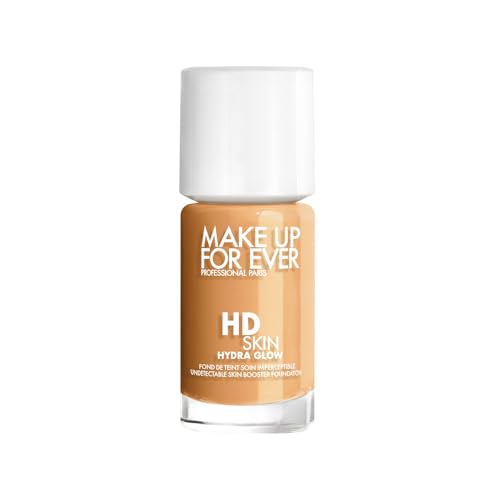
- 🥉 2nd Runner-up — Make Up For Ever HD Hydra Glow — water-forward glow with silicones
Shopping for water-based foundation sounds simple. Until two bottles begin with water, yet act quite differently when layered. We checked the brands’ ingredient details before choosing four formulas. This guide keeps the spotlight on ingredients and pairing, not a separate skin-type breakdown.
✨ Inside This Foundation Guide
🌸 Psst… A Little Beauty Note!
Some links in this post are affiliate links. If you spot something you love and shop through our links, we may earn a small commission—at no extra cost to you. Our picks are based on thoughtful research and, where mentioned, hands-on experience. Thanks for supporting Dappered Chic! 💕 Read our Affiliate Disclosure
Quick Comparison: Best Water-Based Foundation
Here are four ways a water-forward formula can take shape. Two offer stronger silicone-free signals. Two also use silicone ingredients. The listed finishes help us compare, but cannot promise identical wear on everyone.
| Foundation | Formula signal | Why consider it | Check before buying |
|---|---|---|---|
| NARS Light Reflecting | Brand identifies formula as silicone-free | Radiant, medium-coverage option | Confirm current shade and ingredient label |
| Kosas Revealer | Water first; no common silicones identified in published ingredient list | Natural-finish foundation with mineral SPF 25 | Foundation SPF does not replace a full sunscreen application |
| Make Up For Ever HD Hydra Glow | Water-forward; silicone materials appear later | Glow-focused formula | Not a strict silicone-free choice |
| Dior Backstage Face & Body | Water-forward with a later silicone film former | Face-and-body format | Not a strict silicone-free choice |
How Water-Based Foundation Differs from Silicone-Based
The phrase “water-based” usually points to a water-rich emulsion, but it is not a regulated promise that every other type of ingredient is absent. Water is often listed as Aqua/Water/Eau near the beginning of a foundation’s ingredient list. That placement tells you something about its composition, not everything about how the finished foundation will spread or sit on skin.
Silicone ingredients can play several roles in cosmetic formulas, from changing the slip during application to affecting the film left behind after the product sets. You might recognize dimethicone, cyclopentasiloxane, or names containing siloxane.
Seeing a silicone doesn’t make a foundation wrong for us. The useful question is whether we’re avoiding that ingredient class or simply hoping for layers that sit well together.
An instructive brand comparison is NARS Light Reflecting, which its manufacturer describes as silicone-free, versus NARS Natural Radiant Longwear, whose published list begins with dimethicone. Both are liquid foundations from the same company, yet they give very different clues about their formula structure. Even this comparison should not be stretched into guaranteed claims about longevity or skin reactions.
We gave the current maker-provided ingredient details more weight than shopping labels. That’s why two picks below belong in the water-forward group, not the silicone-free group.
Reading an Ingredient List Without Getting Misled
Water at the top of the list isn’t the full story. Ingredient lists generally begin with larger amounts, but the later ingredients still matter.
A foundation may put water first and include dimethicone or another silicone later. When the brand explicitly calls a formula silicone-free, that offers a stronger clue than a shopping-site label.
Start with the exact shade and version of the product you plan to purchase. Search its latest published ingredient list, then compare it with the packaging if you can: brands sometimes update formulas, and marketplace descriptions may lag.
A shade or bottle size is part of the product’s identity. Similar pictures don’t make listings interchangeable. We used specific shade records instead of a loose product-family name.
Next, look beyond a single ingredient name. Dimethicone is easy to recognize, but terms such as trimethylsiloxysilicate can also signal a silicone-derived material. The ingredient’s position offers context, but a later-listed silicone does not make the entire formula equivalent to a silicone-dominant base. Nor can an ingredient list alone tell you whether makeup will pill on top of your particular sunscreen.
If your goal is a strictly silicone-free routine, select a product whose current label and manufacturer statement support that requirement. If your goal is a dewy look, a light feel, or fewer visible patches, use the ingredient list as a shortlist tool and evaluate a small application over your normal skin-care steps. Those are different shopping questions, and the same bottle need not answer both.
And an unfamiliar ingredient isn’t, by itself, proof of a problem. For a known personal reaction, check that exact ingredient instead of assuming every product described as water-based is gentle.
Comparing the Four Foundations
Our four review slots cover two stronger no-common-silicone signals and two intentionally mixed water-forward formulas. Water-forward is not silicone-free, and the difference is the point of this comparison: each choice has its own reason to consider it.
NARS Light Reflecting Foundation
Best Overall
The official silicone-free wording makes this an easy place to start when ingredients lead the decision.
A radiant finish and the PKB’s medium-coverage listing make this a sensible option to investigate if you want more than a sheer tint. The exact selected listing is shade M1 Punjab (Medium 1), 1 oz (30 ml), so check shade suitability separately from our formula recommendation.
That silicone-free description is the real distinction. It cannot tell us whether every sunscreen or primer will work underneath. A thin test layer can reveal rolling or separation before a full application.
Bottom line: Best for an explicit silicone-free requirement. Choose this first when that ingredient constraint matters more than guessing performance from “water-based” wording.

- ✅ Official silicone-free positioning provides a clear formula signal.
- ✅ Published radiant finish and medium coverage offer useful selection clues.
- ❌ Not ideal if M1 Punjab is not your shade or you require a guaranteed matte result.

🧪 Lash Lab Notes — Engr. Nusrat (Engineer & Beauty Enthusiast)
An explicit silicone-free claim is a cleaner testable starting point than water occupying the first ingredient position. Compare how a small amount sets over your own primer before committing to a full-face application.
- 💡 Editor’s Note: We put the formula claim ahead of finish promises here because it answers the strictest version of this search. The radiant finish may appeal to someone looking beyond matte coverage, but shade matching and layering remain personal checks.
See the current listing and shade details for NARS Light Reflecting.
Choose this if a clear silicone-free formula claim tops your checklist.
Our first pick sets a clear silicone-free reference point. The next adds mineral SPF to a different water-first foundation.
Kosas Revealer Skin-Improving Foundation SPF 25
1st Runner-up
Here, a water-first ingredient list meets a natural finish and mineral SPF 25.
The brand’s published ingredients begin with water, and its published list does not show the common silicone names we checked. The product record lists natural finish and medium coverage. Our exact referenced listing is shade 140 Light Neutral, 1 fl oz; other shades should be checked on their own labels.
An SPF number on foundation is useful, but it doesn’t replace our normal sunscreen step. We often wear less makeup than the amount used in SPF testing. Proper sun protection still calls for a dedicated sunscreen.
Bottom line: Best for a water-first foundation with mineral SPF. Consider it for the combined formula features, while keeping sunscreen as a separate step.

- ✅ Water-first ingredient list offers a useful starting signal.
- ✅ Natural finish and medium coverage are documented product attributes.
- ❌ Not ideal if you need your foundation to act as your only sun protection.
🧪 Lash Lab Notes — Dr. Sazia (Medicine Specialist & Beauty Enthusiast)
Mineral SPF in foundation is helpful context, but it should not change the amount of sunscreen you normally use. Check the foundation over fully settled sunscreen before judging whether the two layers work well together.
- 💡 Editor’s Note: We like that this pick combines a formula question with a practical daily-routine feature. The trade-off is an easy one to overlook: SPF in makeup does not tell you how much coverage your actual application provides.
Explore the listed shade and formulation for Kosas Revealer.
Consider this when natural finish and mineral SPF are both priorities.
Ready to consider a formula with silicones? The next option makes glow the main priority.
Make Up For Ever HD Skin Hydra Glow Foundation
2nd Runner-up
Water can lead the ingredient list even when silicones help shape the finished texture.
This formula’s manufacturer information positions hydration and glow as central benefits. Its ingredient list starts with water but includes silicone-related materials later, so we do not call it silicone-free. The specific PKB entry is shade 3R48, 1.01 fl oz; confirm the correct shade before ordering.
If finish and feel over moisturizer matter more, this mixed formula gives us another point of comparison. But a strict silicone-free requirement rules it out. We also don’t have controlled wear data to make a universal layering claim.
Bottom line: Best for water-forward glow without a silicone-free rule. Treat it as a finish-led alternative, not an ingredient-purity substitute.
- ✅ Water-forward formula offers a different option from silicone-free products.
- ✅ Manufacturer’s glow-focused positioning fits a radiance-led search.
- ❌ Not ideal for anyone avoiding every silicone-derived ingredient.
🧪 Lash Lab Notes — Mahmuda (Homemaker & Beauty Enthusiast)
Water leading the list does not erase later silicone ingredients. If pilling is the concern, try applying smaller amounts after skincare settles instead of judging compatibility from a single ingredient label.
- 💡 Editor’s Note: We include this product on purpose: “water-based” shopping should not become an accidental silicone-free shortlist. Its glow emphasis supplies a different comparison point, provided your formula requirements allow it.
Review the shade information for Make Up For Ever HD Hydra Glow.
Try this if a glow-focused finish matters more than excluding all silicones.
The last option shifts the use case from a glow-first foundation to a face-and-body format.
Dior Backstage Face & Body Foundation
Face-and-Body Pick
A water-forward face-and-body formula rounds out the comparison without pretending to be silicone-free.
Dior’s current published ingredient information begins with water and includes a silicone film former later in the list. That combination belongs in the mixed-formula group. The selected PKB listing is 4.5N Neutral in a 1.7 oz bottle, so checking both shade and quantity is particularly important when comparing it with smaller foundation bottles.
The face-and-body format provides a practical reason to consider this option, but it is not evidence of universal transfer resistance or compatibility with every primer. Those results would need separate, formula-specific testing.
Bottom line: Best for a water-forward face-and-body choice. Consider its format and bottle size, but avoid it for a strict silicone-free requirement.

- ✅ Distinct face-and-body product format widens the comparison.
- ✅ Water-forward ingredient profile is supported by the published formula.
- ❌ Not ideal when any silicone-derived ingredient is a deal-breaker.
🧪 Lash Lab Notes — Fauzia (University Student & Beauty Enthusiast)
The later silicone film former is the detail to notice, even with water first. A small trial over the products you already use is more informative than assuming a face-and-body label guarantees wear.
- 💡 Editor’s Note: We included this as a different format choice, not another silicone-free claim. Comparing bottle quantity is useful, but the larger size should not distract from checking the exact shade and ingredient requirements.
Check the exact selected variant of Dior Backstage Face & Body.
Choose this for its format only when a mixed formula suits your routine.
Those four different ingredient profiles become most useful once you consider what sits underneath them.
Can Water-Based Foundation Work With Silicone Primer?
Yes, a water-forward foundation and silicone-containing primer can work together; there is no universal rule that says the two categories must always separate. Finished products contain blends of film formers, emollients, pigments, and other materials. Their behavior depends on the complete formulas, the layers underneath, how much is applied, and the time allowed between layers.
If makeup rolls into little bits, try using less moisturizer or primer in the test area and letting the previous layer settle before applying foundation. Compare one side of your face with primer and the other without it, while keeping sunscreen and the remaining routine the same. This is an at-home comparison, not a controlled performance test.
Pilling also happens when too much product is rubbed back and forth, so switch from repeated sweeping to gentle pressing where that works for the texture. A different sunscreen, moisturizer, or application tool may change the result. If the problem persists, changing only one layer at a time makes it easier to spot which pairing needs adjustment.
Primer texture can be the next useful choice after you understand your foundation’s ingredient profile. A dedicated primer comparison helps you shortlist that layer without assuming silicone on the label automatically means trouble.
If you are keeping every base layer silicone-free, a narrower primer guide addresses that particular ingredient constraint. It helps separate a firm exclusion from a routine compatibility experiment.
The deciding test is the actual stack of products on your face, not a two-word base classification.
Frequently Asked Questions
A few common questions are easier to answer once “water-first” and “silicone-free” are treated as separate descriptions.
❓ How can I tell whether a foundation is water-based?
Look at the current ingredient list for water near the beginning, then read the entire list rather than stopping there. The full ingredient profile and the manufacturer’s formula description help you understand whether it also contains silicones.
❓ Does water first mean a foundation is silicone-free?
No. Water may come first while dimethicone or another silicone-derived material appears later in the list.
❓ Is a water-based foundation always better for dry skin?
No one base category guarantees comfort or hydration for every person. Moisturizer, finish, coverage, and the completed formula are more useful to assess together than the first ingredient alone.
❓ Does a water-based foundation last longer than a silicone-based one?
Ingredient order alone does not establish wear time. Application amount, skin preparation, and the finished formula all matter, so avoid treating the label as a longevity guarantee.
❓ If foundation pills over primer, are water and silicone incompatible?
Not necessarily. Too much product, insufficient settling time, and interactions with sunscreen or moisturizer can contribute to rolling, so test one layer at a time.
❓ Does foundation labeled SPF 25 replace sunscreen?
It should not be treated as a substitute for a properly applied sunscreen. Makeup application amounts can be lower than the quantities used to establish the labeled SPF.
Getting the order right matters when sunscreen sits under moisturizer and makeup. The dedicated layering walkthrough clarifies the sequence without requiring a new skincare section here.
Final Thoughts on Water-Based Foundation
When a silicone-free formula is non-negotiable, start with an explicit current ingredient disclosure rather than “water first” on a shopping page. When your real priority is glow or comfortable layering, compare the full formulas and test the products together instead of imposing a blanket mixing rule. That is the distinction a bottle’s first ingredient cannot settle on its own.
If you are choosing among foundation categories rather than just water-forward formulas, a broader comparison can show how coverage and finish change the shortlist. That next step belongs in the main foundation guide.
Last update on 2026-11-18 / Affiliate links / Images from Amazon Product Advertising API